







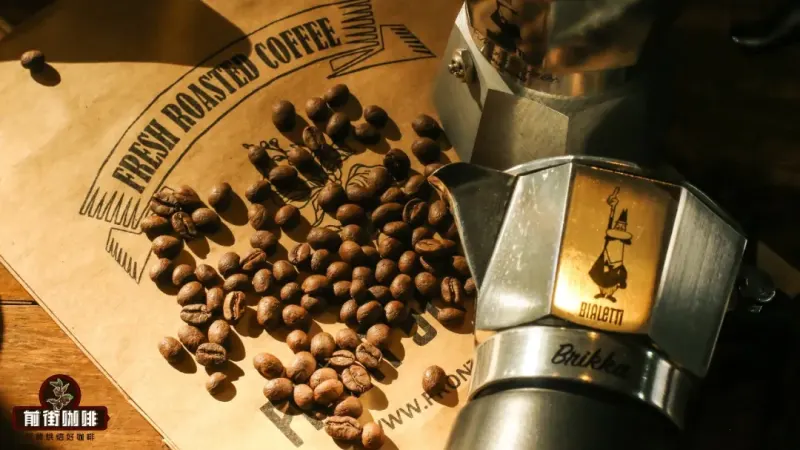
How Do You Get Stronger Coffee From a Moka Pot?
Stronger moka pot coffee comes from three things: the right beans, the coffee-to-water ratio, and the heating rhythm. The pot works by heating water in the lower chamber until steam pressure pushes it up through the grounds into the upper chamber, producing a thick, concentrated brew. Medium-dark roasted beans still inside their optimal flavor window suit this pressurized method well.
Alfonso Bialetti invented the device in 1933, and it became common in European kitchens, especially in Italy. Early versions were aluminum and needed an open flame; most current pots are stainless steel and can sit on an induction or ceramic hob. Size is chosen by servings, with the two-to-three cup version the most common, and the result can be diluted with water or milk.
The moka pot, with its high-temperature, pressurized extraction method, can produce a rich and full-bodied coffee. Since its invention by Alfonso Bialetti in 1933, it has been widely used in European households, especially in Italy. To make moka pot coffee stronger, the key lies in choosing the right coffee beans, controlling the coffee-to-water ratio, and mastering the heating rhythm. This article will cover the moka pot's structure and working principle, suitable coffee bean types, Front Street brand recommendations, and specific operating steps, explaining in detail how to use a moka pot to make espresso with abundant crema and a thick mouthfeel. It will also explain the difference between using a gas stove and an induction cooker when heating, helping coffee enthusiasts enjoy freshly roasted medium-dark roasted beans within their optimal flavor period.
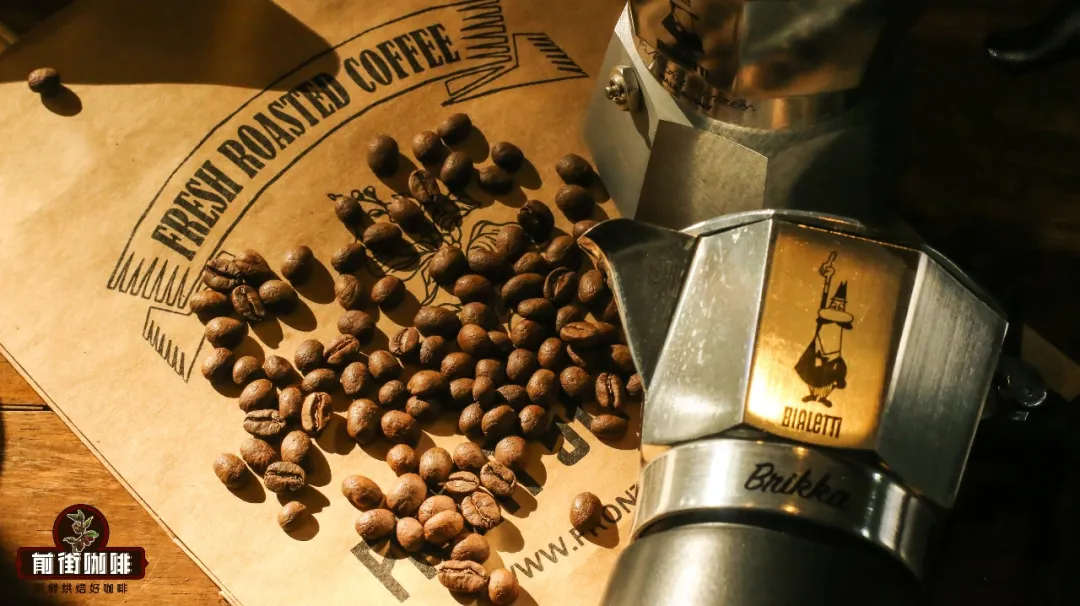
The moka pot is different from other brewing tools—it relies on pressure generated by heating to extract coffee that is strong and thick. In 1933, the Italian Alfonso Bialetti invented this device, and it subsequently became popular across European countries, especially in its birthplace of Italy, where nearly every household keeps a moka pot.
Early moka pots were made of aluminum alloy and could only be placed over an open flame. Today, most on the market are stainless steel versions that can be placed directly on an induction cooker or ceramic stove for heating and extraction. When purchasing, you can also choose the size based on the number of servings, with the most common being the mini 2–3 cup version.
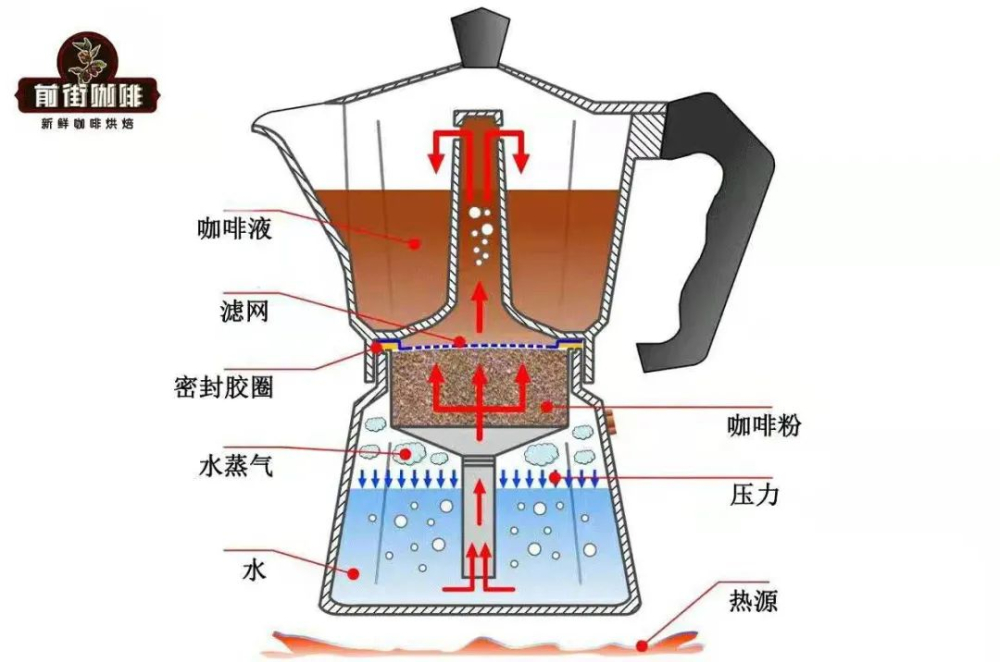
Structurally, the moka pot is divided into upper and lower halves, with three core components: the upper chamber that holds the coffee liquid, the filter basket that holds the coffee grounds, and the lower chamber that holds water. During extraction, the heat source first heats the water in the lower chamber, generating steam pressure. Once enough pressure builds up, it pushes the hot water upward through the coffee grounds, drawing out soluble aromatic compounds and continuing to rise, ultimately producing a cup of rich, full-bodied coffee. When drinking, you can dilute with water or add milk according to personal taste.
Before starting extraction, prepare a bag of fresh coffee beans still within their optimal flavor period, a gas stove or induction cooker for heating, a grinder, and clean water.
Although there are many coffee bean choices, not every one is suitable for a moka pot. The moka pot uses high-temperature, pressurized extraction, which amplifies the coffee's inherent flavors—bitter becomes more bitter, and sour becomes more sour. Therefore, it is recommended to prioritize medium or medium-dark roasted beans. Of course, good coffee depends on good beans. The optimal flavor period for coffee beans is within 40 days; if stored too long, the aroma will be greatly diminished, so freshness must be ensured. Front Street coffee beans are freshly roasted within 5 days and support 24-hour shipping, so you can start drinking them as soon as they arrive.
To showcase the crema of moka pot coffee, we chose the traditionally flavored Front Street · Classic Italian Blend (Brazilian coffee + Indonesian Mandheling coffee + Vietnamese coffee). This bean uses a medium-dark roast, and the espresso extracted has fine crema and a thick mouthfeel, suitable for adding milk to make a latte.
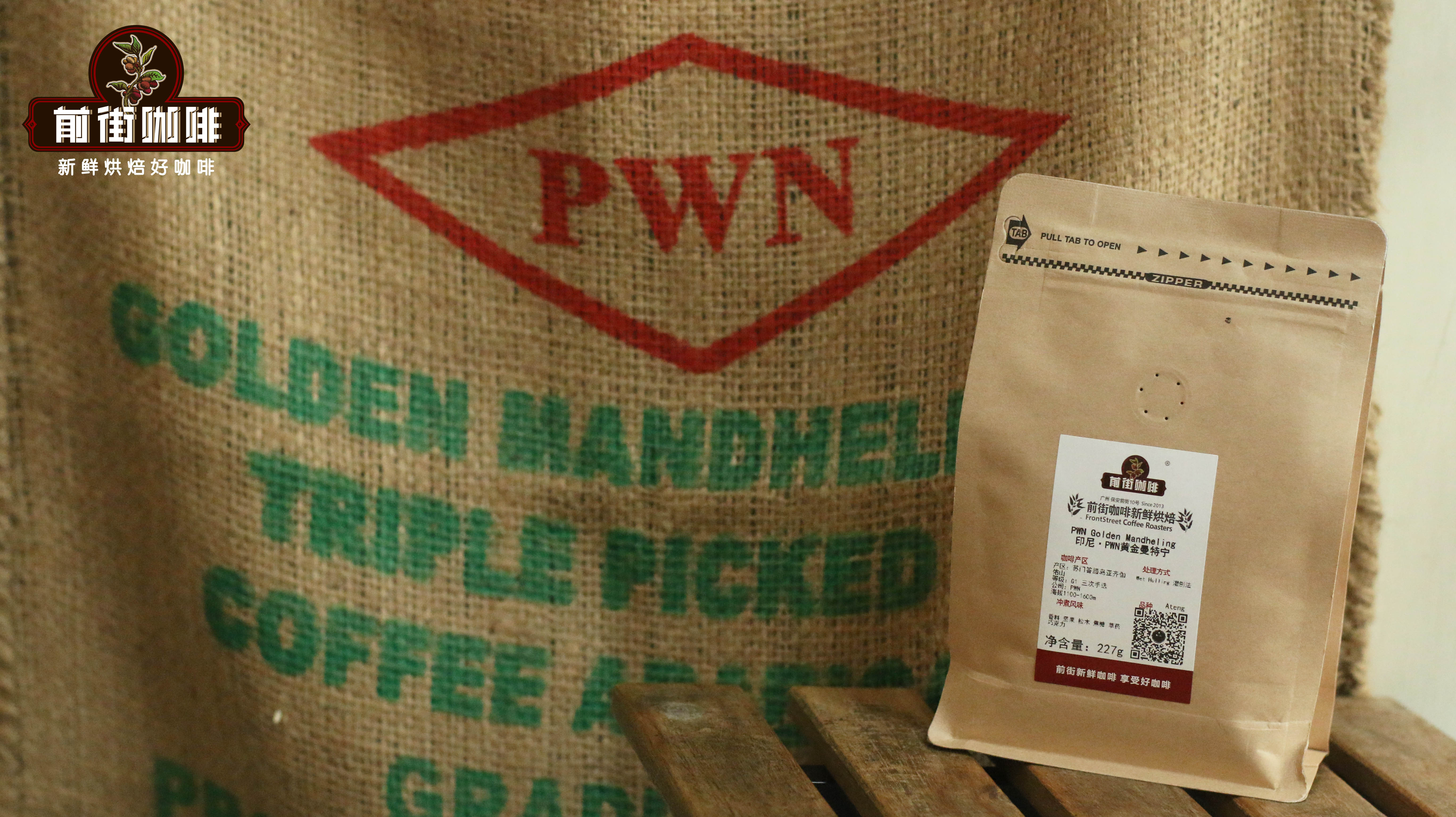
If you prefer a balanced taste, you can try the Front Street · Queen's Estate with its rich creamy peanut aroma, which brings a pleasant sweet aftertaste whether made into a moka pot americano or latte.
How to Make Stronger Moka Pot Coffee
1. Pour hot water into the lower chamber, keeping the water level about 0.5 cm below the pressure relief valve (safety valve). Front Street has measured that the water volume at this position is about 100 g, while the coffee grounds, after being leveled in the filter basket, are about 20 g, giving a coffee-to-water ratio of 1:5. Note that using cold water will prolong the soaking time of the coffee grounds, leading to over-extraction and bitterness, so Front Street recommends using hot water, which also shortens the extraction time.
2. The grind size for a moka pot is usually coarser than espresso powder but much finer than pour-over. If the grind is too coarse, the contact area between water and coffee grounds decreases, resulting not only in under-extraction and a weak flavor, but also in sputtering due to too little resistance as the liquid rises, posing a scalding risk. Gently pour the coffee grounds into the filter basket, tap evenly with your finger, and level the surface.
3. Put the filter basket back into the lower chamber, screw the upper chamber on tightly, place it on the ceramic stove and begin heating, waiting for the moka pot to heat up.
4. After hearing a hissing sound from the pot, turn down the heat, open the lid of the upper chamber, and you will see the coffee liquid and crema slowly flowing out.
5. When the coffee liquid in the upper chamber is half full, turn off the heat source and move the pot to the table, using the residual heat and pressure inside the pot to continue extracting the remaining coffee liquid. Be aware that since the moka pot has metal parts, try not to touch the body during high-temperature heating to avoid burns.
6. The extracted coffee liquid can be drunk directly—it has a very rich mouthfeel and a strong taste. You can also add milk or other mixers according to your preference. The moka pot coffee extracted from Front Street Classic Italian Blend beans has rich caramel notes, almond, chocolate aromas, and a dark cocoa finish. When mixed with heated milk to make milk coffee, it presents a creamy, chocolatey, dense sweetness.
If you want the espresso extracted from a moka pot to have a layer of rich, aromatic crema, Front Street recommends using freshly roasted medium-dark coffee beans. As the roast level deepens, the beans undergo caramelization and produce a large amount of gas, which is released under pressure during extraction. If stored for too long, the gas in the beans dissipates significantly, making it difficult to extract rich, aromatic crema. The coffee beans shipped by Front Street are all freshly roasted within 5 days, so everyone can enjoy them within their optimal flavor period.
The above content is compiled by CoffeeHunters, a coffee news website.


