







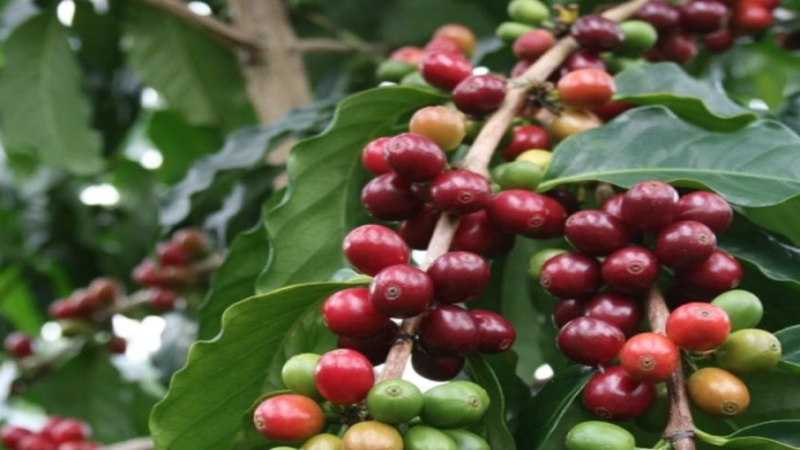
Where Do Ethiopian Coffee Beans Originate, and How Do They Taste?
Ethiopian coffee beans originate from the country's highlands and forests, the genetic home of Arabica. Regions such as Sidamo, now largely renamed Sidama, Yirgacheffe, Guji, Harrar, Limu, and Djimma each carry distinct terroir and processing methods, so their cups vary widely. Sidama and Yirgacheffe tend toward floral and citrus notes, Guji is often juicy and sweet, and Harrar leans toward berry and wine-like character.
One theory holds that nomadic peoples in East Africa mixed crushed coffee fruit with animal fat as an energizing food roughly two thousand years ago, and research suggests the earliest Arabica spread from Ethiopia. The Kaffa forests still hold native varieties, with estimates ranging from two thousand to four thousand five hundred types. That diversity, plus altitude and rainfall differences between regions, explains the wide flavor range within one country.
Ethiopia, as a genetic treasure trove of coffee, has nurtured countless stunning specialty coffee regions. From the administrative transition of Sidamo to Sidama, from the wetland settlement of Yirgacheffe to the rise of Guji as tomorrow's star, each region possesses unique terroir conditions and processing methods. Beans such as Front Street Gutingting, Front Street Red Cherry, and Front Street Huakui are typical representatives of flavors from different regions. This article will systematically outline the flavor characteristics and historical context of Ethiopia's major coffee regions, guiding you to deeply understand the unique charm of Sidamo, Sidama, Yirgacheffe, Guji, Harrar, Limu, and Djimma.
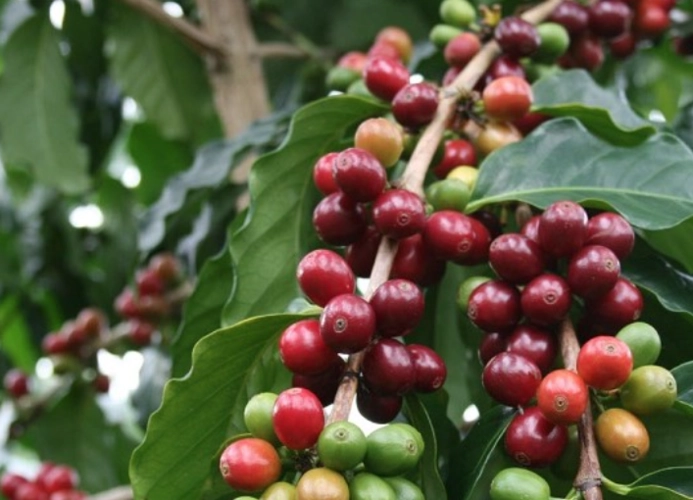
When Ethiopia is mentioned, the first reaction of many coffee enthusiasts is Front Street Gutingting Coffee, Front Street Red Cherry, and Front Street Huakui Coffee. These beans originate from different regions, each with distinct terroir conditions and processing methods, thus presenting entirely different flavor profiles in the cup. Today, Front Street will take everyone to explore the unique aspects of Ethiopian coffee.
Regarding the history of humanity's connection with coffee, one theory suggests that as early as two thousand years ago, nomadic peoples living in the East African region of Ethiopia had already mixed crushed coffee fruits with animal fat as a refreshing and energizing nutritional supplement. Subsequent research also indicates that the earliest Arabica coffee likely spread from Ethiopia.
As a genetic treasure trove of coffee, Ethiopia's Kaffa forests are home to a large number of native coffee varieties, and to this day no one can fully determine exactly how many varieties exist. In the past, if Ethiopians wanted to refresh themselves, they simply walked into the forest and picked coffee fruits—a level of casualness that is astonishing. Estimates of the number of coffee varieties in the country vary, with claims ranging from two thousand to four thousand five hundred, demonstrating the richness of its ecological diversity, which is precisely what has driven the vigorous development of Ethiopia's coffee industry.
Renowned Single-Origin Coffee Regions
As Africa's largest coffee producer, Ethiopia has a very long coffee history. Its abundant regions, combined with widely favored elegant flavors, have made this country almost synonymous with the world's specialty coffee. The familiar Yirgacheffe and Sidamo are both famous regions of Ethiopia. It was not until 2005 that the country applied for trademark patents for these regions, to protect hardworking coffee farmers and commit to improving coffee bean quality.
Ethiopian Native Heirloom Coffee
Unlike most countries, Ethiopian coffee farmers mostly operate in the form of small cooperatives. The diversity of microclimates and regional terrain, combined with local farmers' methods that fall between large-scale farming and semi-forest cultivation, together create the rich variations of Ethiopian coffee, where every tasting may bring new surprises.
Sidamo (SIDAMO) and Sidama (SIDAMA)
Located on the southern highlands of Ethiopia, Sidamo was once one of the most renowned regions. This area is situated in highlands with ample rainfall and fertile soil, at an altitude between 1700 and 2200 meters, highly suitable for coffee cultivation. The production areas are relatively scattered, and the coffee produced has a full, rich flavor known for floral, grape, and citrus aromas. After Ethiopia redivided its administrative regions in 1995, the provincial system officially exited the historical stage, replaced by a hierarchical system of Region, Zone, Woreda, and Area. Areas formerly belonging to Sidamo Province also re-established their product traceability according to the new administrative divisions—for example, Yirgacheffe was assigned to the GEDEO Zone of the SNNP Region, while Guji became an independent zone in the OROMIA Region. The only region that retains some trace of Sidamo is Sidama.
Regarding these two names, one theory holds that the ethnic group in this land was originally called the Sidama people. Later, when a certain ruler occupied the area, in order to demonstrate his authority and humiliate the local ethnic group, he named the place Sidamo. The name was thus perpetuated, and a few years ago the locals even launched a social movement to discontinue the use of the name Sidamo. In 2020, the Cup of Excellence was held in Ethiopia for the first time, and the Sidama region won numerous awards, suddenly drawing outside attention to this region. Thus, after a vote in 2020, it was upgraded to independent status, officially becoming Sidama Zone.
Yirgacheffe (YIRGACHEFFE)
In the local indigenous language, Yirga (or Irga) means wetland, and Cheffe means settlement, so together it means let us settle on the wetland. Compared to the dry and barren terroir of northern Ethiopia, southern Ethiopia's soil is quite fertile, and ancient inhabitants migrated here and decided to take root and live.
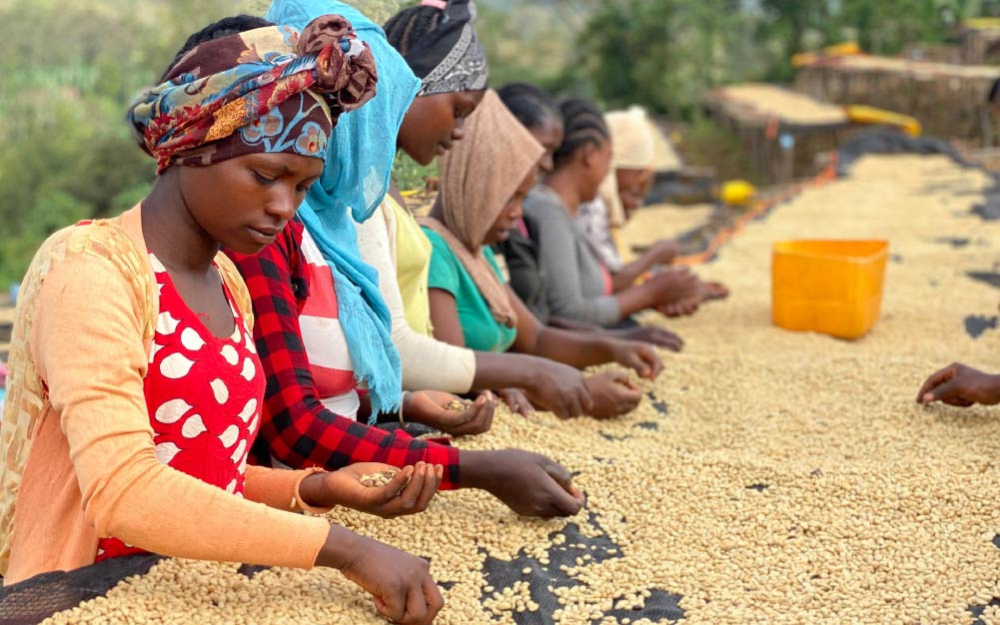
Yirgacheffe was originally just an area within the Sidamo region, but because the coffee produced there was so highly recognizable, it simply became independent and applied for its own trademark. Yirgacheffe's classic flavor features beautiful citrus, berries, and intense floral aromas, often with a clear tea-like quality, making it an unforgettable first-love taste for many. Ethiopia's traditional processing method is natural (sun-dried); this post-processing method is not costly, but the practices at the time were relatively crude, quality was unstable, and the flavor lacked purity.
In the mid-twentieth century, washed processing technology was introduced from Central America. Coffee beans that were clean, bright in acidity, and capable of stable quality production were widely praised in the market, and regions such as Yirgacheffe shifted to washed processing one after another, beginning to build washing stations, and the washed method temporarily became the most popular post-processing technique. By the 1970s, Europeans and Americans initiated a natural revival movement, with the first stop chosen at Yirgacheffe's famous Aricha region. Through improvements to the traditional natural process, Aricha's natural coffee beans surpassed people's imagination of natural beans at the time, with enchanting layers of passion fruit, pineapple, multiple berries, caramel, honey, and other flavors interwoven, as if writing a full circle around the flavor wheel, bringing the overall flavor layering to a whole new level. Yirgacheffe has two relatively well-known sub-regions, namely Kochere (KOCHERE) and Gedeb (GEDEB). Traditionally, Kochere's green lemon and black tea notes are more pronounced, and the famous Chelchelle and Chelelektu both come from here. Gedeb more often presents honey, soft yellow lemon, berry notes, and other flavors, and Worka and Banko Gutiti Village (BANKO GUTITI) are both located here.
Guji, Guji (GUJI)
Guji is a small area adjacent to Yirgacheffe. Due to the outstanding quality of its coffee beans, even during the Sidamo era it was additionally labeled as a sub-region, and in 2002 it officially became an independent region. After Yirgacheffe's prices soared, the one most likely to take over as tomorrow's star is Guji. This region is located in highlands at an altitude of 1950 to 2350 meters, with well-drained mineral soil, variable microclimates, and large areas of forest land preserving original coffee forests, making the refinement of its coffee flavors comparable to Yirgacheffe. Shakiso (SHAKISO), Hambela (HAMBELA), and Uraga (URAGA) in the Guji region are all recently popular coffees with elegant and sweet floral expression. As of 2019, the champions of both the washed and natural groups in the African competition Taste of Harvest mostly came from this region. Guji is certain to be one of the leaders of Ethiopia's coffee industry.
Harrar (HARRAR)
Located in eastern Ethiopia, the Harrar region is situated in highlands and is one of the highest-altitude coffee-growing areas, as well as Ethiopia's most historic region. Harrar has a dry, cool climate and mainly uses the natural processing method. The bean type is longberry, in contrast to Yirgacheffe's short round beans. In addition, there is a variety locally called Mocha (MOCCA), with obvious chocolate notes. The name mocha, which influences the chocolate-flavored coffee-milk beverage, originates precisely from this region. Harrar's specialty coffee has bright blueberry flavors and acidity, with fermented wine aromas.
Limu (LIMU)
Limu is located north of Sidamo. Within its territory, many smallholders engage in production, and there are also large government-owned estates. This region mostly uses washed or semi-washed processing methods, and also mixes in natural methods. Its flavor characteristics are soft, smooth acidity with obvious citrus and floral aromas, and a slight wine-like acidity.
Djimma (DJIMMA)
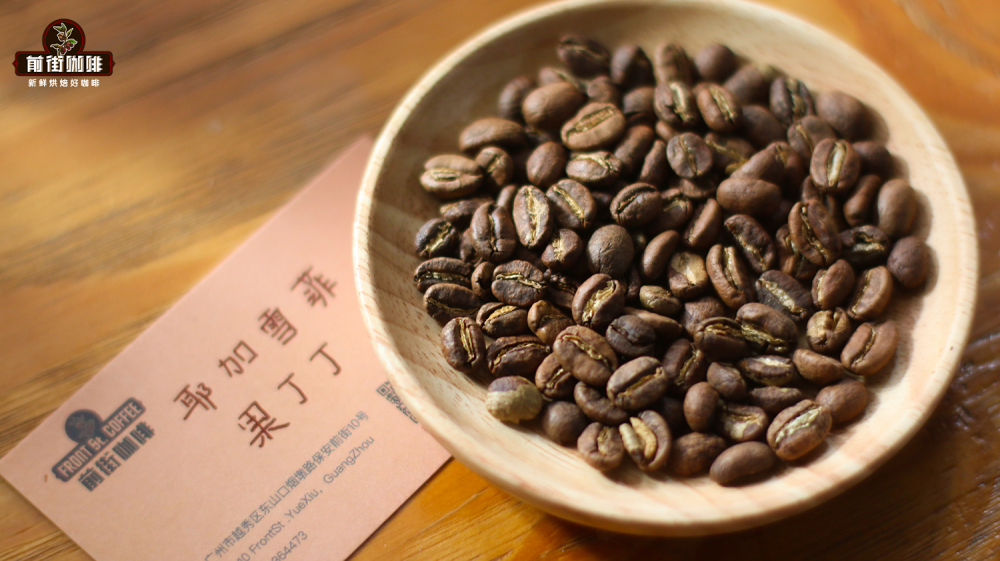
Djimma is located in the Kaffa area of southwestern Ethiopia and is Ethiopia's largest coffee-producing region. The cultivation altitude ranges between 1400 and 2100 meters. Almost all coffee produced in Djimma is primarily processed by the natural method, and most consists of small-sized coffee beans. The flavor features rich spices, mellow cocoa, and slight wine aromas and other mature flavors, with a relatively full body, and it is often used as a choice for premium blend beans.
The above content is compiled by CoffeeHunters, a coffee news website.


