







How Do You Find Sweet, Low-Acid Coffee?
Sweetness in coffee registers both on the tongue and through aroma, so a cup can read sweet without much actual sugar. From a tasting standpoint, only acidic coffees with a sweet base note tend to score well. Roast level drives the balance: sweetness develops earliest during roasting, rises with time, peaks in the medium to medium-dark range, then declines quickly as the roast goes darker.
Shoppers can estimate a bean's sweetness from its flavor notes. Prominent melon, dried fruit, peach, mango, guava, or sweet orange points to a cup that leans sweet rather than acidic, and such beans often carry descriptions like fermented, ripe fruit, or fruit candy. Lemon, passion fruit, plum, and prune notes usually mean acidity stands out instead. Green coffee bean choice and roast both feed into the final balance.
The sweetness of coffee not only comes from taste but is also closely related to the sweet aroma in smell. From a tasting perspective, only acidic coffee with a sweet base note can receive a high score. The development of sweetness is closely tied to the roast level, with medium roast often having the strongest sweetness. Ordinary consumers can judge the sweetness content of beans based on flavor descriptions; if flavors like melon and mango are prominent, it is more sweet than acidic. This article explains in detail the sources of coffee sweetness, the impact of the three extraction stages on sweetness, and recommends several Front Street high-sweetness low-acidity single-origin coffees. Finally, using Costa Rica Blackberry as an example, it shares sweet-brewing techniques for light-roasted coffee.
When we evaluate a cup of coffee as "sweet," it refers not only to the sweetness perceived by the taste buds but also to the sweet aroma captured at the olfactory level. Therefore, from a tasting dimension, only those acidic coffees with a sweet base note can potentially receive a higher flavor score. To achieve an ideal balance between acidity and sweetness in coffee, the roasting stage plays a decisive role.
During the process of green coffee beans being heated until the end of roasting, sweetness is the earliest flavor to be developed, followed closely by acidity. According to the evolution of flavors, as the roast level deepens (i.e., time lengthens), the sweetness of coffee continues to rise until it reaches a peak (usually in the medium to medium-dark roast range), after which it rapidly declines. So, considering sweetness performance from the roasting perspective alone, the medium roast range often contains the most abundant "sweetness."
As ordinary consumers, although we cannot control the roaster's approach to adjusting the acidity-sweetness ratio, we can infer a bean's "sweetness content" through flavor descriptions. For example, if the flavor list prominently features slightly acidic fruits like melon, dried fruit, peach, mango, guava, and sweet orange, then it belongs to the type that is more sweet than acidic, and such beans often come with descriptions like fermented, ripe fruit, and fruit candy. Conversely, if the flavors are dominated by more acidic fruits like lemon, passion fruit, plum, and prune, then acidity is usually more prominent than sweetness. If you don't know where to start, you might refer to the following selected Front Street single-origin coffees:
1. Front Street Sidamo Alo
Flavor: floral, mango, guava, citrus, dried strawberry; the taste interweaves acidity and sweetness, with a light and rich aroma.
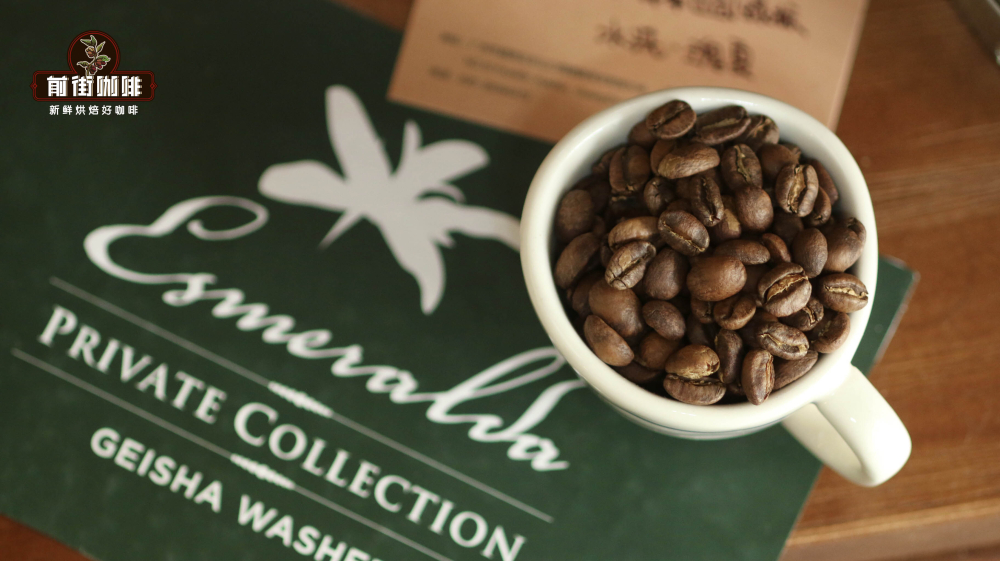
2. Front Street Emerald Green Label Geisha
Flavor: jasmine, melon, citrus, peach, Tieguanyin tea; rich layers with a soft mouthfeel.
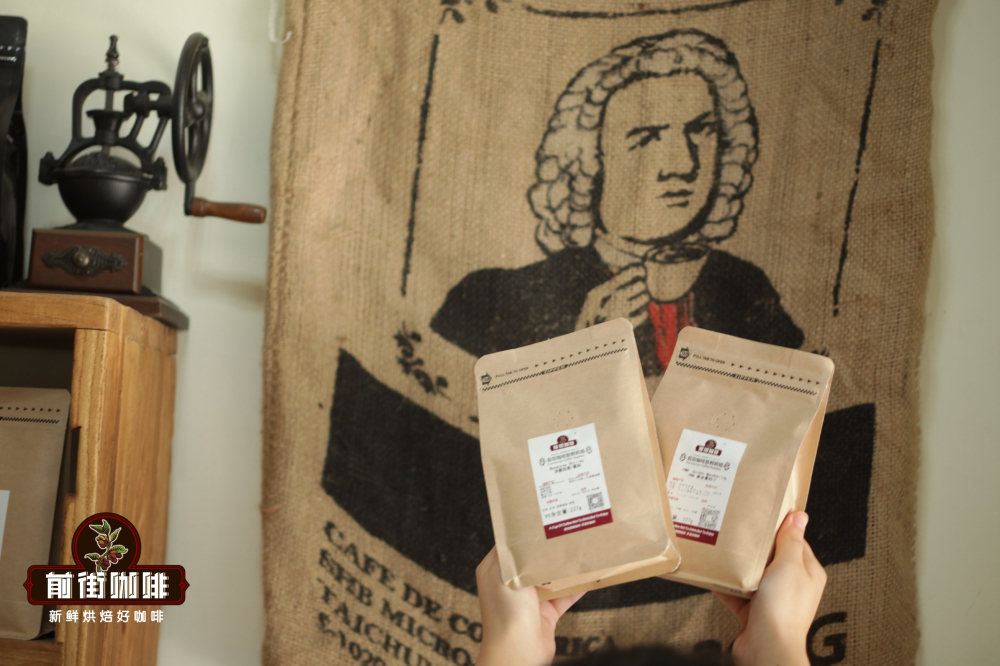
3. Front Street Mozart
Flavor: raisin, osmanthus, sweet orange; clear sweetness on entry with a noticeable fermented note.
4. Front Street Queen's Estate
Flavor: creamy chocolate, sucrose, nuts; moderate body with a clear sweet aftertaste.
Acidity runs out ahead of sweetness
The coffee extraction process can be divided into three stages. The first stage most easily releases light-molecular aromatic substances, such as floral notes and bright fruit acidity; entering the second stage, a large amount of caramelized products are extracted, including vanilla, sucrose, chocolate, nuts, cream, and other sweetness-related flavors that take dominance; by the final stage, larger molecules that are harder to dissolve begin to appear in large quantities, mainly making the coffee's mouthfeel tend toward heavy, woody, sharp, or even bitter and other negative expressions.
Therefore, to brew coffee sweet, the essence is to maximize the extraction proportion of sweet substances, that is, to find a reasonable plan that "suppresses bitterness and enhances sweetness." Returning to today's topic, if you want to enhance the sweetness of light-roasted beans while preserving the beautiful aromatic substances from the early stage, you must first ensure that the acidity and aroma of the first stage are controlled, and second, grasp the second stage as the extraction focus.
How to brew light-roasted coffee sweet?
In terms of parameters and techniques, in addition to highlighting the floral and fruity acidity-sweetness of light roasting, it is also necessary to enhance the overall body and richness of the coffee. Front Street achieves this by increasing the powder-to-water ratio, raising the water temperature by 1–2°C, adding more pours, and using corresponding techniques. Here, Front Street Costa Rica Blackberry is used as an example for a brewing demonstration. This is a honey-processed Caturra coffee with a noticeable sweetness during extraction.
Coffee beans: Front Street Costa Rica Blackberry
Dose: 15 g
Powder-to-water ratio: 1:16
Grind size: regular fine grind (EK43s setting 10)
Dripper: V60
Water temperature: 93°C
Pulse pouring: four pours (30 g / 70 g / 70 g / 70 g)
For the first pour, add 30 g of hot water to bloom for 30 seconds, making sure all coffee grounds contact the water and are in the same pre-extraction state;
After 30 seconds, using a small stream (4 ml/s), pour the second 70 g in a clockwise small circle from the center; the purpose is to let the coffee continue degassing while raising the coffee bed to about 3/5 of the dripper. Finish pouring in about 55 seconds; the scale should read 100 g.
When the liquid level drops and is about to expose the coffee bed, begin pouring the third 70 g, also maintaining a slow small stream of 4 ml/s. At this point, the circling amplitude can be slightly larger than in the second pour, with the aim of bringing out more sweet substances. Finish pouring in about 1 minute 15–20 seconds; the scale should read 170 g. Be careful not to pour too quickly, so as not to push the water level too high, and try to keep the drawdown rate and pouring amplitude in a balanced rhythm.
When the coffee bed is exposed again, pour the final 70 g, using the same technique as the second pour. Try to control the stream so it does not make too large a circle, as this can easily disturb the coffee bed and cause under-extraction. Finish pouring at about 1 minute 45 seconds, for a total water amount of 240 g and a total brew time of 2 minutes 12 seconds.
The Front Street Blackberry brewed this way has a clearly refreshing sweetness on the palate, with ripe fruit flavors of grape, melon, sugarcane, and blueberry jam. Compared with the usual three-pour method, the acidity is much softer, the body is fuller, and the sweet aftertaste is lasting. Even after the temperature drops, the various fruit sweetnesses remain full, and the finish is accompanied by a faint rose aroma.
The above content is compiled by CoffeeHunters, a coffee news website.


