







Why Do Sour Coffee Drinkers Follow Huakui 8.0?
Front Street Ethiopia Sidamo Flower Kui has reached its eighth harvest, and the latest batch, Flower Kui 8.0, keeps the natural, fruit-forward style that sour coffee fans seek. From dry aroma to sipping, it shows guava, jackfruit, and apricot notes with a juicy, layered body. The bean comes from the Buku Abel processing station in Hambella, Guji.
Flower Kui is a natural Ethiopian lot, not a Geisha, even though the similar translated names and shared floral-fruity character cause confusion. Its 2017 debut made it a specialty shop staple, and each yearly version follows the same naming convention. Brewing parameters and cupping records for the new batch help show whether the vintage keeps its signature profile.
Front Street Ethiopia Sidamo Flower Kui, a classic staple for sour coffee lovers, has now welcomed its 8th harvest season, and the latest batch "Flower Kui 8.0" has been released as scheduled. This article covers the origin of the Flower Kui name, its essential differences from Geisha, its TOH competition championship history, and the logic behind its annual version iterations, while also sharing the unboxing and tasting record of Front Street Flower Kui 8.0 along with brewing parameters. From dry aroma to sipping, this new-season natural bean presents multiple fruity notes of guava, jackfruit, apricot and more, with a clear juice-like quality and rich layers. Does this year's Flower Kui 8.0 actually have the "Flower Kui flavor"? Follow along with Front Street's cupping and brewing process to find out.
For more specialty coffee knowledge, please follow: Front Street Coffee (Frontsteet Coffee)
The Front Street Ethiopia Sidamo Flower Kui on the Front Street bean list, as one of the must-have staples for countless sour coffee lovers, has now unknowingly reached its 8th year since debut, and the latest harvest-season batch follows the naming convention of previous years, released under the name "Flower Kui 8.0." Drinking the new Flower Kui has become a top priority for loyal fans. So, how does this year's "Flower Kui 8.0" taste? Does it have the "Flower Kui flavor"? For the details, please join Front Street in today's retrospective story~
What is "Flower Kui Coffee"?
Front Street Sidamo Flower Kui refers to a natural coffee bean from the Hambella region of Ethiopia, with the full English name "Ethiopia Guji Hambella Buku Abel." Broadly speaking, it is a champion bean from Guji, Ethiopia; more specifically, it is a natural batch processed by the smaller Buku Abel processing station in Hambella. In stark contrast to Geisha's arduous origins, Front Street Sidamo Flower Kui has been popular in every specialty coffee shop since its debut in 2017, thanks to its distinctive strawberry-and-cream aroma—truly a case of peaking right from the start.
Perhaps because they have similar-sounding translated names, and both are flagship representatives of floral-fruity coffee, many friends when first getting into coffee mistakenly think Flower Kui is Geisha, or Geisha is Flower Kui, and some even spread the claim that "Flower Kui is the top-tier Geisha." In fact, they are two completely different concepts.
Why is it called "Flower Kui"?
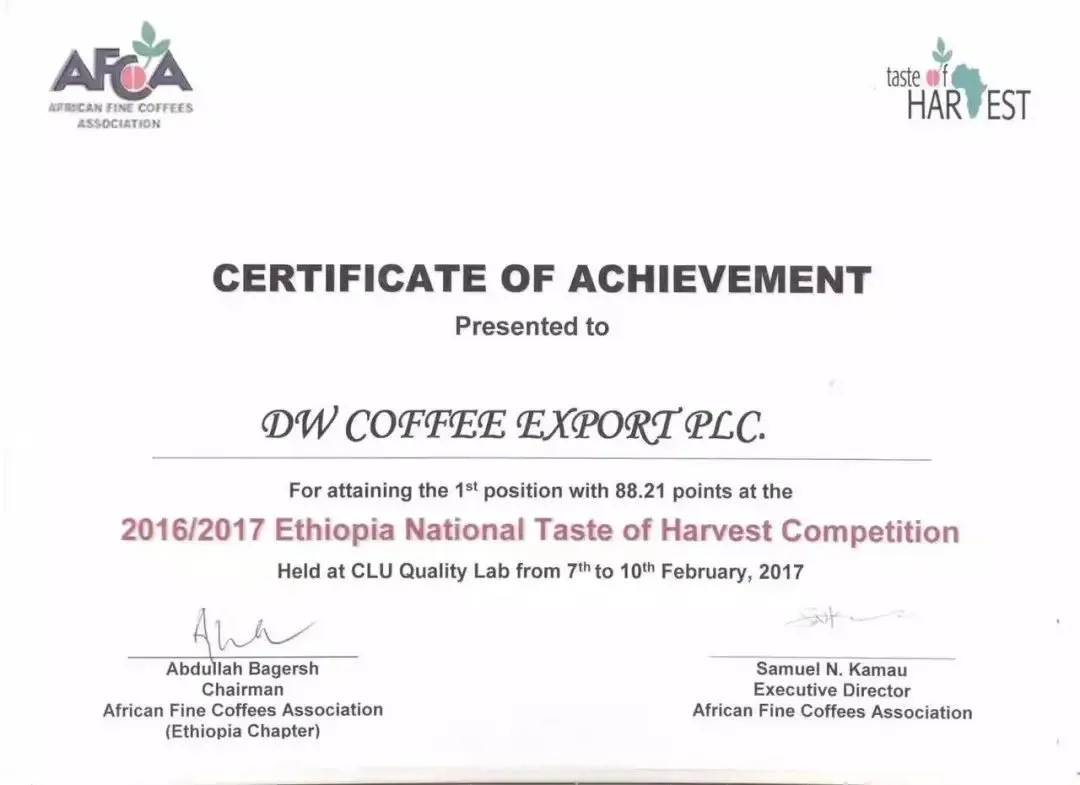
Before "Flower Kui Coffee" became "Flower Kui," it was actually a competition-grade award-winning bean from Ethiopia. In February 2017, Ethiopia's DW Coffee Company, while participating in the green bean competition TOH (Ethiopia National Taste of Harvest competition) organized by the African Fine Coffees Association, submitted a natural coffee bean from the Buku Abel processing station in the Sidamo region, and won the championship in that year's natural category with its rich berry aroma and creamy texture.
In the same year, this champion batch was spotted by a green bean trader in Beijing. Because of its champion status, it was named "Flower Kui" and launched in the domestic market, symbolizing "the chief of a hundred flowers, outshining all others." Soon after, this "Flower Kui" was used by a coffee brewing competition contestant (China region) as a competition bean, defeating opponents who used Geisha and winning that year's runner-up—this was Flower Kui's first time making a name for itself in China.
As its popularity on the competition stage continued to soar, this traditional natural bean from the Buku Abel processing station also successfully "debuted," and with its affordable price and pleasant flavor, it quickly became a high-quality Ethiopian coffee widely recognized by industry insiders.
What does Flower Kui [X.0] mean?
In our impression, coffee beans are usually named according to some traceable logic, and once established, the name doesn't change—for example, Geisha is a variety, Blue Mountain is a origin, Yirgacheffe is a processing station, and so on. But this Front Street Flower Kui from Ethiopia's Sidamo region is particularly special: like Apple's iPhone, it needs a new "version name" every year before it can be released. Why is that?
In fact, before this bean was called "Flower Kui," it had only one English name, "Hambella." Put plainly, what we call "Flower Kui Coffee" is a traditional natural G1 coffee bean from the Hambella region, and "Buku Abel" processing station is its more precise traceability information, located in Dimtu town.
During the annual coffee harvest season (December-January), the Buku processing station organizes farmers to pick fully red coffee cherries with a sugar content of 30 or above. The selected coffee fruits are placed on African raised beds for drying. Because of the large temperature difference between day and night locally, farmers shade the cherries at noon to avoid excessive fermentation from too-high temperatures, and at night they cover them with plastic sheets to prevent sudden rain showers. The cherries are turned continuously throughout the day, allowing them to dry evenly while preventing sunburn or unpleasant fermented flavors. After about 18 days of natural processing, the green coffee beans reach a moisture content of only 13% and can be hulled by machine.
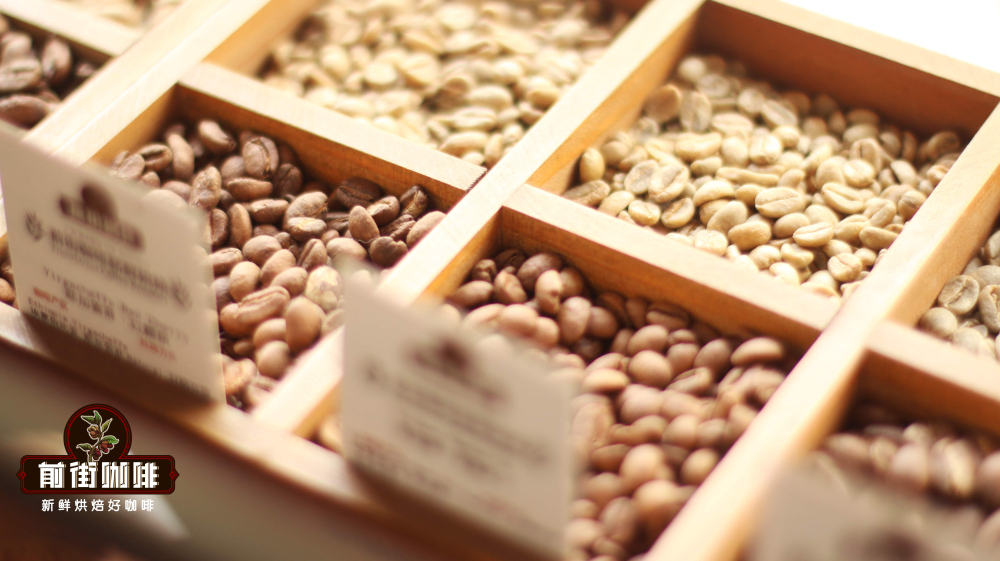
After "Flower Kui" became famous overnight, in order to meet the surging market demand, DW Company added up to 5 independent green coffee drying processing stations in Hambella Wamena Wereda, all located within the core production area of Dimtu town. In addition to the original Buku Abel, four other small villages—Buku Saysay, Haro Soresa, Tirtiro Goye, and Seke Bokosa—also joined the production of natural coffee beans. It is said that at this point, the annual production of "Flower Kui" under DW Company had already reached tens of millions of tons.
Since the 2018 harvest season, Flower Kui (Front Street Ethiopia Sidamo Natural G1 coffee bean) from the same growing origin and the same processing station has already shown some changes in flavor. Front Street found through cupping at the time that although the 2018 and 2019 Flower Kui also had a "natural Sidamo flavor" similar to the 2017 Flower Kui, they were slightly inferior to the "first-generation Flower Kui" in terms of body, aftertaste, and other mouthfeel aspects.
Therefore, in order to continue selling this natural coffee from Hambella while making some distinction from the original version, domestic green bean trading companies, counting from after 2017, created the X.0 suffix for each subsequent year's batch. For example, the 2018 batch was called "Flower Kui 2.0," the 2019 batch was called "Flower Kui 3.0 and 3.1"... last year's release was "Flower Kui 7.0," and so on. In this way, we can use this suffix to identify which year's product the Flower Kui we bought belongs to, and whether it is the latest batch.
What is the "Flower Kui flavor"?
Flower Kui—if we look at it purely from the literal meaning, we might think it is a coffee "overflowing with floral fragrance." Actually, that's not the case. Flower Kui's floral note is not particularly intense; instead, its fruit aromas are especially prominent, such as creamy strawberry, mango, jackfruit, citrus, blueberry, and more. It possesses the mature tropical fruit character unique to Front Street Sidamo natural beans, which often leaves a deep impression and is exactly what won "Flower Kui" first place in that year's TOH green bean competition—its rich berry fragrance.
But everyone knows that coffee is essentially an economic crop. That year's yield and quality are first affected by factors such as climate and rainfall, altitude and soil, fertilization and weeding, and then differ in flavor profile due to variations in processing details (sunlight duration, temperature, humidity). Flower Kui is naturally no exception. So when compared with the previous year, each year's Flower Kui beans will more or less differ in flavor.
So, how does this year's Flower Kui 8.0 taste?
These past few days, the Front Street Ethiopia Sidamo Natural Flower Kui 8.0 that Front Street ordered has finally arrived. While it's fresh and hot, and after a year of anticipation, of course we had to taste it properly. In order to present the refined floral-fruity flavors of the Sidamo region without losing the coffee's caramelized aroma, Front Street's roaster used a medium-light roast to present this Front Street Sidamo natural bean.
Front Street Coffee · Sidamo Flower Kui 8.0 Coffee Bean
Country: Ethiopia Region: Sidamo · Guji Altitude: 2250-2350m Variety: Local heirloom varieties Processing: Natural process
Flavor: Floral, jackfruit, dried fruit, apricot, juicy
In the dry aroma, the new-season Front Street Flower Kui 8.0 shows a more intense fruity character than Front Street Flower Kui 7.0, with dense aromas of guava, jackfruit, apricot, dried fruit, citrus, and pink florals. After hot water is poured in, honey, berry, and chocolate sweet aromas can be detected.
Through sipping, Front Street first perceives in this Front Street Flower Kui 8.0 the interwoven sweet-and-sour of multiple fruits such as dried mango, jackfruit, orange, and passion fruit, with a clear juice-like quality and a round mouthfeel. As the temperature drops slightly, the delicate sweetness of peach and the bright acidity of berries begin to emerge, and after swallowing, one can feel a sweet aftertaste like drinking black tea, with very rich layers.
Front Street Coffee (FrontStreet Coffee) Barista Brewing Parameters Sharing
Dripper: V60
Water temperature: 91-92°C
Dose: 15g
Coffee-to-water ratio: 1:15
Grind size: Fine granulated sugar (80% passing through a No. 20 sieve)
For the first pour, inject 30g of water for a 30-second bloom. Start timing as you pour. Use a slow, small stream at the center point, then begin spiraling outward, making sure to wet the entire coffee bed.
After 30 seconds, begin the second pour with a slightly stronger but steady stream, adding 95g of water. The purpose is to lift the entire coffee bed. The stream should be poured vertically and evenly. At this point the scale reads 125g, and the pour is completed in about 55 seconds.
When the liquid level drops to about halfway, begin the third pour using a slow, small stream in a small spiral, adding 100g. Try to control the stream so it doesn't swirl too widely, as that can easily disturb the coffee bed and cause underextraction. The total water added is 225g, and the drawdown is completed in about 2 minutes.
The above content is compiled by CoffeeHunters, a coffee news website.


