







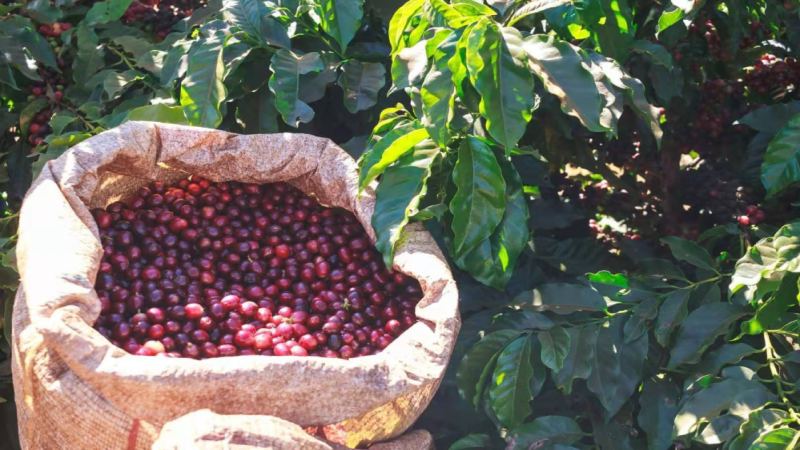
What does the Brazil Cerrado arabica variety grading mean?
Brazil Cerrado green coffee is graded on three fronts: defect count (the NY grade), screen size, and cup profile. A label like NY.2SC 17/18 FC means a low defect count, screen sizes of 17 to 18, and a fine cup. The Cerrado sits in the midwest of Minas Gerais, where Arabica grows at roughly 600 to 1,200 meters.
Cerrado coffee tastes balanced and mild, with soft aroma, and is often blended into espresso for stability and layered flavor. The Red Bourbon arabica variety behind Front Street Coffee's daily drinking series is processed as pulped natural, then roasted medium-dark, giving a smooth body with clear chocolate and nutty notes in the cup.
Brazil is the world's largest coffee producer, and among its regions, the Cerrado in the midwest of Minas Gerais is known for coffee beans with a mellow taste and mild aroma, often used in espresso blends to enhance stability and flavor complexity. In Front Street Coffee's daily drinking bean series, the Brazil Cerrado Red Bourbon is deeply loved by coffee enthusiasts for its rich, smooth mouthfeel and intense chocolate and nutty notes. This article will systematically introduce the terroir conditions of the Cerrado region, the characteristics of the Bourbon variety, the pulped natural processing method, and provide a detailed breakdown of the three major grading dimensions for Brazilian green coffee—defect bean ratio (NY grade), screen size specification, and cup profile. Finally, it will include Front Street Coffee's brewing parameters and flavor description for this medium-dark roasted bean, helping readers fully understand the actual meaning of NY.2SC 17/18 FC.
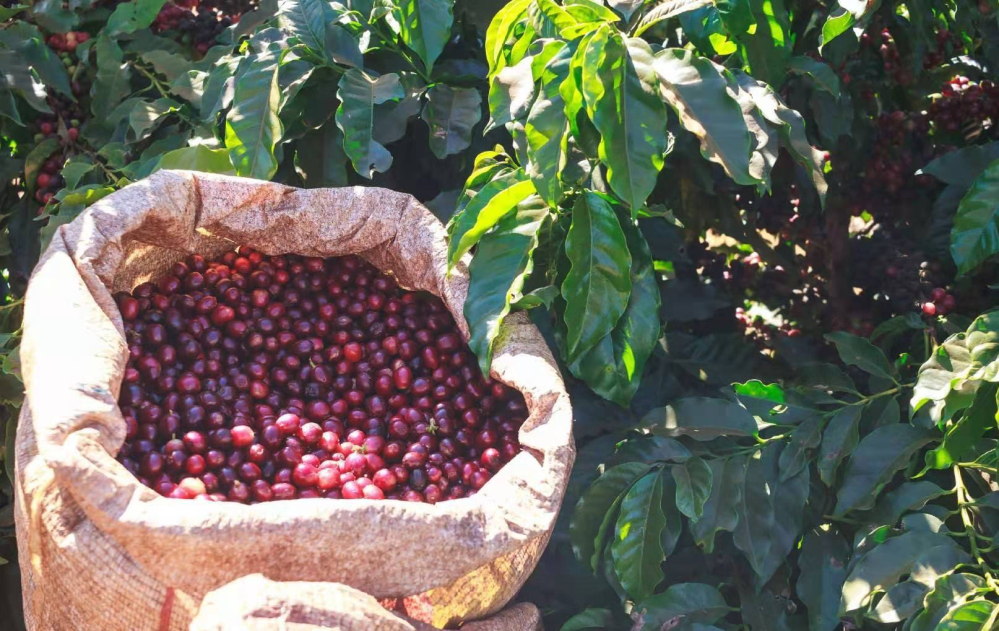
Brazil ranks first in global coffee production, and the Cerrado coffee produced in the midwest of Minas Gerais is an inescapable classic representative. Cerrado coffee beans have a balanced and mild taste, emitting a soft aroma after roasting. Blending them with other beans into espresso not only enriches the flavor layers but also makes the extraction process more stable. In Front Street Coffee's daily drinking bean series, there is a Brazil Cerrado Red Bourbon that is rich and smooth on the palate, with prominent chocolate and nutty notes. Many customers are particularly fond of it.
Brazil Cerrado Coffee Region
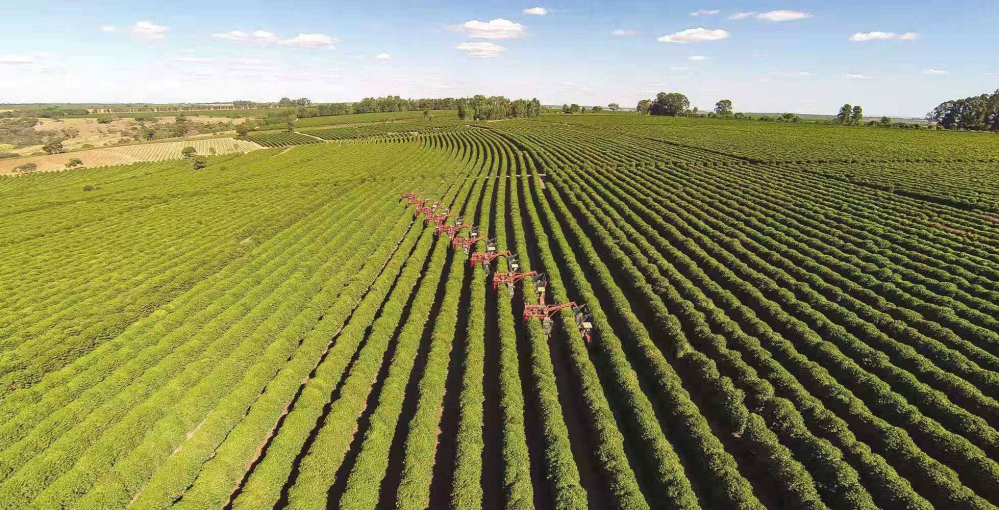
Unlike Colombia's high-altitude cultivation, Brazilian coffee generally grows at lower elevations, with an average planting altitude of about 600 to 1,200 meters. The local terrain is mainly low-altitude plains, with the Brazilian Highlands accounting for only a small portion. The plains environment facilitates large-scale coffee cultivation and uniform management. During the harvest season, most farms use mechanical harvesting to strip all the fruit from a branch at once.
Brazilian coffee production spans 7 states, with Minas Gerais in the southeast having the highest output, encompassing four sub-regions. The Cerrado region is the first coffee-producing area in Brazil to receive geographical indication certification, and almost all the coffee it produces is the higher-quality Arabica variety. Cerrado originally refers to the savanna covering 22% of Brazil's total area, located in the inland heartland, but the Cerrado coffee-producing region does not cover the entire savanna—it is limited to the planting zone above 1,000 meters elevation in the midwest of Minas Gerais. This area is the essence of the Cerrado savanna; its higher altitude and fertile soil are what allow it to produce specialty coffee that is sweet, full-bodied, and highly clean. Cerrado was also the first region in Brazil to achieve commercial coffee production, with many exporters establishing large plantations here.
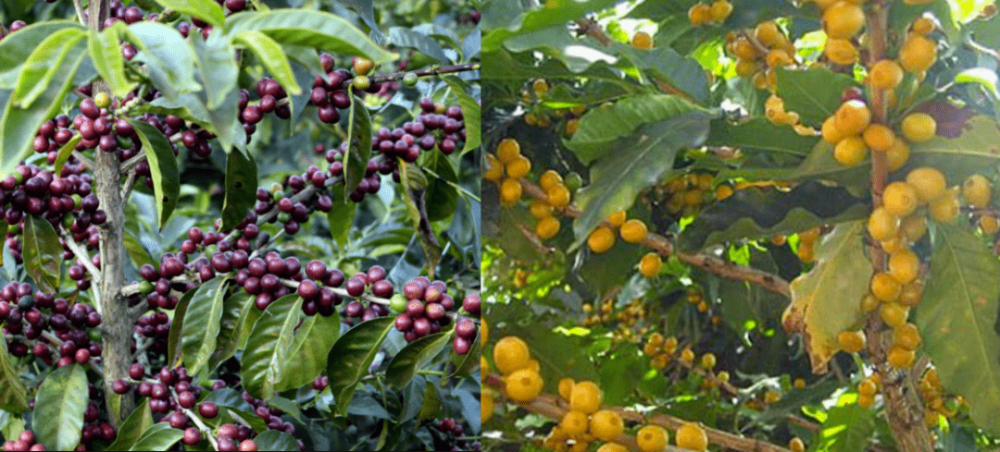
Brazil has a rich variety of coffee varieties, among which Bourbon and Typica are the most ancient. Both are old varieties, but Bourbon has broader leaves than Typica, higher planting density, and yields about 30% more than Typica. Bourbon beans are rounder and shorter, with solid berry acidity, prominent creamy and aromatic qualities, and distinct acidity, but likewise weak disease resistance. This Front Street Brazil Cerrado daily drinking bean uses Red Bourbon, whose fruit turns red when ripe. In addition, Front Street's bean list also includes a Yellow Bourbon from Queen's Farm with yellow fruit.
Brazil's harvest season coincides with the dry season, making it very suitable for drying green beans using the natural process. Traditional natural processing spreads all the fruit directly on the ground, which easily causes the coffee beans to pick up off-flavors like dirt and wood, leading to inconsistent quality. After 1990, Brazil began promoting the pulped natural method (also called semi-washed), which first uses water to remove defective beans and floaters, then uses machines to remove the skin, pulp, and part of the mucilage, followed by washing, and finally drying in the sun or in drying rooms. The pulped natural method saves more water and labor than the washed method, greatly improving the quality of Brazilian coffee and reversing the poor impression left by rough natural processing.
Grading of Brazilian Green Coffee
Brazil has large production and many producing regions, making grading quite complex, and a single standard is difficult to apply. Therefore, Brazilian coffee is graded using a combination of methods, with defect bean ratio, screen size, and cup profile all included in the grading process.
1. Grading by Number of Defect Beans
Based on the number of defect beans per 300 grams of green coffee, evaluation is conducted through a "deduction method." Brazil adopts the New York grading standard, i.e., NY, which can be divided by defect ratio into NY2, NY2/3, NY3, NY3/4, etc. The smaller the number, the lower the defect rate and the higher the grade. Lots with deductions below 4 points belong to NY2, the highest grade. Since NY.1 requires zero defect beans, such a stringent lot cannot be supplied consistently, so Brazil designates NY.2 as the highest grade.
2. Grading by Coffee Bean Screen Size Specification
Size is screened using sieves based on 1/64 inch, with sizes from 14 to 20 divided into different specifications. The screen number corresponds to the short side of the coffee bean, i.e., its "width." The largest screen size for Brazilian coffee beans is 19, but production is scarce, so 17/18 is the highest grade.
3. Cup Profile Flavor and Taste
After defect and specification grading, Brazilian green coffee is roasted and graded from two dimensions—taste and flavor—by reference to Cup of Excellence cupping scores. Taste performance is divided into five categories: Strictly Soft→very smooth, Soft→smooth, Softish→slightly smooth, Hardish→not palatable, Rioy→iodine-like pungent taste. Cup profile flavor grades can be divided into: Fine cup (FC), Fine, Good Cup (GC), Fair Cup, Poor cup, Bad cup, among which Fine Cup (FC) and Good Cup (GC) are more common.
Combining the above points, the bag of Front Street Brazil Cerrado green coffee reads "Brazil NY.2SC – 17/18 FC Cerrado," meaning it is produced in the Cerrado region of Brazil, with a screen size of 17 to 18, a very smooth taste, a fine cup profile, and a defect rate grade of NY.2.
Flavor of Brazil Cerrado Coffee
This coffee needs to highlight the nutty, baked bread, and creamy aromas of Brazilian beans, with relatively low acidity, so Front Street Coffee uses a medium-dark roast level. Regardless of which coffee bean is brewed, Front Street Coffee believes that freshness affects the flavor performance in the cup. To drink a Brazilian coffee with excellent flavor, Front Street Coffee recommends choosing beans roasted within 1.5 months. After high-temperature roasting, coffee beans need a 4 to 7 day degassing and resting period before gradually entering their peak flavor period. Once past the peak flavor period, a large amount of aroma is lost, and many flavors become difficult to present through extraction. Coffee beans shipped by Front Street Coffee are guaranteed to be freshly roasted within 5 days, so by the time they arrive, they are almost ready to enter the peak flavor stage.
FrontStreet Coffee's barista, considering that this bean is roasted relatively dark and has a loose internal structure, making it easy to absorb water and release excessive bitter compounds, uses a lower water temperature and a relatively coarser grind to avoid over-extraction. Using a KONO dripper better highlights the full body of Brazilian coffee.
Water temperature: 88°C
Dose: 15 grams
Coffee-to-water ratio: 1:15
Grind size: 70% passing through a No. 20 sieve
Three-stage pouring: Use 30g of water to evenly wet the coffee bed and bloom for 30 seconds. In the second stage, pour 95g of water in a steady circular motion from inside to outside until the water level drops to 2/3 of the coffee bed in the dripper, then begin pouring the third stage of 100g. Note to keep a small stream throughout. After dripping is complete in about 2 minutes, remove the dripper.
Flavor description: After Front Street Coffee grinds this Cerrado Red Bourbon, one can smell intense nutty and baked bread aromas. Upon contact with water, caramel sweetness begins to spread. After brewing, the main notes on the palate are nuts, cream, and peanut, with a sweet black chocolate finish, a soft mouthfeel, and high body.
For professional coffee knowledge exchange and more coffee bean information, please follow Coffee Workshop (WeChat public account: cafe_style)
For more specialty coffee beans, please add the private WeChat of FrontStreet Coffee: qjcoffeex
The above content is compiled by CoffeeHunters, a coffee news website.


