







What is the difference between espresso and americano?
An americano is espresso diluted with water, so the same coffee that tastes intense and sharply bitter on its own becomes softer and more spread out in the cup. Espresso keeps that concentration and heavier body. Neither is objectively better; the choice comes down to whether you want intensity or a longer, gentler drink.
To make americano at home, pull a shot of espresso and add hot water for the hot version or cold water and ice for the iced one, adjusting the water-to-coffee ratio to taste. Bean choice and extraction parameters still set the base flavor, which is why a poorly extracted shot stays harsh no matter how much water goes in.
On a scorching summer day, the refreshing coolness of an iced americano, or the satisfaction brought by the rich milky aroma of an espresso—both are hard to give up. Many people have tried both types of coffee, yet find it difficult to accurately describe the differences in their taste. From the perspective of Front Street Coffee, this article systematically sorts out the definition evolution, taste characteristics, and suitable groups for americano and espresso, explains in detail the espresso bean selection for americano, extraction parameters, the mixing ratio of water to coffee, as well as the key points for making hot and iced americanos, and includes a fun little tip for latte art on americano, helping coffee lovers more clearly understand the flavor logic of the two coffees.
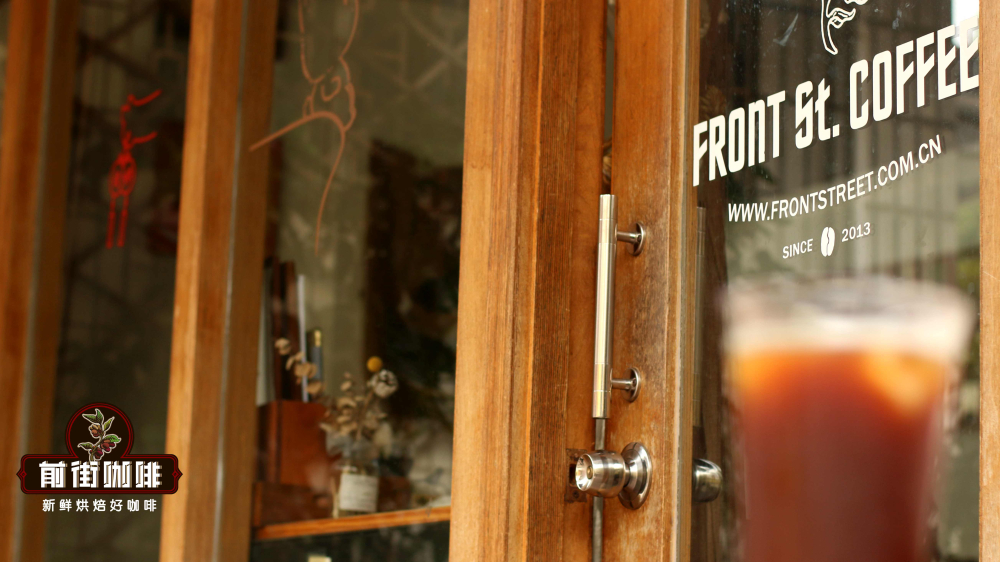
Many people casually order an americano in a café, especially in midsummer—after downing an iced americano, it feels as if the whole body is wrapped in coolness, and that refreshing feeling is truly addictive.
Some people prefer espresso, with its rich milky aroma and mellow taste—one sip brings satisfaction. Everyone's taste differs, so preferences naturally vary, and of course trying both is perfectly fine. So, what exactly is the difference between these two coffees when you drink them? You may have tried both, yet find it hard to accurately express that feeling. Below, Front Street will sort it out for everyone.
What are americano and espresso respectively?
The americano commonly seen in cafés today is usually made with espresso as the base, then diluted with an appropriate amount of water according to personal preference. Because the "espresso machine" originated in Italy, many coffee lovers habitually call espresso "Italian coffee." However, this naming is no longer very popular now. Front Street Coffee and most cafés today tend to collectively call espresso-based drinks espresso coffee.
Which tastes better, espresso or americano?
This is a question many customers often ask when they come to Front Street Coffee. In the old naming convention, it was a comparison between espresso and americano. For most people, espresso has a strong flavor and obvious stimulation, and is not very easy to drink. In contrast, americano diluted with water has its bitterness washed away, and the originally concentrated flavors spread out, making the overall taste softer. In today's naming convention, it is a comparison between coffee drinks with sugar and milk and black coffee—the rich milky aroma or sweetness will cover up the bitterness of the black coffee itself.
What kind of espresso beans are suitable for americano?
Taking Front Street Coffee as an example, the coffee beans used in stores are the Sunflower Warm Sun blend, a blend composed of Honduras Sherry barrel and sun-dried Yirgacheffe, with a ratio of 70% Sherry barrel coffee beans to 30% sun-dried Yirgacheffe. By adjusting the roasting curve, it is made suitable for espresso output, in which the Sherry barrel beans provide the main flavor and full-bodiedness, while Yirgacheffe brings more acidity and aroma.
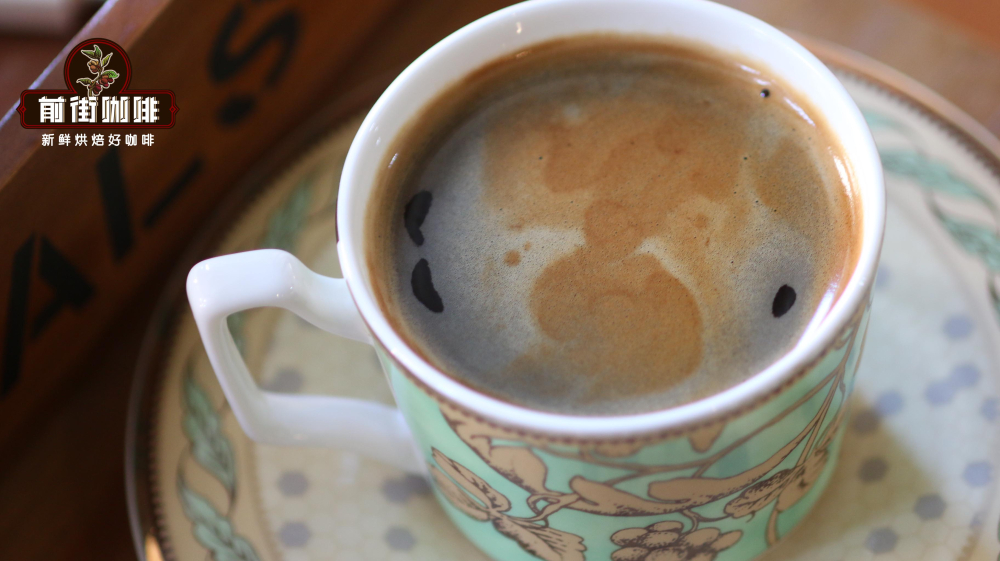
How to use the Warm Sun blend coffee beans to extract a single or double espresso?
Front Street uses a Pegasus E98 espresso machine Pressure: 9 bar
Temperature: 90.5~96°C
Time: 20~30 sec
Powder-to-water ratio: 1:1.7~1:2
Dose: 12g (single espresso) 20g (double espresso)
Extracted espresso yield: 20ml (single) 40ml (double)
What is the water-to-coffee ratio for americano?
The traditional americano ratio is 1:8, that is, double espresso (40 ml) mixed with 320 ml water. In practice, it can be adjusted according to the store's serving cup size, roughly between 1:7 or 1:8, but not all beans are suitable. When Front Street uses the Warm Sun blend coffee beans to make americano, the ratio used is 1:4.5. So how did Front Street determine the americano ratio suitable for its own blend beans?
This leads to the following question: how much water must be added to espresso for it to become americano? Taking the americano served in Front Street stores as an example, Front Street Coffee's hot americano is a single espresso plus a certain amount of water. First extract a double espresso (or according to the number of servings), pour the extracted espresso into a sharing pot placed on a scale, add water in sequence according to the ratio and taste, in order to determine the appropriate range. For example, if 40 grams of coffee liquid is extracted, start from 1:4, that is, pour in 160 ml water, taste it, then pour in 20 grams water (ratio 1:4.5) and taste, continue pouring in 20 grams water (ratio 1:5) and taste, repeat this operation until the appropriate ratio range is found.
Because each tasting consumes part of the coffee liquid, it is impossible to precisely lock in the optimal ratio; this method can only find an approximate range, and afterward the americano still needs to be remade within the suitable range. For example, in the above test, the suitable ratio for making americano with the Warm Sun blend fell between 1:4 and 1:5. Subsequently, americanos at three ratios of 1:4, 1:4.5, and 1:5 were remade, and finally 1:4.5 was determined to be most suitable for the Warm Sun blend beans. At this coffee-to-water ratio, it better highlights the wine charm and cocoa finish of the Warm Sun blend, while not losing fullness. Front Street Coffee's hot americano parameters are 40ml espresso mixed with 180ml of 85°C hot water, or an ice-water mixture.
How to make hot americano or iced americano?
The method for hot americano is to first pour 65°C hot water into the cup, then extract espresso and pour it in. Adding water first and then pouring coffee can ensure that the crema of the espresso is retained, thereby improving the taste.
For iced americano, mix ice and water at a 1:1 ratio to obtain the required amount of water, then extract espresso and pour it in.
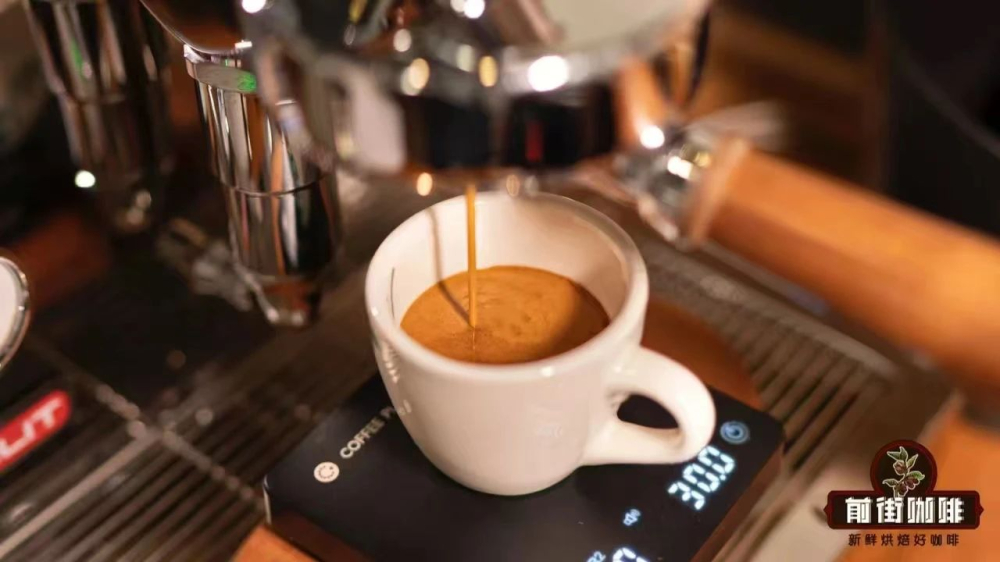
Taste description of americano
Hot americano contains only espresso and water, and better restores the original taste of coffee. It is neither as rich and full-bodied as espresso, nor as hard to accept as espresso. Iced americano, on the other hand, tastes refreshing, and a cup after a full meal is a great helper for cutting greasiness.
Coffee beans have a very large impact on americano. Generally, cafés choose blended coffee beans in order to increase the body of the coffee. During roasting, coffee beans change their composition and color through physical and chemical changes. Sucrose is rapidly lost during roasting, and aroma-emitting substances are weakened, thereby achieving the effect of adjusting flavor. This process also produces an oil called cafestol, which determines the flavor and aroma of coffee. The flavor of traditional americano usually presents notes of nuts and dark chocolate.
Front Street has four espresso coffee beans in total. Apart from the Warm Sun blend, the flavor direction of the other three is similar to traditional ones. But the Warm Sun blend is very special. Front Street's Warm Sun blend coffee is composed of Honduras Sherry and sun-dried Red Cherry, with a full fermented feel, and after extraction it is full of wine aroma.
The correct way to drink americano
Americano originated during wartime, when American soldiers in Europe mixed hot water into espresso. Generally speaking, Americans make coffee rather casually and simply, so it quickly became widespread.
Today's americano can be said to be a general term for black coffee. Whether coffee brewed with a French press or a pour-over kettle, it can all be broadly called americano. In Italy, americano is usually espresso served with a cup of hot water on the side, added by the drinker according to personal taste, with the ratio of espresso to water depending on individual preference, roughly 1:12. Americano tastes relatively light, without the strong mouthfeel of espresso, and is naturally easier for people who do not drink coffee to accept.
Besides americano, what other black coffees are worth recommending?
If you want to taste rich coffee flavors, Front Street suggests taking a little time to watch a barista pour over a single-origin coffee. You will find that in these few minutes your body and mind get an inexplicable relaxation and healing, and then slowly take a sip—the layering of the single-origin coffee reverberates in your mouth, making you feel joyful.
Little bonus: Can americano be used for latte art? Yes!
1. First make 2 espressos.
2. Pour 5 ice cubes into the milk pitcher, then add 150ml direct drinking water, and finally pour in one espresso, and froth it like steaming milk. After frothing, tap the pitcher once, shake it, and eliminate the large bubbles to form a smooth surface.
3. At this point we have one espresso base and one frothed americano, so we can freely do latte art.
The difference between americano and latte is that latte has milk added, while americano uses water instead of milk.
Front Street americano latte art tips!
1. When frothing americano, pay attention to the foam thickness; do not make it too thick.
2. Frothed americano separates faster than frothed milk, so after frothing is completed, integrate and pour latte art as soon as possible.
3. When integrating, make sure the foam fully integrates with the espresso base. Insufficient integration will cause jagged edges when forming the pattern.
Professional coffee knowledge exchange
More coffee bean information
Please follow Coffee Workshop (WeChat public account cafe_style )
For more specialty coffee beans, please add the private WeChat Front Street Coffee, WeChat ID: kaixinguoguo0925
The above content is compiled by CoffeeHunters, a coffee news website.


