







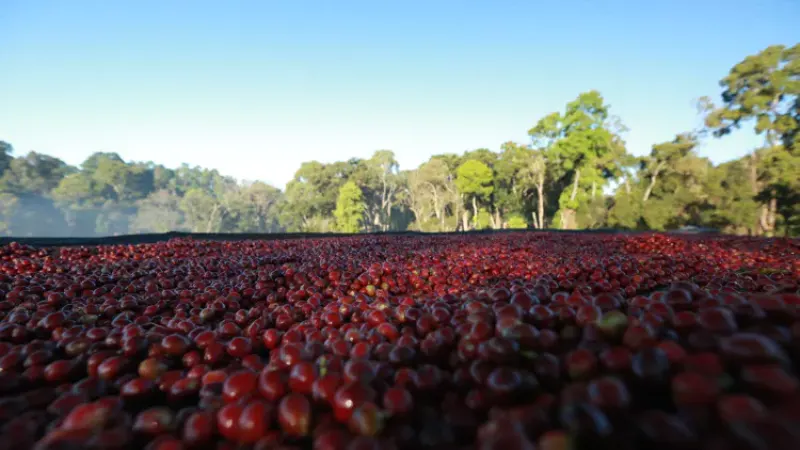
How Has Coffee Processing Changed in Ethiopia?
Coffee processing in Ethiopia has shifted over the past two decades. Traditional natural methods dry whole cherries on raised beds for weeks, letting fruit sugars soak into the bean. Refined natural builds on that idea with tighter controls on cherry selection, drying time, and turning schedules. The result is a cleaner cup that still keeps the berry and floral notes people expect.
Grading runs alongside these methods. If you ask what does g1 grade mean in ethiopian coffee, it refers to the top tier with the fewest defects and the most uniform beans. Lots like Hambela Huakui often carry that mark. Refined natural lots tend to show brighter acidity and clearer fruit than older style naturals from the same area.
Coffee processing methods have a decisive influence on flavor direction. As the oldest processing method, natural processing has undergone an evolution from crude and simple to refined and controllable. From the perspective of Front Street Coffee, this article sorts out the basic principles and historical limitations of natural processing, compares the quality differences between traditional natural and refined natural processing, and uses the Hambela Huakui coffee from the Guji production area of Sidama, Ethiopia as an example to analyze how natural processing gives coffee a full mouthfeel and dark berry notes. It also includes Front Street Coffee's brewing parameters and technique suggestions to help enthusiasts better present the fruit acidity and sweetness of natural beans.
Continuing from last time, today we will continue talking about coffee processing methods. The influence of processing methods on the flavor in the cup is so great that anyone who takes coffee seriously cannot ignore it. In Front Street Coffee's daily selection, the washed processing method has always occupied a special position—it not only performs stably, but is also like a touchstone for a production area. When Front Street Coffee selects beans from various countries in Central and South America, it usually first cups washed lots to determine which production area and which estate's beans can best represent the local terroir.
What exactly is natural processing?
The so-called natural processing, as Front Street Coffee often mentions when explaining processing methods, is essentially a process of obtaining coffee beans from coffee cherries. And the natural method can be said to be the oldest and most traditional of all processing methods.
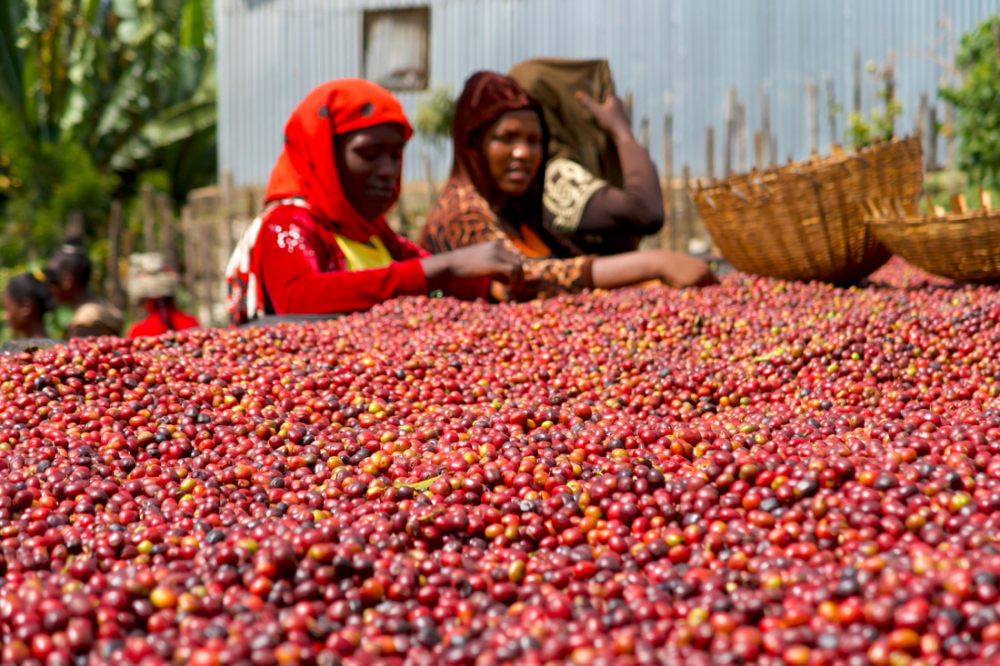
Compared with the cumbersome washed process, the logic of natural processing is easier to understand. The crudest practice is commonly seen among smallholder farmers: the harvested coffee cherries are directly spread on the ground to sun-dry, and after the moisture content drops to a certain level, the shriveled skin and pulp are peeled open to take out the coffee beans inside.
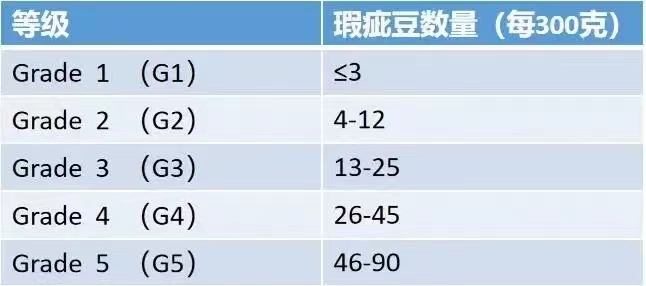
However, this crude operation often leads to a sharp decline in green bean quality, and naturally the flavor is not much better. A typical example is Ethiopia's early green bean grading system. In an era when flavor had not yet been fully valued by the industry, the country mainly classified green bean grades by defect rate. The specific method was to count the number of defective beans in every 300 grams of green beans—G1 required no more than 3 defective beans, G2 was 4 to 12, and so on.
At that time, the washed beans that could be exported to the cafes we are familiar with mostly came from G1 and G2 grades. The highest grade for natural beans was only G3, meaning that every 300 grams of natural green beans contained at least 13 defective beans.
Fortunately, with the continuous improvement and refinement of natural processing technology, Ethiopian natural beans can now also reach G1 level. Huakui is one of the most representative examples—this natural bean from the Guji Hambela production area presents distinct dark berry notes, with a complex and full mouthfeel that is unforgettable after one sip. Natural processing gives it a rich body and a pleasant fermented aroma.
The appeal of natural processing
Although Front Street Coffee has a special affection for the washed method, it is equally passionate about natural beans. Not only us—many well-known estates and classic production areas are also embracing natural processing. Twenty years ago, Front Street Coffee was surprised to learn that the Blue Mountain production area began trying and producing natural-processed Typica. In the past, when we described Blue Mountain, we always said it had a balanced flavor, stability, and consistent quality. Behind this was the local insistence on making only washed Typica, and it was precisely this insistence that created Blue Mountain's legendary status. However, times have changed. With the wave of specialty coffee sweeping in, Blue Mountain also faced new competitive pressure, so starting in 2019 it experimented with natural processing and invited well-known estates to provide technical guidance, finally launching natural Typica Blue Mountain coffee in 2020.
Even Blue Mountain has bowed to the market's preference for natural coffee. Although natural processing is high-risk and highly dependent on weather, carefully managed natural lots often bring rich rewards—complex and full texture, refined berry notes. The source of these flavors is precisely that during processing the pulp and skin are retained and dried together, and the sugars in the pulp are absorbed by the beans, thereby developing such fascinating flavors.
Refined natural processing method
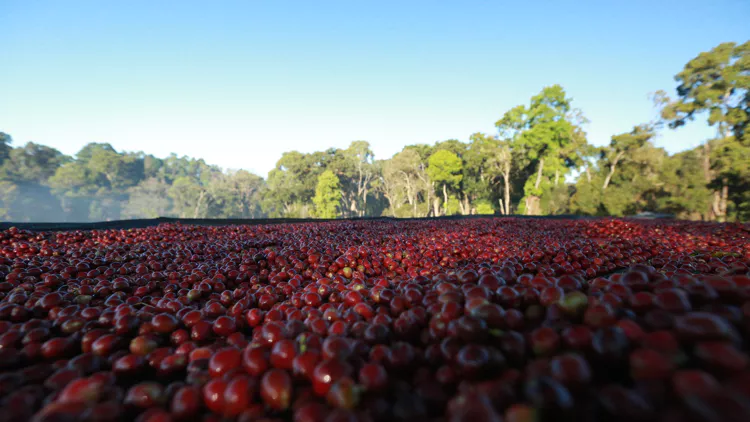
The so-called refined natural processing means that coffee farmers pick only fully ripe coffee cherries from the native forest, ensuring that each fruit is intact and, with pulp and skin still attached, placed on raised beds for drying. On the one hand, this completely isolates the beans from off-flavors that may be brought by contact with soil; on the other hand, it also improves drying efficiency and can more completely display the coffee's original fruit flavors.
Front Street Coffee : Sidama · Huakui 8.0 coffee beans
Country : Ethiopia Production area : Sidama · Guji production area Altitude : 2250–2350 meters Variety : Local heirloom varieties Processing method : Natural processing
Flavor : Floral aroma, jackfruit, dried fruit, apricot, juicy feel
Front Street Coffee brewing suggestions: Dripper: Hario V60 #01 Water temperature: 90-91°C Dose: 15 grams Coffee-to-water ratio: 1:15 Grind size: 80% passing through China standard No. 20 sieve
In order to fully extract the fruit acidity of Yirgacheffe and Sidama, Front Street uses a relatively high water temperature and a finer grind size. But to avoid over-extraction caused by high temperature, it pairs this with a faster-flow dripper, such as the V60. The V60 dripper is conical at 60 degrees. This angle allows the coffee grounds to be concentrated, and when pouring, the water flow also automatically converges toward the center, ensuring sufficient contact time between water and grounds, thereby extracting the ideal coffee liquid. In addition, the ribs on the inner side of the V60 are in a clockwise spiral shape, extending from the bottom all the way to the top, leaving ample space between the filter paper and the dripper wall. The flow is good, and together with the large hole at the bottom, the overall flow rate is faster than many drippers.
Front Street brewing method: In the first stage, pour 30 grams of water for a 30-second bloom, then pour 95 grams (the electronic scale shows about 125 grams), completing the pour in about 1 minute. When the water level drops to 2/3 of the coffee bed, pour the remaining 100 grams (the electronic scale shows about 225 grams), completing the pour in about 1 minute 40 seconds to 1'45". Finish dripping in 2'00''-2'10", remove the dripper, and extraction is complete.
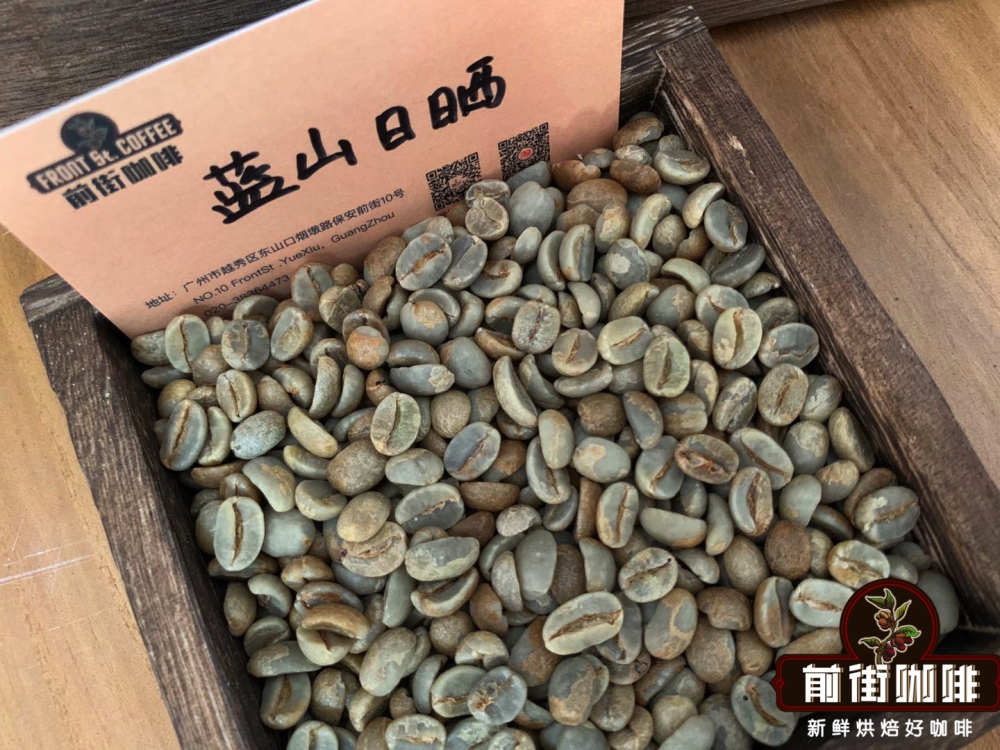
Compared with washed processing, natural beans have a richer fruity aroma and a higher body.
The above content is compiled by CoffeeHunters, a coffee news website.


