







How Much Ice and Water Goes Into Diluted Espresso?
Sourness in an iced Americano is usually not spoilage. It comes from the beans themselves: growing region, roast level and extraction ratio all shape how much acidity reaches the cup. A lighter roast or an under-extracted shot leaves more sour notes, while a darker roast or a longer extraction pushes the same diluted espresso toward bitterness instead.
The ratio matters as much as the beans. A hot Americano typically uses a smaller share of water than the iced version, where ice melts and keeps diluting the drink. Single-origin SOE beans and blended beans also behave differently: SOE shows its origin's fruit and acidity, while a blend built for balance stays rounder. Adjusting water, ice and grind is what turns a sour americano into a balanced one.
Iced Americano, with its refreshing and palate-cleansing taste, has a large following regardless of winter or summer. But many coffee enthusiasts notice that the iced Americano they drink sometimes tastes sour and sometimes bitter—is the coffee spoiled, or is it a characteristic of the beans themselves? There are many versions of the origin story of Americano, and its flavor performance is actually closely related to the coffee bean's growing region, roast level, and extraction ratio. This article will analyze the causes of sourness, roasting trends, and the differences between SOE and blended beans, and share the specific ratios and parameters used by Front Street Coffee (FrontStreet Coffee) when making hot and iced Americanos, to help everyone find the cup of Americano that suits their taste.
For more specialty coffee knowledge, please follow: Front Street Coffee (Frontsteet Coffee)
Many coffee enthusiasts first encounter instant coffee, then muster the courage to walk into Starbucks, only to be overwhelmed by the dense menu—fortunately, they can still recognize the familiar Americano. Compared to hot Americano, iced Americano is clearly more favored. Whether in freezing winter or scorching summer, a cup of iced Americano brings a crisp, palate-cleansing experience.
Regarding the origin of Americano, the most widely circulated story is related to World War II: American soldiers on their way to support Europe couldn't get used to the strong coffee of southern Europe, so they diluted espresso with water. Europeans, disapproving of this drink as weak as plain water, named it "Americano."
However, the origin of Americano may be even earlier. In the late 1920s, writer Somerset Maugham wrote a character in a play who drank Americano, but the book never explained how this coffee was made.
Even if in the eyes of some espresso lovers, Americano is as weak as plain water, it doesn't affect the public's love for it at all. In most people's impressions, the typical flavor of coffee is inseparable from bitterness. However, some coffee novices, after tasting the iced Americano produced by Front Street Coffee (FrontStreet Coffee), besides finding the flavor unique, also have doubts: the Americanos I drank before were all bitter, but today's cup has a sour taste—could the coffee be spoiled?
Actually, this is related to the coffee beans themselves—it's not that the beans have gone bad, but rather it depends on the growing region and roast level. Italian-style beans used by chain coffee shops like Starbucks are usually roasted darker. Dark roasting ensures stable bean quality and extends shelf life, but the darker the roast, the more the original flavors of the origin are lost, replaced by more prominent nutty, dark chocolate notes, and even burnt bitterness.
After World War II, the quality of green coffee beans improved significantly, and roasting equipment and techniques also saw notable improvements. With the rise of the third wave of specialty coffee, coffee enthusiasts worldwide increasingly value terroir. To preserve the richer fruity sweetness and elegant aromas of the coffee beans themselves, roast levels gradually shifted toward medium-light.
Additionally, some specialty coffee shops use single-origin beans to extract SOE for making Americano. Since the espresso extraction method amplifies the bean's flavors, single-origin beans inevitably carry distinct characteristics—for example, Ethiopian beans, when extracted as espresso, are sour.
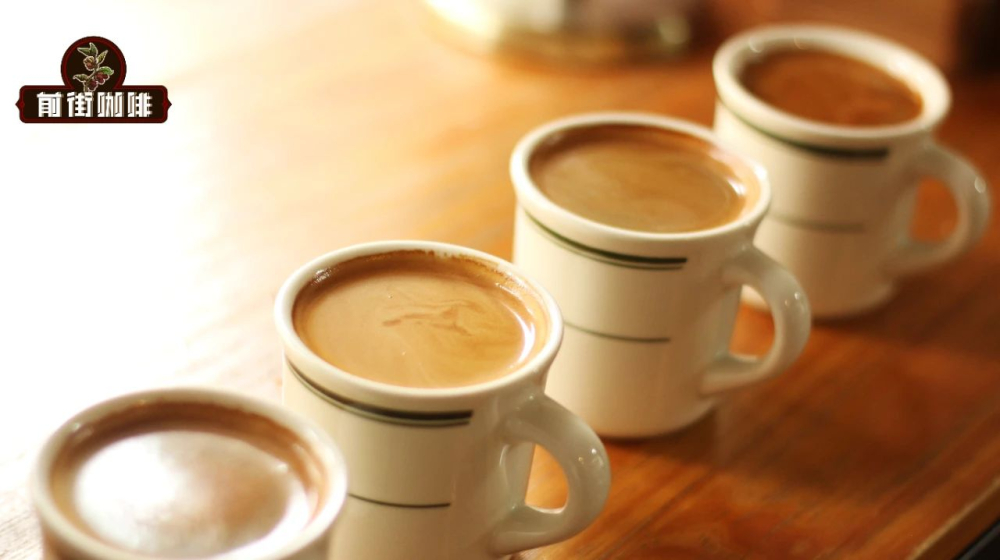
Of course, for extraction stability, most coffee shops still choose blended beans for espresso. But as long as the blend includes beans from African regions, the resulting iced Americano will also have a sour taste. So drinking a sour iced Americano outside is quite normal, and the probability is not low.
Front Street Coffee (FrontStreet Coffee) mentioned in an article explaining flavors that sourness itself is good, but it should be viewed on a case-by-case basis. High-quality acidity is close to the sourness of fruit juice; if sharp sourness appears, it's most likely a problem in the extraction process.
So the same goes for iced Americano—sourness is the inherent flavor of the coffee beans, and it's perfectly normal for it to appear. You can drink it with confidence; it's not that the beans have gone sour and bad. If you don't like this taste, you might as well ask the staff in advance: what's the roast level of the coffee beans, which region are they from, will it be on the sour side—to avoid pitfalls. May everyone drink the cup of coffee that suits their taste.
The espresso produced at Front Street Coffee (FrontStreet Coffee) shops uses a blend called "Sunflower Warm Sun Blend Coffee Beans." This blend consists of 70% Honduras Sherry coffee beans and 30% Ethiopian sun-dried Yirgacheffe.
Among them, the Honduras Sherry coffee beans, after fine washing, are placed in Sherry whisky barrels for 30 to 40 days of low-temperature fermentation. The whisky aroma compounds in the barrels seep into the green beans, bringing vanilla cream and whisky notes.
The Ethiopian sun-dried Yirgacheffe uses the natural processing method, injecting berry-like fruity acidity into the espresso and making the sweetness more prominent.
Before production each day, the baristas at Front Street Coffee (FrontStreet Coffee) adjust the various parameters of espresso extraction based on the day's temperature and humidity. After adjustment, Front Street Coffee (FrontStreet Coffee) uses a Galileo Q18 espresso grinder at a grind setting of 1.5 to grind 19.7 grams of coffee grounds, then brews with a Lelit Bianca V3 espresso machine for 30 to 32 seconds, extracting 38 to 40 grams of espresso liquid.
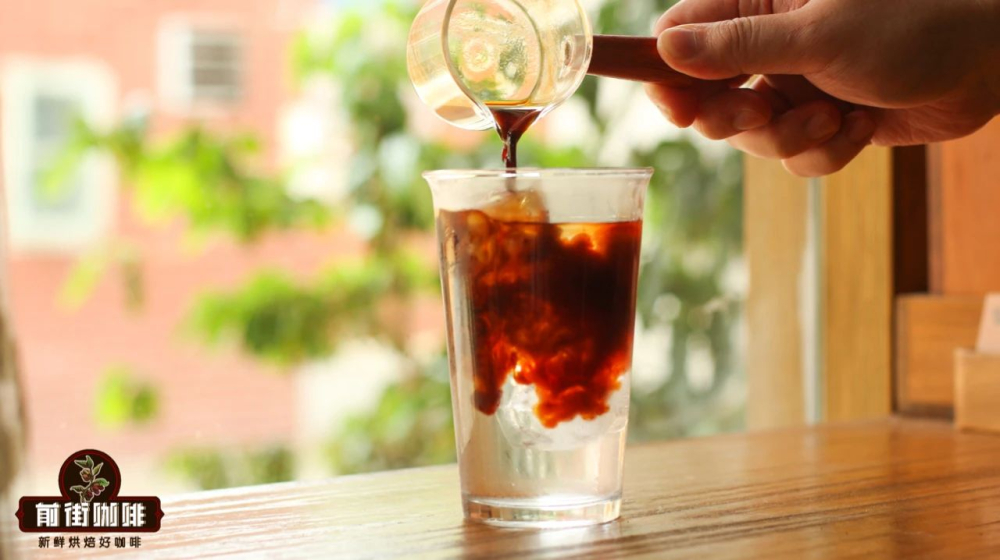
Americano requires no sugar or milk—just diluting espresso with a certain ratio of water—so it also belongs to the category of black coffee (plain coffee) that is widely loved.
When producing hot Americano, Front Street uses a 1:4.5 ratio. At this ratio, the hot Americano better highlights the whisky, vanilla, and chocolate flavors of the Warm Sun Blend while retaining a rich mouthfeel.
When producing iced Americano, considering the lasting power of the chill and the state after ice, water, and coffee merge, Front Street chose larger ice cubes (25g each) and finally produced it at a ratio of 1:2.5:3, i.e., espresso liquid : ice : water. This way, the coffee won't be uncomfortably strong at first sip, the ice melts more slowly, and it won't become too diluted.
The above content is compiled by CoffeeHunters, a coffee news website.


