







Why Does Mandheling Need a Deep Roast?
Mandheling and espresso are not the same category. Mandheling is a single-origin coffee from Sumatra, known for a full body, moderate acidity and a bitterness balanced by noticeable sweetness. Espresso is a brewing method and a base for milk drinks like lattes and cappuccinos. In coffee, acidity peaks partway through roasting and then fades, while bitterness keeps rising as the roast turns darker.
To get Mandheling's traditional full-bodied mouthfeel, roasters usually choose a medium-dark to deep roast, so the bitterness arrives along with the body. The beans go through Sumatra's wet-hulling process, which shapes that heavy, earthy character. Comparing golden mandheling coffee with an espresso blend shows the split between the single-origin lineage and the espresso lineage, since one is drunk for its own flavor and the other often carries milk.
Many people, when first encountering coffee, often equate it with the bitter, burnt taste of "dishwater." In reality, the world of coffee is far richer than that. Mandheling and espresso belong to different categories: the former is a typical single-origin coffee known for its rich, full-bodied intensity; the latter uses Espresso as its base and gives rise to fancy drinks like lattes and cappuccinos. This article will sort out the differences and characteristics of the two, explain where Mandheling's bitterness comes from, and introduce the Sumatra producing region, the wet-hulling process, as well as the flavors and brewing suggestions for two Mandheling beans from Front Street Coffee, helping coffee lovers more clearly understand the two lineages of single-origin and espresso.
Many people just stepping into the world of coffee have a first impression that stops at the burnt, bitter "dishwater" stage, but the truth is not that simple. Let's talk below about exactly what differences exist between Mandheling coffee and espresso.
Mandheling coffee and espresso do not belong to the same category at all; Mandheling is a single-origin coffee.
【Single-Origin Coffee】
This refers to coffee made by grinding and brewing beans from only one producing region, usually without adding milk or sugar when drinking, in pursuit of pure flavor. Mandheling is similar to Blue Mountain in that both are famous for being "full-bodied." Its flavor expression is quite intense, combining aroma, bitterness, and body, with a hint of sweetness. The mouthfeel is plump and solid, and the acidity is pleasant. The aroma is fragrant, the acidity moderate, the sweetness ample, and it is thought-provoking; it is suitable for deep roasting, which can release a rich aroma. Mandheling has always used its unique bitterness to set off its unique sweetness.
However, in order to highlight Mandheling's traditional full-bodied mouthfeel, a relatively dark roast level is usually chosen during roasting. The acidity, sweetness, and bitterness in coffee beans change accordingly with the roast level. Acidity peaks at a certain stage of roasting, then weakens as roasting continues darker; bitterness, meanwhile, keeps rising as the roast level deepens. To obtain a full-bodied mouthfeel, Mandheling coffee beans generally use a medium-dark roast, and that bitterness naturally appears along with it.
【Espresso Coffee】
The core of espresso coffee lies in Espresso, which is also the foundation of the espresso system. The production method uses extremely high pressure and near-boiling hot water to instantly push the coffee liquid through a fine layer of coffee grounds. All milk coffees or fancy coffees use Espresso as their base, so Espresso is the key to judging the quality of a cup of coffee. Types include cappuccino, macchiato, latte, ristretto, and more.
Influenced by the extraction principle, espresso liquid is very thick and aromatic, but its flavor is too concentrated; the first things sensed are acidity and bitterness, so many people new to coffee unconsciously frown when drinking espresso. In fact, after adding liquids such as milk or water to dilute it, the flavors of espresso can unfold in layers.
According to factors such as the ingredients and proportions of the espresso liquid and the added liquid, espresso coffee is further divided into Americano, latte, macchiato, cappuccino, and so on.
What is Mandheling coffee?
When Mandheling coffee is mentioned, many people today first think of pour-over. Mandheling comes from the Sumatra producing region and is planted with Arabica varieties. There are two places that produce Mandheling: one is Lake Toba in northern Sumatra, and the other is Lake Tawar in Aceh. Traditional Indonesian Mandheling mainly comes from the Lake Toba area, the world's largest volcanic lake, a high mountain lake at an average altitude of about 900 meters. The producing region is rainy and foggy year-round, with abundant moisture and swirling clouds and mist, which makes the Mandheling produced there of superior quality. The Lintong producing region at an altitude of 1,300 meters is the main Mandheling producing area, cultivated by the Mandailing and Batak peoples, while Mandheling from Lake Tawar is cultivated by the Gayo people.
The name Mandheling coffee comes from a double linguistic misunderstanding, and that is how the term "Mandheling" came to be. Thanks to its fragrant, rich, and full-bodied qualities, Mandheling became widely popular in Japan. Early definitions of top-grade coffee mostly followed Japanese standards, and Mandheling rose to fame because of this as well.
On Front Street Coffee's bean list, there are two Mandheling coffee beans to choose from: one is Lintong Mandheling from the daily drinking series, and the other is PWN's Golden Mandheling.
Both Mandheling coffee beans use the wet-hulling process. The special feature of this processing method is that while the parchment beans are still in a semi-wet, semi-dry state, the parchment layer is directly removed, exposing the green coffee beans for drying. Coffee processed by wet hulling therefore carries some deep spice and herbal notes.
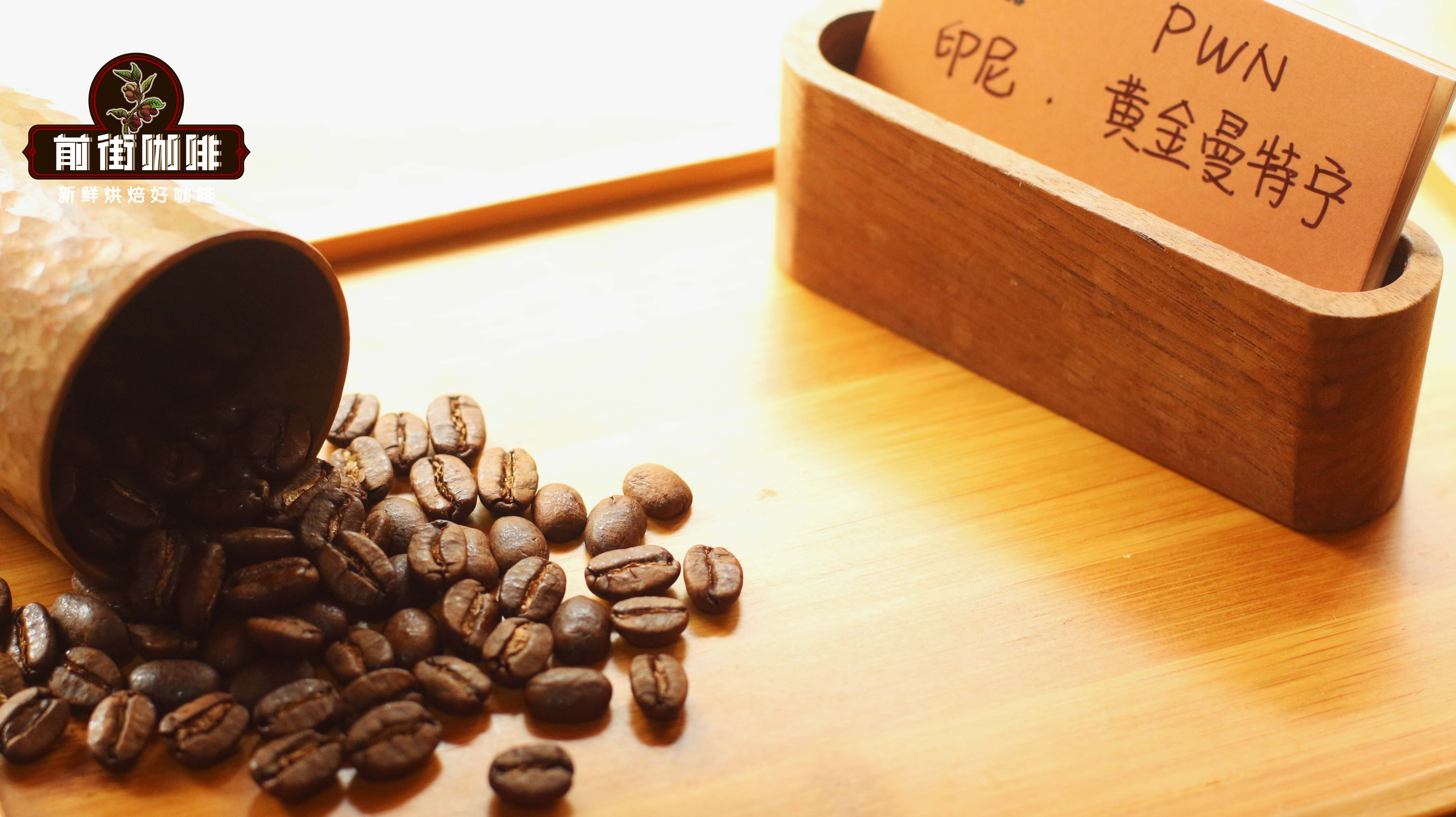
Front Street Coffee: Front Street PWN Golden Mandheling Coffee Beans
Producing region: Sumatra, Indonesia
Altitude: 1100m—1600m
Grade: G1, hand-sorted 3 times
Variety: Ateng
Processing method: wet-hulled
Front Street Coffee's Golden Mandheling comes from PWN. PWN implements extremely high standards when producing Golden Mandheling: G1 grade, 18 screen, three times hand-sorted, ensuring that every Front Street PWN Golden Mandheling coffee bean meets the standard. Because of this standard, PWN's Golden Mandheling is priced relatively high.
There are merchants on the market who select beans above 18 screen from G1-grade Golden Mandheling coffee beans and sell them. Some merchants, in order to make the appearance as close as possible to Front Street PWN Golden Mandheling, even really do three rounds of hand sorting, making the appearance infinitely close to PWN's Golden Mandheling. Front Street has also acquired several lots of Golden Mandheling. In cupping, Front Street's baristas can clearly identify Front Street PWN Golden Mandheling; its cleanliness in the mouth is difficult for other Golden Mandheling coffees to match.
The two Mandheling coffee beans sold by Front Street Coffee use a medium-dark roast on the premise of ensuring a full-bodied mouthfeel, a rich and striking aroma, and obvious sweetness. Since coffee's bitterness increases with the roast level, under such a full-bodied mouthfeel, bitterness is unavoidable.
Interestingly, in the world of coffee, bitterness is divided into two types. Good bitterness is bitterness that can be tasted on entry, like eating very pure dark chocolate, but the bitterness dissipates quickly, leaving a lasting, enticing aroma and sweet aftertaste. Bad bitterness is the astringent bitterness that sticks to the tongue and throat and does not fade for a long time. Most specialty coffees people encounter on the market fall into the good type of bitterness.
Because Mandheling coffee beans are roasted to a relatively dark level, Front Street Coffee's baristas use a KONO dripper, a water temperature of 88 degrees Celsius, and a coarser grind when brewing Mandheling.
Dripper: KONO dripper
Water temperature: 88 degrees Celsius
Dose: 15 grams
Coffee-to-water ratio: 1:15
Grind level: 70% passing through a Chinese standard No. 20 sieve
First pour 30 grams of water to completely wet the coffee grounds and bloom for 30 seconds, then pour from the center point in a thin stream and slowly circle to 125 grams. When the water level in the dripper drops until the coffee bed is about to be exposed, continue pouring in circles to 225 grams. The total extraction time is about 2 minutes.
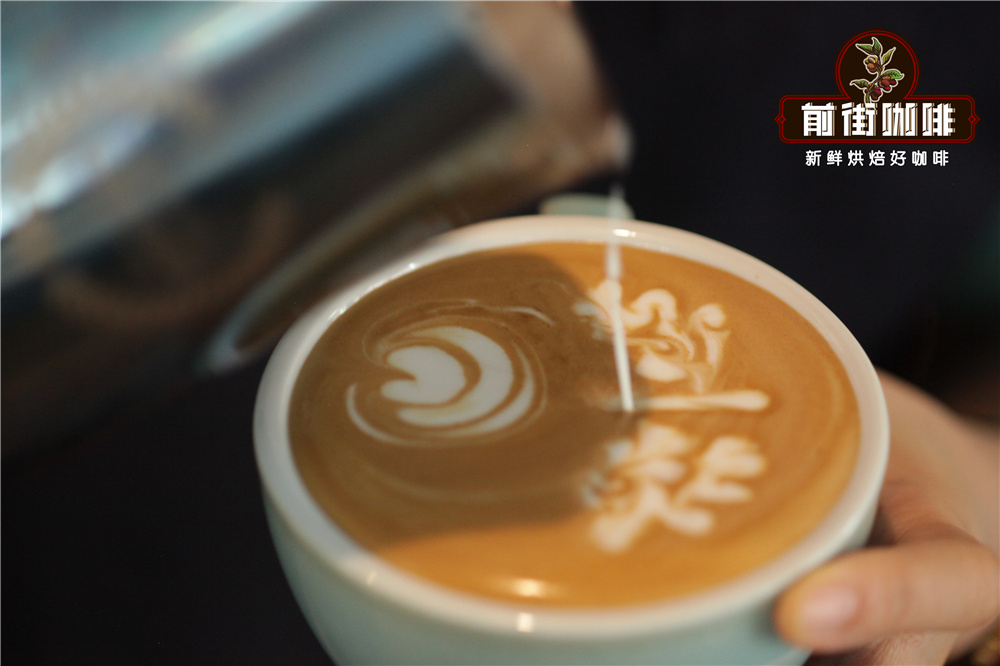
After brewing, Front Street's Front Street PWN Golden Mandheling coffee has a rich nutty and caramel aroma on entry, with the bitterness and aroma of dark chocolate, and a clean, full-bodied mouthfeel. As the temperature drops slightly, it carries mild herbal and spice notes, with obvious sweetness and a lasting finish.
For more coffee bean information, please follow Coffee Workshop (WeChat public account cafe_style) For professional coffee knowledge exchange, please add WeChat ID kaixinguoguo0925
The above content is compiled by CoffeeHunters, a coffee news website.


