







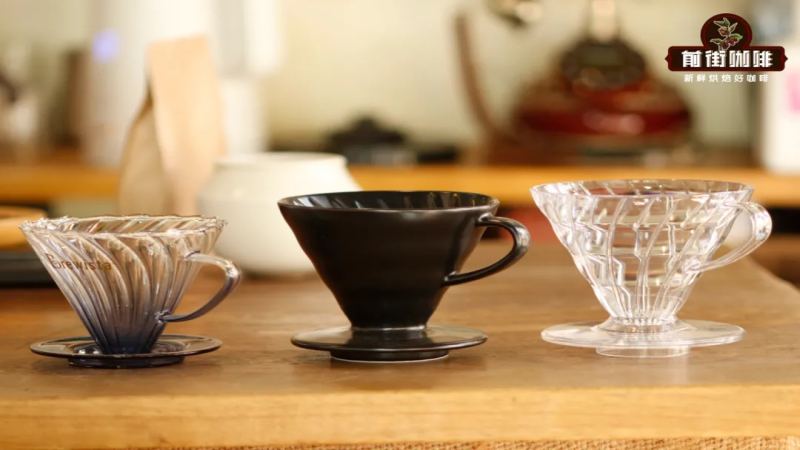
Which V60 Dripper Material Suits Your Coffee Brewing?
For V60 drippers, the material choice mainly changes two things: how well the cone holds heat and how fast water flows through the coffee bed. Ceramic retains heat strongly, but if the dripper is not preheated it can push extraction too far and flatten the cup. Resin loses heat quickly, which tends to leave more layered, brighter flavors. Glass sits between the two.
A comparative coffee brewing test used Ethiopian Yirgacheffe Gutingding washed beans at 15g dose, 91C water, medium-fine grind like fine granulated sugar, a 1:15 ratio, and two pours. Coffee bed and brewed coffee temperatures were logged with and without preheating. Match the material to roast level: darker roasts favor stable heat, lighter roasts often benefit from faster heat loss.
Faced with the dazzling array of V60 drippers on the market, beginners are often confused about how to choose between resin, glass, and ceramic materials. After receiving a reader's message, Front Street Coffee deliberately used Ethiopian Yirgacheffe Gutingding washed beans for comparative brewing, testing everything from heat retention and flow dynamics to the final flavor performance. This article fully presents the temperature change data of drippers in different materials under preheated and non-preheated conditions, analyzes why ceramic retains heat well but tends to over-extract while resin dissipates heat quickly yet offers better layering, and provides purchasing advice for different roast levels and taste preferences, helping coffee lovers find the one that suits them best.
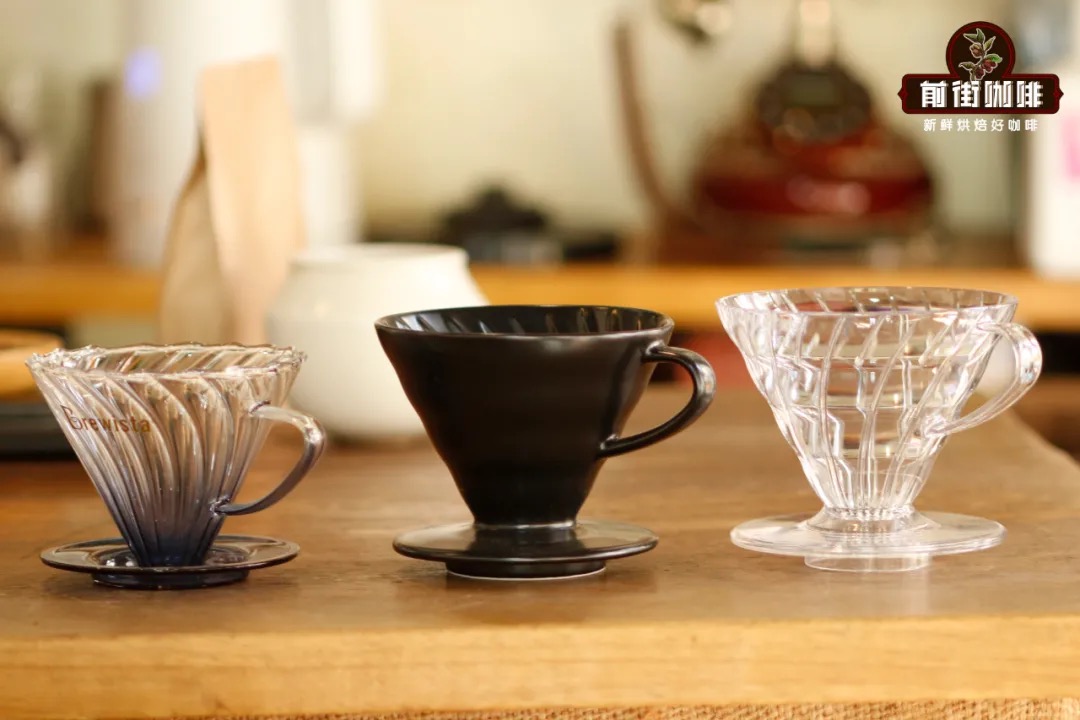
Front Street recently saw a reader's message on our official account backend: "I just want to buy a V60 dripper—why are there so many material options? And the price gap is so huge. Is it really true that different materials brew coffee that tastes different?"
What are the differences between drippers of different materials?
Currently, the mainstream V60 dripper materials on the market include resin, glass, and ceramic, and their core differences mainly lie in heat retention and flow dynamics. There are of course also portable aluminum versions and pricier brass versions, but these two are not market mainstream, so this article won't go into a detailed comparison of them.
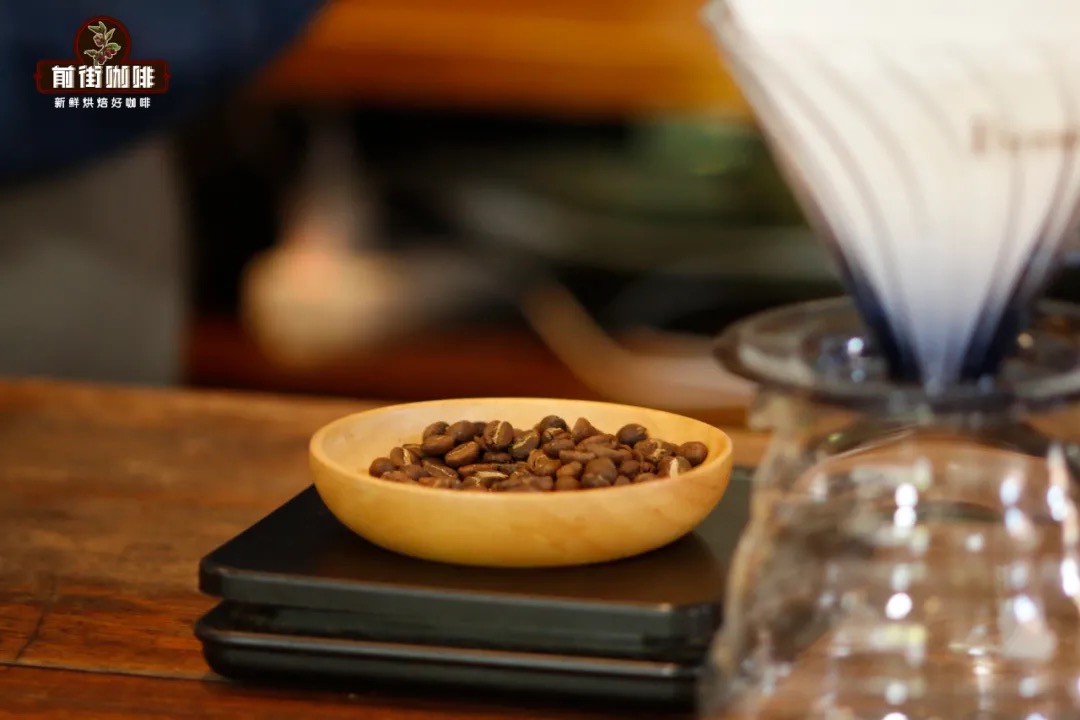
This time Front Street chose Ethiopian Yirgacheffe Gutingding washed coffee beans to test the brewing performance of different drippers. The parameters were set as: 15g dose, 91℃ water temperature, grind size referencing fine granulated sugar (medium-fine grind), 1:15 coffee-to-water ratio, and pouring in two stages.
"Heat Retention Comparison"
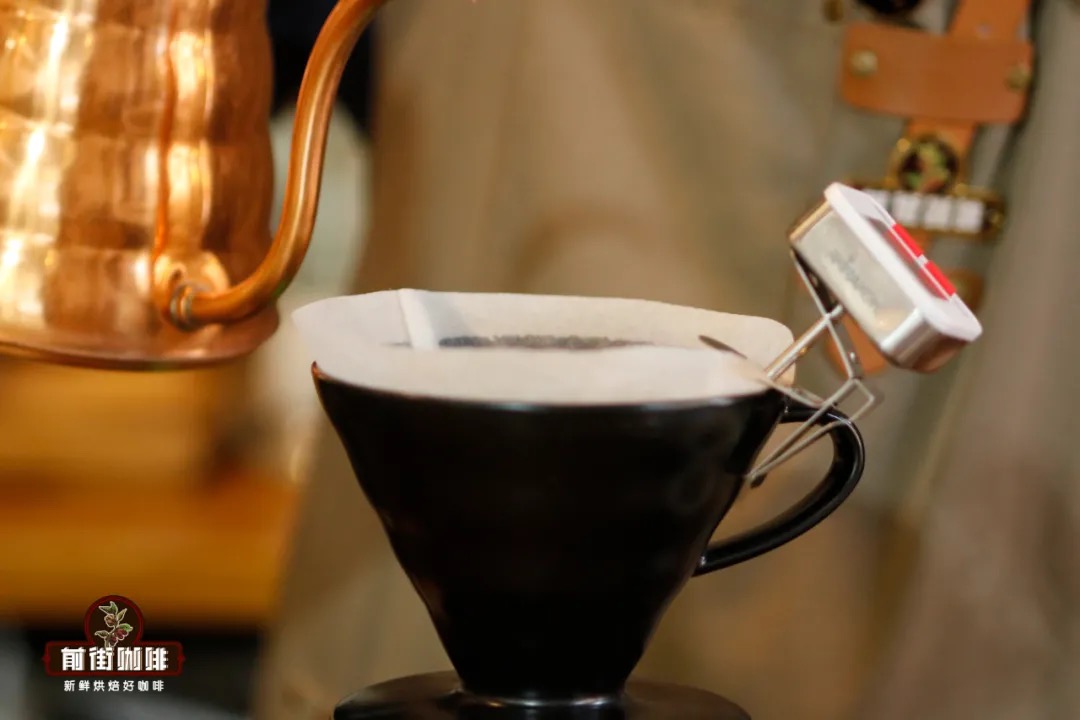
Front Street first tested the coffee bed temperature after adding coffee grounds, the coffee bed temperature during the blooming stage, the coffee bed temperature during pouring, and the actual temperature of the brewed coffee after extraction, under both non-preheated and fully preheated conditions.
Comparison without preheating the dripper
Comparison with even preheating of the dripper
From the two sets of data, it is clear that the ceramic dripper has the most outstanding heat retention during brewing, but there is an important precondition—the ceramic dripper must be preheated evenly! Although it has strong heat retention, because the material absorbs heat slowly and the walls are thicker, it requires more hot water to bring the entire dripper to a consistent temperature.
Glass, whether preheated or not, performs slightly better than resin in maintaining a stable temperature, keeping the coffee temperature steady throughout the entire extraction stage. It does not heat up as slowly as ceramic, nor does its temperature climb as quickly as resin.
Resin ranks last among the three materials in heat retention, and it is quite "strong-willed"—whether you preheat it or not, the coffee bed temperature does not fluctuate much during extraction.
So if ceramic retains heat so well, does the coffee it brews necessarily taste better? The answer is not necessarily!
"Coffee Flavor Comparison"
In terms of flavor performance, Front Street believes that coffee brewed with resin and glass drippers has richer layering, while ceramic drippers produce a fuller body but with a slightly grassy note in the finish.
Different flavor compounds in coffee are released at different temperature ranges. Resin and glass dissipate heat faster, so during brewing the coffee bed temperature shows a wave-like pattern—rising during pouring, falling when pouring stops, and rising again with the next pour. Ceramic, by contrast, has much smaller temperature fluctuations, so the coffee is always extracted at a relatively high temperature. In addition, the ceramic dripper's flow rate is slower than resin and glass, so the flavor is fuller, but slight over-extraction may also occur.
"Flow Dynamics Comparison"
Although the walls of all three drippers use a curved spiral rib structure extending from the rim to the outlet hole to maximize help with coffee grounds degassing, Front Street found through observation and touch that the ribs of resin and glass drippers feel more pronounced than those of ceramic drippers. After the filter paper is wetted, a larger degassing gap can form between the paper and the wall, thereby increasing flow rate. These two are better suited for brewing coffee beans with rich layering.
When not wetted | During blooming | During pouring | Extraction complete | |
Resin material | 28.6℃ | 80.4℃ | 86.2℃ | 83.2℃ |
Glass material | 29.1℃ | 83.5℃ | 86.3℃ | 83.3℃ |
Ceramic material | 44.3℃ | 83.7℃ | 87.5℃ | 87.2℃ |
The ribs of the ceramic dripper feel smoother to the touch, and after the filter paper is placed and wetted, it more easily clings to the wall, narrowing the degassing channels, so the extraction speed is slightly slower than resin and glass. It is better suited for brewing coffee beans that pursue a full body or high richness.
So which material of coffee dripper should you actually get?
From a cost-effectiveness perspective, resin is undoubtedly the best—drop-resistant and durable, and completely sufficient for beginners. Glass and ceramic are relatively easier to break and more expensive, especially glass. If you usually like dark roasts or coffee beans with a full body, you can consider ceramic; if you value visual beauty more, glass would be a good choice.
The above content is compiled by CoffeeHunters, a coffee news website.


