








How Do You Use an American Coffee Machine for a Balanced Americano?
A cafe-style Americano is espresso plus hot water, and the espresso itself decides the final taste. A common starting plan is a 20 g dose yielding 40 g of liquid in 27 to 28 seconds, a brew ratio near 1:2, and a total time of 25 to 30 seconds. Adjust the grind and dose to fit the beans.
If the drink tastes sharp or sour, the usual causes are a light roast level or under-extraction. Moving to medium-dark roasted beans, or grinding finer to slow the flow, often balances the cup. On a hot Americano, the crema comes from carbon dioxide and oils released under pressure and trapped as the liquid leaves the machine.
Americano is one of the most common drinks in coffee shops. It seems to require only espresso and water, but in reality it is a great test of a barista's extraction skills. This article begins with the two major categories of Americano and focuses on the coffee shop version, including the recommended extraction parameters for Front Street Coffee's classic blend (20 g dose extracting 40 g liquid, 27 to 28 seconds), a brew ratio controlled at 1:2, and a time of 25 to 30 seconds. It also analyzes the two common reasons Americano tastes sour—a lighter roast level or under-extraction—and offers solutions such as switching to medium-dark roasted beans or making the grind finer. Finally, it explains how the layer of crema forms on the surface of a hot Americano, helping enthusiasts fully master the key points of making a delicious Americano.

Among the many coffee drinks, Americano is extremely popular. It can usually be divided into two categories: one found in cafés, belonging to the espresso system, made by adding an appropriate amount of water to espresso; the other is more often seen at home or in offices, made with a drip coffee machine, and has a relatively light taste. However, as cafés spring up everywhere, more and more people have come to prefer the flavor of the Americano served in cafés, so this time Front Street Coffee will talk about how to make the café version of Americano.
Americano can be said to be the lowest-barrier drink in the espresso family, because its composition is very pure—espresso plus water, and if it is an iced Americano, then ice cubes are added as well. But do not take it lightly just because the steps are simple; the more basic something is, the more it reveals skill, and Americano is exactly the espresso drink that tests a barista's espresso extraction level.
Back to the point: as mentioned earlier, Americano is simple to make, nothing more than water and espresso, and operationally you just pour the espresso into the water. The key lies in the espresso itself, where the extraction plan needs to be set according to the characteristics of the beans used, and different beans correspond to different parameters. Taking the Front Street Coffee Classic Blend espresso blend we use ourselves as an example, we adopt an extraction plan of 20 g coffee grounds, extracting 40 g coffee liquid, taking 27 to 28 seconds.
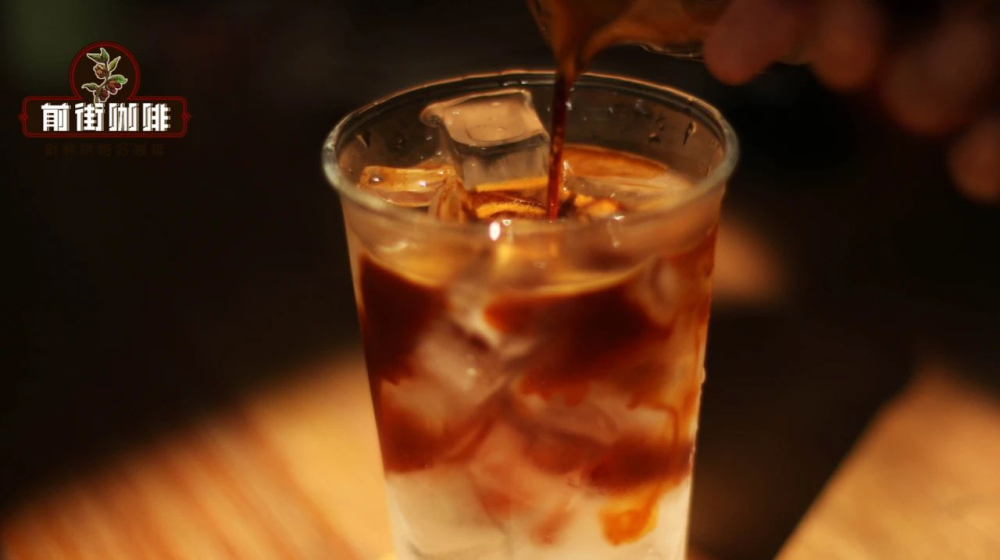
Some friends have told Front Street Coffee that the Americano they make tastes too sour, which usually has two causes. The first is that the coffee beans chosen have a lighter roast level. In this case, you can switch to medium-dark roasted beans such as Front Street Coffee Commercial Blend or Front Street Coffee Specialty Blend, which are mainly caramel and nut in tone.
On the other hand, coffee tasting sour is also related to the extraction process. Generally speaking, we use a 1:2 coffee-to-water ratio and control the time between 25 and 30 seconds. If the extraction time is less than 20 seconds, it means the contact time between the coffee grounds and water is too short, and under-extraction is very likely, making the coffee not only prominently sour but also noticeably lacking in aroma. The corresponding solution is to make the grind finer or appropriately increase the dose.
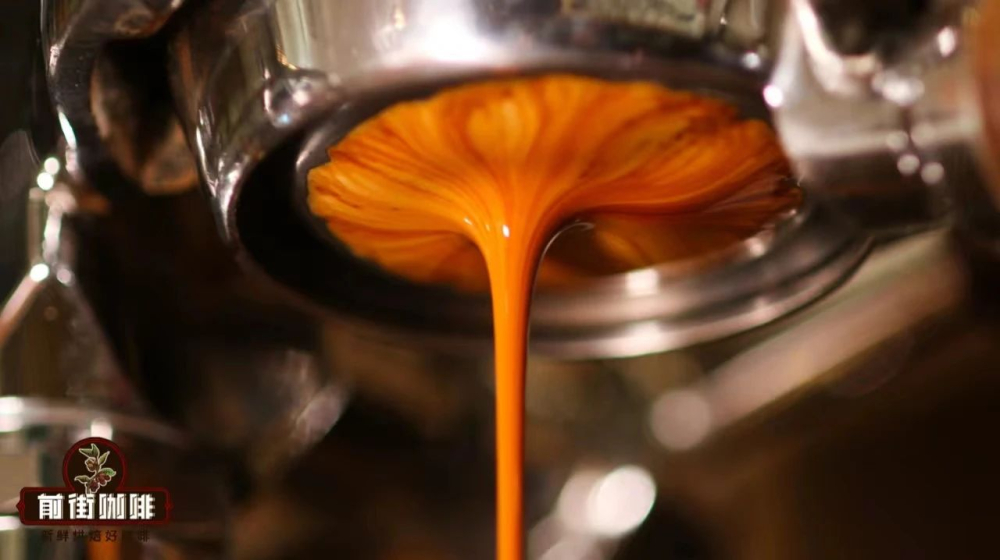
When making a hot Americano, you will notice a layer of foam floating on the surface of the coffee liquid. This is what everyone often calls crema. This crema comes from the process of making espresso. We know that espresso consists of three parts: the heart, the body, and the crema. The mechanism for crema production is as follows: under the high pressure of the coffee machine, carbon dioxide is dissolved into the liquid; when extraction ends and the pressure returns to normal, the carbon dioxide in the coffee liquid begins to escape into the air, and on the way it encounters and is wrapped by the fats in the coffee, thus forming crema.

The above content is compiled by CoffeeHunters, a coffee news website.


