







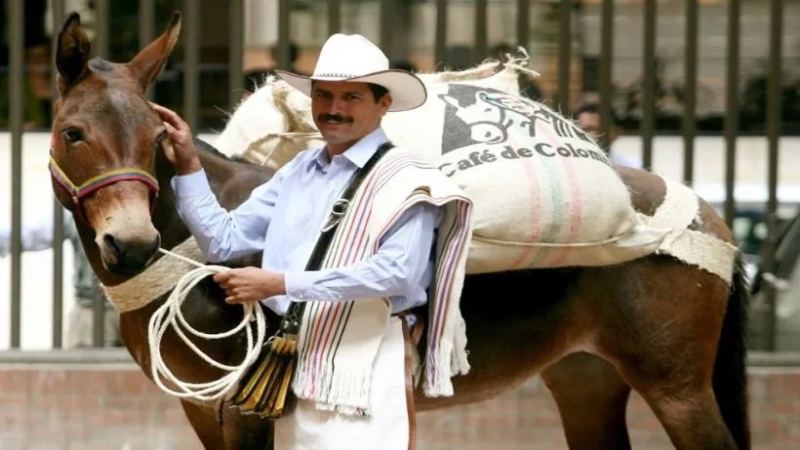
What does a Colombian coffee farm have to do with Juan Valdez?
Colombian coffee's most famous symbol, Juan Valdez, is not a real person. He was created in 1959 by the National Federation of Coffee Growers of Colombia to represent the country's roughly 550,000 smallholder coffee farm families. His mule, Conchita, reflects the real use of mules to carry coffee down steep Andean slopes.
Colombia's growing regions spread across three Andean ranges that split the country like a map of rivers, which is why the coffee belt map matters for understanding transport and terroir. Even with modern roads, the terrain keeps mules useful. The article also covers the triangle logo and how Colombian beans perform in blends.
Colombian coffee occupies an important place in the global specialty coffee landscape, and when it comes to Colombia, many people first think of the "Uncle Juan" leading a mule. This fictional character, launched by the National Federation of Coffee Growers of Colombia (FNC) in 1959, carries behind it the real stories of more than half a million coffee farmers and the rugged terroir of the Andes. This article will walk you through the origins of Uncle Juan and his mule Conchita, the meaning of the Colombian coffee triangle logo, and the aromatic performance of Colombian coffee in blends. At the same time, we will also recommend a Colombian and Brazilian blend from Front Street Coffee for coffee lovers to reference and taste.
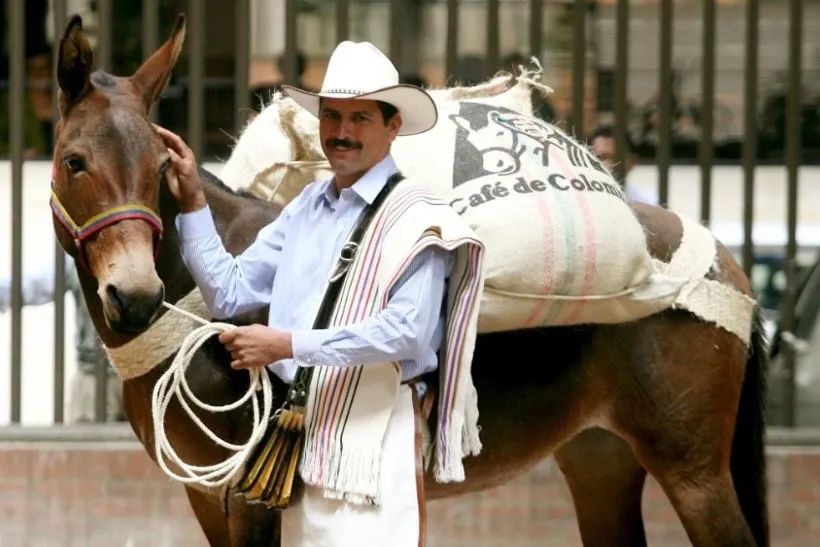
When it comes to Colombian coffee, many enthusiasts picture a coffee farmer leading a mule—Juan Valdez. He is probably the most recognizable symbol of a coffee grower in history; you may have seen him in television commercials or even in movies, and coffee friends in China affectionately call him "Uncle Juan."
Who exactly is Uncle Juan?
In fact, "Uncle Juan" is a spokesperson image for Colombian coffee created and promoted by the National Federation of Coffee Growers of Colombia (FNC) in 1959. In other words, this uncle is not a real person.
The inspiration for Uncle Juan's character comes from the community of Colombian coffee growers. Colombia currently has about 550,000 coffee farmers, each running small-scale farms. If family members and those indirectly or directly involved in the coffee supply chain are included, millions of people in Colombia depend on coffee for their livelihoods.
When talking about Uncle Juan, one cannot fail to mention the mule that is always by his side, carrying sacks of Colombian coffee—"Conchita."
In Colombia, coffee farmers really do use mules to transport coffee down from the mountains. Colombia's main coffee-growing belt is distributed across three branches of the Andes that run like the character "川," with rugged mountain roads and inconvenient transportation, so mules have become a common transport partner for coffee farmers. Even today, when transportation and technology are quite advanced, this unique terrain still gives mules a role to play.
From a certain perspective, the image of Juan Valdez—with a mule beside him, a thick beard, work clothes, a traditional Colombian poncho over his shoulder, and a wide-brimmed straw hat called an "Aguadeno"—condenses the collective portrait of coffee growers at large. Although he is modeled on the typical male coffee farmer of the Paisa region in central Colombia, the image actually represents every coffee grower in the country.
The historical origins of Uncle Juan
The FNC was founded in 1927 and has long been committed to improving the quality of Colombian coffee and promoting it in the market. After thirty years of effort, the quality of Colombian coffee had gained recognition from many large coffee brands worldwide. But at the time, consumers did not truly know what Colombian coffee itself tasted like, because most Colombian coffee back then was used in blends.
If you want to experience the flavor of Colombian coffee, you can try the specialty blend from Front Street Coffee. This recipe combines two producing regions, Colombia Huila and Brazil Cerrado; made into espresso, it presents a comfortable bittersweet profile, is very smooth on the palate, and carries a faint grassy aroma, with a lightly bitter note within its fresh fragrance, pleasant sweet smoothness, and a comforting finish.
Coffee beans from Colombia's Huila region have a pleasing acidity, a rich aroma, moderate acidity, and abundant sweetness that is thought-provoking; coffee beans from Brazil's Cerrado region bring a comfortable bittersweet taste and are extremely smooth on entry. This specialty blend is suitable for all kinds of specialty coffee shops.
At the time, the U.S. market consumed 77% of Colombia's coffee production, but only about 4% of American consumers knew that Colombia was a coffee-producing country. To change this perception gap and further boost Colombian coffee consumption in the U.S. market, the FNC brought in a New York marketing agency (DDB) in 1958 to plan an advertising campaign. The agency suggested creating a symbolic representative figure for the community of Colombian coffee growers to serve as the promotional vehicle.
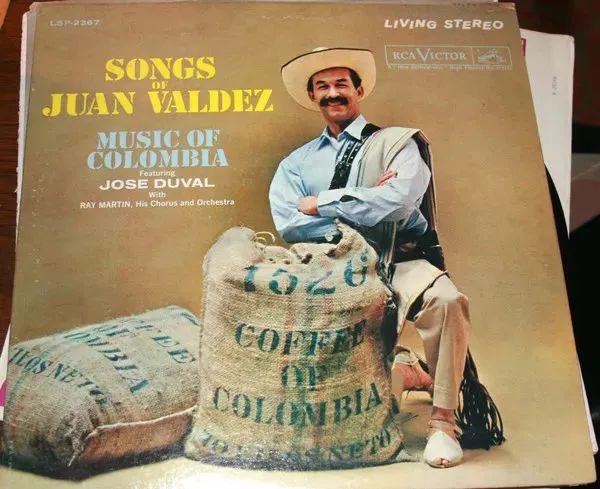
A year later, the charming and far-reaching "Uncle Juan" and his mule "Conchita" were officially introduced, with the goal of shaping Colombian coffee as a symbol of single-origin product and high-quality coffee. It is said that within five months after the introduction of Uncle Juan's image, the number of Colombian coffee consumers increased by nearly 300%. This marketing campaign was highly successful and was once rated among the top five most recognizable figures in the world.
The birth of Uncle Juan gave consumers a more concrete understanding of Colombian coffee. They could see coffee growers planting, picking, and processing on the Andes on television, and gradually began to recognize and pay attention to the meaning of origin as a promise of quality. Just as wines from certain regions or countries are appreciated, coffee also began to have the opportunity to shine.
The Colombian coffee triangle logo and Uncle Juan
The now-familiar Colombian coffee triangle logo was born in the early 1980s. At that time, in order to create a more unified consensus about Colombian coffee among global consumers and ensure that consumers could drink authentic Colombian coffee, the FNC began establishing ingredient branding partnerships with coffee roasters to ensure from the source that 100% Colombian coffee raw materials were used. This is the "100% Colombian Coffee Program" (100% Café de Colombia) that continues to this day.
In 1981, designed by DDB, the logo's main body consists of Uncle Juan and his mule Conchita, with a triangle symbolizing the Andes in the background and "100% Café de Colombia" written below. The appearance of this seal-like mark allowed Colombian coffee to emerge as a single-origin coffee on the world coffee map, building brand recognition and a sense of belonging for consumers, and conveying more clearly the message of where the coffee comes from.
Today's Uncle Juan is no longer just a representative image. The namesake café chain Juan Valdez Cafe, founded in 2002, has hundreds of outlets in more than a dozen countries around the world. Walking into the store, you can see traditional Colombian floor tiles, vertical gardens reminiscent of the abundant vegetation of coffee-producing regions, and wooden tables made from recycled coffee trees. Of course, there are also the familiar burlap export sacks.
After reading this, have you also become curious about "Uncle Juan"? If you have the chance, why not go and taste the unique charm of Colombian coffee.
The above content is compiled by CoffeeHunters, a coffee news website.


