







What does arabica mean for Jamaican Blue Mountain coffee?
Jamaican Blue Mountain coffee earns its reputation from the Blue Mountain region's terroir, the Typica variety brought to Jamaica, and a grading system set by the Jamaica Coffee Industry Board based on altitude and screen size. The article traces that history and the Clifton Mount Estate business story.
For brewing, the piece gives a pour-over plan for Blue Mountain No. 1: dripper choice, water temperature, coffee-to-water ratio, and pouring rhythm. Understanding what arabica mean and its arabica meaning helps explain the bean's balanced acidity, sweetness, and bitterness with a creamy, silky texture.
In the specialty coffee wave, Geisha is currently all the rage, but when it comes to historical status and public recognition, Jamaican Blue Mountain is always a name that cannot be avoided. This coffee, once repeatedly mentioned in Hong Kong and Taiwan dramas, what exactly made it the king in the hearts of a generation? This article starts with the terroir conditions of the Blue Mountain region, sorts out the historical context of the Typica variety's introduction to Jamaica, explains in detail the grading system of the Jamaica Coffee Industry Board based on altitude and screen size, and introduces the business story of Clifton Mount Estate. Finally, Front Street Coffee will disclose the pour-over extraction plan for Blue Mountain No. 1, including the choice of dripper, water temperature, coffee-to-water ratio, and pouring rhythm, to help you recreate that classic flavor with balanced acidity, sweetness, and bitterness, and a creamy, silky texture.
Every industry has its own benchmark. Even as time passes and kings change hands, the glory once forged is enough to be praised for a long time. The coffee world is the same. If we speak of an overlord with both seniority and reputation, it is not the currently hot Geisha, but Jamaican Blue Mountain.
The phrase "even if you haven't drunk it, you must have heard of it" is enough to outline the weight of Jamaican Blue Mountain coffee in the public mind. At Front Street Coffee stores, we often meet customers who ask for Blue Mountain coffee as soon as they push the door open, and only after chatting in detail do we discover that they have never had pour-over before. Interestingly, many people's first impression of this bean comes from a line casually spoken by urban white-collar workers in Hong Kong, Macau, and Taiwan film and television dramas.
In the early years, Jamaican Blue Mountain coffee beans were extremely expensive. Even so, a large number of products under the Blue Mountain banner still appeared on the market. After many people actually drank it, they became confused instead: the flavor did not seem amazing, so what story pushed Blue Mountain coffee beans onto the altar?
Consistent with the naming logic of many coffee beans, Yirgacheffe is named after the Yirgacheffe region in Ethiopia, and the origin of Blue Mountain coffee beans points to the Blue Mountain region in Jamaica. This region is located in the Blue Mountains in eastern Jamaica, at 25 degrees north latitude, which happens to fall within the coffee-growing belt.
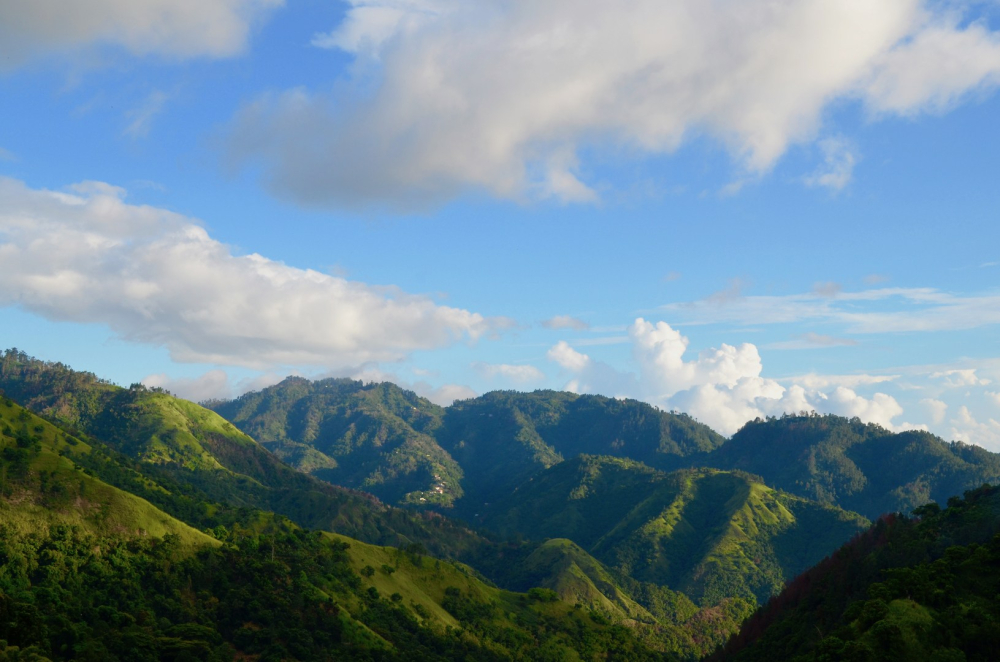
The highest peak of Jamaica's Blue Mountains exceeds 2,200 meters. The suitable coffee-growing areas have fertile soil, delivering sufficient nutrients to the coffee trees; the mountains are shrouded in clouds and mist all year round, with high humidity and clean air, plus a marked temperature difference between day and night, together creating an ideal growing environment. The Blue Mountains are surrounded by the Caribbean Sea. On clear days, sunlight shines directly on the azure sea, and the brilliant blue light reflects back and covers the entire mountain range, which is how the name Blue Mountain came about.
The origin of coffee is Ethiopia, while Jamaica's history of growing coffee is inseparable from the process of Europeans opening up colonies in the Americas. Around 1728, then Jamaican Governor Sir Nicholas Lawes brought the descendants of European mother plants (Typica variety) from Martinique back to Jamaica and planted them at the foot of the mountains in the St. Andrew area outside Kingston. After that, coffee cultivation gradually expanded to many places in the Blue Mountains.
To this day, the variety of Jamaican Blue Mountain coffee is still the ancient-bloodline Arabica—Typica. Typica coffee trees have shorter spacing between branches, wavy leaves, and red-bronze top leaves. Typica has elegant flavor, soft fruit acidity, and a delicate mouthfeel, which also explains the varietal foundation for Blue Mountain coffee's outstanding quality.
However, not all coffee beans produced in Jamaica can be called Blue Mountain. The Jamaican authorities attach great importance to the coffee industry and have established strict and detailed standards for green bean grading. According to the regulations of the Jamaica Coffee Industry Board (CIB), grading first looks at cultivation altitude.
Jamaican Blue Mountain coffee requires a cultivation altitude above 1,000 meters; Jamaican Mountain coffee corresponds to an altitude between 500 and 1,000 meters; Jamaican Prime coffee is usually grown at an altitude below 500 meters.
Next, grading is based on the particle size of the green coffee beans, commonly known as screen size.
No. 1: screen size reaches 17/18, defect rate below 2%
No. 2: screen size reaches 16, defect rate below 2%
No. 3: screen size reaches 15, defect rate below 2%
PB: single round bean with screen size reaching 10, defect rate below 2%. When a coffee cherry contains only one seed, it is called a PB round bean. The yield is extremely rare, so it is listed as a separate grade.
Overall, Jamaican Blue Mountain No. 1 coffee beans have the highest grade, and the high standard is directly reflected in the price. The market is mixed with good and bad, and some merchants label products as "Blue Mountain flavor" or "Blue Mountain blend," causing consumers unfamiliar with Jamaican Blue Mountain coffee to mistakenly think they have bought authentic Blue Mountain beans.
To judge whether the Blue Mountain coffee beans in your hands really come from Jamaica's Blue Mountains is actually not difficult. You can start from two aspects: the appearance and taste of the coffee beans, and the supporting documents.
In addition, Blue Mountain coffee beans undergo strict screening. Even after roasting, each bean's appearance is relatively uniform, without uneven sizes. The flavor characteristic of Blue Mountain coffee lies in the balance of acidity, sweetness, and bitterness, with no single taste particularly prominent or missing, a rich and lingering aroma, and a mellow mouthfeel.
Jamaican Blue Mountain coffee is the only coffee in the world packaged and transported in oak barrels. Every batch of exported Blue Mountain coffee must be certified by the Jamaica Coffee Industry Board and hold the corresponding certificate. Each batch of exported beans undergoes special supervision and batch sampling to ensure quality.
Friends who visit Front Street Coffee stores can see a certificate of origin hanging on the wall, and Jamaican Blue Mountain coffee green bean barrels placed beside the bean shelf. The barrel is printed with a green frog logo, which is the mark of "Rainforest Alliance Certified," meaning that the area where the coffee beans are grown pays attention to ecological environmental protection.
Front Street Coffee's Jamaican Blue Mountain No. 1 coffee beans come from Clifton Mount Estate. The estate has been growing and producing coffee since the 1790s and is one of the oldest coffee plantations in the area. Clifton Mount Estate and the surrounding cottages originally belonged to a gentleman who had lost his beloved wife. To avoid being reminded of her by the surroundings, he opened the property to tourists on a weekly rental basis, allowing more people to appreciate the vibrant, majestic, and undulating forest scenery here.
By the early twentieth century, Clifton Mount Estate had become one of the largest estates in Jamaica. Unfortunately, the gentleman eventually gave up managing the estate. In 1978, the Sharp family purchased Clifton Mount Estate. At the beginning of taking over, the estate was surrounded by dense shrubs, and wild coffee trees grew freely and vigorously in various areas.
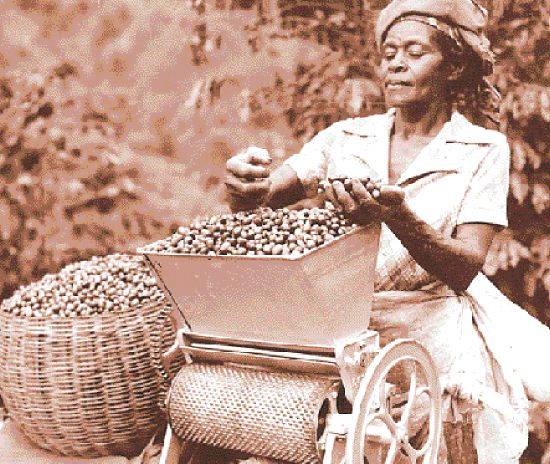
In 1984, Richard of the Sharp family resolved to become a coffee grower and began to carefully manage Clifton Mount Estate. Since 2003, Richard and his younger brother have visited coffee-producing regions around the world to learn relevant knowledge, improved the traditional Jamaican fully washed processing method, introduced high-end equipment, and built one of Jamaica's largest coffee processing plants—BMCP.
Clifton Mount Estate is strict in controlling green bean quality and once won the best award for the 2017/2018 Jamaican crop season, being rated as the estate producing the finest coffee beans.
Front Street Coffee has previously obtained several Blue Mountain No. 1 coffee beans from Jamaica's Blue Mountain region. After cupping comparison, it is believed that Clifton Mount Estate Blue Mountain No. 1 coffee beans can be regarded as one of the outstanding representatives.
Front Street Coffee's Jamaican Blue Mountain No. 1 coffee beans use a medium-dark roast to maximize the release of Blue Mountain coffee's rich and lingering aroma while also bringing a mellow and smooth mouthfeel.
Buying beans is easy. How to bring out the flavor of coffee beans to the fullest is a question many coffee lovers ask Front Street Coffee. Next, Front Street will explain the specific operations for producing Blue Mountain coffee.
Dripper: KONO
Water temperature: 88°C
Dose: 15 grams
Coffee-to-water ratio: 1:15
Grind size: 75% passing rate on China standard No. 20 sieve
First pour 30 grams of hot water and bloom for 30 seconds. Then pour from the center point in a thin stream and slowly circle to 125 grams. When the water level in the dripper drops to the point where the coffee bed is about to be exposed, continue circling and pouring to 225 grams. Total extraction time is about 2 minutes.
Front Street Coffee's Jamaican Blue Mountain No. 1 coffee has a rich nutty note on entry, a creamy, thick, and silky mouthfeel, a finish like dark chocolate, and balanced acidity, sweetness, and bitterness.
For more coffee bean information, please follow Coffee Workshop (WeChat public account cafe_style)
For professional coffee knowledge exchange, please add WeChat ID kaixinguoguo0925
The above content is compiled by CoffeeHunters, a coffee news website.


