








What Makes the Gedeb Coffee Farm Cooperative Distinct?
Gedeb is a small village in the Worka region southeast of Yirgacheffe, Ethiopia, and the name on the bean list comes from its coffee farm cooperative. Roughly 300 farmer members broke away from the larger Worka Cooperative in 2012 to form their own group, keeping the traditional washed and natural processing methods of the area.
Front Street Coffee selected the cooperative's washed lots for their typical Yirgacheffe character: floral aroma, citrus acidity, and a green tea-like finish. The beans are often described as a delicate coffee, and they suit a pour-over recipe tuned to protect that lighter, tea-like structure rather than a heavy brew.
On Front Street Coffee's bean list, the name "Gedeb" always sparks curiosity among many coffee lovers—it sounds playful and cute, but it's actually a real village in the Worka region of Yirgacheffe, Ethiopia. The coffee farmers of Gedeb independently formed a cooperative in 2012. This origin, known as "the last pure land of Yirgacheffe," is famous for its traditional washed and natural processing methods. Front Street Coffee chose the washed beans from the Gedeb cooperative, precisely for their classic Yirgacheffe character: rich floral aromas, citrus acidity, and a green tea-like finish. This article will walk you through Gedeb's background, its washed processing flow, its cup profile, and Front Street Coffee's recommended pour-over brewing recipe.
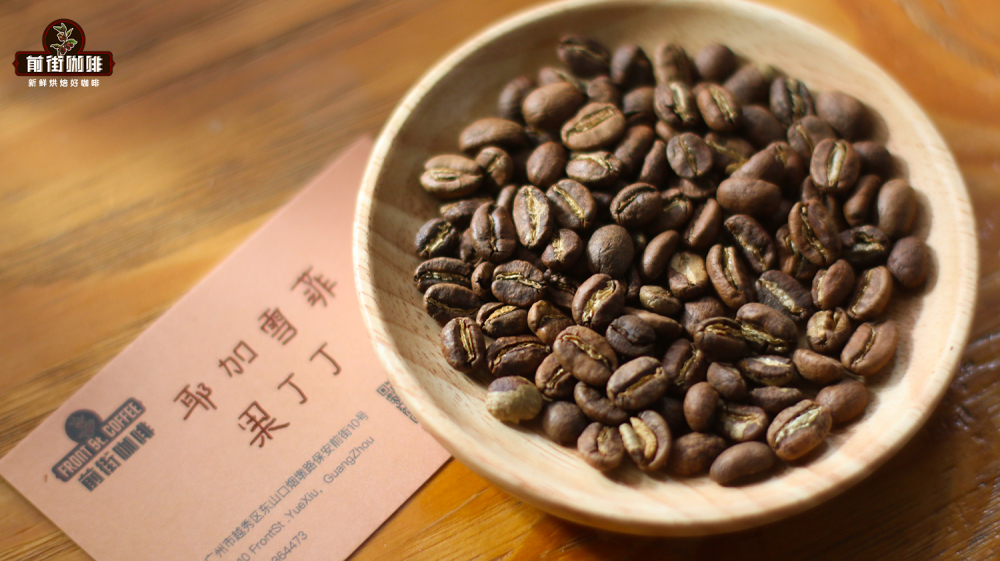
Many customers walking into Front Street Coffee to order have their eyes immediately caught by the words "Gedeb" on the bean list. The name sounds so appealing that they eagerly ask the staff about the origins of this bean.
What exactly is Gedeb?
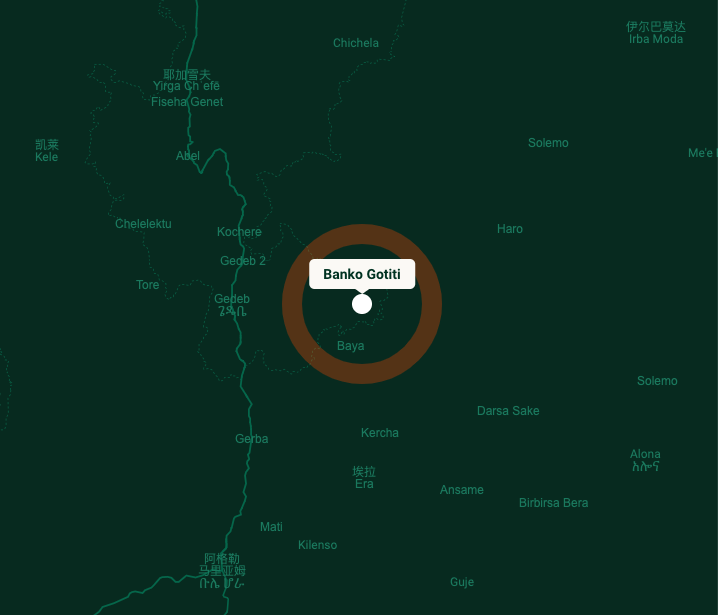
Gedeb is actually a small village in Ethiopia, located in the Worka region southeast of Yirgacheffe. The coffee growers in the village banded together to form an agricultural cooperative, originally under the Worka Cooperative within the Yirgacheffe Coffee Farmers' Cooperative Union (YCFCU). Later, as the market's demand for traceability in green coffee continued to rise, coffee hunters around the world gradually uncovered one "single origin" after another.
In 2012, Gedeb, with approximately 300 farmer members, formally broke away from its parent organization and established the "Gedeb Cooperative." Among the many village areas that gained independence, Gedeb was one of the earliest. Many smallholder farmers were themselves former members of the Worka Cooperative, with quite mature coffee cultivation and processing skills. The Gedeb Cooperative is hailed as the last pure land of Yirgacheffe, so it still follows traditional routes in green coffee processing, using both washed and natural methods.
Front Street Coffee chose the washed coffee beans from the Gedeb Cooperative because the flavor of these beans is highly typical of Yirgacheffe, while also displaying fuller floral aromas, citrus acidity, and a green tea-like resonance.
Ethiopia is one of the most watched coffee-producing countries in the world. As the birthplace of coffee, it preserves an extraordinarily vast resource of coffee varieties, truly a treasure trove of coffee genetics. However, variety identification is both time-consuming and labor-intensive. Moreover, since local farming is mostly smallholder-based, harvests are often processed in mixed lots, making it difficult to distinguish varieties one by one. As a result, Ethiopian coffee beans for export are mostly lumped together under the term "heirloom varieties."
In Ethiopia, the most iconic coffee beans are the washed beans from Yirgacheffe. The country originally relied mainly on natural processing, but the common natural methods were relatively rough and prone to defect flavors. So in the last century, the Yirgacheffe region introduced washed processing technology from the Americas, which made the coffee produced here famous worldwide.
The village of Gedeb originally had no dedicated processing plant, so harvested coffee cherries could only be transported to the nearby Worka village processing plant for washing. Later, coffee hunters conducted in-depth inspections of the region and determined that Gedeb village's coffee beans were of exceptional quality, so they specifically partnered with local coffee farmers to build a processing plant belonging to Gedeb village. Washed processing requires large amounts of water and depends on professional mechanical equipment, which individual farmers can hardly afford on their own. Therefore, coffee farmers all deliver their harvested cherries to the processing plant for centralized processing. The advantage of washed processing lies in its ability to stabilize coffee bean quality while clearly revealing the origin's fundamental flavors.
Steps of washed processing
Washed process: After coffee cherries are picked, they are first put into water, using buoyancy to remove underripe fruit; then the skin and pulp are removed with a pulper, and the beans rest in fermentation tanks for 18 to 36 hours while the mucilage layer breaks down. After fermentation, the parchment beans are scrubbed in channels for 30 to 60 minutes. Through specially designed channels and the force of water flow, low-density, poor-quality beans are separated out. Finally, the high-quality coffee beans are drained of water and spread flat on African raised beds to dry.
Because the skin, pulp, and most of the mucilage have already been removed before formal drying, the coffee bean's own aromas are presented more clearly, expressing citrus and lemon notes along with elegant floral aromas, with an overall bright and delicate flavor.
Unlike the era when "coffee is just bitter," light-roasted Yirgacheffe can be said to have opened a new chapter for fruity-acid coffee. Coffee is mainly bitter and strong because roasters roast the beans very dark, pushing the flavor toward nuts and dark chocolate. With the rise of the specialty coffee concept, in order to preserve more acidity, roasters only roast Yirgacheffe to an appropriate light level, allowing it to display pleasant fruity sweetness and acidity along with white floral aromas. Front Street Coffee believes that the greatest characteristic of Ethiopian coffee lies in its fruity acidity and floral aromas, and many coffee people praise it as a "fruit bomb." Since such explosive fragrance is to be highlighted, the roast level naturally cannot be too dark. Therefore, Front Street Coffee uses a medium-light roast to present the coffee's fruity profile.
Cup profile:
The dry aroma of the washed Gedeb Cooperative coffee gives off fresh passion fruit, citrus, and berry acidity. The wet aroma shows citrus and berries. On the palate, there is citrus acidity, accompanied by the sweetness of berries, almonds, and a tea-like sensation, with honey-like sweetness in the finish. The body is on the lighter side, the acidity is bright, and it is clean and refreshing.
Front Street Coffee's recommended brewing method: pour-over
Dripper: Hario V60
Water temperature: 90°C
Dose: 15 grams
Coffee-to-water ratio: 1:15
Grind size: medium-fine grind (80% passing through a Chinese standard No. 20 sieve)
Brewing technique: Use staged extraction. First bloom with 30 grams of water for 30 seconds, then pour in a slow circular stream until the water reaches 120 grams for a stage break. When the water level drops and is about to expose the coffee bed, continue pouring until 225 grams and stop. When the water level drops again and is about to expose the coffee bed, remove the dripper. The extraction time (starting from the beginning of the bloom) is 1 minute 50 seconds. The washed Yirgacheffe Gedeb coffee brewed this way offers fresh and elegant floral aromas, a transparently sweet mouthfeel, and a slightly astringent finish, like a cup of unfermented green tea.
The above content is compiled by CoffeeHunters, a coffee news website.


