







What Makes Geisha Coffee So Expensive?
Geisha coffee commands prices that can reach thousands of yuan per kilogram because of its rarity and its cup quality. The variety was discovered in 1931 in the Geisha forest of Ethiopia, later reaching the Kenya Coffee Research Institute, Uganda, Tanzania, Costa Rica and finally Panama in 1970, where Hacienda La Esmeralda separated it and won the 2004 BOP auction.
Geisha regularly scores above 90 in specialty coffee evaluations, and its floral, fruity aroma with layered tropical sweetness sets it apart from Blue Mountain, Hawaiian and Mandheling coffees. Small yields, demanding cultivation conditions and intense auction competition keep supply tight, and pour-over brewing with Front Street Coffee suggestions helps bring out its delicate acidity.
Geisha coffee is known as the goddess of the specialty coffee world, and its bright, complex floral and fruity aromas along with its multi-layered sweetness have captivated countless coffee lovers. However, its price—often thousands or even tens of thousands of yuan per kilogram—also makes many people hesitate. What exactly makes Geisha so expensive? From its discovery in an Ethiopian forest in 1931, to the rise of Panama's Hacienda La Esmeralda, to the sky-high bids at the BOP auction, every step of Geisha's story is full of legend. This article will guide you through a deeper understanding of Geisha's varietal characteristics, cultivation requirements, and the reasons behind its price, and will also include practical pour-over brewing suggestions from Front Street Coffee, so you can gain a comprehensive understanding of this top-tier coffee.
For more specialty coffee knowledge, please follow our WeChat public account: Front Street Coffee (FrontStreet Coffee)
The Geisha variety often takes first place in green coffee competitions, and both its flavor and mouthfeel are deeply fascinating. This is one of the reasons Geisha coffee is so unforgettable and widely renowned. In addition, Geisha frequently scores above 90 in specialty coffee evaluations, so tasting a top-tier Geisha coffee bean on the market is by no means easy.
What exactly is Geisha coffee?
Geisha gets its name "Geisha coffee" because its pronunciation is similar to the Japanese word for "geisha." Compared with Blue Mountain coffee, Hawaiian coffee, and Mandheling coffee, Geisha coffee has fuller and richer floral and fruity aromas, with distinct layers of intense tropical-fruit sweetness. In the eyes of coffee lovers, Geisha is truly a goddess in name and reality, and countless people are captivated by her bright, complex floral and fruity fragrance, multi-layered high-sweetness fruit profile, and delicate, gentle acidity.
This variety was discovered in 1931 in the Geisha forest of Ethiopia, then sent to the Kenya Coffee Research Institute, introduced to Uganda and Tanzania in 1936, brought to Costa Rica in 1953, and introduced to Panama in 1970. At first, Geisha did not attract much attention until Panama Geisha Hacienda La Esmeralda separated it from other varieties in 2003 and won the BOP competition championship in 2004.
Only then did the Geisha variety formally enter the public eye. Although Geisha's flavor is exquisite, this elegant flavor comes from a specific growing environment. Geisha is extremely picky about growing conditions, requiring cultivation in areas with high altitude, cloud shading or ample shade trees, and fertile soil. High-altitude Geisha coffee has obvious floral aromas and refined, elegant fruit acidity, and this elegant flavor is also one of the reasons it has become popular worldwide.
After gaining fame, the Geisha variety received attention from coffee-producing countries around the world, and many introduced it for cultivation. However, to obtain delicious Geisha coffee, it must be grown at high altitude, in soil rich in nutrients, with a large temperature difference between day and night, and a warm climate year-round.
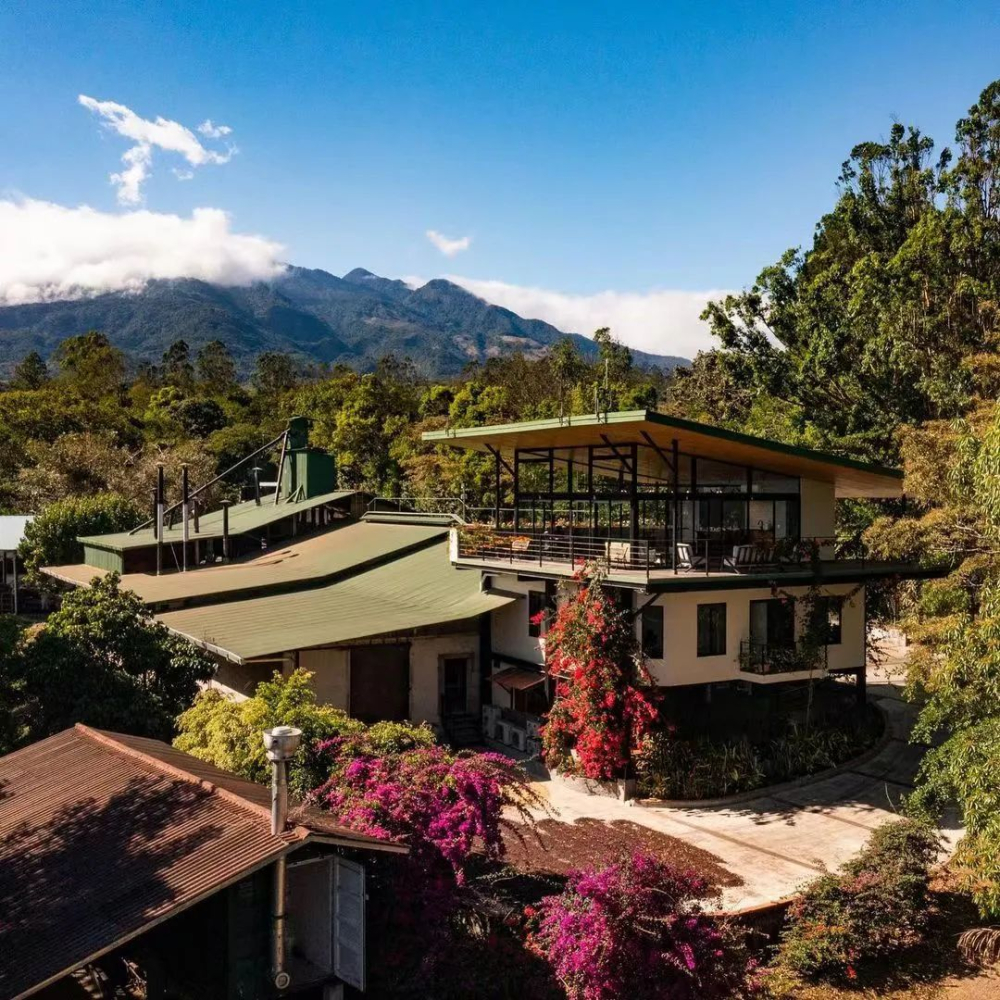
In Panama, the finest Geisha must be grown above 1,700 meters. Some estates, such as Front Street. Hacienda La Esmeralda Red Label and Front Street. Hacienda La Esmeralda Green Label grade Geisha coffee beans, are all grown in areas above 1,700 meters, and some estates plant Geisha at 1,700 to 1,950 meters, such as the famous Elida Estate.
What are the characteristics of the Geisha variety grown in Panama?
Many articles from Front Street have mentioned that coffee, as an agricultural product, always has its flavor performance closely related to factors such as variety, climate, altitude, soil, and management. It is a natural and authentic expression of the variety and local terroir, while post-processing methods and roasting should maximize the preservation, restoration, and presentation of its most authentic flavor. Therefore, Geisha's excellence cannot be separated from the coordination of the above factors.
Compared with other Arabica varieties, Geisha not only has lower fruit yield, but the plant itself is also especially fragile and quite picky about its growing environment. It needs high altitude, fertile soil, cloud cover or plant shade, and cannot be directly exposed to the sun. The leaf system of the Geisha coffee tree is very thin, its photosynthetic efficiency is very low, and its roots are also fragile, so the absorption of water and nutrients is relatively slow, resulting in very low coffee yield. In addition, because of the high-altitude growing environment, the fruit matures later. A single Geisha coffee tree produces only half the fruit of a Caturra variety, which is also one of the reasons Geisha coffee is expensive.
The owner of Hacienda La Esmeralda, Geisha's "talent scout," once said that the estate needs a large number of shade trees to block sunlight for the delicate Geisha, and in the early stages of planting, traditional pruning methods must also be used, otherwise the plants are prone to dying. The higher the altitude at which Geisha is planted, the longer the coffee fruit takes to mature, and only then can the flavor expression be more complex and unique. Geisha fruit needs to be harvested at the most appropriate degree of ripeness and immediately undergo post-processing. This is a tremendous test of the estate owner's professional judgment and the estate's labor quality; once the timing is missed, it will lead to a decline in quality and waste.
Why is Geisha coffee so expensive?
Extremely low yield is only one reason it sells for a high price. What truly fascinates people is Geisha's unique and alluring coffee flavor, and this is the most important reason Geisha is exceptionally precious. Geisha needs to be harvested at the most appropriate moment of ripeness and immediately undergo careful extraction and drying.
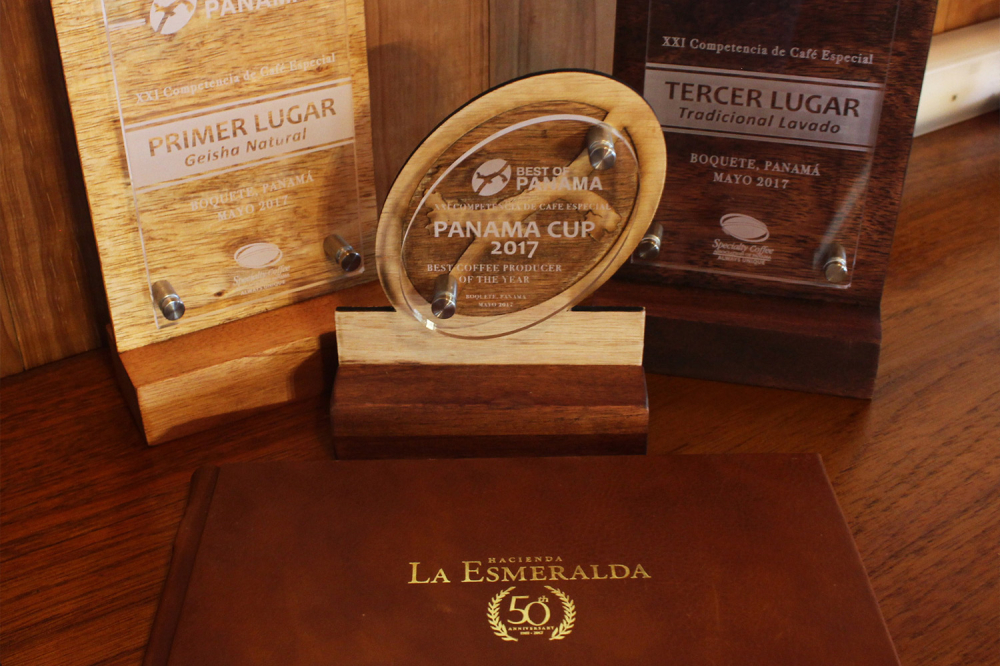
Taking Hacienda La Esmeralda's Geisha as an example, there are three reasons for its high price: first, Hacienda La Esmeralda was the earliest discoverer of Geisha; second, Geisha is a consecutive BOP champion; third, it established its own quality system. However, Hacienda La Esmeralda's most expensive Geisha coffee beans can only be purchased through auction, and these beans are called auction-lot grade.
Changes in the price of Hacienda La Esmeralda auction-grade Geisha coffee: in 2004, $21 per pound; in 2006, $50.25 per pound; in 2007, $130 per pound; in 2010, $170.2 per pound; by the 2017 Best of Panama specialty coffee auction, a lot of Hacienda La Esmeralda natural Geisha fetched a sky-high price of $601 per pound, meaning one kilogram of green beans was priced as high as 8,900 RMB.
The Front Street. Hacienda La Esmeralda Red Label and Front Street. Hacienda La Esmeralda Green Label Geisha coffees we can buy do not need to go through auction, so their prices are relatively much more affordable. Geisha coffee prices will fluctuate in different regional estates and different coffee shops (due to different purchasing costs).
Geisha pour-over coffee brewing suggestions
The coffee beans sold by Front Street are all shipped within 5 days after roasting is completed, so after receiving the coffee beans, do not rush to brew them. You can first rest the beans by letting them sit sealed in their original packaging in a cool, dry place for 3-4 days after the roast date. Brewed this way, the Geisha coffee will be even more delicious.
Suggested brewing parameters for Front Street. Geisha coffee beans: dripper: V60 #01, dose: 15g, coffee-to-water ratio: 1:15, brewing water temperature: 90-91°C, grind size: medium-fine grind (80% passing through a No. 20 standard sieve).
For the brewing method, a three-stage pour is recommended: start the timer, use 30g of water for the first stage to bloom for 30 seconds; after 30 seconds, begin the second stage, pouring in a small circular stream up to 125g; when the coffee liquid level in the dripper drops to 2/3 of the coffee bed, begin the third stage, pouring in a small circular stream up to 225g, then stop pouring. After all the coffee liquid in the dripper has flowed into the server, remove the dripper and end extraction. The total extraction time for Geisha coffee beans is generally 2 minutes 10 seconds to 2 minutes 20 seconds.
The pour-over Hacienda La Esmeralda Red Label Geisha coffee tastes of fresh jasmine, citrus, and tropical fruit acidity. The flavor layers vary with temperature, the overall mouthfeel is smooth, and the tea-like finish is pleasant.
The above content is compiled by CoffeeHunters, a coffee news website.


