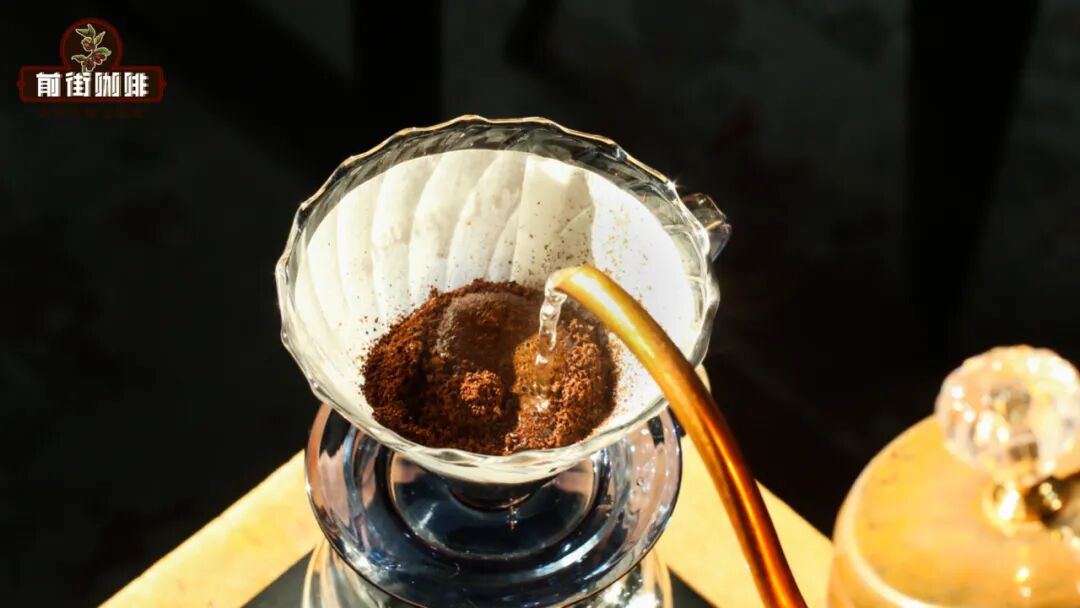
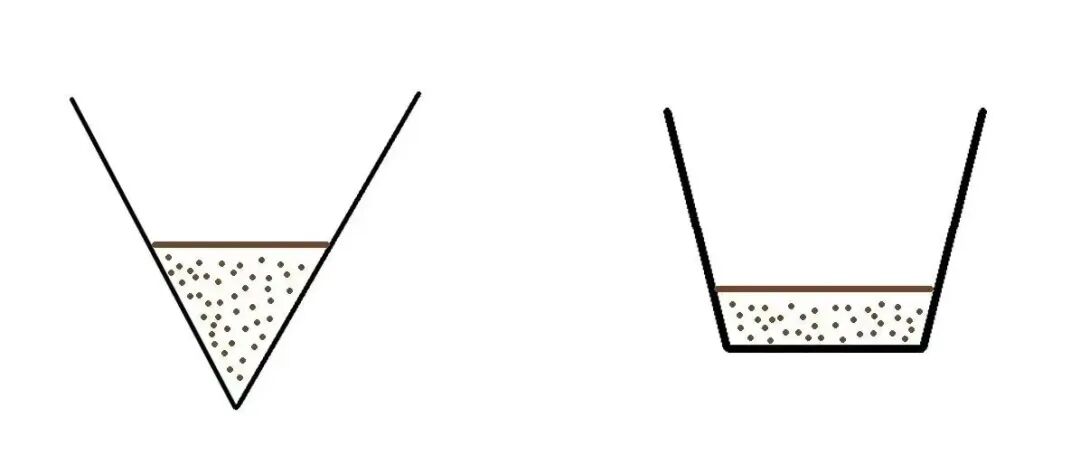
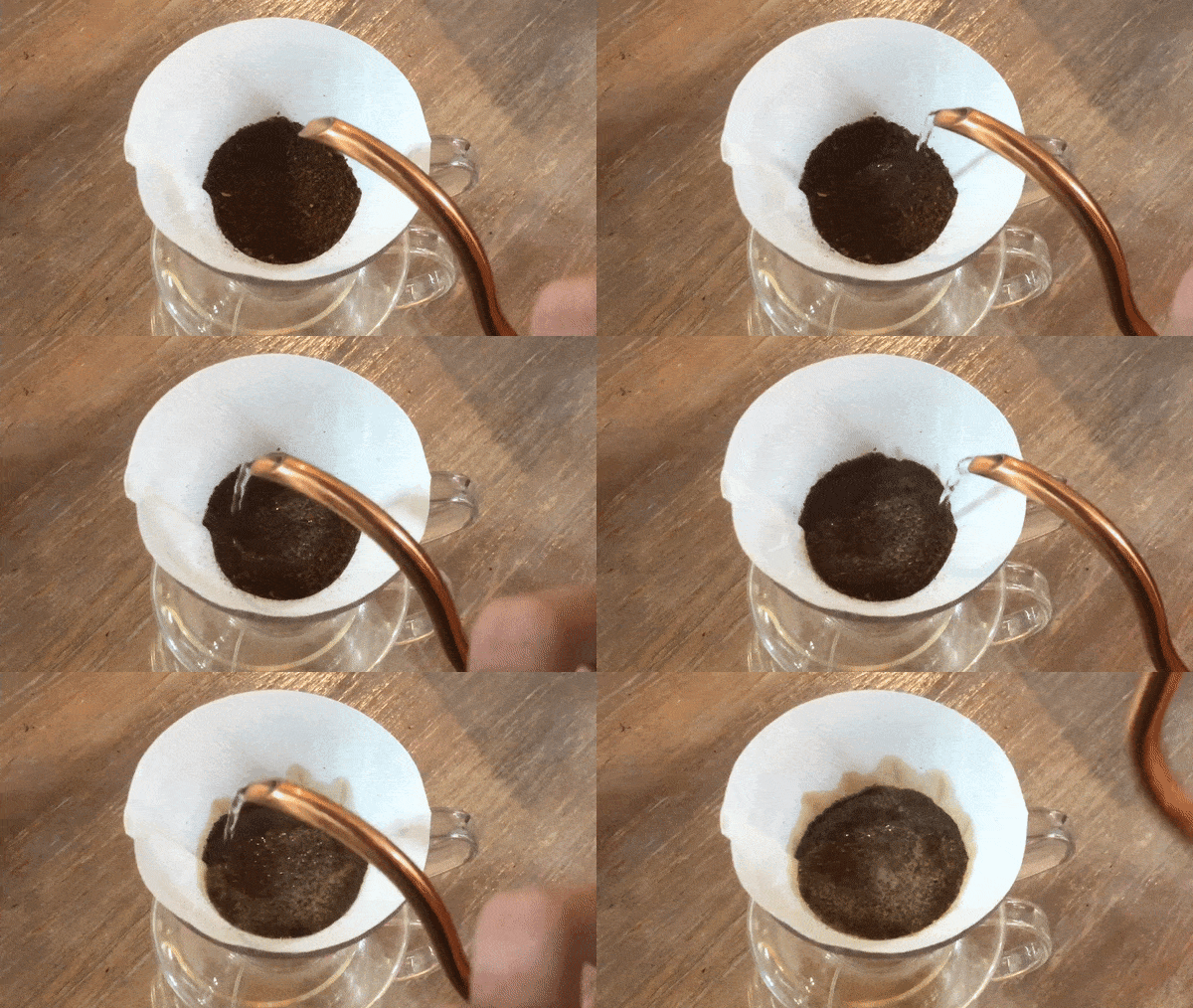
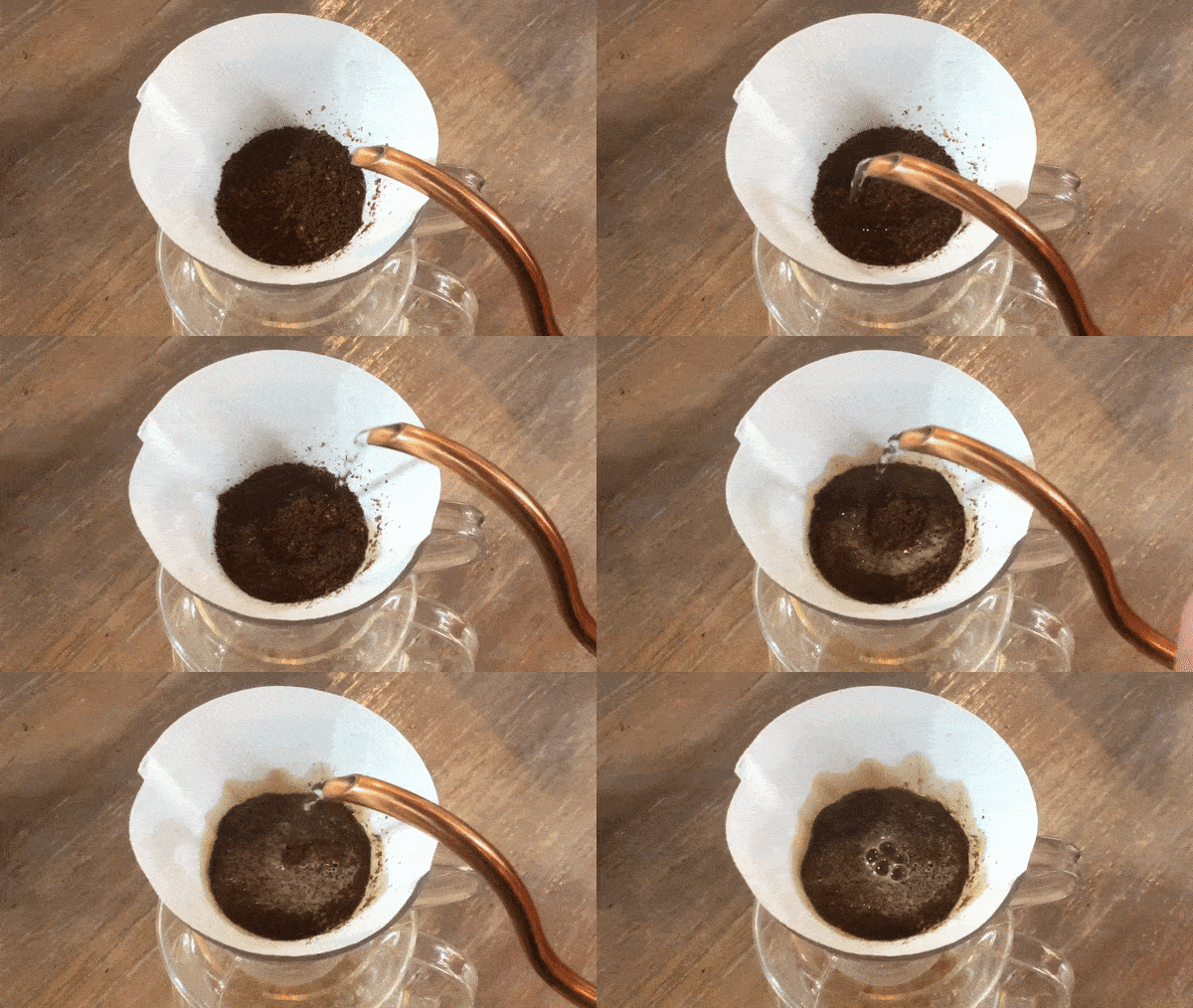
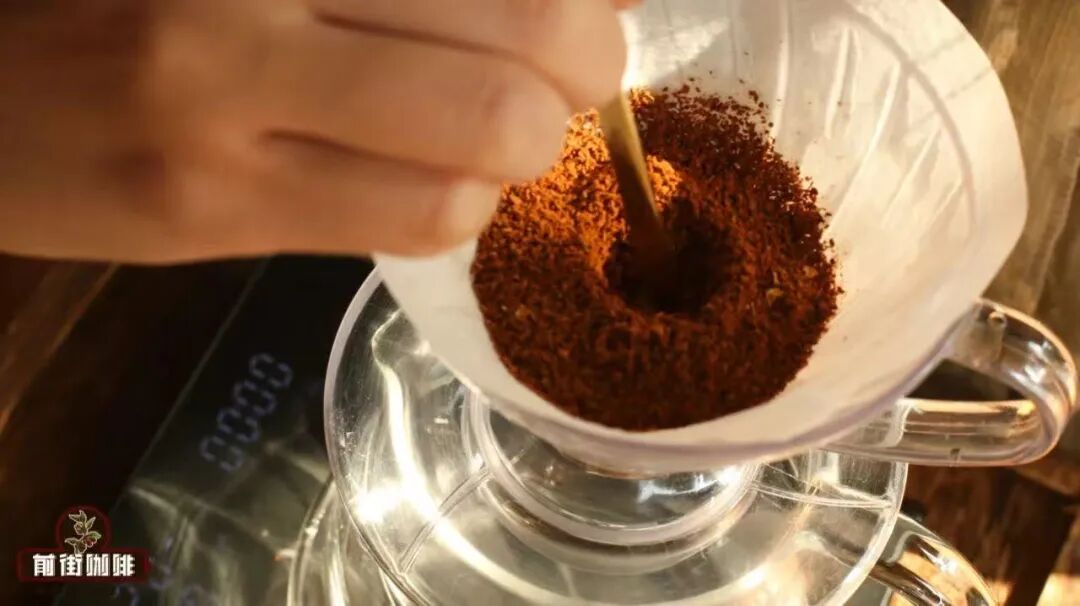
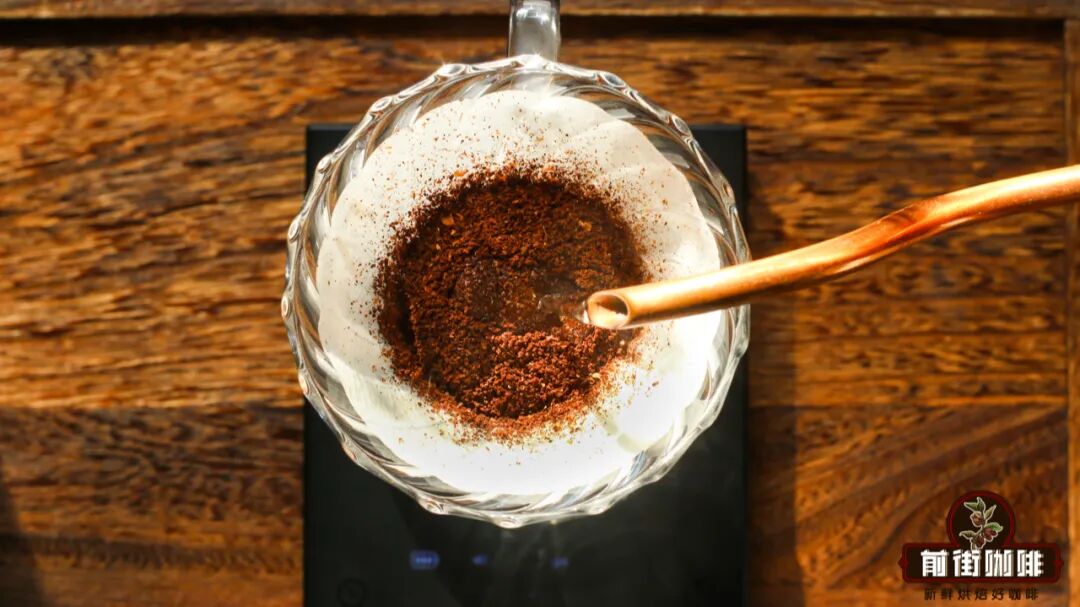
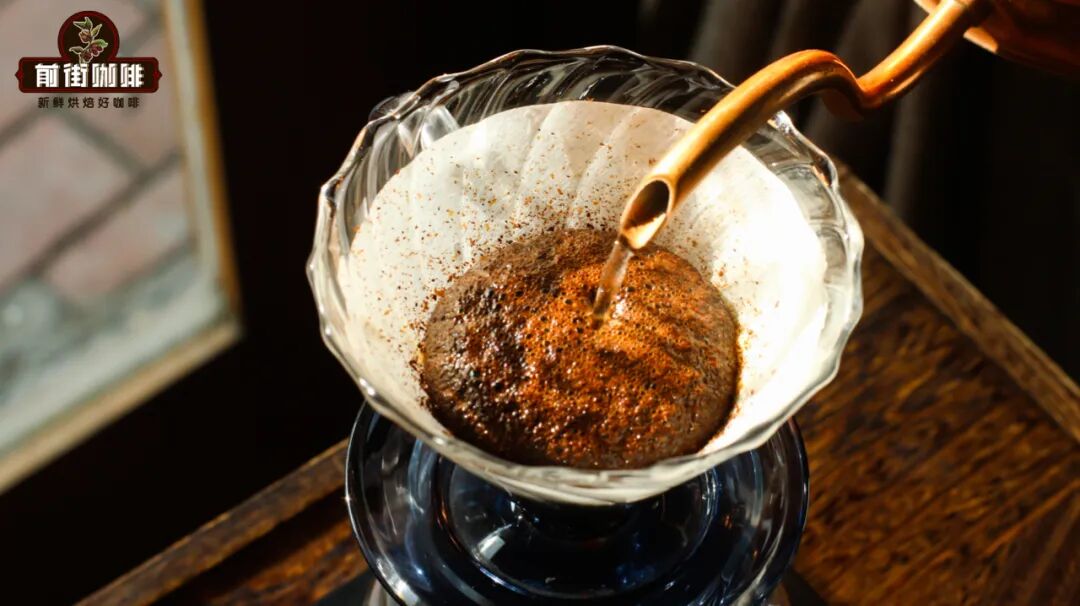
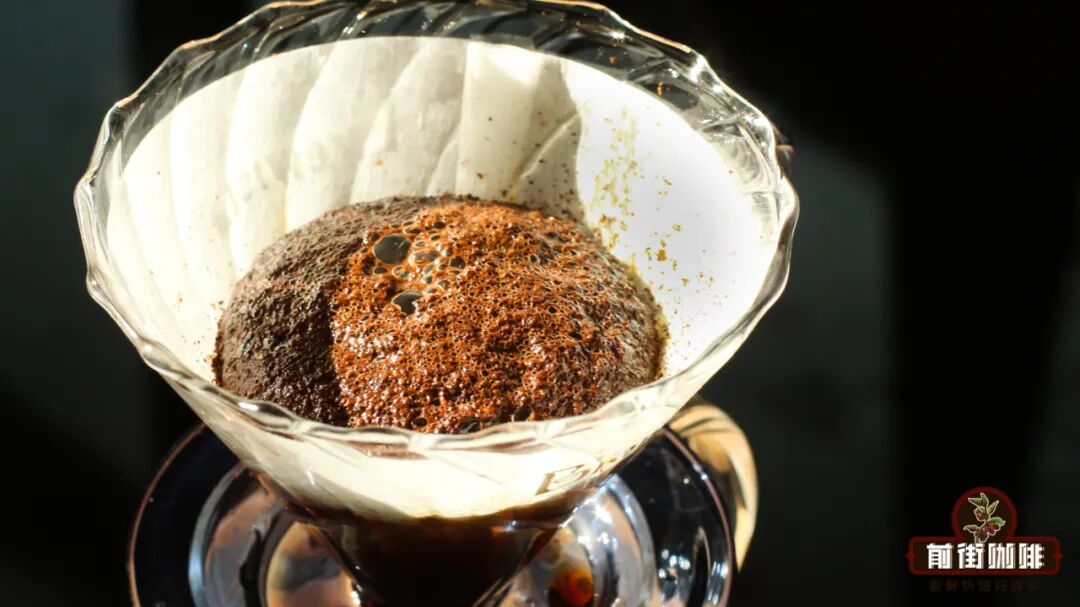
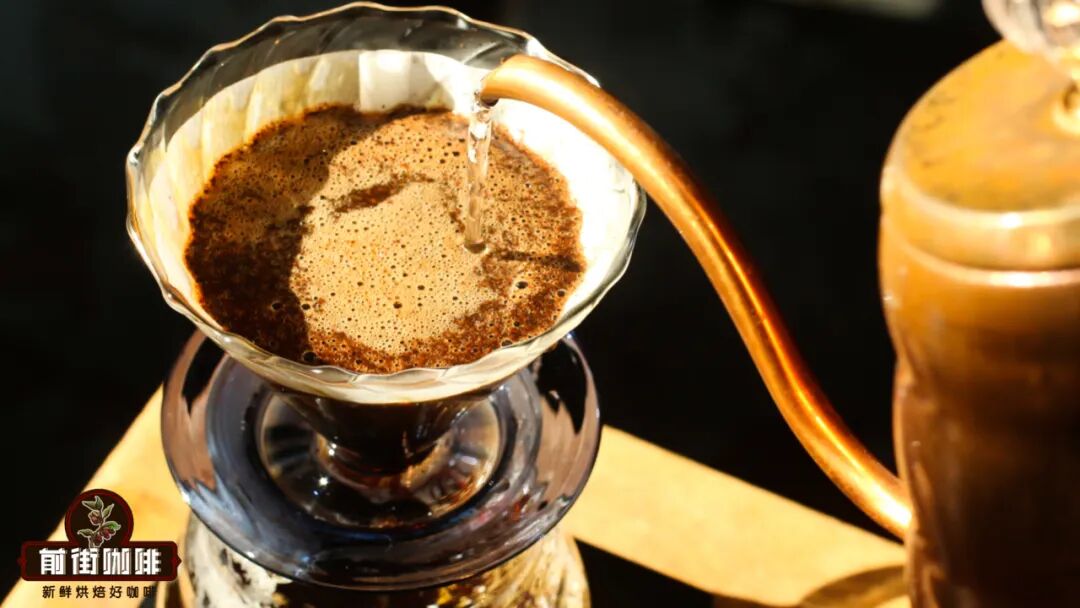
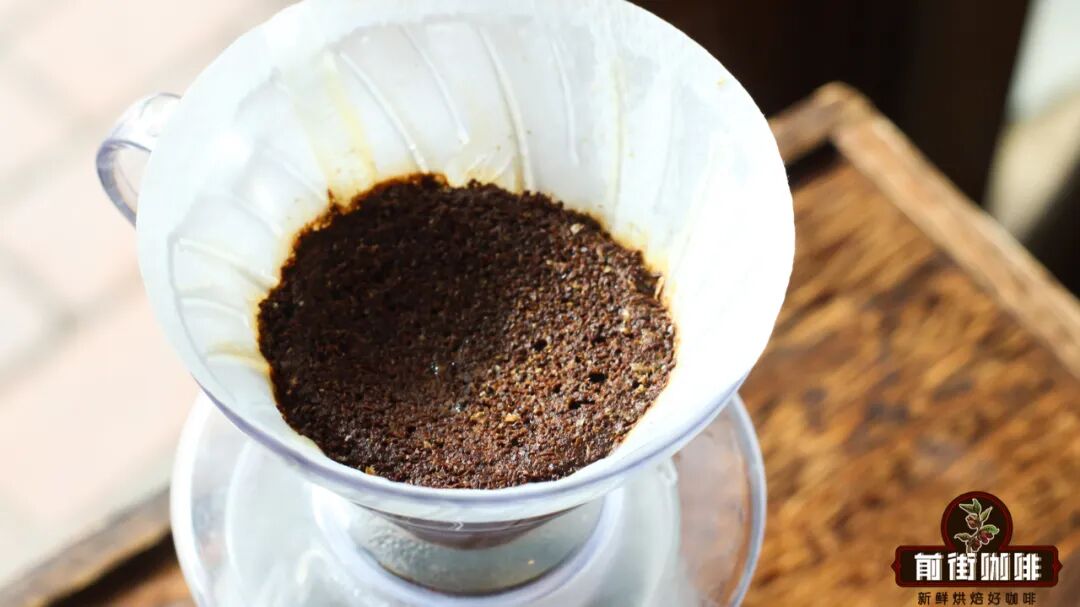
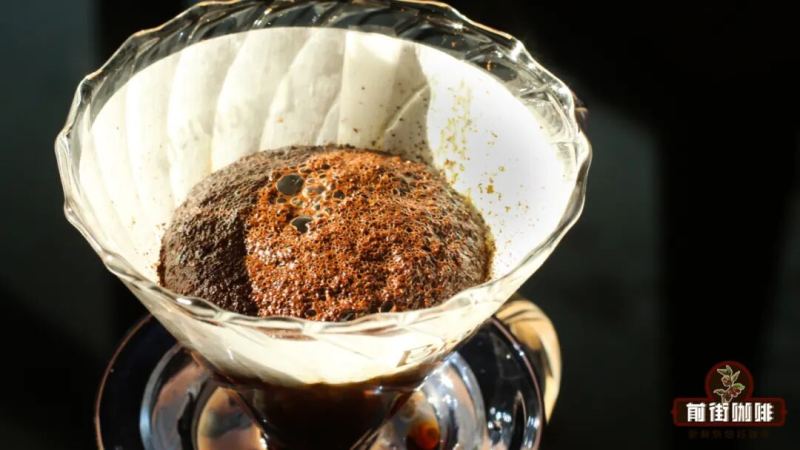
As the saying goes: "Bloom well, and brewing will be trouble-free." For pour-over coffee, blooming is a very important preparatory step.So-called blooming is the step where, before we formally extract the flavor compounds from the coffee, we use a small amount of hot water to pre-wet the coffee grounds and wait for a certain period of time. In this way, the carbon dioxide in the coffee that hinders extraction is released during this stage, and the hot water we pour afterward can better extract the flavor compounds in the coffee, making the coffee taste fuller.However, doing the blooming step well is very demanding in terms of technique. Because the amount of water used during blooming is relatively small(usually twice the weight of the coffee grounds), without a certain foundation or experience in pouring, this hot water will find it very difficult to wet all the coffee grounds, which in turn causes some coffee grounds to be unable to degas during the blooming stage, and the final coffee taste is not as rich.If we don't want this situation to occur, then besides increasing the amount of water poured, we can also choose a more scientific way to pour! Just as Front Street often shares, scientific pouring allows hot water to more comprehensively saturate the coffee grounds, so that more coffee grounds can fully degas during the blooming stage, thereby achieving a "perfect bloom."Then the question comes: how exactly should it be done?How to achieve a perfect bloom?Generally speaking, uneven blooming mainly occurs incone-shaped drippers. Front Street has shared in past articles that because the structure of a cone-shaped dripper is an inverted triangle, the same amount of coffee grounds piles up in a cone-shaped dripper as acoffee bedthat is thicker than in drippers of other shapes, so the path for hot water to flow downward is longer, and it is easier for the water to find a channel during the downward seepage and deviate from the target route, unable to wet the coffee grounds at the bottom.Therefore, if we want a small amount of hot water to saturate the coffee grounds in the dripper as much as possible, then we might as well try the following two pouring methods:1. Pour the hot water concentrated in the center:The first is the pouring method Front Street uses more often, pouring the hot water concentrated in the center! Because the coffee bed in the center of a cone-shaped dripper is the thickest, as long as we pour the hot water concentrated in the center, we can make the hot water penetrate as much as possible in the center, reducing the situation where some coffee grounds fail to degas due to bypass water, so degassing is more even.The specific method is very simple. For example, what Front Street uses most often is circling from the center outward. The only difference is that when circling and pouring in the center, the停留 time is a bit longer and the amount of water used is a bit more. The specific method is shown in the figure below:Of course! We can also do it the opposite way, circling from the outside inward. Then similarly, when circling and pouring in the center, the停留 time can be a bit longer. But this pouring method has a drawback: it is not very suitable for relatively fresh coffee beans with a very rich carbon dioxide content. Because this will affect the degassing effect of the coffee grounds in the center, making it somewhat difficult for the coffee grounds at the center to degas.2. Reduce the thickness of the central coffee bed:Another method is one that Front Street just shared not long ago, which is to dig a small hole in the center of the coffee bed, then pour the hot water concentrated into the hole before circling outward. As shown in the figure below:Through this method, we can reduce the thickness of the coffee bed, and the hot water can more easily come into contact with the coffee grounds at the bottom and complete the saturation. Front Street relatively recommends that beginners use this method, because compared with the previous method, this method has lower requirements for water control when pouring. Even a complete beginner can easily achieve a perfect bloom.The length of the blooming timeBesides the pouring method, we can also pay attention to the blooming time. "Twice the water of the coffee grounds, wait 30 seconds" is a very classic blooming formula. For beginners, using the parameters in this formula is undoubtedly the most conservative method when just starting out.But we all know that thegas contentin coffee that hinders extraction varies depending on freshness and roast level. Sometimes just relying on this time may not be enough to fully release these gases, and extraction efficiency will be reduced. So at times like this, we can appropriately adjust the extraction time.How to adjust? As Front Street always mentions, we need to first observe the state of the coffee bed during blooming. If the coffee bed still looks very "moist" when blooming reaches 30 seconds, and its size is still continuously expanding, then it indicates that this bean is relatively fresh and has a relatively rich carbon dioxide content.For example, the figure below shows what Front Street Golden Mandheling, which was roasted only a few days ago from Front Street's bean list, looks like after blooming for 30 seconds. You can see that it is not only very moist, but also has bubbles continuously emerging.This is because after carbon dioxide emerges from the beans, it forms bubbles, and the presence of these bubbles reduces the speed at which hot water penetrates. So when the carbon dioxide content is relatively rich, the hot water will penetrate relatively slowly because of the continuously emerging gas. Even after the set 30 seconds, the state of the coffee bed looks no different from when the water was just poured. And this coffee bed will also gradually expand because of the continuously released carbon dioxide.At times like this, we can appropriately extend the blooming time by about 5~10 seconds, allowing the coffee grounds to release more carbon dioxide before extraction, and the coffee taste can thereby be fuller.But if after we finish pouring the blooming water, the coffee bed quickly dries up and the swollen dome quickly deflates(as shown in the figure below), then it means there is not much carbon dioxide in the coffee grounds.In this case, we can appropriately shorten the blooming time and end blooming 5~10 seconds early to begin extraction. After all, the carbon dioxide that hinders extraction is gone, so there is no need to bloom. But if your experience is not sufficient and you are not yet good at judging, Front Street still recommends blooming for 30 seconds before starting extraction as the safest approach.So the above are the two things we need to pay attention to during blooming: blooming time and pouring method. As long as the hot water can evenly wet the coffee grounds and at the same time give the coffee grounds sufficient degassing time, then we can minimize the obstruction during extraction(carbon dioxide)and better extract the flavor compounds in the coffee, making the taste fuller~ The above content is compiled by CoffeeHunters, a coffee news website.