







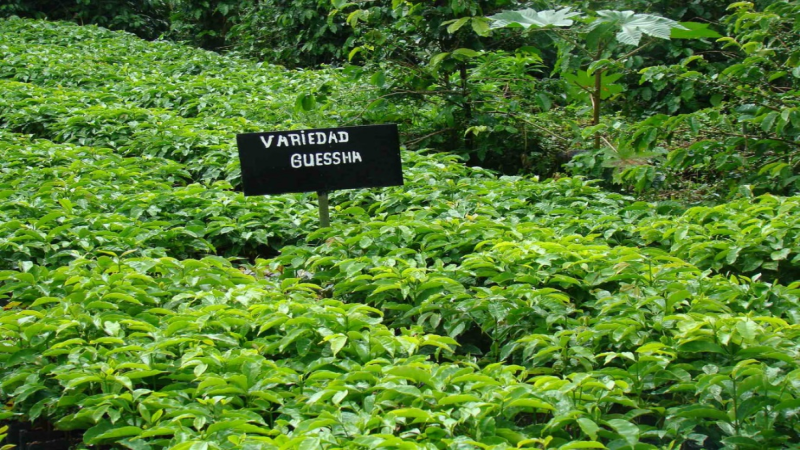
What Tier Do Geisha Coffee Beans Occupy in Specialty Coffee
Geisha coffee beans sit at the top of the specialty coffee market, widely treated as the most prestigious high-end variety after Blue Mountain. The name is tied to Panama's Hacienda La Esmeralda, which sets the auction, red-label, and green-label tiers used to position Geisha lots by growing altitude, cup score, and process.
The variety traces back to the Kaffa forest region of western Ethiopia before reaching Panama. Geisha is demanding about growing conditions: it needs higher altitude, cloud cover or shade trees, and fertile soil to express floral aroma and delicate fruit acidity. Panama's coffee regions cluster around the Chiriquí volcanic area, with Boquete the most noted district.
Geisha coffee beans are hailed as the most prestigious high-end coffee variety after Blue Mountain, and their price and quality have long stood at the pinnacle of the specialty coffee pyramid. When it comes to Geisha, Panama's Hacienda La Esmeralda is undoubtedly a name that cannot be avoided. This article will systematically outline the tier positioning of Geisha coffee beans, provide a detailed interpretation of Hacienda La Esmeralda's auction, red-label, and green-label Geisha grading standards, along with their respective flavor characteristics and purchasing advice. At the same time, Front Street Coffee (FrontStreet Coffee) will also share Geisha brewing parameters and practical tips to help coffee enthusiasts gain a more comprehensive understanding of this legendary bean.
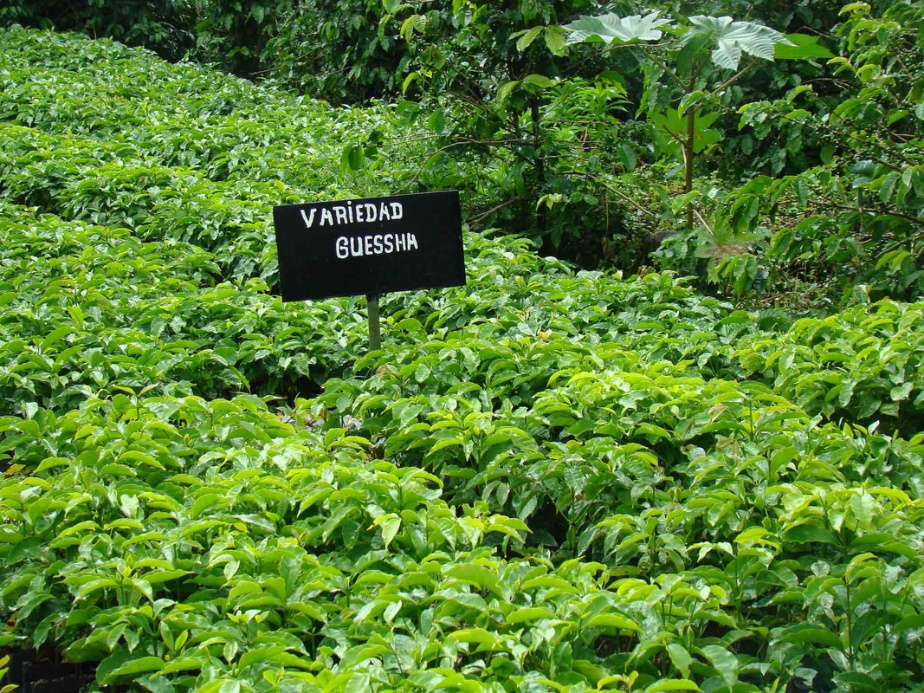
What tier exactly do Geisha coffee beans occupy? Front Street can state clearly: from the current market landscape, Geisha is the most well-known, most high-end positioned, and most expensive coffee variety after Blue Mountain coffee. Even before tasting it, its reputation is already thunderous, which speaks to Geisha's standing in the coffee world. To trace the legendary story of Geisha coffee, Hacienda La Esmeralda is an absolutely unavoidable link—it is a tale of a talent scout recognizing a thoroughbred.
According to subsequent variety traceability research, Geisha coffee originated in the Kaffa forest region of western Ethiopia, then made its way to Panama, where it transformed into a globally sought-after top-tier coffee bean. Front Street has mentioned in other articles many times: coffee is essentially an agricultural crop, and its flavor expression is inseparable from its growing environment. The Geisha variety is extremely demanding regarding growing conditions; only in areas with higher altitude, cloud cover or abundant shade tree coverage, and fertile soil can it produce rich, captivating floral aromas and delicate, elegant fruit acidity. Front Street has also noticed a rather interesting phenomenon with Geisha coffee—the more rugged the growing environment, the more outstanding the coffee's flavor.
Panama's climate conditions are very suitable for coffee cultivation. Panama Geisha is renowned worldwide, and the country's coffee-producing regions are almost all concentrated around the Chiriquí volcanic area. Among them, the most beautiful is the Boquete producing region, which possesses volcanic-rich soil, abundant water sources, regular rainfall, dense vegetation, and cloud cover, providing ideal growing conditions for coffee trees, thus enabling the production of high-quality coffee beans with intense flavor. In addition, numerous microclimates also create conditions for diverse flavor characteristics in coffee beans, and Hacienda La Esmeralda is located within this producing region. Meanwhile, the Volcán producing region adjacent to Boquete has also gradually become an important source of high-quality Geisha coffee in recent years.
After Geisha coffee became popular, estates around the world began planting it, including Yunnan, China, which has also introduced Geisha. There are also many well-known estates in Panama itself growing Geisha, such as Deborah Estate and Elida Estate, but their fame is clearly overshadowed by Hacienda La Esmeralda. Front Street has purchased Geisha coffee from these estates, and each has its own charming flavor. Today Front Street will introduce in detail the estate that made Geisha famous—Panama's Hacienda La Esmeralda.
Panama Hacienda La Esmeralda
The Geisha variety was discovered in 1931 in the Geisha forest of Ethiopia, then sent to the Kenya Coffee Research Institute, introduced to Uganda and Tanzania in 1936, spread to Costa Rica in 1953, and only introduced to Panama in 1970. But according to Front Street's understanding, throughout this long dissemination process, Geisha was never taken seriously, because its yield was extremely low, cultivation was difficult, and economic returns were poor, so it remained unnoticed for a long time.
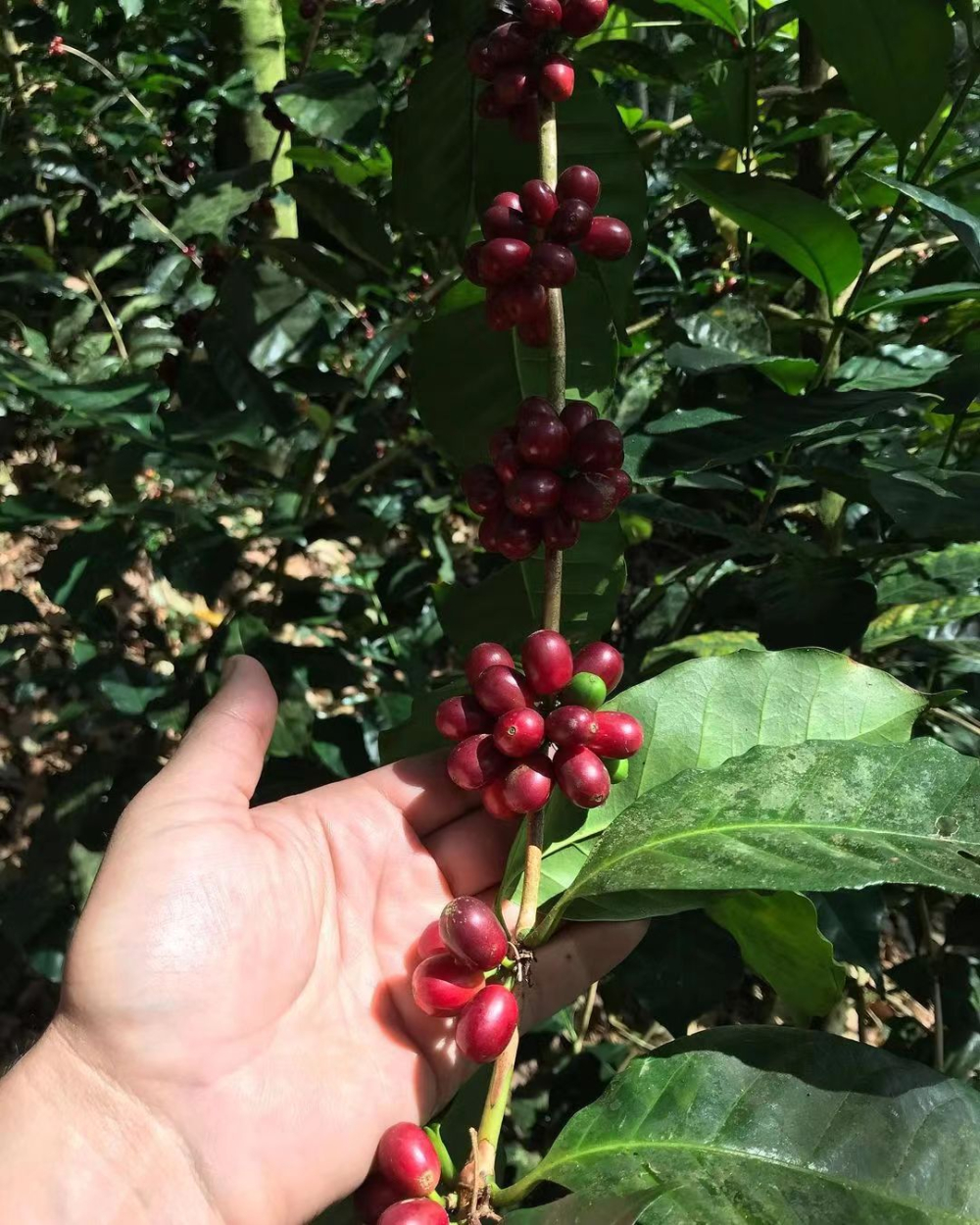
Later, the owner of Panama's Hacienda La Esmeralda and his son discovered that Geisha coffee beans had a unique flavor expression, completely different from the coffee grown locally in Panama. So in 2003, the Geisha variety was separately selected out, and in 2004 it was sent to compete in the BOP coffee competition, winning the championship in one fell swoop. Geisha coffee became famous overnight, entering the视野 of coffee enthusiasts worldwide, and simultaneously sparked a wave of Geisha planting in Panama.
After years of experimentation, Hacienda La Esmeralda found that only Geisha beans from coffee trees grown above 1,400 meters in altitude could exhibit the unique flavor the variety should have. Therefore, the estate owner invested a great deal of effort into infrastructure construction to support fine batch separation and processing, dividing Geisha grades by plot planting, with growing altitude as the primary basis and cupping results as auxiliary reference. In the past, Hacienda La Esmeralda's Geisha product line was divided into red label, green label, and blue label, with the red label including both auction and non-auction batches. In 2022, Hacienda La Esmeralda adjusted its Geisha product line, further elevating Geisha's positioning, and after the adjustment it became three series: Esmeralda Auction, red label, and green label.
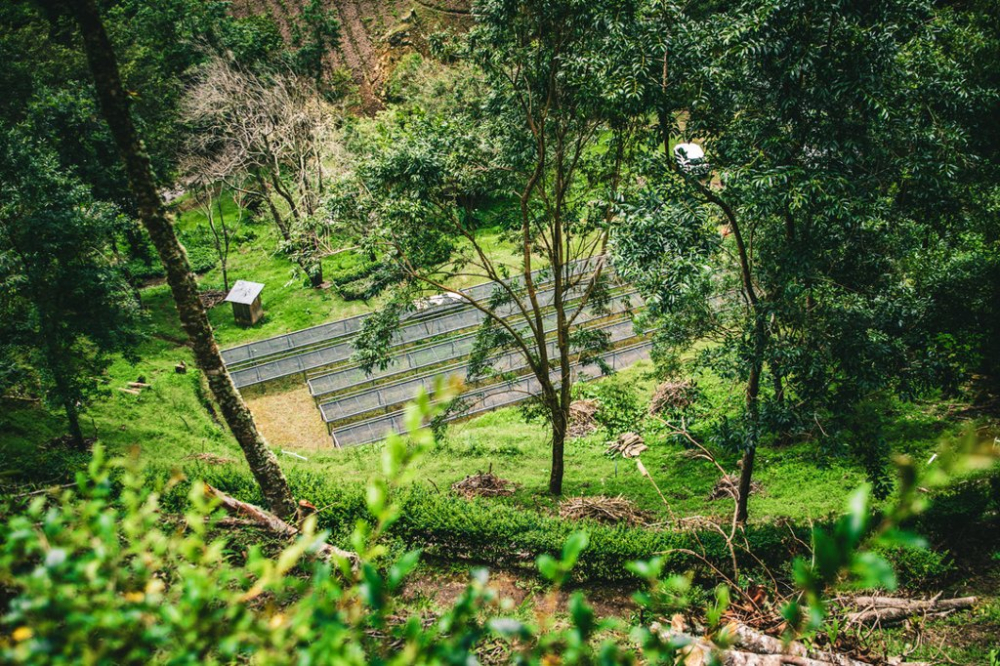
Panama Hacienda La Esmeralda Auction Geisha Coffee Beans
Esmeralda Auction is a brand that Hacienda La Esmeralda separated from the red label in 2022, and this batch can only be obtained through auction channels. As early as 2021, when Front Street spoke with estate owner Rachel, they learned that at the time the Esmeralda Special red label covered both auction and non-auction batches, and management was rather chaotic. She indicated at the time that the auction batches would be separated out in the future. Sure enough, in 2022 Esmeralda Auction was officially launched, and on August 17, 2022 (Beijing time), batch ES-W-3-1 sold for $2,755 per kilogram, setting Hacienda La Esmeralda's highest auction record in history.
Panama Hacienda La Esmeralda Red Label Geisha Coffee Beans
Esmeralda red label is currently one of the higher-priced coffee beans in Front Street Coffee's (FrontStreet Coffee) product line. Some people also ask: if it's expensive, is it necessarily the best-tasting? Everyone's taste preferences differ, so this question really cannot be generalized. But Front Street can tell you: Esmeralda red label is absolutely an outstanding coffee! The red label Geisha is grown at altitudes between 1,600 and 1,800 meters, with cupping scores above 90 points, mainly from the Jaramillo and Canas Verdes producing areas. Red label batches come in both washed and natural processing methods.
Hacienda La Esmeralda Green Label Geisha Coffee Beans
Although Esmeralda green label Geisha is not as expensive as the red label, you will find that at Front Street the green label is actually far more popular than Esmeralda red label. Although the green label batches do not participate in auctions, the coffee bean quality still maintains an excellent standard. Green label Geisha is also grown at altitudes between 1,600 and 1,800 meters, mainly blending batches from multiple different plots such as Jaramillo and Canas Verdes.
Because it uses a multi-plot blending model, sometimes the flavor similarity between green label and red label can be very high. Although the grade of green label Geisha is not as high as red label, its clarity is outstanding, presenting an overall jasmine tea character with bright acidity; while natural-processed green label Geisha has even better sweetness, with a pleasant balance of acidity and sweetness reminiscent of passion fruit and floral tea.
Guests often ask, "What exactly is the difference between red label and green label?" Front Street Coffee (FrontStreet Coffee) offers an easy-to-understand reference: red label Geisha can be traced back to a specific small plot; green label Geisha cannot be traced back to a small plot. Hacienda La Esmeralda's green label Geisha uses a mixed-planting model, so detailed plot information is not labeled. Precisely because of this, Front Street Coffee (FrontStreet Coffee) has found that sometimes the flavors of green label and red label show extremely high similarity. Front Street Coffee (FrontStreet Coffee) believes there is no need to necessarily pursue the auction level. On one hand, the price is indeed quite high; on the other hand, if you just want to try it for the experience, Front Street Coffee's (FrontStreet Coffee) non-auction batch Panama Hacienda La Esmeralda red label Geisha is also a very good choice.
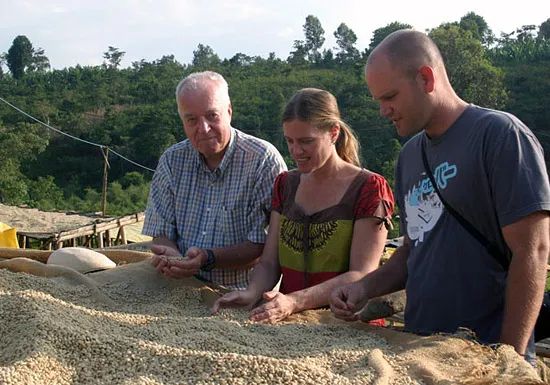
Front Street Coffee (FrontStreet Coffee) Brewing Recommendations
Regarding coffee brewing, Front Street recommends using freshly roasted coffee beans, as this allows you to experience the coffee's rich flavor layers to the greatest extent. The coffee beans shipped by Front Street Coffee (FrontStreet Coffee) are all within 5 days of roasting, because Front Street deeply understands that freshness has a crucial impact on coffee flavor. Front Street's roasting philosophy is "freshly roasted good coffee," so that every customer who places an order receives the freshest possible state when the coffee arrives. Coffee's resting period is about 4 to 7 days, so when customers receive it, it is exactly at its peak flavor stage.
Of course, some customers need Front Street to grind the coffee for them, which is completely fine, but Front Street needs to remind: once coffee beans are ground in advance, they no longer need to rest, because during transport the pressure from carbon dioxide inside the packaging can also make the coffee flavor rounder, so after receiving ground coffee it can be brewed and drunk immediately. However, ground coffee needs to be used up as quickly as possible, because after grinding it oxidizes faster on contact with air, flavor loss is also faster, and the coffee's overall performance will be compromised. Therefore, Front Street recommends buying whole beans and grinding fresh for each brew, so you can better taste the coffee's flavor.
Front Street's Geisha coffee brewing parameters:
Front Street takes into consideration that this Geisha coffee bean is a light roast, and light-roasted beans have a lower coffee substance dissolution rate than dark roasts. Therefore, to ensure full extraction of Geisha's flavor, a higher water temperature is used for brewing, along with a finer grind size.
Geisha beans are relatively hard and tend to sink and clog the drainage holes, so for grind coarseness, use a size with an 80% pass rate on a Chinese standard No. 20 sieve (about the size of fine granulated sugar). For dose, Front Street still chooses 15g, paired with a Hario V60 small filter cone, and the recommended brew ratio is adjusted to 1:15—on one hand, using one extra part of water to maintain the extraction yield, and on the other hand, lowering the coffee concentration to 1.15%, at which concentration the coffee's best flavor can be experienced. For water temperature, maintain 91 degrees Celsius.
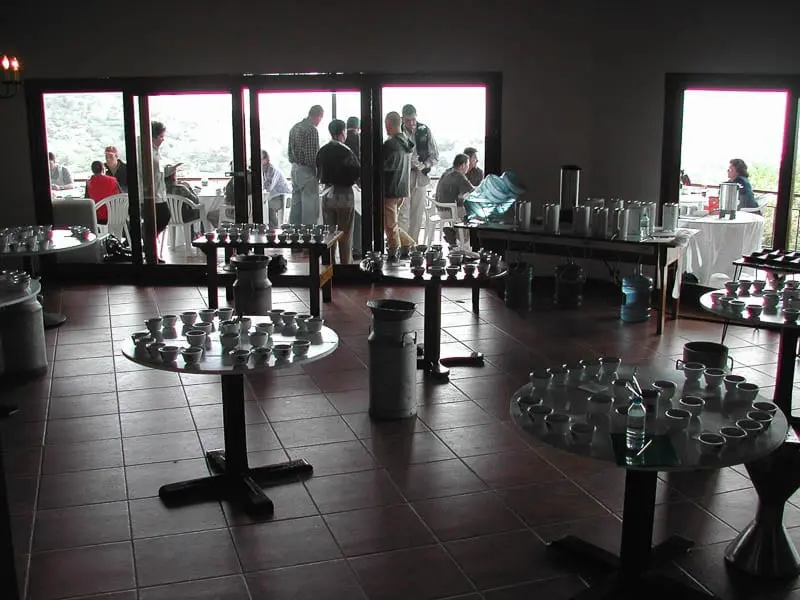
Use staged extraction: first bloom with water at 2 times the coffee dose, that is, 30 grams of water for a 30-second bloom. The purpose of blooming is to let the coffee grounds release internal carbon dioxide, thereby making the later extraction more stable. Pour in a small stream in circles until 125 grams, then pause, continue pouring until 225 grams and stop. After the water in the filter cone has completely dripped through, remove the filter cone, and timing from the start of pouring, the extraction time is 2 minutes 00 seconds. Finally, swirl the entire cup of coffee to mix evenly, pour into a cup, and enjoy.
Front Street Coffee (FrontStreet Coffee) Panama Hacienda La Esmeralda Red Label Geisha Coffee Bean Flavor Description: bright rose and citrus aromas, along with flavors of brown rice, berries, apricot, composite fruits, honey, and more, with a thick juicy body, rich layers, and pronounced sweetness.
Front Street Coffee (FrontStreet Coffee) Panama Hacienda La Esmeralda Green Label Geisha Coffee Bean Flavor Description: rich jasmine floral aroma, high sweetness, with flavors of citrus, berries, juicy body, cream, green tea, orange peel, cantaloupe, and more, with rich overall layers and a lingering finish of floral and citrus notes.

Of course, today more and more estates are growing Geisha, and Geisha coffee's fame continues to rise, such as Panama's Deborah Coffee. If you want to experience Geisha flavor but do not want to spend too much, you can also try Geisha blend beans, which can likewise convey Geisha's character. For example, Panama's Butterfly Coffee, Costa Rica's Mirazu Coffee, and Colombia's Hanami Coffee—these Geisha blend beans are all specialty coffees with extremely high cost performance.
The above content is compiled by CoffeeHunters, a coffee news website.


