







Did the Panamanian Geisha Blue Label Really Disappear
Geisha 1500 refers to a batch of Panamanian Geisha named Las Rocas, which appeared in late September 2021 and is described as the Blue Label lot of Hacienda La Esmeralda. In 2020 the estate added a natural process to the Blue Label series; in 2021 it announced only Red Label and Green Label would be released, prompting talk that Blue Label was cancelled.
The labels are defined by different criteria. Red Label, sold as Esmeralda Special, comes from growing altitudes of 1,600 to 1,800 meters with cup scores of 90 points or above, from the Jaramillo area. Green Label and Blue Label follow separate rules, so treating all three as products from the same altitude range misreads how the estate grades geisha coffee.
What exactly does Geisha 1500 refer to? What is its relationship with Hacienda La Esmeralda's Blue Label Geisha? In 2020, Hacienda La Esmeralda added a natural process to the Blue Label series, which once made enthusiasts cheer for the arrival of an era of affordable Geisha; however, in 2021 the estate only announced Red Label and Green Label, and Blue Label seemed to disappear, sparking much speculation. It was not until late September of the same year that a batch of Panamanian Geisha named Las Rocas appeared. According to Front Street Coffee, it is precisely the incarnation of Hacienda La Esmeralda's Blue Label batch. This article will sort out the grading standards and flavor differences of Hacienda La Esmeralda's Red Label, Green Label, and Blue Label, reveal the truth behind Blue Label's rebranding, and introduce the Esmeralda Red Label and Green Label Geisha that Front Street Coffee supplies year-round, making it easier for readers to choose.
For more specialty coffee information, welcome to follow Front Street Coffee (Frontsteet Coffee).
In 2020, Panama's Hacienda La Esmeralda—hailed as the "father of Geisha"—announced that the Blue Label Geisha series would add a natural process version. After the news spread, many ordinary coffee lovers were delighted, feeling that Hacienda La Esmeralda had finally released a more affordable Geisha coffee bean.
Entering 2021, Hacienda La Esmeralda released information again, stating that only two Geisha series, Red Label and Green Label, would be retained that year, and gave a more detailed explanation of the grading. However, the Blue Label Geisha commonly seen in previous years did not appear on the list, leading outsiders to speculate that Blue Label had been canceled. Not long after, Front Street Coffee (FrontStreet Coffee) also received confirmation: Hacienda La Esmeralda would not release the Blue Label Geisha series in 2021.
This puzzled Front Street, because according to Hacienda La Esmeralda's definitions of Red Label, Green Label, and Blue Label, Blue Label Geisha and Red/Green Label Geisha do not seem to be products from the same altitude range. The specific distinctions are as follows:
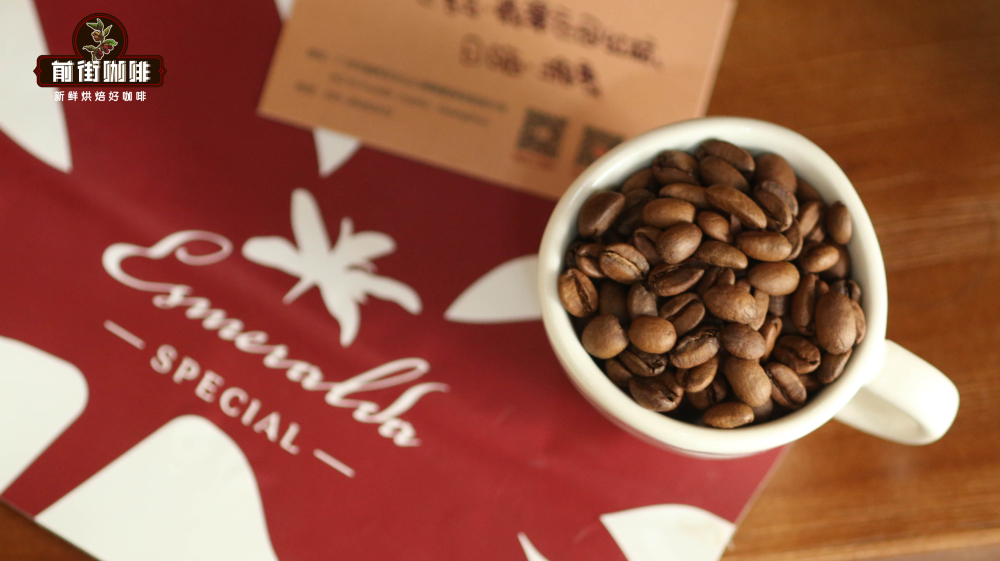
Red Label Geisha Geisha from Esmeralda Special, what we commonly call Red Label. Beans are selected from growing altitudes of 1,600–1,800 meters, cup scores must reach 90 points or above, and they come from the Jaramillo and Cañas Verdess production areas.
In the independent auction held by Hacienda La Esmeralda itself, only the Geisha batches selected from the divided plots are auction Red Label. Guests often ask whether auction Red Label or non-auction Red Label tastes better. In fact, both come from the same plot, and the only difference is whether they participate in the auction. Front Street Coffee (FrontStreet Coffee) believes there is no need to insist on the auction level: first, the price is indeed relatively high; second, if you just want to try it, Red Label is also a good choice. Geisha of this grade uses natural or washed processing, and the flavor presents special and bright floral aromas and citrus notes.
Green Label Geisha Private Collection, commonly known as Green Label, belongs to batches that do not participate in the independent auction. It is a Geisha variety that does not participate in bidding but still has excellent quality. It is made from a blend of micro-batch beans grown at altitudes of 1,600–1,800 meters and sourced from different plots such as Jaramillo and Cañas Verdess.
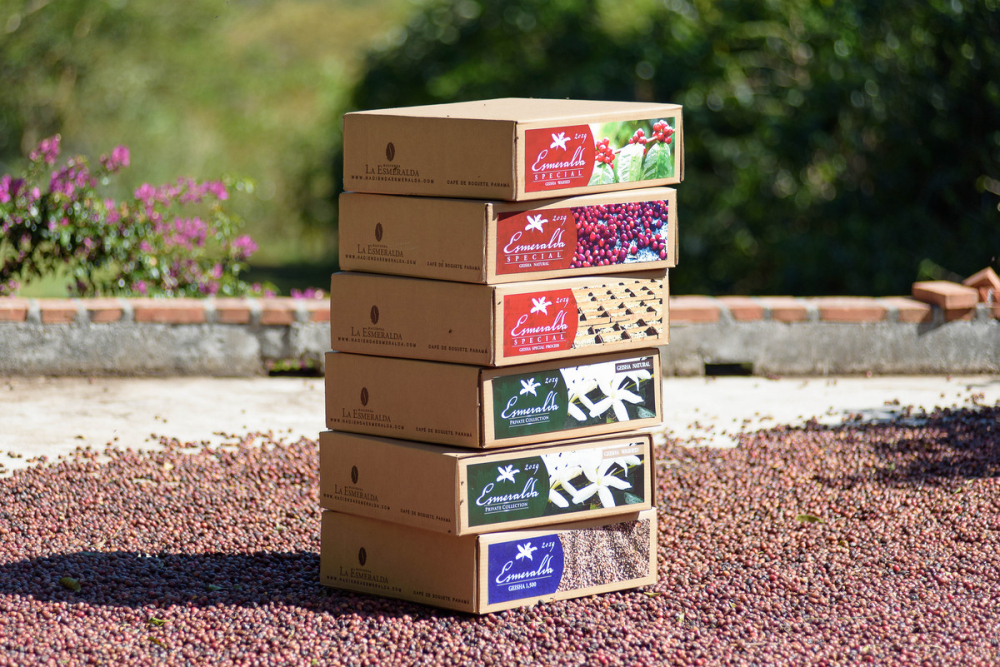
People often ask about the difference between Red Label and Green Label. Front Street Coffee (FrontStreet Coffee) gives the most plain explanation: Red Label can be traced back to a specific small plot, while Green Label is a blend of beans and cannot be traced. Because it uses a blended-bean model and is not labeled in detail by plot, sometimes Green Label and Red Label can be very similar in flavor, but the next release may differ again. Front Street Coffee (FrontStreet Coffee) feels that drinking Green Label is like buying a lottery ticket—perhaps the batch you drink this time carries the flavor of Red Label. Although Green Label is lower in grade than Red Label, it still carries the classic flavors of Geisha: floral aroma, fruity notes, citrus acidity, and a thick, juicy mouthfeel. Green Label Geisha is likewise available in washed or natural processing.
Front Street Esmeralda Red Label and Front Street Esmeralda Green Label have always been deeply loved by Geisha fans, so they remain on the bean list year-round. Those who want to taste them can place an order directly at the Front Street flagship store.
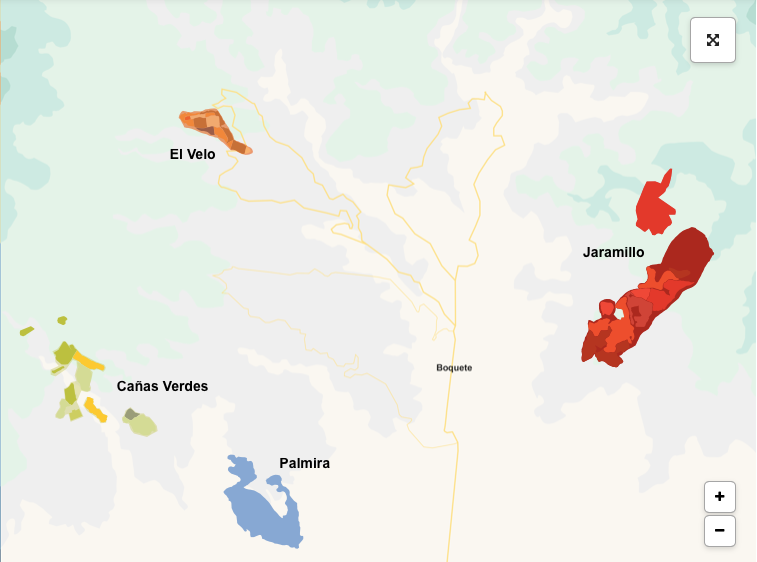
Blue Label Geisha The brand Geisha 1500 is what we commonly call Blue Label Geisha. It is made from a blend of beans grown at altitudes of 1,400–1,500 meters and sourced from three different plots: Jaramillo, Cañas Verdess, and El Velo. The flavor has faint floral notes, fruity acidity, and sweetness, with a less thick mouthfeel. Blue Label Geisha is available in both washed and natural processing.
That being the case, where did the Blue Label Geisha coffee that should have been produced this year go? If it were classified into Red Label and Green Label, it would inevitably affect Hacienda La Esmeralda's reputation, and the estate owner would not be so short-sighted as to drain the pond to catch all the fish. Could it be that something went wrong with the Geisha coffee trees this year? That should not be the case either; otherwise, it would not be only the Blue Label series that was affected.
The truth comes out
In late September 2021, a Panamanian Geisha labeled "Las Rocas" quietly appeared. Judging from the packaging information, this was a new brand of Geisha from Boquete, Panama, but after some investigation by Front Street, it was found that this batch of Geisha coffee beans labeled "Las Rocas" actually came from Hacienda La Esmeralda's Blue Label batch.
It seems Blue Label Geisha has not disappeared, but has merely changed its vest and continued to appear in the consumer market. This batch of coffee beans uses washed processing, and the processor is still Hacienda La Esmeralda. It can be seen that its quality still maintains the high standard of Blue Label. Those craving Blue Label Geisha coffee beans can look forward to it!
The above content is compiled by CoffeeHunters, a coffee news website.


