







Why is cappuccino called cappuccino next to flat white?
Cappuccino, latte, and flat white are separated by two measurable things: the ratio of espresso to milk and the thickness of the milk foam. Flat white carries a stronger coffee presence with thinner, glossier foam, while a cappuccino sits lighter on coffee and heavier on airy foam.
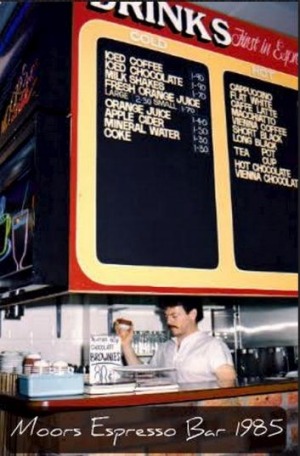
Flat White origins are still disputed between Australia and New Zealand, with the name traced back to a 1962 British film and the drink itself appearing on a 1985 Moors Espresso Bar menu. Cafes also differ on whether they build it with espresso or ristretto, which shifts body and sweetness.
As a highly sought-after milk coffee category in recent years, Flat White stands out from lattes and cappuccinos with its rich coffee flavor, drawing the attention of many coffee enthusiasts. This article provides a comprehensive overview of the origins of Flat White—including the two distinct claims from Australia and New Zealand—and delves into the differences in using espresso and ristretto when making Flat White. At the same time, using the practical parameters from Front Street Coffee stores as an example, it explains in detail the extraction scheme, the approach to choosing blend beans, and how to distinguish Flat White, latte, and cappuccino through the ratio of espresso to milk and the thickness of milk foam. Whether you want to recreate an authentic Flat White at home or hope to systematically understand the underlying logic of this beverage, this article offers a complete and practical reference.
For more specialty coffee knowledge, please follow the WeChat public account: Front Street Coffee (FrontStreet Coffee)
Many people's coffee initiation often begins with a latte, until one day they discover an unfamiliar name on the menu of their regular café, and from then on step into a broader coffee world. Unlike lattes, where the coffee flavor is relatively gentle, this milk coffee conquers the taste buds of a large number of coffee lovers with its strong coffee presence.
At Front Street Coffee (FrontStreet Coffee) stores, customers often come to ask whether Flat White is available, how to make it at home, and what exactly makes this beverage special. Next, let Front Street Coffee (FrontStreet Coffee) guide everyone into a deeper understanding of this distinctive milk coffee.
The background of Flat White is quite unique. The expression "Flat White" can be traced back as early as the 1962 British film *Danger by My Side*, though in the film's context it was used to describe coffee that tasted as bland as water. As a modern beverage, the birthplace of Flat White remains disputed to this day—one side believes it originated in Australia, while the other insists it came from New Zealand.
If we consider the earliest record of the beverage's identity, Flat White appeared on a 1985 menu at Moors Espresso Bar in [Australia]. In addition, an article published in the May 1983 issue of *Sydney café* magazine also mentioned that Flat White was listed on the menu of Miller's Treat café.
Another account points to Wellington, [New Zealand], in 1989. It is said that barista Fraser McInnes mistakenly used skim milk while making a cappuccino. Because skim milk lacks sufficient fat content, the milk foam could never be whipped into shape, ultimately producing a milk coffee with extremely thin foam, so he called it Flat White.
Regardless of whether Flat White was born in Australia or New Zealand, this beverage has driven the wave of popularity of milk coffee. It is only in preparation methods that the two countries have their own preferences: New Zealanders tend to use a double ristretto as the base, while Australians are more accustomed to using a single espresso as the base.
The baristas at Front Street Coffee (FrontStreet Coffee) stores choose to use a double espresso as the base when making Australian-style white coffee. Because the espresso blend beans used in the store consist of 70% Honduras Sherry coffee beans and 30% sun-dried Yirgacheffe coffee beans, the extracted espresso presents distinct flavors of vanilla, cream, oak barrel, and dark chocolate.

Taste preferences vary from person to person. Some prefer espresso, and naturally some are fond of ristretto. Some friends may still not be clear about what ristretto is. From the perspective of preparation principles, it is almost identical to espresso—the same dose, the same water temperature and extraction pressure, and in the same amount of time it yields a coffee liquid that is thick in texture and concentrated in flavor.
In Italian, ristretto means "restricted," which is to say that ristretto is a "shortened version" of espresso: with the dose unchanged, the final coffee liquid obtained is less. It can also be understood as an espresso with "high concentration and low extraction yield."
For this reason, ristretto mainly captures the flavor components from the front and middle segments of espresso, so the cup presents more sweet and sour substances, with a more concentrated flavor, a more viscous mouthfeel, and lighter bitterness compared with espresso.
Because environmental conditions change every day, and temperature and humidity both affect the extraction results of espresso, Front Street Coffee (FrontStreet Coffee) calibrates the extraction parameters every day. After adjustment, Front Street Coffee (FrontStreet Coffee) uses 19.8 grams of coffee powder, pre-infuses for 6 seconds, and extracts 35 grams of coffee liquid at 10 bar pressure, with a total extraction time of about 30 seconds.
On this basis, when making ristretto, Front Street Coffee (FrontStreet Coffee) also uses 19.8 grams of coffee powder, pre-infuses for 6 seconds, and uses 10 bar pressure, but extracts only 25 grams of coffee liquid, with an extraction time of about 25 seconds. Because the blend beans contain Sherry coffee beans and sun-dried Yirgacheffe, the resulting ristretto has vanilla and cream as its main tone, with clear berry acidity and a more viscous and smooth mouthfeel.
Front Street Sunflower Italian Warm Sun Blend Coffee Beans
Region: Honduras & Ethiopia
Variety: Caturra, Catuai, Pacas, local native species
Processing method: Washed & Sun-dried
When Front Street Coffee (FrontStreet Coffee) blended this espresso bean, it wanted to highlight the signature flavor of Sherry coffee beans, so Sherry beans occupied the dominant proportion in the blend. Honduras coffee beans themselves include Bourbon variants such as Caturra, Catuai, and Pacas, and perform prominently in sweetness. Therefore, Front Street Coffee (FrontStreet Coffee) added 30% Yirgacheffe Red Cherry to adjust the taste direction of the Honduras beans, making the overall flavor more balanced.
Front Street Coffee (FrontStreet Coffee) is often asked by friends who are new to coffee: since Flat White, latte, and cappuccino are all milk coffees, how exactly are the three distinguished?
To clarify the differences among the three, they can be analyzed from two dimensions: the ratio of espresso to milk, and the state of the milk foam.
[Espresso-to-milk ratio] When Front Street Coffee (FrontStreet Coffee) serves a latte, it usually uses a 300 ml wide-mouth ceramic cup; when making a cappuccino, it uses a 240 ml tulip ceramic cup; and for Flat White, it uses a 200 ml old-fashioned glass. Flat White has the least milk among the three, so its coffee flavor is the most prominent, placing more emphasis on the beans' own expression. To make a delicious Flat White, choosing the right beans is the key prerequisite.
[Milk foam] Among the three beverages, milk foam is the most noticeably different element. A latte is topped with about 5 mm of milk foam; a cappuccino has thicker foam, about 10 mm; while Flat White has the thinnest foam, only about 3 mm.
The milk foam layer of Australian-style white coffee is thin and delicate. Friends at home who have equipment often ask Front Street Coffee (FrontStreet Coffee) how to create thin yet dense milk foam. Front Street Coffee (FrontStreet Coffee) suggests: first fully submerge the steam wand's steam tip into the milk, and after the milk begins to form a vortex, introduce a little air, then quickly switch to the stage of texturing it into dense foam.
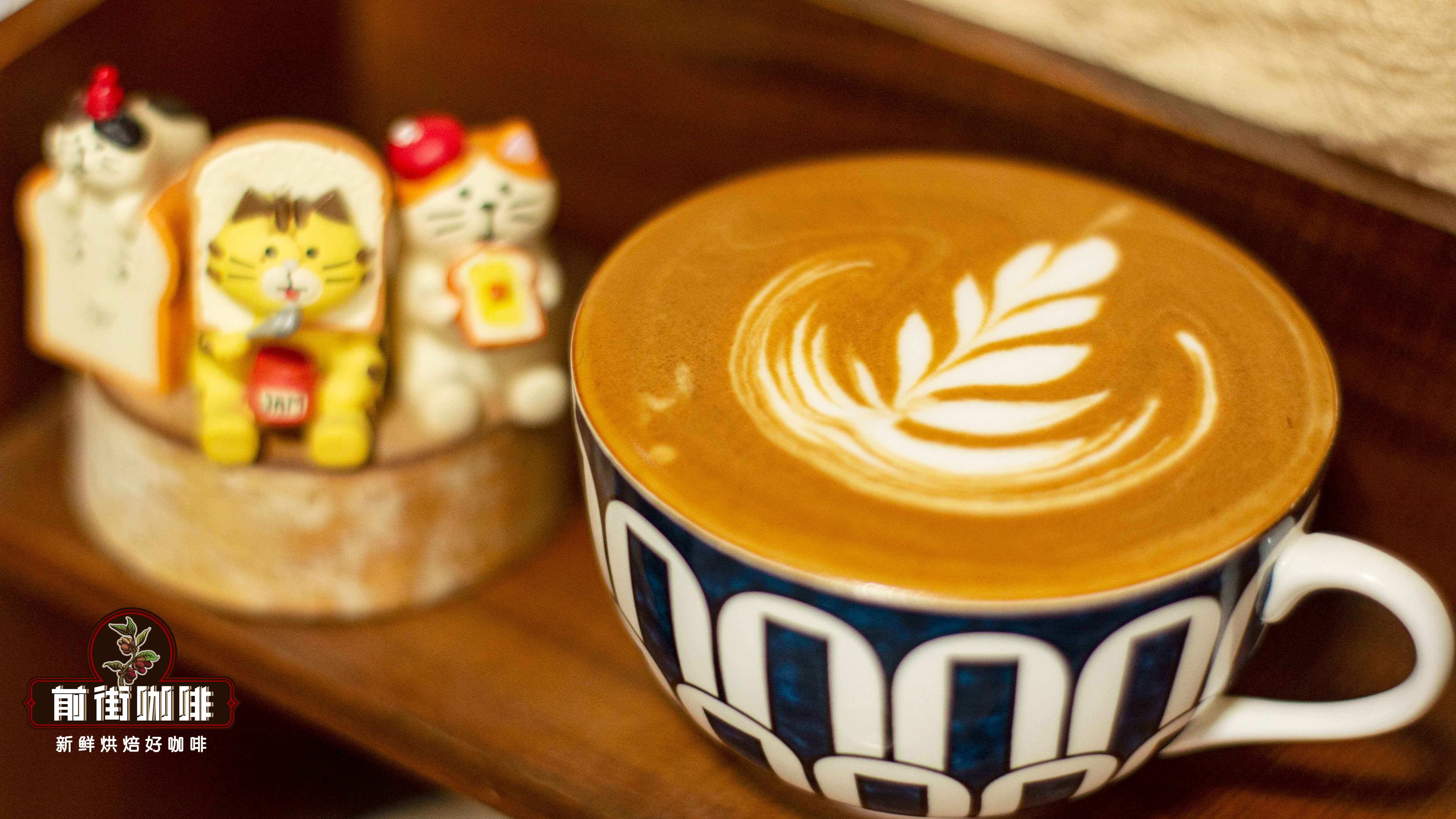
Because the milk foam is extremely thin, when serving Flat White, Front Street Coffee (FrontStreet Coffee) first integrates the espresso and milk, then finally pours at a fixed point in the center, or draws a simple pattern (such as a heart).
For more coffee bean information, please follow Coffee Workshop (WeChat public account: cafe_style)
For professional coffee knowledge exchange, please add WeChat ID: kaixinguoguo0925
The above content is compiled by CoffeeHunters, a coffee news website.


