







How are Mandheling coffee grades and flavors classified?
Mandheling coffee comes from Sumatra in Indonesia, mainly the Aceh and Lintong areas, grown at roughly 1,100 to 1,600 meters. Its flavor depends on three things: origin, variety, and processing method. The wet-hulled process gives the beans their herbal, spicy and earthy profile. Golden Mandheling refers to a trademarked grade tied to PWN company standards, while regular Mandheling covers the broader crop.
For beginners, Mandheling is often suggested as a bean to practice pour-over with, and it also works in a siphon or French press. The typical cup shows baked toast, nuts, pine, caramel and herbal notes from varieties such as Ateng. Golden Mandheling coffee is held to tighter grading, which is why its price and consistency sit above ordinary lots.
Mandheling is the representative of Indonesian coffee, but do you know exactly how Golden Mandheling differs from regular Mandheling? This article starts with Front Street Coffee's Indonesian Golden Mandheling, focusing on the three key elements of origin, variety, and processing method, sorting out the characteristics of core producing areas such as Sumatra, Aceh, and Lintong, explaining in detail how the wet-hulling process shapes Mandheling's signature herbal and spicy notes, and uncovering the origin of PWN Company's "Golden Mandheling" trademark and its grading standards. It will also share why Mandheling is an easier bean to practice pour-over with at home, suitable for multiple extraction methods such as pour-over, siphon, and French press.
For more specialty coffee knowledge, welcome to follow our WeChat public account: Front Street Coffee
As the specialty coffee wave continues to expand, more and more coffee enthusiasts are beginning to try making pour-over coffee at home. However, pour-over is not something you can master just by following a recipe; it requires repeated practice and gradually accumulating feel before you can consistently brew a satisfying cup. Next, Front Street Coffee will talk with everyone about the key points of practicing pour-over at home. Among them, Front Street Coffee feels that Front Street Indonesia Mandheling coffee beans are a relatively suitable choice for beginner practice, so this article will start with Front Street Indonesia Golden Mandheling.
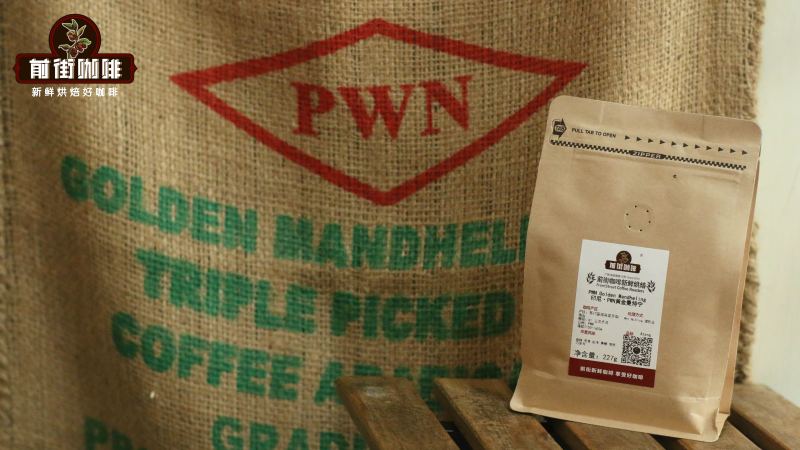
Front Street Coffee: Front Street PWN Golden Mandheling Coffee Beans
Country: Indonesia Region: Sumatra, Aceh, Gayo Mountain Altitude: 1100-1600m Variety: Ateng Processing Method: Wet-hulled Flavor: Baked toast, nuts, pine, caramel, herbal
Indonesian Mandheling Coffee Producing Areas
Front Street Coffee has mentioned many times in past articles that the formation of coffee flavor mainly depends on three links: producing area, variety, and processing method. Below, Front Street Coffee will follow these three points to talk about Front Street Mandheling coffee. Mandheling's producing areas are concentrated on the island of Sumatra in Indonesia. This island is Indonesia's largest island, close to the equator, with a typical tropical rainforest climate, high temperatures, high humidity, and abundant rainfall, making it very suitable for growing high-quality Arabica coffee.
However, Indonesia's producing areas themselves have limited altitude conditions, and there is not much land available for growing high-quality Arabica. Therefore, only about one quarter of Indonesia's coffee output belongs to the Arabica species. Arabica usually needs higher altitudes to develop ideal flavors, so the remaining about three quarters of the land is planted with Robusta, which can adapt to lower altitudes. The relatively highest-altitude area in Indonesia is precisely Sumatra.
In addition, among the traditional Arabica coffee produced in northern Sumatra, the best-quality batch will enter the market under the name Lintong Mandheling. Strictly speaking, Lintong Mandheling refers to coffee grown in the Lintong administrative region, in a small area southwest of Lake Toba.
Sumatra Coffee Bean Producing Areas
Mandheling coffee is also called "Sumatra coffee." Most producing areas in North Sumatra are located in the Gayo region, mainly with the Ateng variety; the area around Lake Tawar at the northern tip can be called Aceh coffee or Tawar Lake coffee; Lintong in South Sumatra and the area around Lake Toba can be called Mandheling. The Lintong area is the core producing area of Mandheling. The finest local Mandheling varieties include four: Sidikalang, Bergendar, Siborong borong, and Telok Sanggul.
Lake Toba: Located in the central part of North Sumatra Province, Dutch colonists introduced "Java Mandheling" northward to the Lake Toba area in 1888, thus creating the legend of modern Mandheling.
Lake Tawar: Located in the central part of the Aceh Special Region, at the northernmost tip of Sumatra Island, with an area less than one tenth of Lake Toba. But in recent years, the coffee quality and output of this region have surpassed Lake Toba.
Gayo Mountains: Located in the Aceh producing area of North Sumatra Province, most coffee farmers working in the Gayo area are local farmers. The term "Gayo" originates from a tribe in the Aceh region of Indonesia. This region has ideal growing conditions, a long history and culture, and unique flavor performance. Local coffee is generally grown organically, without chemical fertilizers, and is considered a green coffee production region in the world. Therefore Gayo coffee is also often called green coffee or Gayo organic coffee.
Indonesian Mandheling Coffee Processing Method
When talking about Indonesian coffee, Front Street cannot fail to mention here the processing method that brought Mandheling to the world—wet-hulling. Interestingly, this green bean processing method was not a solution actively chosen by locals, but a response forced by weather conditions. Yet it is precisely this that gives Mandheling its unique earthy, herbal, and spicy notes.
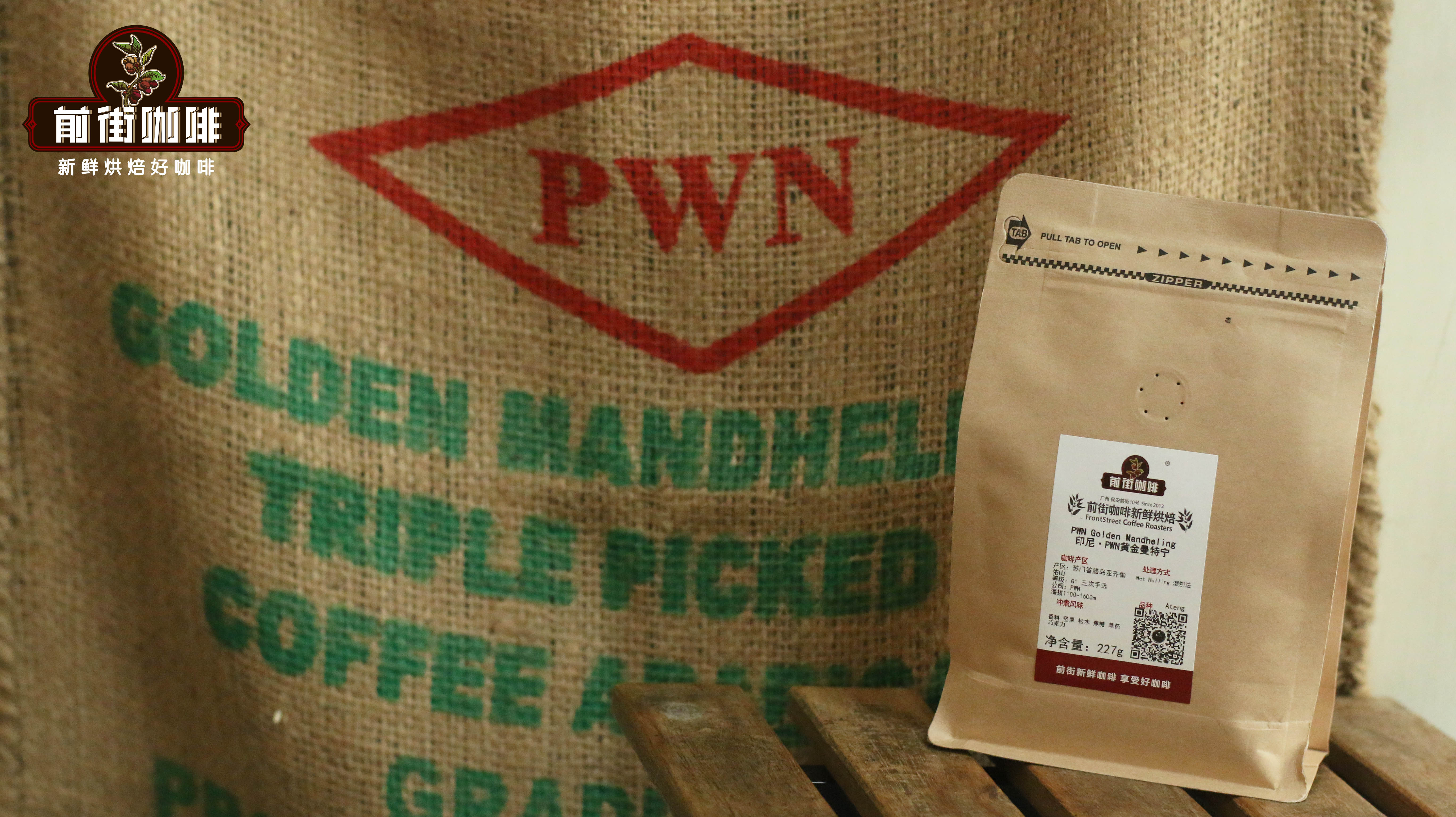
When the wet-hulling method is used, the moist green beans, half hard and half soft, are easily squeezed and damaged during the process of removing the mucilage and parchment layer. The beans split open and take on a shape like a sheep's hoof, commonly known as sheep hoof beans. Front Street Coffee believes this is a very distinctive characteristic of Mandheling and does not count as a defective bean.
The Origin of Indonesia's Wet-Hulling Method According to Front Street Coffee's understanding, the reason Indonesia uses the wet-hulling method to process coffee cherries is that the local weather is rainy and typhoons are frequent, making it difficult to obtain the good weather required for natural sun-drying; in addition, local economic conditions are poor, and there is no capacity to bear the higher cost of the washed method, so the highly locally characteristic wet-hulling method came into being.
Of course, today Indonesia's coffee industry is no longer the impoverished scene of the past, and there are quite a few estates and companies capable of using the washed method, but they still have not abandoned wet-hulling. Front Street Coffee believes that wet-hulling is the factor that pushed Mandheling coffee to the world. Whenever Mandheling is mentioned, people think of wet-hulling. Clearly, the two have formed a mutually reinforcing relationship.
The specific steps of the wet-hulling method can be divided into two stages:
The first stage, use a wooden pulper to remove the skin and pulp, ferment for 3 hours, then dry, bringing the moisture content down to a semi-dry, semi-wet 30-50%. The second stage, remove the mucilage and parchment layer, continue drying in the later stage; the drying process takes 2-4 days, and the moisture content drops to 12-13%.
What is "Golden Mandheling"?
When talking about "Golden Mandheling," we must start with PWN. This abbreviation often appears together with the name Mandheling coffee. It is actually the abbreviation of a company—Pwani Coffee Company.
This company is very famous locally in Indonesia and is mainly engaged in coffee purchasing, especially Mandheling coffee. Almost all of Indonesia's best producing areas have been bought up by it, so most beans produced by PWN are unique specialty products. Golden Mandheling is exactly a product launched by this company. After the green beans are purchased, they undergo multiple rounds of manual hand-sorting to select plump, defect-free beans. In the end, only these excellent beans, filtered out like layer after layer of auditions, can be classified as Golden Mandheling.
As the specialty Mandheling market grows larger and larger, PWN Company also realized the importance of trademarks and registered the English name "Golden Mandheling" as an exclusive trademark one step earlier than the Japanese. Therefore, only the Golden Mandheling produced by PWN Company counts as true "Golden Mandheling"; what the Japanese produce can only be renamed "Top Mandheling." The Golden Mandheling obtained by Front Street is naturally the genuine product from PWN Company. Everyone can identify authentic Golden Mandheling through the green bean jute bags bearing the PWN logo and a certificate of origin signed by PWN Company. Front Street displays these two marks in the Dongshankou store.
Observing the green bean jute bags of Golden Mandheling, you can see the words "Triple pick" and "GRADE 1," meaning it belongs to Indonesia's highest grade of green beans. During production, PWN, on the basis of purchased GRADE 1 green beans, underwent three more rounds of hand-sorting.
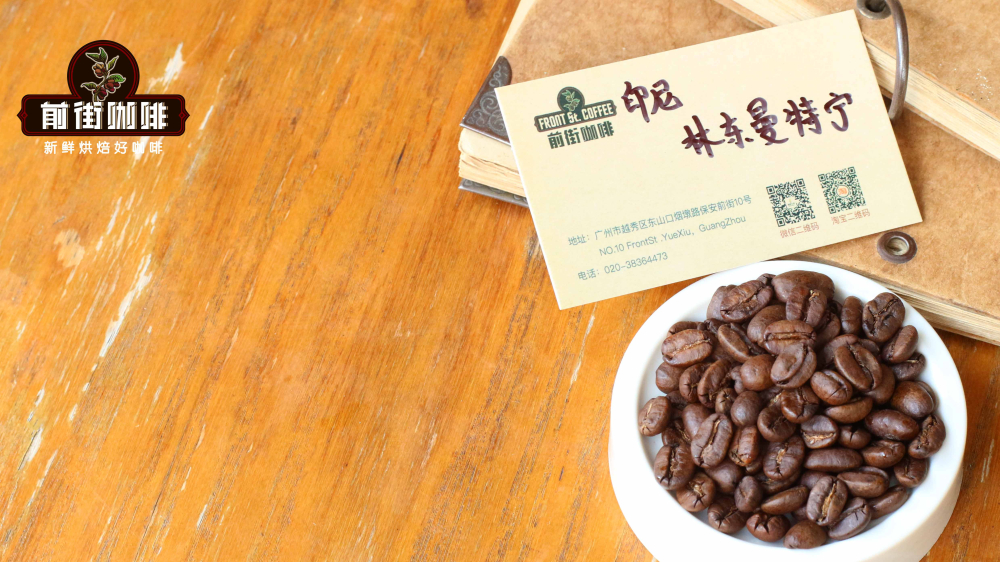
In order to give Mandheling a full roasted coffee aroma and a solid mouthfeel, Front Street Mandheling everyday coffee beans and Front Street Golden Mandheling coffee beans both use deep roasting and are suitable for various brewing and extraction methods, such as pour-over, siphon, French press, AeroPress, moka pot, coffee machine... Everyone can purchase them at the Front Street flagship store or Front Street Taobao store.
The above content is compiled by CoffeeHunters, a coffee news website.


