







Why does coffee quality matter again for Starbucks China?
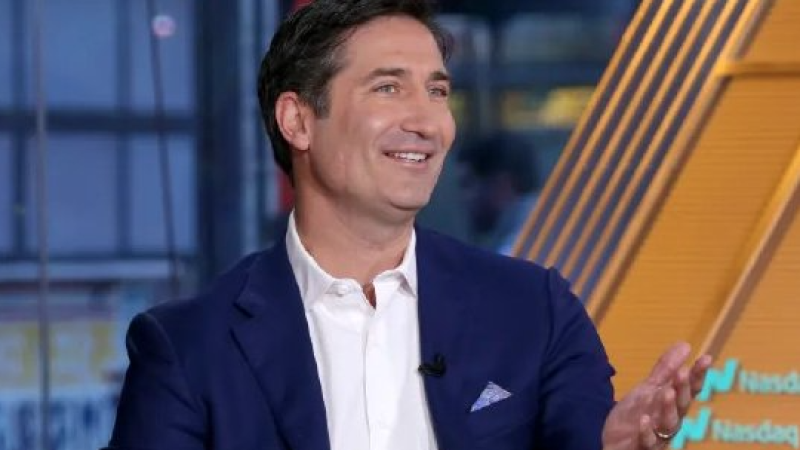
Brian Niccol, Starbucks' new chief executive, used his first open letter to say the company should rediscover its original self, putting community cafés and coffee quality back at the center. The letter also called China a market with tremendous vitality that needs a clear growth path. The message lands as Starbucks China faces weak consumption and a price war led by local brands.
The scale of the pressure shows in the numbers: third-quarter 2024 revenue for Starbucks China fell 10.71 percent year on year to 734 million US dollars. Mainland China stores are company-owned rather than franchised, so the chain carries the cost of every location directly. Investor calls to spin off the China business have resurfaced as local rivals push low-price coffee.
After taking the helm as Starbucks' new leader, Brian Niccol issued his first open letter, emphasizing a return to the original aspiration of community cafés and coffee quality. However, in the face of a price war and declining revenue in the Chinese market, investor calls to spin off the China business have resurfaced. Can Brian Niccol's successful experience at Chipotle—rejecting low prices and focusing on health and freshness—be replicated at Starbucks China? This article will sort through the challenges facing Starbucks China, the possibility of a spin-off, and the new CEO's past track record, offering coffee lovers an in-depth interpretation.
After taking office as Starbucks' new chief executive, Brian Niccol quickly issued his first public letter. In this letter, he proposed that Starbucks should "rediscover its original self," once again emphasizing the brand's identity as a community café and promising to focus on improving the in-store consumer experience.
Brian Niccol stated that Starbucks was built from the very beginning on a passion for specialty coffee, with every cup handmade by baristas in green aprons and then solemnly handed to customers. In Starbucks' view, coffee is not just a beverage, but a sincere work imbued with craftsmanship. Likewise, stores are not merely places to drink coffee, but community spaces where people gather, talk, and form friendships.
He specifically mentioned that the Chinese market contains tremendous vitality, and that Starbucks needs to find an effective path to growth and fully unleash its unique advantages. As Starbucks' second-largest market globally, China has been affected by weak consumption and a fierce price war among local coffee brands. The third-quarter 2024 financial report showed that Starbucks China's revenue fell 10.71% year on year to US$734 million.
There is information indicating that Starbucks does not open franchising in China; all stores in mainland China adopt a company-owned direct-operation model and do not license franchises externally. But competition in the Chinese market is becoming increasingly intense, and consumer demands are constantly evolving, leaving Starbucks China facing unprecedented challenges.
At present, the domestic coffee market is mired in a prolonged price war. With the successive rise of local brands such as Luckin and Cotti, the idea of "coffee for 9.9 yuan" has taken deep root in consumers' minds. To cope with competition, Starbucks has had to lower its posture and frequently launch low-price promotions, such as "three cups for 59.9 yuan, two cups for 45.9 yuan, one cup for 19.9 yuan."
The third-quarter 2024 financial report showed that both Starbucks' average ticket price and transaction volume in the Chinese market declined. Although discount promotions increased purchase frequency and translated into sales and profit, the current situation of "trading price for volume" seems to conflict with Starbucks' brand positioning.
In view of this, some investors have suggested that Starbucks consider spinning off its China business and turning the China division into an independent entity to boost its stock price. In July of this year, former Starbucks CEO Laxman Narasimhan revealed on an earnings call the idea of divesting the China business.
Now, market analysts believe that Brian Niccol's appointment further increases the possibility of Starbucks spinning off its China business. Previously, Brian Niccol had led two chain restaurant companies, Taco Bell and Chipotle, out of trouble. During his tenure, Chipotle's annual revenue grew by an average of 34%, operating profit rose 91%, and net income increased by an average of 175%.
Known as the "miracle firefighter," Brian Niccol took over Chipotle after the company had tried to cut costs by simplifying operating procedures or lowering ingredient quality, which led to a severe food safety crisis from 2015 to 2016 and forced more than 40 stores to close.
At the time, the senior management team resorted to a "low-price strategy," which further damaged Chipotle's brand image and reduced it in the minds of American consumers to a prime example of being "cheap and unsafe."
After Brian Niccol arrived at Chipotle, he clearly said "no" to the price war. Shortly after taking office, he halted all low-price tactics and promotional strategies. He keenly observed that among Chipotle's core customer base at the time, the share of "millennials" was gradually expanding, and what these young consumers cared about most was not "low prices" but "health."
Subsequently, Brian Niccol shifted Chipotle's strategic focus to "made-to-order, fresh ingredients, health," and began modestly raising prices. A series of measures ultimately propelled Chipotle into the ranks of the top four chain restaurant giants by market value, with its stock price reaching its highest point since inception.
In response to possible changes at Starbucks China after Brian Niccol took office, relevant Starbucks China personnel told the media that the leadership reshuffle at headquarters would not affect the Chinese market.
Image source: Internet
The above content is compiled by CoffeeHunters, a coffee news website.


