







Is Americano Coffee Bitter, or Is the Brew Simply Too Strong?
Bitterness in coffee usually comes from over-extraction: brewing too long or with water that is too hot pulls harsh compounds from the grounds, and no method rescues that cup. Coffee that is merely too strong is a different problem, caused by a high extraction yield that has not yet tipped into over-extraction, so the flavor stays concentrated rather than spoiled.
Bypass is the standard fix. Adding water straight to the brewed coffee, roughly 10 to 20 milliliters at a time, lowers concentration while leaving the extraction yield untouched. For coffee that is too weak, cup color helps: red or coffee-colored ceramic cups make the brain read a richer taste than glass, improving the drinking experience.
Pour-over coffee seems easy, but brewing a satisfying cup is not simple. Many enthusiasts are often troubled by coffee that is too strong or too weak: when too strong, the bitterness lingers and irritates the throat; when too weak, the flavor is light as water—not unpleasant, but hardly good. This article addresses these two common situations. First, it analyzes the causes of coffee being too strong—often due to a high extraction yield that has not yet reached over-extraction—and introduces a professional adjustment method called "bypass," which means adding water directly to the coffee liquid to reduce concentration while preserving the extraction yield. Front Street Coffee also recommends adding 10-20ml at a time. For coffee that is too weak, it cannot be physically made stronger, but we can use cup color experiments and the visual differences between glass and ceramic cups—letting red or coffee-colored ceramic cups make the brain perceive a richer taste—to improve the drinking experience.
Although pour-over coffee is simple to operate, brewing a good cup still has some difficulty, and friends often jokingly call themselves "masters of over-extraction." The so-called "over-extraction" here mostly describes coffee with unacceptable flavors such as burnt bitterness, off-flavors, and astringency. These flavors are mostly caused by brewing the coffee too long or using water that is too hot, which makes the coffee grounds release too many bitter substances.
If such negative flavors appear, it is also hard to rescue the cup by any method; you can only summarize the problems of this brew and adjust in the next brew. In addition, some coffees have no obvious negative flavors but still feel uncomfortable to drink. For example, coffee that is too strong tastes too stimulating, and the bitterness easily remains on the tongue without dissipating for a long time. Coffee that is too weak has a very light flavor, with a mouthfeel like water; although it is not unpleasant to drink, it cannot be considered a good cup of coffee. If you brew such a cup that is not very tasty but acceptable, will you keep drinking it or pour it away? Or choose a third method and try to rescue it. Coffee brewed too strong is actually very common. When Front Street was sorting through friends' brewing feedback, a considerable number of friends felt that the coffee they brewed had a heavy bitterness, tasted very strong, and choked the throat uncomfortably. When Front Street asked whether they felt burnt, astringent, or off-flavors, 80% of these people said it was not burnt or astringent, but the taste was a bit muddled. If you also feel this way, it is very likely that the coffee is too strong and making you uncomfortable, or possibly that the extraction yield is high but has not reached "over-extraction." In this case, we can add an extra 10-20ml of water to adjust the concentration.
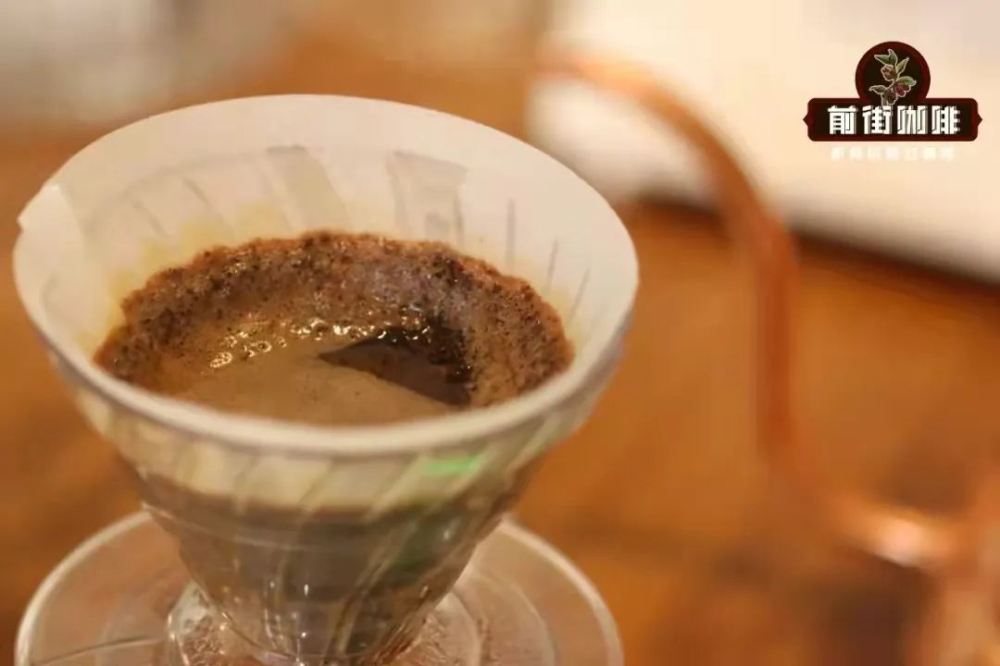
This method has a professional term called "bypass"! Translated into Chinese, it means "旁路." It is an extraction strategy or remedial measure in coffee extraction. For example, the Americano we drink in coffee shops is actually a bypass approach. Espresso extracted with an espresso machine is very strong, and the general public cannot directly drink such strong and bitter coffee, so water is added to dilute its concentration, making its taste less concentrated and stimulating, and becoming comfortable and palatable. In this water-adding process, the water does not pass through the coffee grounds but bypasses them and goes directly into the coffee liquid, so it does not affect the coffee's extraction yield; it only changes the coffee's concentration, making it milder.
Applying bypass in practice: if you taste your coffee and the flavor is concentrated, strong, and bitter, making you uncomfortable, but there are no obvious defective flavors, then you can add water to the coffee liquid to adjust it. The amount of water added should not be too much, generally controlled within 10-20ml. You can first add 10ml of water, then shake evenly, and taste again. If it still feels a bit strong, add another 10ml. Gradually adding water can effectively avoid the risk of the coffee becoming too weak.

When coffee liquid is too strong, the coffee substances are too concentrated, making it harder to distinguish the coffee's flavors. By adding water to lower the coffee's concentration, the originally concentrated flavors spread out due to dilution, making them easier to identify. There is another situation: because everyone perceives concentration differently, some people think the cup's concentration is suitable, while others still think it is very strong. For this situation, using bypass is especially suitable. So what should be done if the coffee is too weak? Bypass can dilute strong coffee, but it cannot make weak coffee stronger. In fact, there is no way to make weak coffee stronger on a physical level (you cannot pour the coffee into a pot and "reduce it over high heat," after all). Could we use a way of tricking the brain to make us feel that the cup is not so weak? A Sanmi Coffee shop in Japan did an experiment, serving 30 guests four cups of coffee with different cup colors one after another; the four cups of coffee were actually the same concentration. As a result, when drinking coffee from a coffee-colored cup, two-thirds of people thought the coffee was too strong; when drinking from a cyan cup, everyone thought the coffee was too weak; when drinking from a yellow cup, almost everyone thought the concentration was just right. When drinking from a red cup, almost everyone thought the coffee was too strong. In other words, color affects our cognitive judgment. For example, when coffee is served in a glass cup versus a ceramic cup, visually the perceived concentration also differs. With a glass vessel, the coffee's transparency is better, so it is perceived as weaker, while the coffee color reflected by a ceramic cup is deeper and looks stronger.
If you feel the coffee is a bit weak, you might as well try drinking it from a red or coffee-colored ceramic cup.
The above content is compiled by CoffeeHunters, a coffee news website.


