







Why do distribution and tamping decide hand brew coffee quality
Espresso preparation happens before the brew button is pressed. Distribution evens out the coffee particles in the basket, and tamping compresses them into a puck that can resist 9 bar of water. If density is uneven or the tamp is too light, water punches through the path of least resistance, causing channeling and imbalanced flavor.
The standard workflow runs from dosing, to distribution, to tamping. Good dosing at the start saves effort later, since a level bed distributes more easily. Manual distribution and distribution tools each have trade-offs, but both serve the same goal: a uniform puck. Most channeling traces back to a mistake in one of these two steps.
Brewing a proper espresso—the real contest begins before you even lock in the portafilter. Distribution and tamping, as the core steps of the preparation stage, directly determine whether the coffee puck can withstand the impact of 9 bar of pressurized water. Once the coffee bed is uneven in density or not tamped firmly enough, hot water will seek the path of least resistance and punch through, creating what is known as "channeling," which leads to uneven extraction and imbalanced flavor. This article breaks down the standard workflow step by step—from dosing, to distribution, to tamping—compares the pros and cons of manual distribution versus using a distribution tool, and shares Front Street Coffee's professional advice on common pitfalls, helping you consistently reproduce a well-layered espresso at home.
In the espresso extraction process, the actual extraction only begins the moment you press the brew button and water starts flowing. Everything before that is preparation. However, how a shot of espresso ultimately turns out depends largely on whether this preparation stage was done properly.
The reason distribution and tamping are so critical is that they both serve one goal—avoiding "channeling." The purpose of distribution is to even out the coffee particles inside the basket. When the density across the coffee bed is more uniform, water is less likely to find shortcuts.
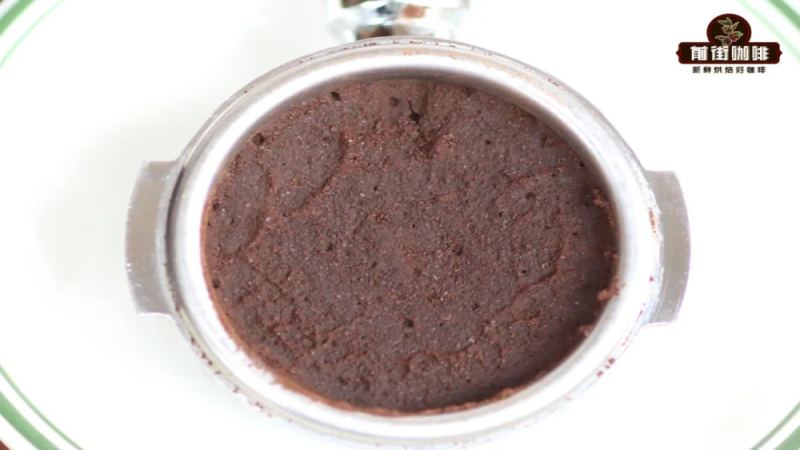
The holes in the image are the traces left by "channels." Tamping, on the other hand, compresses the loose, fluffy coffee grounds into a puck. The reason is that during extraction, hot water at 9 bar passes through the coffee bed, and a structure that is too fluffy simply cannot withstand that kind of impact—at which point it is not just a matter of localized channeling, but the entire puck falling apart. Therefore, tamping is needed to force the coffee grounds into a barrier that slows the rapid penetration of water.
In theory, this logic is clear, but in practice, even a slight deviation can backfire. Most "channeling" that occurs during espresso extraction can be traced back to mistakes in the distribution or tamping steps. Nail these steps down, and a good espresso extraction will follow naturally.
- Dosing Stage
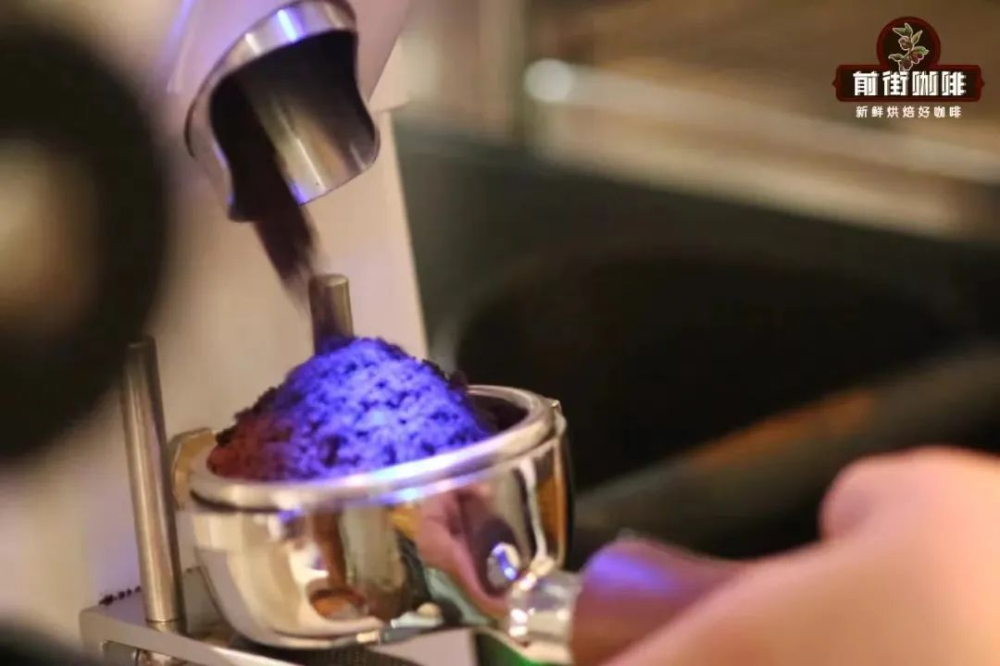
Why discuss dosing separately? Because if you dose well, you will save a lot of effort in the subsequent distribution step. The ideal dosing state is when the coffee grounds fall naturally into the basket and pile up into a small mound with a raised center. If after dosing you find one side higher than the other, things get trickier—you will need to gently tap the lower side to gradually level the surface.
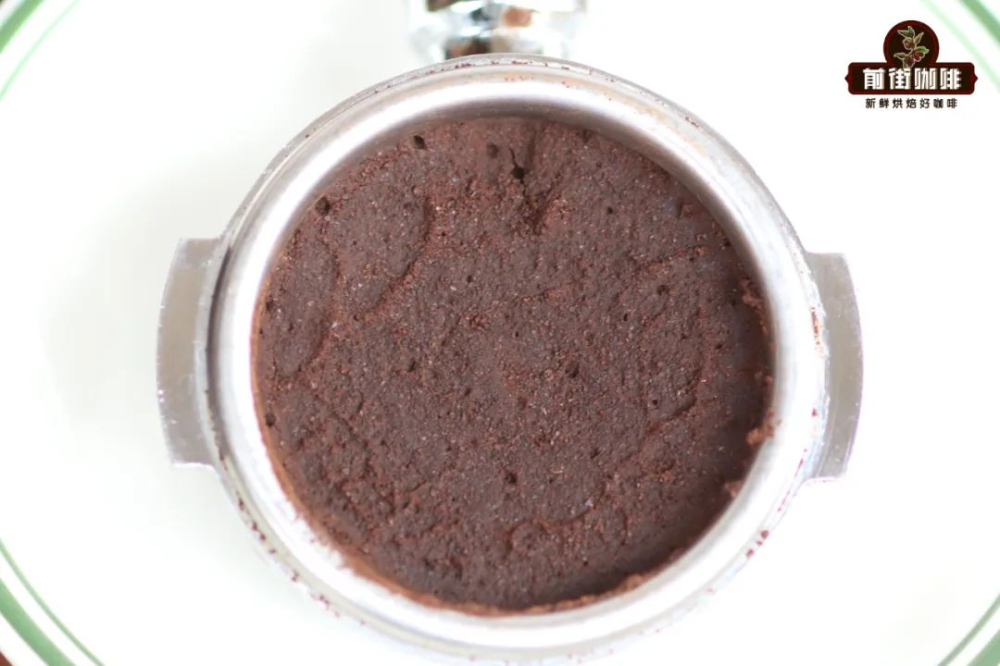
Some people habitually knock the portafilter against the table a few times to level things out, but Front Street does not recommend this. The vibration from knocking can compact the coffee grounds too tightly, which actually creates more trouble for the subsequent distribution step.
- Distribution Stage
Currently there are two main approaches to distribution: one is the traditional manual distribution, and the other is using a distribution tool.
For manual distribution, use your index finger and the web between your thumb and palm to push back and forth, encouraging the coffee particles to fill the gaps and ensuring even distribution. Note that your finger should move in a horizontal direction—do not apply downward force. Manual distribution is indeed effective, but the learning curve is steep. If you do not grasp the key points, it is easy to distribute unevenly and plant hidden risks of "channeling."
For this reason, many coffee shops now choose to use a distribution tool to level out technique differences and achieve standardized, consistent output. The usage is not complicated either: when a "mound" forms in the basket, place the distribution tool vertically on top of the basket and rotate it a few turns in the same direction.
However, the distribution tool's shortcomings are also fairly obvious—it applies a downward force during operation, so it only makes the surface of the coffee bed look level. The uniformity between the surface and the bottom actually differs considerably. In terms of uniformity, this method is not optimal, but it is still within an acceptable range. Its advantages are equally prominent: fast, easy to learn, and highly consistent.
- Tamping Stage
The most common problem with tamping is an uneven tamp, and the root cause is often incorrect posture (the arm is not kept vertical) or the wrong point of force (using your fingers to apply pressure). The standard tamping technique (note: standard, not the only way) is: place your thumb and index finger on either side of the tamper, grip the handle with the remaining three fingers, rest the center of your palm on top of the handle, keep your arm vertical, and direct the force downward through your arm so that your palm presses the tamper down, while using your index finger and thumb to feel the change in thickness on both sides of the basket (text descriptions are limited—you will get the feel after a few tries).
Once you have accumulated enough tamping practice, you will be able to tell—the instant you press down—whether the coffee grounds are too coarse, too fine, too much, or too little.
The above content is compiled by CoffeeHunters, a coffee news website.


