







Why does Yirgacheffe coffee trees taste floral?
Ethiopia's Yirgacheffe region grows coffee between 1,700 and 2,200 meters, and that altitude shapes the cup. Cool nights slow cherry ripening, so sugars and aromatic compounds build up. The result is a light, floral and fruity coffee with citrus acidity and a honey-like finish, not the bitter profile many expect.
Coffee trees were first found in the Horn of Africa, and Yirgacheffe is one of the areas that still shows why origin matters. Smallholders send cherries to cooperative washing stations for processing and export. Washed lots lean clean and tea-like, while natural lots bring heavier berry and dried-fruit notes.
The African continent often gives the impression of being arid and barren, but it is precisely this land that gave birth to the world's first coffee tree. Today, Ethiopia's Yirgacheffe has become a benchmark growing region that cannot be overlooked in specialty coffee. This article will guide you through Yirgacheffe's geographical environment, the advantages of high-altitude cultivation, and the impact of washed and natural processing methods on flavor, and introduce two representative Yirgacheffe coffee beans from Front Street — Gutingting and Red Cherry — to help you find the floral and fruity coffee you love.
When it comes to Africa, most people picture deserts, drought, tribes, and poverty. Yet it is precisely this unique climate that makes Africa an ideal place for coffee trees to thrive. The world's first coffee tree was discovered in the Horn of Africa. Over the passage of time, Ethiopian coffee has now firmly secured its place as a representative of the specialty coffee world, and Yirgacheffe is among the finest of them all.
The town of Yirgacheffe is located in the Sidama region of Ethiopia, with coffee cultivation at altitudes ranging from 1,700 to 2,200 meters. This area is both the administrative hub of Ethiopia's coffee-growing regions and an important zone for producing high-quality coffee beans. Since nearly every household in Yirgacheffe town makes a living from coffee farming, individual yields are generally limited, so harvested cherries are typically sent to the town's cooperative processing stations for centralized processing, and exports are also conducted in the name of the cooperative.
The high altitude gives Yirgacheffe a significant temperature difference between day and night, which slows the ripening pace of coffee cherries and thereby promotes a richer accumulation of flavor. The reason Front Street's Yirgacheffe coffee beans are so highly regarded is precisely their abundant floral and fruity aroma and bright acidity, which overturn the public's preconceived notion that coffee is only bitter. It was also starting from Yirgacheffe that people realized coffee could present such a clear, clean, and richly layered flavor profile.
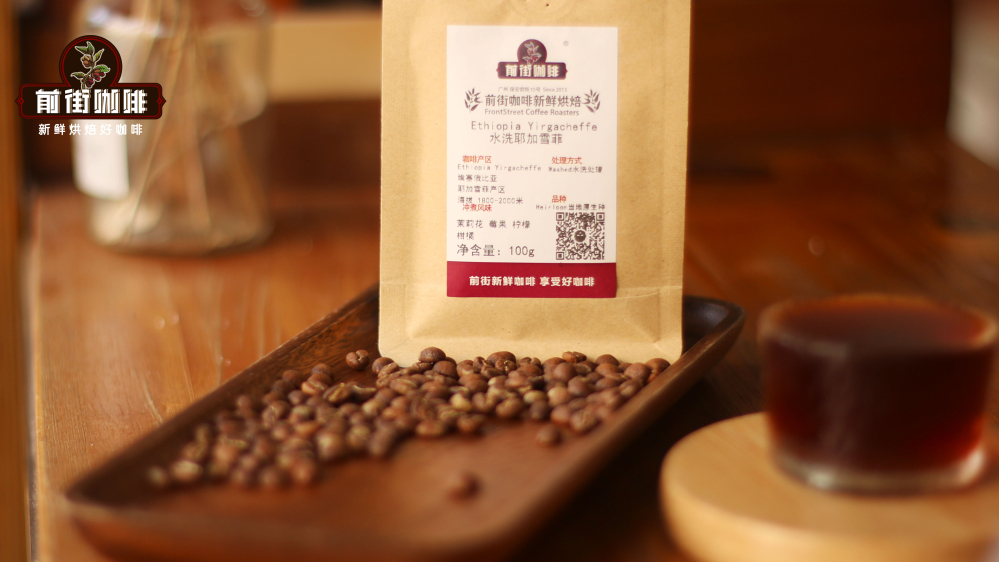
Front Street's Ethiopian Yirgacheffe coffee beans feature a distinct citrus acidity, rich white floral notes, and a honey-like sweet finish. The fresh tonality woven from these floral and fruity notes is the signature characteristic of coffee beans from the Yirgacheffe region.
Traditionally, Yirgacheffe is divided into two major categories: washed and natural.
The washed Yirgacheffe method is as follows: first, the harvested coffee cherries are passed through a machine to remove the skin and pulp, then placed in fermentation tanks with clean water to ferment for 12 to 36 hours. The acidic substances produced during fermentation break down the pectin, after which the beans are scrubbed with clean water and then sun-dried. The washed method removes impurities (such as stones and debris) and defective beans at each stage, so the green beans have a uniform appearance, high cleanliness, and stable flavor. It is generally regarded as a symbol of high quality, and its trading price is relatively higher.
Washed Yirgacheffe recommendation: Front Street Gutingting Coffee Beans
Region: Yirgacheffe growing region
Altitude: 1900-2000m
Processing method: Washed
Variety: Heirloom
Flavor: Jasmine, citrus, berries, tea-like
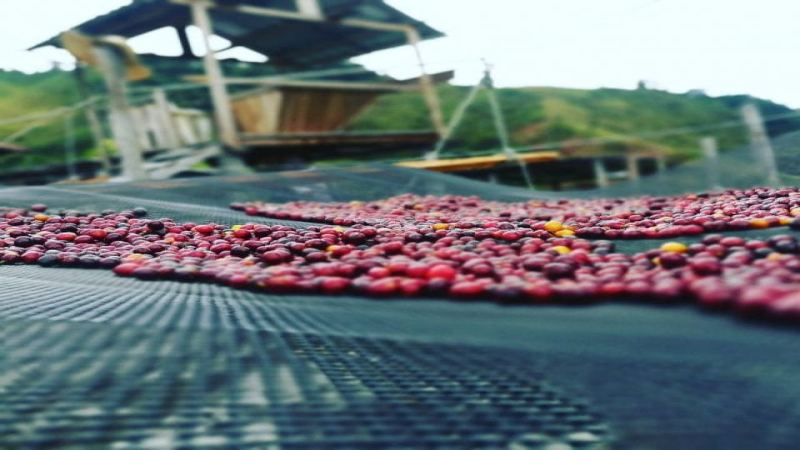
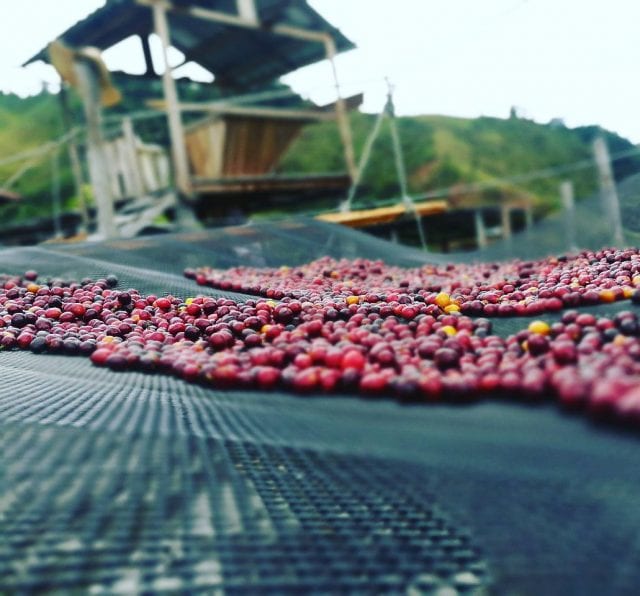
Natural Yirgacheffe, on the other hand, involves spreading the harvested coffee cherries directly on drying beds for sun drying. Natural processing is one of the oldest and most traditional processing methods. The cherries are exposed to sunlight immediately after picking, which is especially common in areas with abundant sunshine or scarce water resources — among all growing regions in Ethiopia, nearly 70% of coffee cherries are processed naturally. Compared with washed Yirgacheffe, naturally processed coffee has lower acidity, higher sweetness, and a more pronounced mouthfeel, but slightly less cleanliness. In terms of flavor, it presents more berry-like notes and greater complexity.
Natural Yirgacheffe recommendation: Front Street Red Cherry Coffee Beans
Region: Yirgacheffe Aricha Processing Station
Altitude: 2300m
Variety: Ethiopian Heirloom
Processing method: Natural
Flavor: Citrus, berries, fruity fermented aroma, honey, creamy mouthfeel
The above content is compiled by CoffeeHunters, a coffee news website.


