







How Does Kenya K72 Washing Shape Coffee Taste?
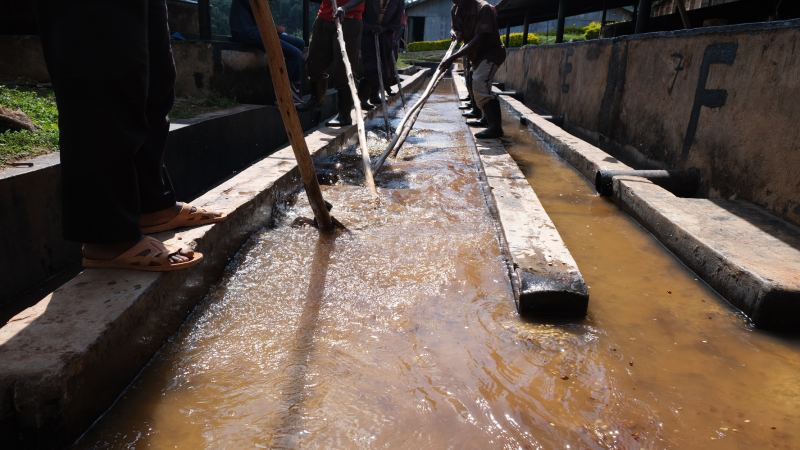
Kenya's K72 method is a double washed process: fresh cherries are pulped, fermented overnight in an upper tank, washed, fermented again for about 36 hours in a lower tank, washed, soaked in water for 12 hours, then dried. The result is high acidity and a very clean cup.
Fermentation time depends on ambient temperature, and circulating water must be changed every few hours to keep the process even. Beans graded AA, the largest screen size, are common in this style. Words to describe coffee taste often include tomato, blackcurrant, and berry, matching the bright character of Kenyan lots.
Kenyan coffee is renowned for its bright acidity and clean taste, with the K72-hour double washing method being key to its flavor. This article explains this processing method's two fermentation and two washing stages, describes how fermentation time control affects coffee's acidity and cleanliness, and introduces the Kenyan AA grade standards. It also combines Front Street Coffee's Kenyan Cherry Tomato Coffee to provide hot pour-over parameters and flavor descriptions, helping readers understand the complete flavor logic from processing method to cup.
For more specialty coffee knowledge, welcome to follow: Front Street Coffee (Frontsteet Coffee)
Front Street's Kenyan coffee beans are basically all processed using the K72-hour washing method. In the specialty coffee field, washed processing is one of the most valued methods. Generally speaking, washed coffee beans have a cleaner flavor with very few off-flavors, and their fruit aromas and fruit acidity are also more outstanding. Kenya's K72-hour washing method was developed on the basis of conventional washing, and because the coffee cherries undergo two rinses, it is also called the "double washing method."
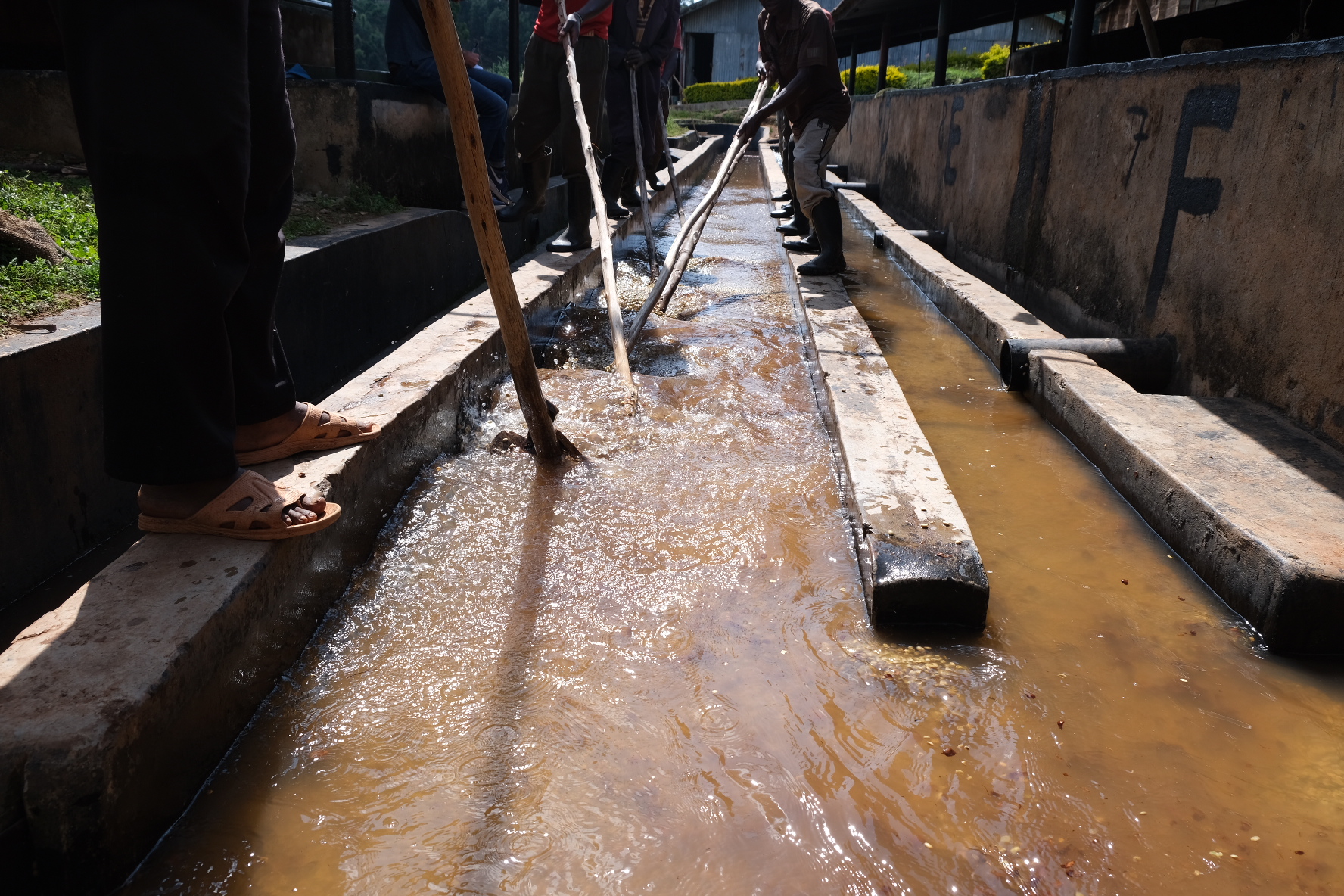
The so-called "double washing method" refers to coffee beans undergoing two washes and two fermentations. The specific process of Kenyan double fermentation is: floating selection of fresh fruit → removal of pulp → fermentation in the upper fermentation tank for 1 night → washing → transfer of parchment beans to the lower fermentation tank for continued fermentation for 36 hours → washing → soaking in water for 12 hours → sun drying. The washing channels of the double fermentation method have two levels, high and low, corresponding respectively to the first and second washing. After harvesting the coffee cherries, defective fruits are first removed, the skin is removed, and then they are poured into the upper fermentation tank for fermentation; dry fermentation without putting them into the tank can also be used directly. The time required for fermentation is affected by many factors; the higher the ambient temperature, the faster the fermentation speed. After a period of time, washing removes most of the mucilage, and then the beans are placed in the lower clean water tank for a second fermentation. It should be noted that during fermentation, the circulating water must be changed every few hours to prevent the coffee beans from becoming foul-smelling.
The coffee beans are washed again with water to remove residual mucilage. The second fermentation plus rinsing requires a total of 36 hours. But this is not the end. If the coffee beans are soaked too long during fermentation, negative flavors will increase. Once it exceeds 36 to 72 hours, over-fermentation may occur, and fatty acids may be produced, making the coffee taste too sour. Therefore, this process lasts about 12 hours or more. In other words, Kenyan washed processing takes at least 48 hours, and may even last as long as 72 hours.
Kenya's unique double fermentation washing method can enhance coffee's original acidity and cleanliness. During the washing and fermentation process, the acetic acid concentration of the coffee beans rises, thereby enhancing flavor expression. The reason Front Street Kenyan coffee has impressive cleanliness and uplifting flavors is not only the growing environment of the coffee beans themselves, but also this processing method.
Characteristics of Front Street Kenyan AA Coffee
In the book "Coffee Bean Hunter" by Hsu Pao-Lin, the content on the grading of Kenyan coffee beans mentions 8 grades: E, AA, AB, PB, C, TT, M. Among them, the Kenyan AA grade is a label that many customers often see when looking for Kenyan coffee beans at Front Street stores.
The standard for Kenyan AA is: the green coffee beans are 17 to 18 screen sizes in size (between 7.2 mm and 8.2 mm), and all are flat beans, meaning each coffee cherry contains two beans.
Many friends who are new to Kenyan coffee, after buying a bag of Front Street Kenyan coffee beans at Front Street, will ask: what is the best way to drink Front Street Kenyan coffee? Front Street's baristas usually recommend pour-over. If you like its acidic aroma, you can choose hot pour-over; if you pursue a more refreshing taste, you can choose iced pour-over, cold brew, or ice drip.
Front Street Coffee (FrontStreet Coffee)'s suggestions for brewing Front Street Kenya
If you do not have the conditions to make iced coffee, how should Front Street Kenyan coffee be brewed? Below, Front Street will use hot pour-over as an example to share the parameters with everyone.
[Front Street Coffee (FrontStreet Coffee) Kenyan Cherry Tomato Coffee]
Region: Thika, Kenya
Processing station: Asali Honey Processing Station
Altitude: 1550—1750 meters
Grade: AA TOP
Variety: SL28, SL34
Processing method: Kenyan 72-hour wash
Brewing suggestion: Dripper: Hario V60, water temperature: 90-91°C, coffee dose: 15 g, coffee-to-water ratio: 1:15, grind size: EK43s#10
Use staged extraction: first bloom with 30 g of water for 30 seconds, then pour in a circular motion with a small stream of water until 125 g for the stage break; when the water level drops and is about to expose the coffee bed, continue pouring until 225 g and stop; when the water level drops again and is about to expose the coffee bed, remove the dripper. Start timing from the bloom; the extraction time is 2 minutes 00 seconds.
Flavor description: The wet aroma has ripe tomato and floral notes; on the palate it presents cherry tomato and smoked plum flavors, with bright acidity, a clean and solid, rich mouthfeel, like the weight of an African elephant! The mid-palate has prominent sweetness with a juicy feel, and the finish is berry aroma and brown sugar sweetness, accompanied by green tea fragrance.
The above content is compiled by CoffeeHunters, a coffee news website.


