







What Does SOE Coffee Meaning Have to Do With a Starbucks Double Shot?
A Starbucks double shot refers to two single espresso shots, and the caffeine total depends on the beans and the drink size. A single shot is traditionally about 1 ounce, roughly 30 milliliters, but modern cafes pull shots by weight rather than volume, so the actual caffeine can vary from shop to shop.
The word shot comes from bar culture, where a shot meant a small glass of liquor. Espresso borrowed the term because it is served and consumed quickly. The SOE coffee meaning, or single origin espresso, also matters here, since single origin beans can shift both flavor and caffeine level compared with a standard blend.
When ordering at Starbucks, have you ever noticed the term "Double shot"? Just how much caffeine does a double espresso actually contain, and how much do different products vary? This article starts with the origin of the word "Shot," traces the evolution of espresso measurement from volume to weight, and explains why the size of a single shot can differ so dramatically from one café to another today. At the same time, we'll draw on Front Street Coffee's extraction practices to provide specific dose, yield, and time parameters, helping you understand the true nature of a double shot more clearly—whether you're a regular Starbucks drinker or extract espresso at home, you'll find practical reference here.
For more specialty coffee knowledge, please follow our WeChat public account: Front Street Coffee (FrontStreet Coffee)
Do you know what "Double shot" actually refers to? Many consumers know that Starbucks' menu features a large number of double-shot espresso drinks, and their caffeine levels vary widely. Which one has the most caffeine, and what differences exist among these products? Front Street is here to find out.
What does the word "Shot" mean?
As for the origin of "shot," after checking the sources, Front Street found that accounts are not consistent and differ considerably from one another.
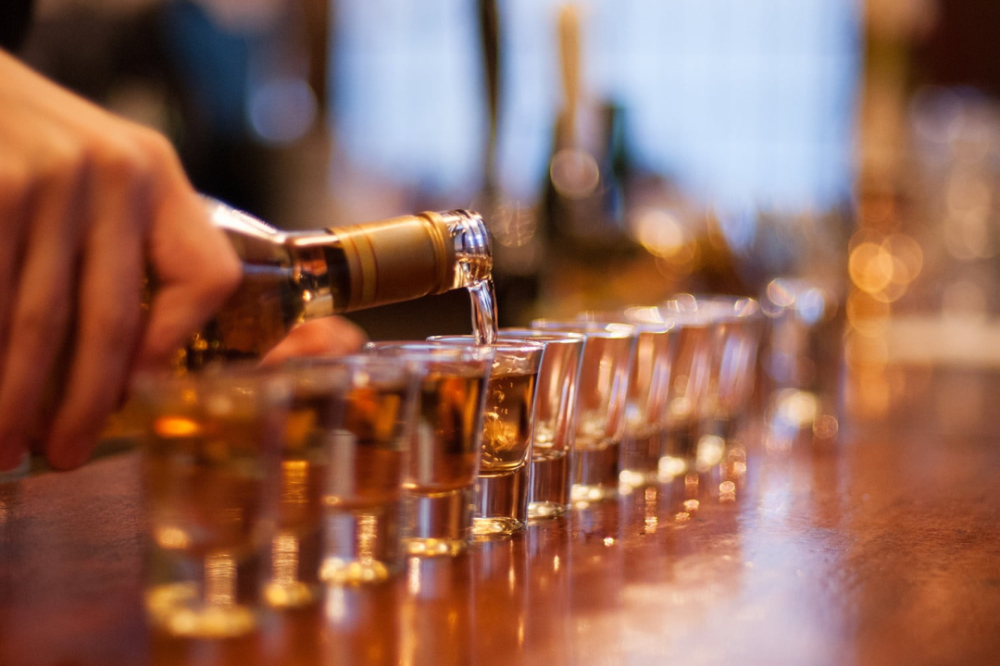
The "Shot" we're familiar with today is more of a unit of measurement in drinking culture, referring to a small glass of liquor. By traditional standard, one shot equals 1 ounce, roughly 30 milliliters. The use of shot glasses became popular in the mid-twentieth century; bars offered these small "down-in-one" glasses so customers could consume alcohol faster, more cheaply, and more conveniently.
Similar to its use in bars, when people talk about "one shot" in a café, they mean a single espresso—a small cup of roughly 30 milliliters of espresso.
Why does espresso borrow the measure word "shot"?
In Italian, espresso carries the meaning of "fast"—a barista needs only about a minute to make a rich, crema-topped coffee. After paying, the customer takes the coffee and finishes it in two or three sips standing at the bar, consuming caffeine very efficiently.
Since there were no precision devices like electronic scales back then, baristas could only judge by eye, using a split spout handle to catch the coffee into two 1-ounce shot glasses and relying on the glass's capacity to decide when extraction ended. Add to that the fact that espresso back then had a heavy, intense, liquor-like taste, and calling it a "shot" didn't seem out of place at all.
Of course, from today's perspective, this approach inevitably involves error and makes it hard to guarantee consistent output every time. That's why baristas today generally use liquid weight as the standard when extracting espresso.
(Note that the volume and weight of crema are not equal, so a shot with thick crema will actually weigh less than one with thin crema.)
For example, for those who prefer thick crema, we recommend the two dark-roast espresso beans "Front Street Classic Blend" and "Front Street Commercial Blend"; while those who enjoy fruity acidity or soft aromatics are better suited to medium-roast products like "Front Street Strawberry Candy" and "Front Street Hualei SOE." When Front Street extracts them with the same parameters (20 grams of grounds, 40 grams of liquid extracted in 28–30 seconds), although the weight is identical, the former will look "twice as much" as the latter.
How much is one shot of espresso?
As a unit of measurement for espresso extraction, for a long period the shot followed the practices of baristas at the time and formed a set of espresso extraction formulas: a single shot used a single basket, extracting 30 milliliters of espresso from 7 grams of grounds; a double shot used a double basket, extracting 60 milliliters of espresso from 14 grams of grounds.
Later, as pressurized espresso machines continued to improve and weight-based units became widespread, the basis for judging extraction shifted from the volume of the coffee liquid to the actual weight of the espresso, making precise extraction control possible. As bean quality and roasting technology kept improving, the range of brew ratios baristas use for a shot also narrowed. When using a double-capacity basket, what used to be 14 grams of grounds yielding 60 milliliters is now typically 18 grams of grounds extracting 36 grams (about 50 milliliters) of coffee liquid.
So now, how much coffee is 1 shot?
If you walk into two cafés and say "one shot, please," one might serve a small cup of espresso close to twenty milliliters, while the other gives you forty to fifty milliliters. Why such a big difference?
Most cafés today default to using a double basket when serving. Baristas set a dedicated extraction ratio for their own beans, extracting the best-tasting coffee liquid in one go with a specific dose. Precisely because blending approaches and extraction ratios differ, one shot can range from a dozen-odd grams to several tens of grams of espresso, and every shop has its own standard.
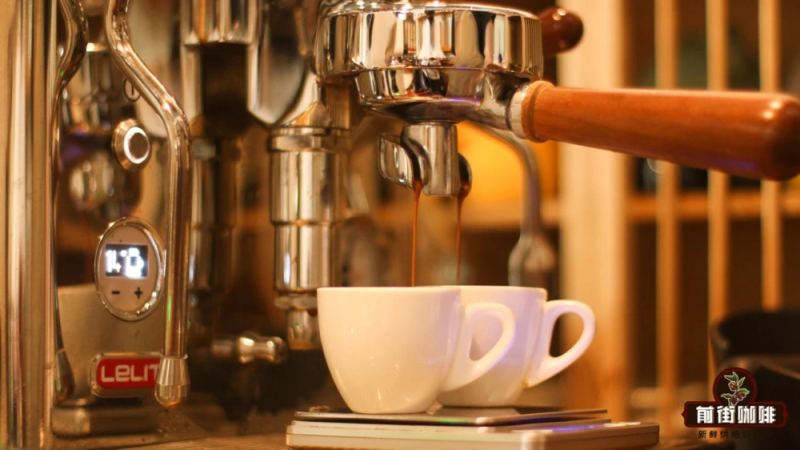
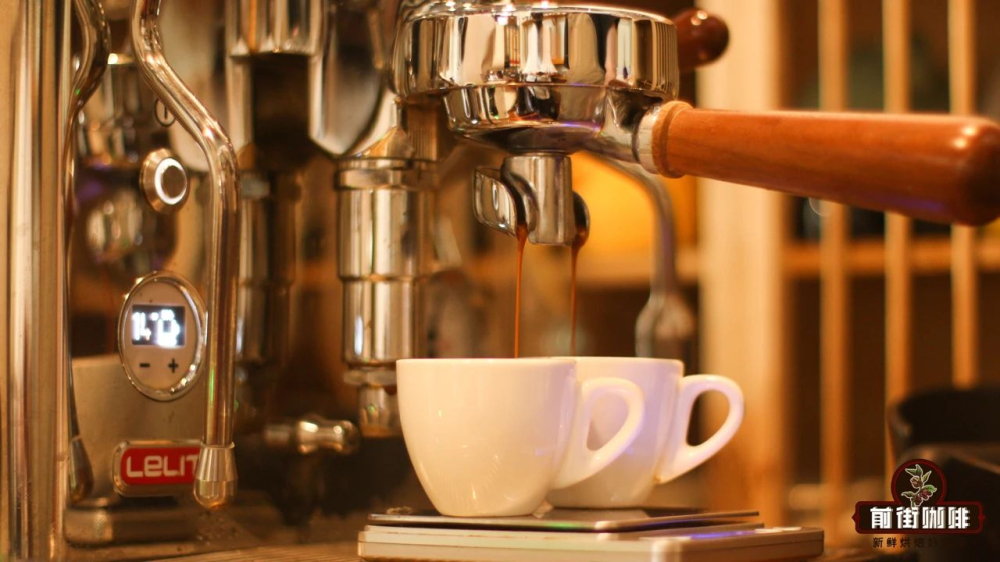
For example, Front Street uses a 20-gram-capacity basket, doses 19.8 grams of grounds, and extracts 38 grams of espresso in 29 seconds—so the "double shot" here is 38 grams. If a customer only wants a single shot, the barista will use a handle with a split spout to catch into two cups and give only one of them, making one shot in the cup about 19 grams.
The above content is compiled by CoffeeHunters, a coffee news website.


