







Is Geisha Coffee Acidic and Where Does It Come From?
Geisha coffee is known for elegant white floral aroma and bright citrus honey acidity, which reads as a clean, tea-like brightness rather than sharp sourness. It was collected in 1931 in the kaffa forest of southern Ethiopia during a search for disease-resistant varieties, and its name comes from the nearby Geisha Mountain.
The seeds reached CATIE in Costa Rica in 1953 under the number T2722, then arrived in Panama in the 1960s. On Hacienda La Esmeralda, the Peterson family noticed Geisha trees resisted leaf rust and transplanted them to more areas. Fragile branches and low yield keep supply small, which helps explain the high price and the Red Label and Green Label grade differences.
Geisha coffee is famous for its elegant floral aroma and bright fruit acidity, and is hailed as the pinnacle of the coffee world. Is it actually acidic? Where is the most famous Geisha produced? From the perspective of Front Street Coffee, this article traces Geisha's legendary journey from the Kaffa forests of Ethiopia to Hacienda La Esmeralda in Panama, analyzes the high price brought by its fragile plants and low yield, and compares the flavor differences between the Red Label and Green Label grades. It also shares Front Street's V60 three-stage brewing parameters for medium-light roasted Geisha, taking you through a floral and fruity tea experience woven with mango, rose, and jasmine.
To learn more about specialty coffee, welcome to follow our WeChat public account: FrontStreet Coffee.
Geisha is an extremely rare coffee variety with an elegant white floral aroma and bright citrus honey notes. With its outstanding flavor performance, it has repeatedly won championships in major coffee competitions, and its price has risen year after year, so it is often called "the pinnacle of the coffee world." This time, Front Street will talk with everyone about the origins of Geisha and why it is so charming.
In 1931, in order to find new disease-resistant varieties, Geisha was collected in the Kaffa forests of southern Ethiopia, and its name comes from the nearby Geisha Mountain. It was later sent through various channels to research institutes in Kenya, Uganda, Tanzania, and elsewhere for trial planting. In 1953, Geisha seeds arrived at CATIE, the Tropical Agricultural Research and Higher Education Center in Costa Rica, and were recorded under the number T2722. Although many local farms planted it, Geisha's branches were fragile and its yield was low, so it never won farmers' favor and was never widely promoted.
Entering the 1960s, CATIE gave T2722 Geisha to coffee growers in Panama, and only then did Geisha truly set foot on Panama's fertile soil. In the 1990s, the Peterson family, owners of Hacienda La Esmeralda, began to focus on coffee production and bought a new high-altitude farm, Jaramillo. At that time, many coffee trees on the farm were infected with leaf rust, but Daniel Peterson noticed that the Geisha trees were almost never seriously affected, so they decided to transplant the Geisha that had originally been mixed among other varieties to more areas of the farm while also increasing its growing altitude.
In 2003, the Peterson family finally discovered Geisha's potential. In the first cupping, it presented an extremely intense white flower aroma, a remarkably clean mouthfeel, and a finish reminiscent of berries, citrus, and bergamot, thus establishing the classic Panama Geisha flavor. Amid their surprise, everyone decided to enter it in the 2004 BOP (Best of Panama) competition and officially named it "Geisha." So today's stunning Panama Geisha is precisely the T2722 variety from back then.
Geisha is deeply loved by coffee people because, unlike the traditionally rich and heavy impression of black coffee, it is more like a refreshing floral and fruity tea. It has a rich fragrance and complex fruit flavors, calling to mind a series of unusual aromas. At different temperatures, you can feel a delicate texture and sweet-and-sour fruitiness filling the mouth. Geisha's extraordinary flavor characteristics are enough to make it the "pinnacle" spoken of by many coffee people. What won Geisha such high popularity is precisely Geisha coffee's "talent scout" — Hacienda La Esmeralda in Panama. Front Street's bean list has long kept two popular products from Hacienda La Esmeralda, "Red Label" and "Green Label," allowing enthusiasts to drink the "pinnacle" of specialty coffee in daily life.
Guests who come to Front Street for the first time to drink Hacienda La Esmeralda Geisha often ask: "Why is Hacienda La Esmeralda's Geisha so expensive?" Front Street has mentioned in many articles that coffee, as an agricultural product, always has its flavor performance closely related to factors such as variety, climate, altitude, soil, and management. The taste of coffee is a natural and authentic reflection of the variety and local terroir, while post-processing methods and roasting should maximize the preservation, restoration, and presentation of the bean's most authentic flavor. The reason Hacienda La Esmeralda's Geisha can be so outstanding is inseparable from the combined effect of all the above conditions.
Compared with other Arabica varieties, Geisha not only has low fruit yield, but its plants are also especially fragile and very picky about the growing environment. It needs high altitude, fertile soil, and cloud cover or plant shade, and cannot be directly exposed to the sun. The leaf system of the Geisha coffee tree is very thin, so its photosynthetic efficiency is therefore very low, and its roots are also very fragile, absorbing water and nutrients slowly, so coffee yield is extremely small; combined with the high-altitude growing environment, the fruit also ripens relatively late. A single Geisha coffee tree produces only half the fruit of a Caturra variety, which is also one of the reasons for Geisha's high price.
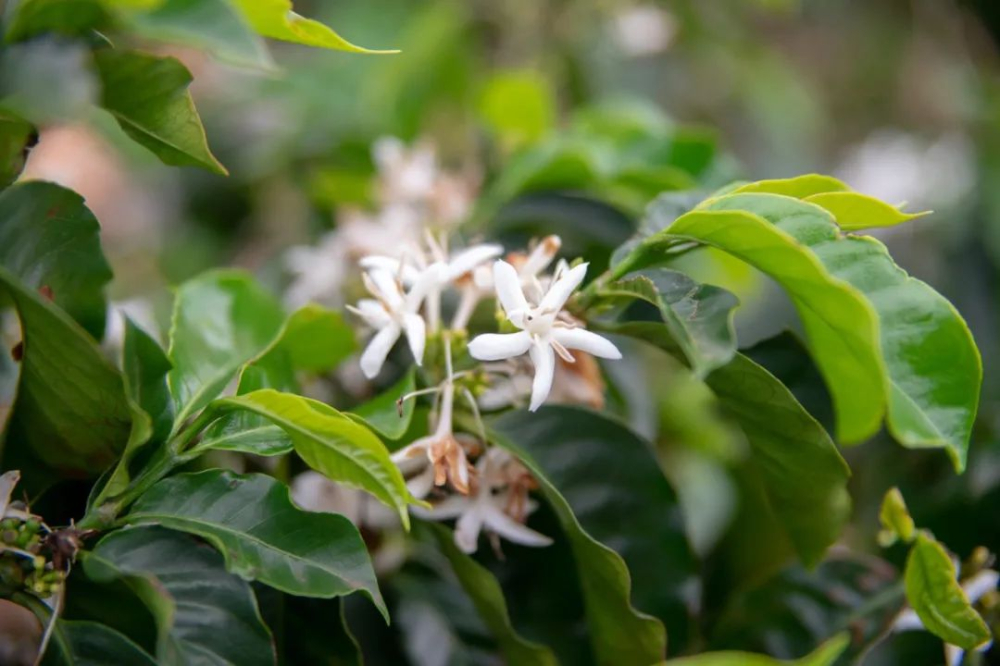
As the saying goes, things are precious when they are rare, and Geisha coffee's production is extremely limited. Panama produces about 10,000 tons of coffee each year, while the famous Hacienda La Esmeralda produces only 150 bags of green beans annually, about 9,000 kilograms. If Geisha is calculated as only 3% of production, that is only 270 kilograms. In addition, with various media publicizing and dramatizing Geisha's flavor, people's enthusiasm for Geisha only grows, so its price naturally remains high.
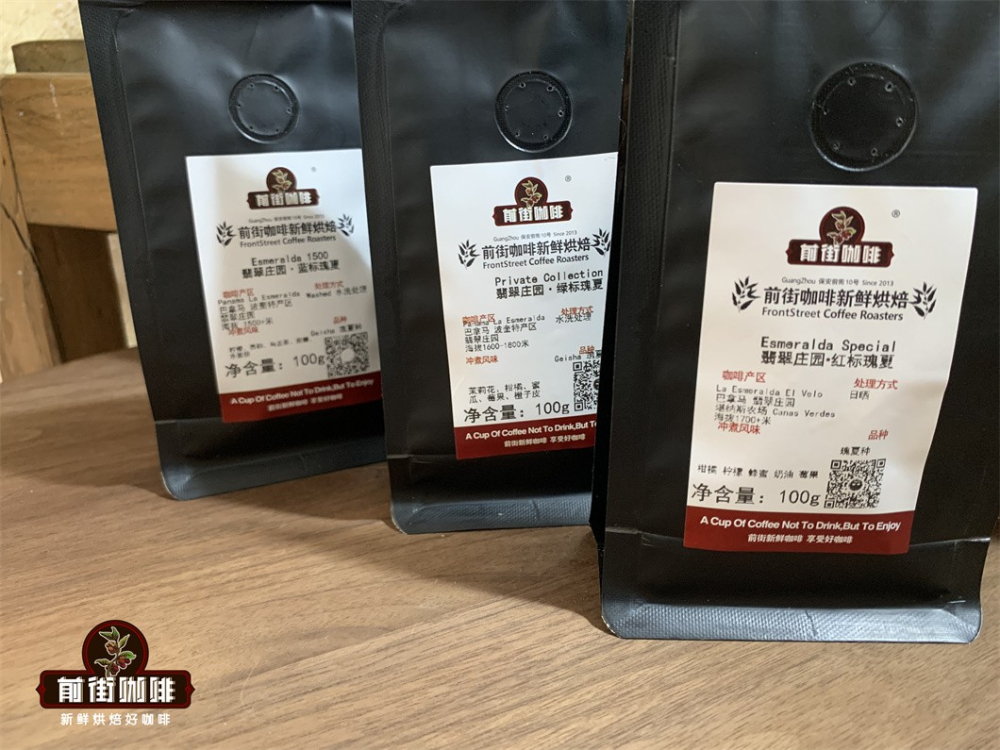
Come to Front Street. If it is your first time drinking Geisha, the FrontStreet Coffee barista will recommend Hacienda La Esmeralda's Natural Red Label or Washed Green Label. The so-called Red Label refers to the Esmeralda Special grade (including auction lots); Green Label refers to the Private Collection grade.
The highest-grade Red Label is picked from coffee cherries of high-altitude Geisha (1600 - 1800 meters), with a cupping score exceeding 90 points, mainly from the Jaramillo and Cañas Verdes farms. Although such an altitude brings challenges to planting and harvesting, in the Boquete production area, Geisha's floral and fruity charm is the most prominent. Hacienda La Esmeralda holds an independent auction event, and among the divided plots, the Red Label lots put out for competition are called auction lots. Auction lots have unique numbers, and each number corresponds to an entire lot from one plot. The one we hear about most often is probably the Mario plot of Jaramillo farm. The Hacienda La Esmeralda Red Label Geisha coffee beans that Front Street obtained come from the Mario plot and use natural processing.
In addition, Front Street also has a washed Green Label grade Geisha, whose cupping performance shows fresher, more natural flavors of lemon, berries, pomelo, and Tieguanyin tea. Green Label is selected from micro-lot coffee beans grown at 1600-1800 meters, produced from Jaramillo, Cañas Verdes, and other areas without specific plot separation. Green Label does not participate in the auction. Although its grade is not as high as Red Label, it mainly presents the signature classic flavor of high-altitude Geisha.
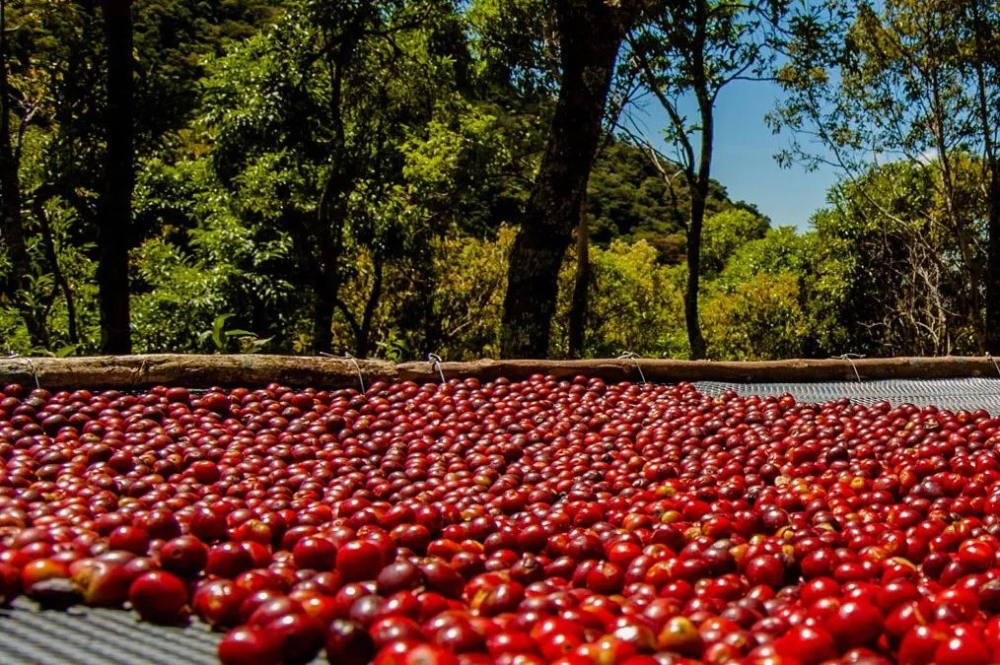
As Front Street said above, Geisha's flavor belongs to the floral and fruity acidity type, so the roast level is generally not too dark. In order to retain more elegant acidity, Front Street chooses medium-light roasting. The coffee beans are relatively hard and require hotter water to release more aroma, while the grind size also needs to be finer. Paired with a Hario V60 dripper and staged pouring, the layering of Geisha's flavor can be made more obvious.
Dripper: V60
Water temperature: 91-92°C
Dose: 15g
Coffee-to-water ratio: 1:16
Total poured water: 240g
Grind size: fine granulated sugar size (No. 20 sieve bowl, 80% passing)
Three-stage extraction: First pour 15 grams of coffee grounds into the dripper and tare the weight. For the first stage, pour 30g of water and bloom for 30 seconds while starting the timer. Throughout, pour with a small stream from the center point and begin circling outward. Note that the entire coffee bed needs to be moistened.
For the second stage, begin pouring 120g of water with a slightly larger stream, with the aim of raising the entire coffee bed. The water column needs to be poured vertically and evenly. At this point the timer scale shows 150g, and pouring is completed in about 55 seconds.
When the liquid level drops to the halfway point, begin using a small stream to pour the third stage of 90 grams in a small circle. Try to control the stream so it does not circle too widely, as it can easily disturb the coffee bed and cause underextraction. The final total poured water is 240 grams, and the drip completion time is about 2 minutes 10 seconds. After removing the dripper, swirl the coffee liquid in the server to mix it evenly, and it is ready to taste.
After grinding Red Label Geisha, you can already smell a rich rose aroma. On the palate there is mango and tropical fruit, and the mouthfeel is smooth like cream. It does not feel like drinking a cup of coffee at all, but more like a cup of floral and fruity tea. Green Label Geisha's flavor performance is clearer, with jasmine aroma, the sweet-and-sour taste of berries and lemon, and a long-lasting green tea finish.
For more specialty coffee knowledge, please follow our WeChat public account: FrontStreet Coffee.
The above content is compiled by CoffeeHunters, a coffee news website.


