








How do cafe ingredients split between espresso and milk?
Latte, cappuccino, and mocha all build on espresso plus milk, but the proportions and textures separate them. A latte leans milk-forward for a milder, smoother cup, a cappuccino carries a thick layer of milk foam, and a mocha adds chocolate for sweetness. Espresso extraction parameters, including grind and yield, decide how strongly the coffee shows through the milk in each drink.
Ratio suggestions shift with roast level and serving temperature, so hot and iced versions of mocha and coffee drinks need different amounts of milk. Beans such as an espresso blend, Flor SOE, or Sidra each pull the balance in a different direction, which is why freshness and a matching extraction plan matter more than a single fixed recipe when making these drinks at home.
Latte, cappuccino, and mocha all contain espresso and milk, but their styles and proportions differ noticeably. Starting from the flavor balance of a latte, this article explains how espresso extraction parameters affect the performance of a milk coffee, and compares the thick milk foam of a cappuccino with the sweet aroma of a mocha after chocolate is added. The article also combines beans such as Front Street Coffee's classic espresso blend, Flor SOE, and Sidra to give coffee-to-milk ratio suggestions for hot and iced drinks under different roast levels, helping coffee lovers find a pairing method that suits them when making cold brew at home.

To get more specialty coffee content, welcome to follow: Front Street Coffee (Frontsteet Coffee)
Front Street dares to say that among friends who have a coffee machine at home, milk coffee definitely ranks among the drinks they make most often in daily life, and latte is the one everyone reaches for most. Because of this, Front Street is often asked all kinds of questions about making lattes at home, such as "how to choose milk," "how to steam milk foam," and "how to practice latte art," and the most frequently asked question is: what ratio should a latte use to be smooth and pleasant?
What are the characteristics of a delicious latte?
Many customers report that, compared with lattes sold in coffee shops, the ones they make at home either taste too bitter or lack coffee aroma and body. In Front Street's view, recreating a coffee-shop-style latte is not complicated. As long as the ingredients are fresh enough, you find a suitable espresso extraction plan, and then let the coffee and milk work well together, you can easily make a similar result.
The original name of latte, "Caffè Latte," actually makes it clear that both coffee and milk are the protagonists in this drink. If you want to show it at its best, the two flavors must achieve balance in the cup, that is, letting the milk soften the sharp bitterness of the espresso, so that after full integration, the coffee tastes milder, fuller, and smoother. This is also one of the reasons latte coffee has always remained highly popular among the public.
Correspondingly, there are also cappuccino and mocha coffee commonly seen on cafe menus. Because they are also made of milk and espresso, many friends who are new to coffee easily confuse them. In fact, the three each have their own characteristics: a freshly made cappuccino is covered with a fluffy, thick layer of milk foam on the surface, looking like a mushroom top puffing up, with a dense mouthfeel mixed with the bitterness of coffee; mocha coffee, on the other hand, adds chocolate-flavored ingredients on top of a latte, so it tastes more prominently sweet and aromatic.
The ratio of espresso
Anyone with brewing experience knows that the taste of a latte is largely determined by the coffee beans used, followed by the espresso extraction ratio, and finally the milk (see the previous "Milk Review! How big is the difference between coffees made with different fresh milks?").
The reason the choice of coffee beans is key is ultimately that it directly determines the final flavor direction of a latte. And if you want the coffee to taste good, the first thing to ensure is the freshness of the beans, and the second is the espresso extraction ratio, because it affects both the concentration of the coffee base itself and the strength of the "coffee flavor" in the whole latte.
If you use medium-to-dark roasted coffee beans to make a latte, the flavor usually tends to be rich, caramelized, and nutty. Front Street suggests first applying the basic formula we have mentioned in many articles: a coffee-to-liquid ratio of 1:2 (extract 40g of coffee liquid from 20g of coffee grounds / 18g of grounds corresponds to 36g of liquid weight), control the time at 25-30 seconds, and make sure there is no splashing or unstable flow throughout the process. The coffee liquid made according to this ratio has higher concentration and moderate aroma, and can pair well with fancy coffees like latte.
If you choose medium-roast coffee beans to make a latte, such as Front Street Flor SOE, which is known for its floral and fruity aromas, then we are mostly looking for a soft, fragrant latte with less bitterness. In that case, in order to provide enough coffee aroma, the extraction needs to be adjusted accordingly.
Considering that lighter-roasted coffee beans require a higher extraction yield, extending the extraction time is obviously a good approach. When the coffee-to-liquid ratio is still kept at 1:2, we can make the time fall within 30-35 seconds by adjusting the grind finer, and the espresso made this way can give the milk coffee richer floral and fruity flavors. (PS: As far as espresso extraction is concerned, light-roasted (extremely light-roasted) coffee beans are not highly compatible and are prone to splashing and lacking aroma, so Front Street will not discuss that in detail here.)
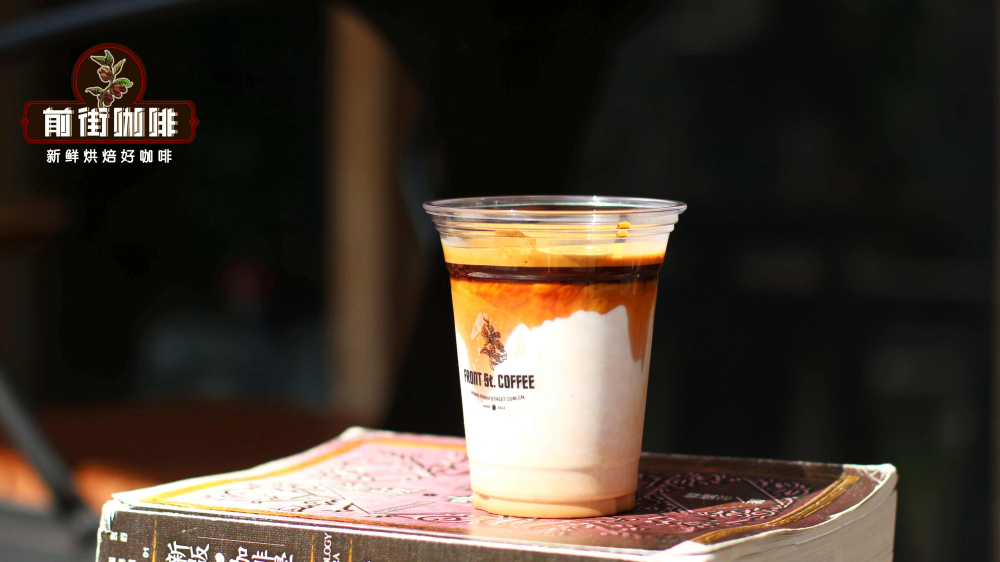
What does using different coffee-to-milk ratios determine?
Whether for a cold or hot drink, the ratio of coffee to milk is the key to determining which one dominates in a latte. Simply put, adding too much milk will cover up the coffee flavor, making the latte taste thin and lacking body; adding too little milk will make the bitterness of the coffee stand out and may even make it lose its sweetness; only when the two coordinate with each other can the taste of the latte reach balance. Therefore, a suitable ratio is essentially about finding a balance point between milk and coffee liquid.
In many online latte-making tutorials, coffee and milk are usually given as an approximate ratio range, sometimes 1:4-1:6, sometimes 1:4-1:8. In short, there is no fixed standard. Front Street believes that the reason these figures are so "vague" is mainly that each shop or brand uses different coffee beans, and their origin, processing method, roast level, and blend formula differ more or less, which gives the extracted espresso a different flavor profile and thus changes the overall style of a latte.
To make a latte with rich aroma and a full-bodied mouthfeel, it is recommended to use Front Street classic espresso blend coffee. This is a formula composed of three origins: Brazil, Indonesia, and Vietnam. It uses a dark roast, which can highlight the rich aroma of coffee to the greatest extent and also allows everyone to easily extract rich and dense crema. It is very suitable for both Americano diluted with water and latte paired with milk, and can be purchased in the Front Street Taobao store or the Front Street Tmall flagship store.
What ratio is suitable for making lattes at home?
Here, Front Street combines different roast levels with the differences between cold and hot latte mouthfeel to briefly divide how to find a "secret recipe" that suits you more quickly.
If you use espresso beans that are shiny black for extraction, the coffee liquid usually has an obvious caramelized aroma and a relatively heavy bitterness. Then, to maintain the balanced taste of a latte, it is best to increase the proportion of milk, so that the coffee and milk fall within the ratio range of 1:7-1:8. For example, Front Street once tried making a hot latte with the darkest-roasted Robusta. It first extracted 36g of coffee liquid from 18g of grounds, then mixed in 288g of steamed hot milk, resulting in a rich and solid mouthfeel; when making an iced latte, because of the ice cubes, the mouthfeel is more refreshing, so the ratio was changed to 1:7, that is, pouring in 252g of fresh milk, and at this point the bitterness of the coffee becomes much softer.
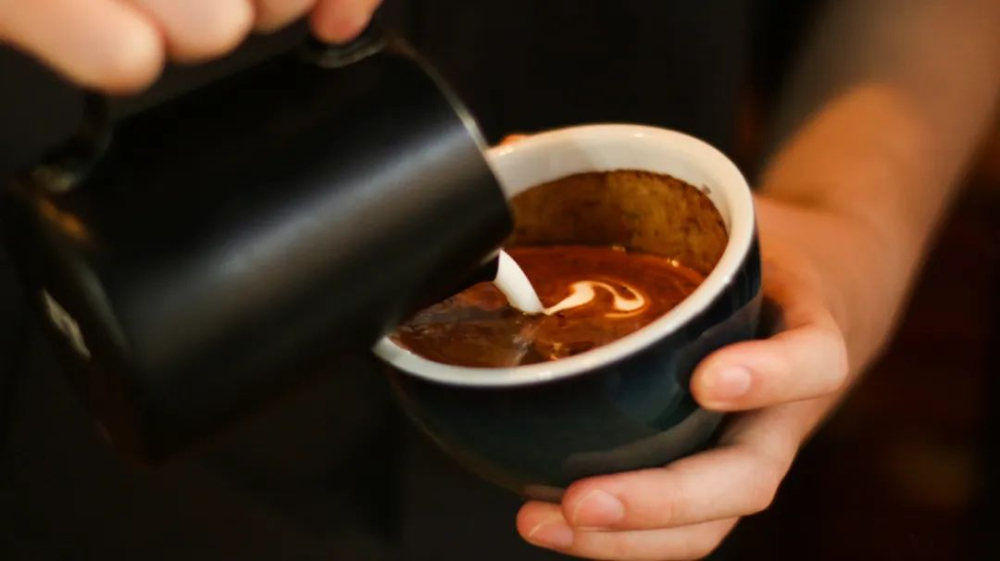
When using medium-dark roasted coffee beans whose flavors highlight roasted nuts, white chocolate, vanilla, cream, cookies, toffee, and other aromas to make a latte, they usually emphasize sweetness, aroma, and smoothness in the mouthfeel. In this case, you may set the ratio within the range of 1:5-1:6. For example, for the hot latte made with the Sunflower · Warm Sun blend, the standard at Front Street stores, the coffee and milk fall at 1:5, with dense milk aroma while still retaining the body of the coffee; if it is an iced drink, 40g of coffee liquid corresponds to 180g of fresh milk, for a ratio of 1:4.5, and the vanilla and chocolate flavors instantly become refreshing.
Finally, for medium-roast beans with floral and fruity aromas, the espresso itself has a relatively mild aroma and a less intense mouthfeel, and sometimes also carries higher acidity. If you want it to form a good partnership with milk, you can highlight the coffee's "presence" by reducing the proportion of milk.
For example, when Front Street makes Flor SOE latte, in order to present its fragrant berry and citrus profile, it directly uses a 1:4 ratio, adding 160g of milk to 40g of coffee liquid. On the palate, you can feel the sweetness of the milk first, followed by the fresh aroma brought by the espresso, making the whole thing very soft; if you want to make an SOE latte full of fruity aroma, it is recommended to use Front Street Sidra coffee beans. First extract 40g of coffee liquid from 20g of coffee grounds in 28 seconds, then add 200g of fresh milk. The Front Street Sidra latte made this way tastes full of fruity aroma, as smooth as passion fruit-flavored cream.
The above content is compiled by CoffeeHunters, a coffee news website.


