








What Sets Mocha and Coffee Drinks Like Latte Apart?
Latte and mocha fall into different categories. A latte blends espresso with milk, so the coffee flavor is diluted and the drink is mild with a prominent milky aroma. A pure mocha is essentially a black coffee with an elegant balance of acidity, sweetness, and bitterness, while a flavored mocha adds chocolate sauce and cream for a sweeter profile.
An italian latte is a classic Italian espresso-and-milk drink, often taken at breakfast, when coffee and milk are heated together on the stove. Latte and cappuccino also differ in foam thickness, the ratio of milk to coffee, and latte art presentation. Comparing foam, taste, and origin helps clarify which cup fits a given preference.
Latte and mocha both belong to the Italian coffee family, yet they are often confused. The former is characterized by the blending of espresso and milk, with a prominent milky aroma and a relatively gentle coffee taste; the latter presents different faces depending on whether chocolate sauce and cream are added—a pure mocha is elegantly tart and sweet, while a flavored mocha gains the sweetness and fragrance of chocolate and cream. Latte and cappuccino are similarly easy to confuse, as the two differ noticeably in foam thickness, the ratio of milk to coffee, and latte art presentation. From the perspective of Front Street Coffee, this article sorts out the origins and brewing techniques of latte, analyzes the historical threads of mocha, and compares latte and cappuccino in three aspects—latte art, taste, and origin—to help coffee lovers find the cup that suits them better.
At Front Street, latte and mocha are two of the most frequently ordered coffees, and the baristas at Front Street Coffee are especially fond of them. However, when it comes to actually articulating the difference between the two, many people are not really clear. Front Street will first sort it out for everyone: latte and mocha inherently belong to different categories of coffee. Milk is added to latte, so the coffee's own flavor is diluted, making it relatively light to drink; mocha depends on the situation—a pure mocha is a black coffee, with a relatively elegant layering of acidity, sweetness, and bitterness, and a more prominent body, while an American-style mocha falls under flavored coffee, with chocolate sauce and cream or milk foam added, where chocolate and milky aromas interweave for a rather pleasing flavor profile.
Latte is a classic blend of Italian espresso and milk, and Italians also like to have latte as a breakfast beverage. In Italians' morning kitchens, coffee and milk are usually being heated at the same time on a stove that catches the sunlight.
Latte is made by combining Italian espresso (Espresso) with milk, and is a very classic item in Italian coffee. Italians are accustomed to treating it as a breakfast drink; in the morning kitchen, coffee and milk are often being heated at the same time on a stove bathed in sunlight. For Italians who drink latte, rather than saying they are fond of espresso, it is more accurate to say they are even more infatuated with milk—and only Espresso can give seemingly ordinary milk an unforgettable flavor.
Mocha (Mocca Cafe) is an ancient coffee made by mixing Italian espresso, chocolate sauce, fresh cream, and milk.
In the fifteenth century, the coffee export trade in the Middle East and Africa had not yet flourished, and the port of Mocha in Yemen was a pivotal commercial port around the Red Sea. At that time, most coffee produced in Africa was first gathered at the port of Mocha before being transshipped out, and this batch of coffee was uniformly called Mocha coffee. Later, new ports rose and replaced the original status of the port of Mocha, but the names of the coffee-producing regions left over from the Mocha port era are still in use, and the coffee beans produced in these regions are still called Mocha coffee beans to this day.
Later on, in order to recreate the mocha coffee with a chocolate flavor, people tried adding flavoring sauces and cream, gradually evolving into the mocha Italian coffee we are familiar with today. As the international chain brand Starbucks promoted Italian coffee drinks globally, this milk coffee with added chocolate-flavored sauce also became known to more and more people.
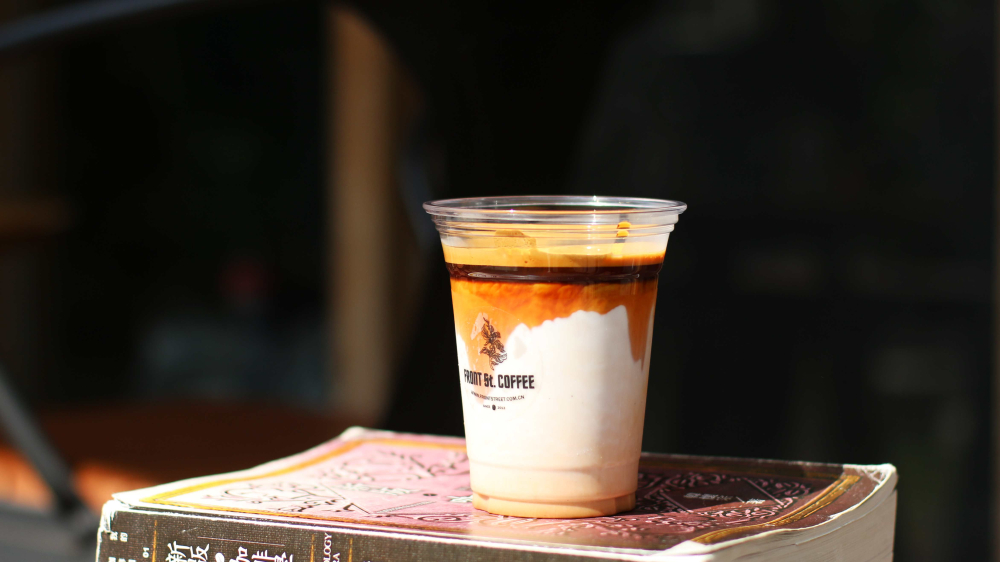
Taste differences between latte and cappuccino
1. Different latte art
The most direct way to distinguish these two coffees is to observe the latte art. Both latte and cappuccino require steaming milk during preparation, but the milk foam needed for latte is thinner than that for cappuccino. It is precisely this thin layer of milk foam that allows the coffee liquid to maintain good fluidity, enabling latte to pour latte art with fine lines and exquisite patterns.
Cappuccino's milk foam is thick, making it difficult to pour patterns with delicate lines; it is usually handled with etching, or simply without latte art. This is also the reason latte art is also called "latte art."
2. Relatively large taste differences
To clarify the difference between the two, we made a cup of latte and a cup of cappuccino separately, using Front Street specialty blend coffee beans. This is a coffee bean combining two well-known producing regions, Brazil and Colombia, using a medium-dark roast; the espresso carries the aromas of cocoa, chocolate, cookies, and cream, making it arguably an excellent match for milk.
Although the ingredients are the same, different ratios steer the tastes of the two in two directions. Usually, milk accounts for 70% of a latte, milk foam about 20%, and coffee only about 10%; milk far exceeding coffee is a major characteristic of latte. So when you take a sip, latte is full of milky aroma and smooth in texture, and the coffee's bitterness is not obvious.
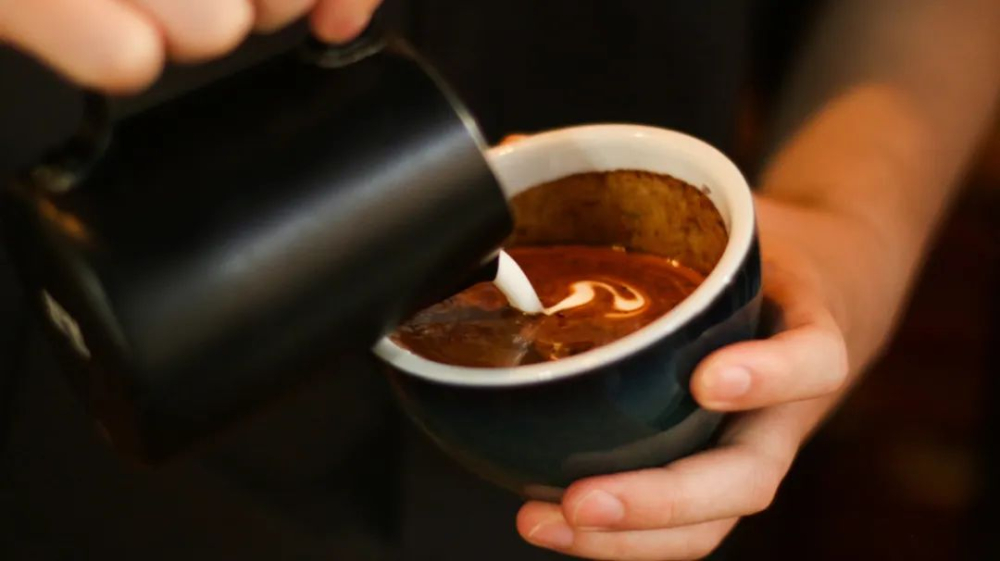
In cappuccino, milk, milk foam, and coffee each account for one third, and equal amounts of milk and coffee are its most distinctive feature. Because the proportion of milk and milk foam is smaller, it cannot suppress the coffee's aroma; when tasting, cappuccino's coffee flavor is stronger and its texture is also denser, as soft as marshmallow. Therefore, if you are not quite accustomed to a heavy coffee flavor, latte will be more suitable; if you prefer coffee with a slightly stronger taste, cappuccino is worth a try.
3. The two have different origins
Latte in Italian simply means milk. The earliest latte was nothing more than hot milk poured directly into brewed coffee. It was not until the Italian Achille Gaggia invented the steam pressure coffee machine that Italian latte truly became popular and has continued to this day. Cappuccino, on the other hand, was born alongside the steam pressure coffee machine, with a later origin than latte. And the name cappuccino comes from the brown robes worn by church monks and that pointed hat.
For more specialty coffee knowledge, please follow: Front Street Coffee ( Frontsteet Coffee )
The above content is compiled by CoffeeHunters, a coffee news website.


