







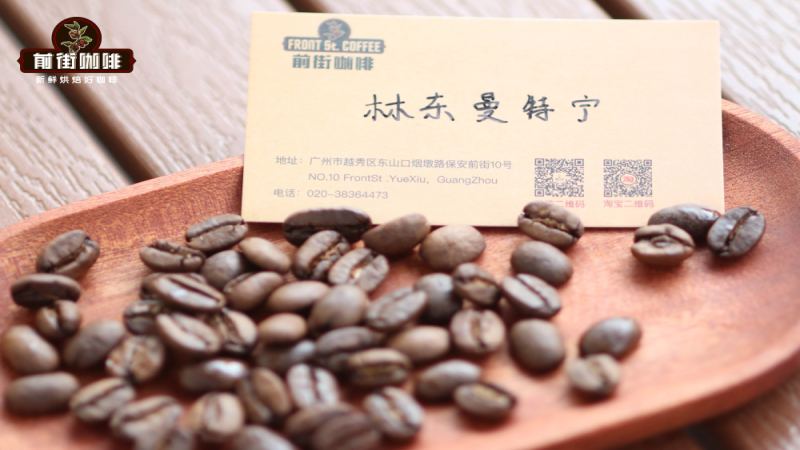
What Makes Mandheling Coffee Beans Different From Other Origins?
Mandheling is neither a region nor a variety name. It comes from the Mandailing ethnic group on the island of Sumatra, and today the term generally refers to Arabica coffee grown on Sumatra, most often the Timtim and Ateng varieties. PWN applies the Golden Mandheling label to lots that meet its own screening standards.
Timtim, also called Timor or Bor Bor, is a natural Arabica-Robusta hybrid found on Timor in the 1940s, with 44 chromosomes, strong leaf rust resistance and low acidity, showing agarwood, pine and herbal notes. Ateng, known as Catimor, is the other main variety. Both differ from indonesian robusta coffee in flavor and price.
Mandheling coffee beans are truly one of a kind in the specialty coffee world—it is neither a region name nor a variety name, but originates from the Mandailing ethnic group on the island of Sumatra. This coffee from Indonesia has won over countless enthusiasts with its rich, solid body and deep flavor. This article will take you through the interesting story behind the name Mandheling, analyze the characteristics of the two main varieties Timtim and Ateng, understand how PWN defines authentic Golden Mandheling, and share Front Street Coffee's professional insights on roasting and brewing, so you can fully understand this legendary coffee bean.
For professional coffee knowledge exchange and more coffee bean information, please follow the Coffee Workshop (WeChat public account: cafe_style)
For more specialty coffee beans, please add the private WeChat of Front Street Coffee (FrontStreet Coffee), WeChat ID: qjcoffeex
In today's specialty coffee trend, in order to strengthen the traceability of coffee beans, the vast majority of exporters name their coffee by region, area, estate, or processing cooperative. However, Mandheling coffee from Sumatra, Indonesia, is an exception—it completely defies convention!
The name Mandheling is neither a place name on the island of Sumatra nor a designation for a coffee variety. It actually comes from the indigenous group on the island—the Mandailing people, also transliterated in Chinese as 曼代宁 or 曼特宁族. Today, Mandheling coffee beans on the market generally refer to Arabica coffee grown on the island of Sumatra, with the main varieties being Timtim and Ateng.
Timtim, commonly known as Timor, is an interspecific variety formed by the natural hybridization of Arabica and Robusta, also called Bor Bor, with 44 chromosomes, and is therefore still classified as Arabica. It was discovered on the Indonesian island of Timor in the 1940s. This variety has strong resistance to leaf rust and became the most widely used rust-resistant germplasm, Hibrido de Timor (HdT). It combines cold tolerance and high yield, with a thick plant body and strong trunk, and drooping branches that facilitate the effective distribution of nutrients. After cupping, Front Street found that although Timtim's flavor is not as refined as pure Arabica, it carries notes of agarwood, pine, and herbs, with relatively low acidity.
Ateng, commonly known as Catimor, is a cross between Caturra and Timor. Ateng inherits the genes of Timtim while also incorporating the lineage of Caturra (a natural mutation of the old Bourbon variety within the Arabica line), so its flavor is noticeably better than Timtim, with better brightness and more prominent sweetness. After cupping, Front Street concluded that Ateng has a stronger sweet aftertaste and a rounder, cleaner mouthfeel than Timtim.
Why did this ethnic group become associated with coffee? Behind it is actually a funny story of a lucky coincidence. During World War II, when Japan occupied Indonesia, a Japanese soldier drank an extremely delicious cup of coffee at a coffee shop on the island of Sumatra and immediately asked the shop owner for the name of the coffee. Because of the language barrier, the shop owner mistakenly thought he was asking "Where are you from?" and replied: "Mandailing."
After World War II ended, the Japanese soldier could not forget that cup of Sumatran coffee. He knew the Japanese would love this rich, full-bodied taste, so he returned to Sumatra, found the owner of that coffee shop, and introduced the locally grown Arabica coffee beans to Japan.
Sure enough, Mandheling became hugely popular in Japan. In order to bring Mandheling's rich flavor to the extreme, coffee artisans spent years researching dark roasting, so that under dark roast conditions the coffee would not only have bitterness but also present a smooth mouthfeel and a strong sweet aftertaste.
The coffee shop owner also saw a business opportunity. He understood that only solid quality could make the coffee taste better. So he founded a coffee company specifically to purchase Arabica coffee beans from the Sumatra region, then carry out more than three rounds of manual hand sorting, ensuring both high quality and that the beans were above 18 mesh and uniform in size, so that during roasting they would be heated more evenly and the flavor would be more concentrated and clean.
After purchasing the fruit, PWN first selects ripe coffee cherries reaching 18 mesh or above, and after drying and processing carries out at least three rounds of purely manual sorting, ensuring that in a 300-gram green bean sample there are no more than 3 defective beans, belonging to the highest grade G1. Under sunlight, the green beans show a golden color, hence the name Golden Mandheling.
Because of the meticulous selection, Golden Mandheling is extremely popular in Japan, and PWN also registered Golden Mandheling as a trademark. As its fame grew, more coffee beans exported under the name "Golden Mandheling" appeared in the Sumatra region, but these can only be considered specialty Mandheling.
For authentic Golden Mandheling, look for PWN. To make it easier to identify authenticity, the Golden Mandheling sold by PWN all uses gunny sacks printed with the letters PWN and comes with certification certificates. These can all be seen at Front Street Coffee (FrontStreet Coffee) stores.
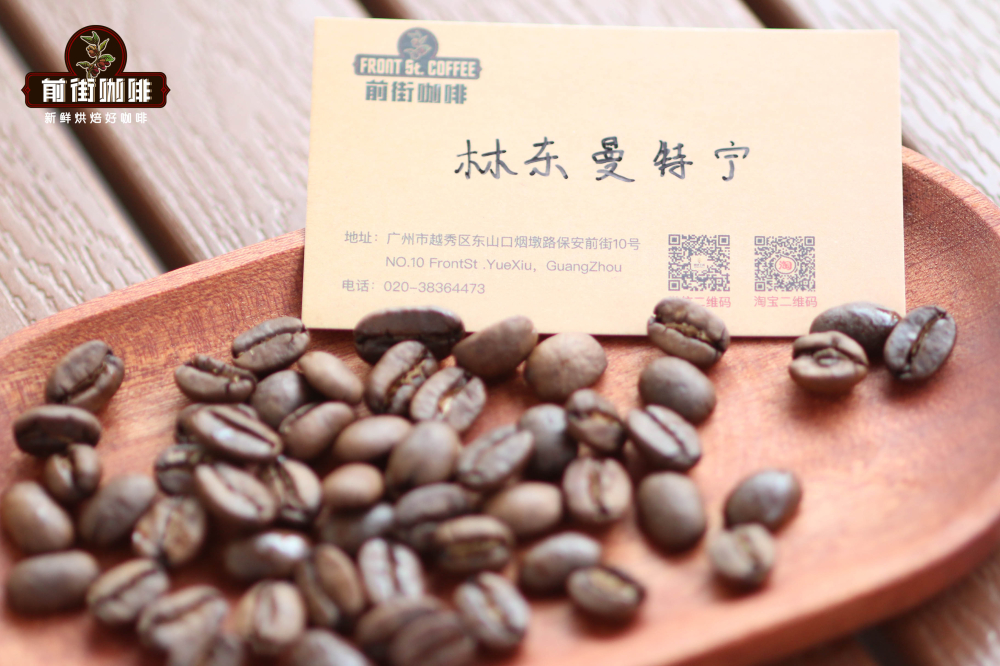
In order to preserve Mandheling's rich, solid flavor, Front Street Coffee (FrontStreet Coffee) roasts Mandheling until it is close to second crack before unloading. After dark roasting, it carries a deep woody note and a toasted bread-like aroma, with a mellow entry, abundant sweetness, syrupy smoothness, and a full, solid body, with prominent bittersweetness accompanied by mild acidity.
To make Mandheling express a richer, fuller body, Front Street Coffee (FrontStreet Coffee) uses the Kono dripper when serving in stores, grinding the coffee powder to a medium-coarse degree (70% passing rate on the Chinese No. 20 standard sieve), with the water temperature controlled at 88°C.
The uniqueness of the Kono dripper lies in its ribs and guide grooves extending to the bottom of the hole where the coffee liquid flows out. Because the ribs are located at the bottom and are relatively short, they fit closely with the filter paper, making the flow rate slower than the V60. The ribs create a tiny gap between the conical wall and the filter paper, allowing coffee liquid to seep out from the filter paper, while the part clinging to the wall does not seep through.
The Kono dripper ensures sufficient extraction, while coarse grinding and low water temperature can control the rate of substance release. For brewing, it is recommended to pour in three stages: in the first stage, pour 30 grams for a 30-second bloom; in the second stage, pour until 125 grams, wait 10 seconds, then pour the remaining water until 225 grams, with the total extraction time about 2 minutes.
Front Street Coffee (FrontStreet Coffee) currently sells two Mandheling coffee beans. One is Mandheling from the Lintong region, with a brewed flavor of: spicy herbal notes, soft acidity, cocoa and nutty finish, obvious sweetness, and high body;
The other is Front Street PWN Golden Mandheling, whose brewed flavor presents sweet herbs, cinnamon-like spices, and citrus peel notes, with a rich, full-bodied sweetness, creamy walnut chocolate. The fruit acidity is restrained and soft, and the aroma carries a strong melon sweetness. As the temperature drops, herbal notes emerge, with a light spice and herbal character, full-bodied, accompanied by a rich sweetness.
The above content is compiled by CoffeeHunters, a coffee news website.


