







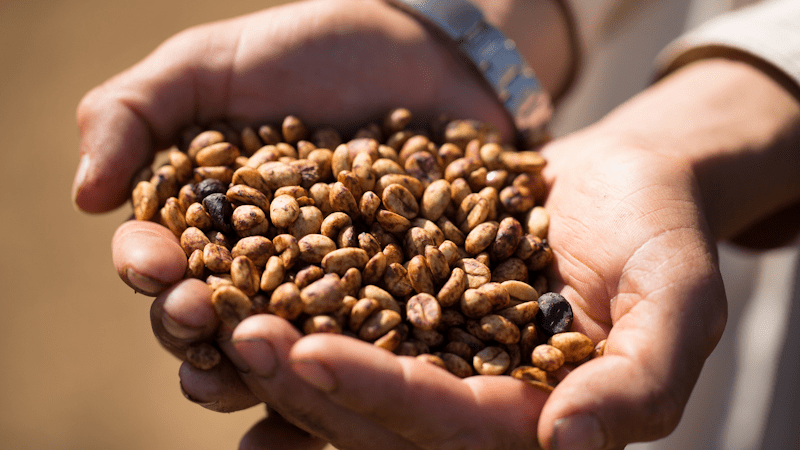
How does honey processing differ from natural processing?
Honey processing keeps the mucilage on the bean during drying instead of washing it off. Natural processing dries whole cherries in the sun until moisture drops to about 11 percent, then removes skin, pulp, and mucilage. Washed processing removes skin and pulp first, ferments away the mucilage, then dries the beans.
The sticky, sugar-rich mucilage coats green beans like honey, which gives the method its name. It appeared formally in Costa Rica and El Salvador, tracing back to Brazil's pulped natural, or semi-dry, approach. Costa Rica later split honey lots into yellow, red, and black grades, and the raisin honey process is a newer branch.
In coffee processing methods, washed, natural, and honey are three common approaches. Honey processing, with its unique technique of retaining mucilage during drying, achieves a more ultimate balance in flavor. From Brazil's pulped natural to Costa Rica's yellow, red, and black honey classifications, and to the recently popular raisin honey process, this processing method has continuously evolved into rich branches. This article will systematically review the origin of honey processing, various classification standards, and its core differences from natural and washed processes, with a focus on introducing the innovative flow and flavor characteristics of raisin honey processing. It will also recommend several classic honey-processed coffee beans from Front Street Coffee to help coffee enthusiasts gain a deeper understanding of the charm of this processing method.
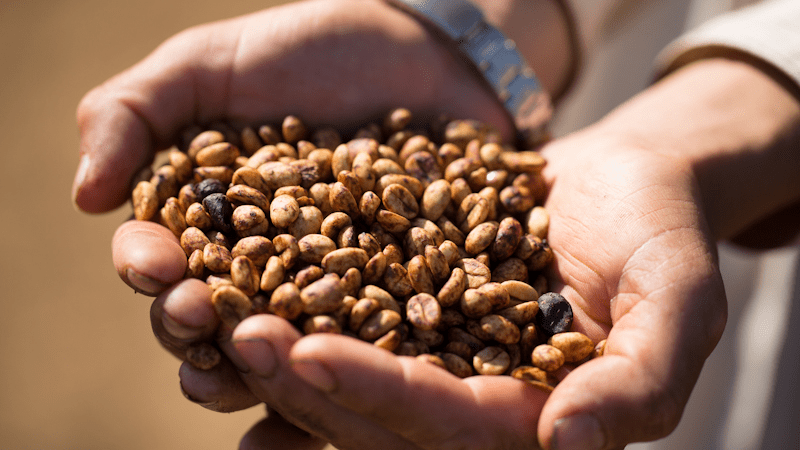
In the field of coffee processing, washed processing is known for its stability, natural processing for its full body, and today we will focus on honey processing.
The natural process involves drying the coffee cherries directly under the sun until the moisture content drops to around 11%, then removing the skin, pulp, and mucilage layer to extract the coffee beans. The washed process, on the other hand, first uses a machine to remove the skin and pulp, then relies on fermentation to break down the remaining mucilage layer, and finally dries the beans to reduce the moisture content to a sufficiently low level.
Honey processing takes a different route—it chooses to retain the mucilage during drying, which is why honey processing can present that more ultimate sense of balance. The mucilage itself is sticky and high in sugar content, and during processing it coats the green coffee beans like honey, so people vividly call this layer of mucilage "Honey," and the name honey processing derives from this.
What exactly is honey processing?
The formal introduction of the honey processing method occurred in Central and South American countries such as Costa Rica and El Salvador, and its predecessor can be traced back to Brazil's pulped natural method, also called semi-dry. At that time, Brazil was limited by terrain and water resources conditions (climate was relatively dry), so natural processing was very common. However, most Brazilian farms were commercial plantations, and after mechanical harvesting, they directly spread the coffee on patios to dry, often resulting in quality inferior to the African raised-bed natural beans of the same period.
To solve this problem, Brazil switched to a method of first removing the skin and then sun-drying (Pulped Natural), which on one hand shortened the number of days required for drying, and on the other hand avoided the improper fermentation off-flavors that Brazilian natural beans easily developed on patios, significantly improving the flavor of the coffee beans. Front Street Coffee's Cerrado is a classic Brazilian pulped natural coffee, presenting distinct creamy, peanut, nutty, and chocolate flavors.
The success of Brazil's pulped natural processing attracted the attention of Central and South American countries, represented by Costa Rica, which originally focused on washed processing. While introducing Brazil's processing method, Costa Rica considered that its own climate was not as dry as Brazil's (more rainfall, shorter sunshine hours), and improved it based on the amount of retained mucilage and drying time, ultimately developing the honey processing method and further subdividing it into more specific categories such as black honey, red honey, yellow honey, and white honey.
Among them, yellow honey processing removes about 40% of the mucilage, and the drying stage requires the most direct heat absorption, receiving the most sunlight, lasting about 8 days to reach a stable moisture content.
Red honey processing removes about 25% of the mucilage, and compared to yellow honey, the drying time is longer while reducing the duration of direct sun exposure, even using shade covers, with the entire process lasting around 12 days.
Black honey processing basically does not remove the mucilage, and the drying time is also longer, lasting at least two weeks, using covers to avoid overly strong sunlight causing too rapid drying, thereby ensuring full sugar transformation. The barista recommends purchasing Front Street Coffee's Blackberry, a black honey processed coffee from Costa Rica, which when ground into powder emits a rich floral aroma, and when brewed tastes with special flavors of grapes, berries, and ripe blackberries.
The more distinctive raisin honey process
In addition to the several common honey processing branches mentioned above, there is now a raisin honey process that is quite popular.
Reviewing the steps of honey processing: the processor first floats the coffee beans, removes the skin and pulp, and retains the mucilage layer to complete fermentation and drying. The more mucilage retained, the longer the drying time, and the richer and more complex the flavor, but at the same time the risk also increases. Black honey processing, because it almost does not remove the mucilage layer, has the longest drying time and requires the most effort.
Raisin honey processing is an innovative method that breaks out of the traditional yellow, red, and black honey framework. The specific practice is to first pre-dry the coffee cherries, letting the fruit dry on raised beds for at least three days until they reach a "raisin"-like state, and only then removing the skin and pulp to continue the subsequent honey processing steps.
Mirasu Estate Raisin Honey Process
The characteristic of the raisin honey processing method lies in "retaining 100% mucilage" and "zero water processing," which further increases the processing difficulty of raisin honey. According to Front Street Coffee's understanding and analysis, this method requires strict control of time, with difficulty even exceeding black honey processing.
The above content is compiled by CoffeeHunters, a coffee news website.


