








Which arabica variety does Typica come from?
Typica belongs to the Arabica species, the same Coffea arabica that covers nearly all specialty coffee on the market. Written records of the coffee tree date to the 9th century, and Carl Linnaeus set the scientific name Coffea Arabica L. in the 17th century, wrongly assuming the Middle East was coffee's birthplace.
Typica originated in Ethiopia and reached the Arabian Peninsula in the 9th century, receiving its own scientific name only in 1913. Genetic studies published in 2002 found far lower diversity in Yemen than in Ethiopia, confirming Ethiopia as the true center of origin. Variety, altitude, and processing remain the three dimensions used to judge a bean.
Among the three core elements of specialty coffee, variety has always been the most complex and fascinating topic. This article starts from botanical classification, sorts out the historical origins of Arabica and Typica, traces Typica's spread from Ethiopia to Yemen, India, Europe, the Americas, and even Yunnan, and compares the background of Catimor's rise with the terroir characteristics of Yunnan's major producing regions. It also introduces Front Street Coffee's choice to cultivate Typica in Yunnan, as well as the flavor performance and brewing parameters of Front Street 2013 Natural Typica, providing coffee lovers with a complete guide to understanding varieties.
Arabica The third wave of coffee has driven the popularity of specialty coffee, and when evaluating a specialty bean, variety, altitude, and processing method are three unavoidable dimensions. Among them, variety covers an extremely broad range of content. As for the specialty coffee currently available on the market, almost all of it belongs to the Arabica species. Taking our Front Street Coffee bean list as an example, apart from espresso commercial blends that include Robusta beans, all other products use Arabica varieties.
The earliest written record of the coffee tree can be traced back to the 9th century AD. The Persian scholar Razi (Muhammad b. Zakariya) described in his medical work "Comprehensive Book on Medicine" a plant called "bunn," whose boiled juice "bunchum" had the effect of refreshing the mind and relieving headaches. The "bunn" here referred precisely to the coffee fruit. From this it can be inferred that Arabica was introduced to the Arabian Peninsula around the 9th to 10th centuries AD.
By the 17th century, the Swedish botanist Carl Linnaeus established the scientific name Coffea Arabica L. in "Species Plantarum," meaning Coffea genus, Arabian species, named by Linnaeus. Linnaeus mistakenly believed at the time that the Middle East was the birthplace of coffee. This understanding was not corrected until 2002—a research project found that the genetic diversity of coffee in places such as Yemen was far lower than that of Ethiopia, thereby confirming that Ethiopia is the true center of origin of Arabica. Typica Typica originated in Ethiopia and was introduced to the Arabian Peninsula in the 9th century, but it did not receive its own scientific name until 1913: Coffea arabica L. var. typica Cramer, meaning Coffea genus, Arabian species, named by Linnaeus, variety, Typica, named by Cramer. The namer used the word typica to indicate that it is the most representative typical variety within the Arabica species.
After Typica entered the Arabian Peninsula in the 9th century and took root and multiplied there for several hundred years, by around the 16th century, a coffee-drinking culture arose around Yemen's Mocha Port and Aden Port. At first, people crushed dried coffee fruit pulp and soaked it in water to drink; later it developed into roasting coffee beans together with spices and fruit pulp, then grinding and boiling them. Around 1600, an Indian Muslim became enamored with coffee on his pilgrimage to Mecca, managed to smuggle 7 seeds back to India, and successfully planted them on the Chandragiri Hills. Around the 17th century, in order to prevent coffee seeds from flowing abroad, the Yemeni authorities required that exported coffee beans undergo roasting. The Dutch saw a business opportunity in this. In 1616, the Dutch obtained coffee seedlings from Yemen through improper means and brought them back to a large greenhouse in Amsterdam for careful cultivation; this tree later became known as the "European Mother Plant." In 1699, the Dutch moved Typica planted in India to Java for trial cultivation with success, and in 1706 they transported Java's Typica back to the Netherlands for continued cultivation.
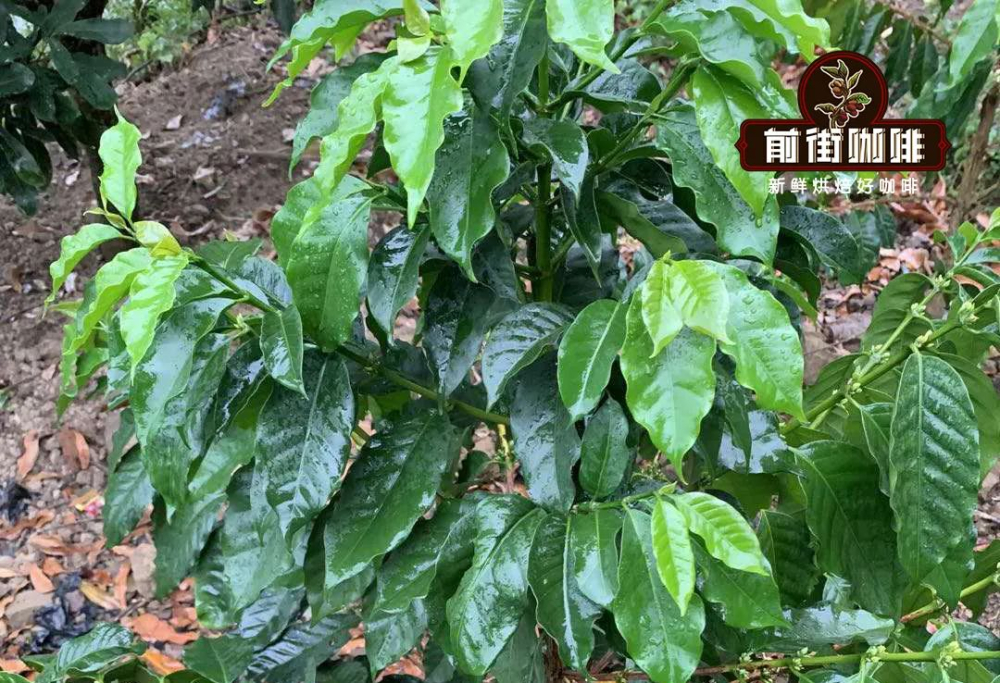
In the 1710s, the mayor of Amsterdam presented a Typica sapling to the King of France, and after the French cultivated it, they transplanted it to South America. In the 1720s, the French naval officer de Clieu stole Typica saplings from the Royal Botanical Garden and took them to the French island of Martinique for planting. The "European Mother Plant" produced a large number of descendants, and its saplings and seeds were distributed to several countries in Central America. In 1825, Hawaii introduced improved Typica from Guatemala and planted it in the Kona region; this was the origin of the later famous Kona coffee. At the end of the 19th century and the beginning of the 20th century, a French missionary brought Typica to Yunnan. In 2013, in Yunnan, where Front Street Coffee is located, Catimor was still the mainstream cultivated variety, but we chose to cultivate Typica. Typica's top young leaves are bronze-brown, the tree is relatively tall, the leaves are narrow and long, and the beans are pointed and elongated. Its flavor is layered and rich, with various fruit acids and a delicate mouthfeel, and it is widely recognized as a high-quality variety. The renowned Front Street Jamaica Blue Mountain Coffee and Front Street Hawaii Kona Coffee both belong to Typica.
Catimor At the end of the 19th century, leaf rust destroyed a large number of Typica plants worldwide. In 1959, Portugal's Coffee Leaf Rust Research Center CIFC crossed Timor with Caturra to breed Catimor. This variety has strong disease resistance and high yield, so it was promoted on a large scale. Yunnan, China's producing region, initially cultivated Typica, which has an elegant flavor but is delicate and weak. Later, when international brands such as Nestlé and Starbucks entered the Chinese market looking for coffee raw materials, coffee farmers, driven by economic benefits and the promotion of Catimor by these major brands, cut down Typica one after another and switched to Catimor, which has high yield and strong disease resistance.
Catimor 7963 is a hybrid variety bred by Portugal's Tropical Research Institute (HCT) for coffee rust, with stable traits. This variety has a compact tree shape, short plants, many branches, short fruiting nodes, vigorous growth, and extremely strong vitality. Its most prominent advantages are rust resistance and high yield. For this reason, it is favored by Yunnan coffee farmers, and currently more than 90% of coffee trees in Yunnan are Catimor. Although Catimor has achieved commercial value, its cup quality is often criticized, and defective flavors easily appear when it is not handled properly. With the rise of domestic awareness of specialty coffee, more and more coffee professionals and researchers are devoting themselves to the cultivation stage in Yunnan's producing regions, starting from pest and disease control, shade tree management, soil and water conservation, cultivation altitude, and fresh fruit harvesting and processing methods to continuously improve coffee quality. Today, Yunnan Catimor processed with professional methods can also display satisfying aroma and cleanliness.
Yunnan Producing Regions Yunnan is China's main producing region for specialty coffee, with an average altitude of more than 1,000 meters, complex and undulating terrain, fertile soil, abundant sunshine, ample rainfall, and significant day-night temperature differences. These conditions are very suitable for Arabica growth and also give Yunnan coffee its unique flavor characteristics: strong but not bitter, fragrant but not harsh, with a slight fruity note.
[Dehong]: Known as the "Hometown of Chinese Coffee," it has a typical southern subtropical rainforest climate, with no severe cold in winter and no scorching heat in summer, a short frost period, and small temperature differences. The average cultivation altitude is above 1,000 meters, and it is recognized by domestic experts as the region most suitable for cultivating small-bean coffee. The coffee produced has a unique flavor and excellent quality, and enjoys considerable recognition in domestic and international markets. [Baoshan]: The history of coffee cultivation in Baoshan can be traced back to the mid-1950s, when the first coffee seedling was introduced from Southeast Asia by the patriotic overseas Chinese Mr. Liang Jinshan. Baoshan small-bean coffee is a national geographical indication product and is renowned at home and abroad. Merchants from Europe, America, and Arab countries, especially those from the UK, the US, Egypt, and Hong Kong and Macao, regard it as a premium coffee, and the product has long been in short supply. [Lincang]: Lincang City is located in southwestern Yunnan Province, with the Tropic of Cancer running through its south. It borders Pu'er to the east, Dali to the north, Baoshan to the west, and Myanmar to the southwest, and it is named for its proximity to the Lancang River. Its unique geographical location and climatic conditions have made Lincang a hot spot of attention for many coffee enterprises. Our Front Street Coffee chose to cultivate Typica coffee in the Lincang producing region. [Pu'er]: As a tea hometown, Pu'er also has a long history of coffee cultivation, already 150 years. Although Pu'er City is famous for tea, its coffee planting area has reached 789,000 mu, coffee bean output is 58,600 tons, and total output value is 2.469 billion yuan, making it Yunnan's largest coffee planting base. Its climate, geography, and soil conditions are uniquely favorable for coffee cultivation.
On Front Street Coffee's bean list there are two coffees from Yunnan producing regions: one is Front Street 2013 Natural Typica produced by Front Street's own estate, and the other is Front Street Yunnan Washed Small-Bean Catimor everyday drinking beans. If you want to experience the flavor of the Typica variety, Front Street Typica is recommended. This is a natural bean, medium roast, with a flavor profile of brown sugar, nuts, plum, and dried apricot, and a very balanced mouthfeel. It can be purchased at the Front Street flagship store or Front Street Taobao store. Brewing Recommendations Dripper: hario v60 Dose: 15g Water temperature: 90°C Grind size: 75% passing a No. 20 sieve Water-to-coffee ratio: 1:15 Three-stage pouring: First use water at twice the coffee dose to wet the coffee bed, and after it forms a dome, let it bloom for 30 seconds. Then pour in a small stream in circles from the inside out until 125g, and pause. Wait until the coffee bed drops to half the height of the dripper, then pour the third stage in the same fine stream until 225g. After all the coffee liquid has drained, remove the dripper. Total time is about 2 minutes.
Front Street 2013 Natural Typica coffee flavor: the dry grounds have aromas of caramel, nuts, and citrus; the high-temperature stage presents chocolate, fermented notes, and berry tones; after the temperature drops, it shows plum-like acidity, with a finish of black tea and sugarcane-like clean sweetness. The body is medium-high, the mouthfeel is clear, and the layering is rich and varied.
The above content is compiled by CoffeeHunters, a coffee news website.


