








What Makes Elida Estate Geisha Coffee Distinct?
Elida Estate in Boquete, Panama, grows Geisha at roughly 1,900 meters and processes it with anaerobic fermentation followed by low-temperature slow sun-drying. That combination, plus the estate's century of coffee history, is why its Geisha won the Geisha processing category at a reliable of Panama competition and why the cup shows layered floral and fruit notes.
The estate also grows Typica at about 1,850 meters, sun-dried rather than anaerobically fermented, which gives a useful side-by-side comparison of variety and coffee bean processing. Compared with Hacienda La Esmeralda Geisha, Elida's fermentation approach tends to produce a more complex flavor profile, so roast and brew plans should be adjusted to protect those delicate aromatics.
Elida Estate in Panama is a legend in the specialty coffee world, and its Geisha coffee once won the championship in the Geisha processing category at the BOP competition. From the tasting perspective of Front Street Coffee, this article provides a comprehensive analysis of Elida Estate's terroir, a parameter comparison between its two major varieties, Geisha and Typica, the process details of anaerobic fermentation low-temperature slow sun-drying, and roasting suggestions and brewing plans for these two beans. Whether you are a beginner or a seasoned enthusiast, you can gain practical brewing references and recreate the floral and fruity notes of Elida Geisha at home.
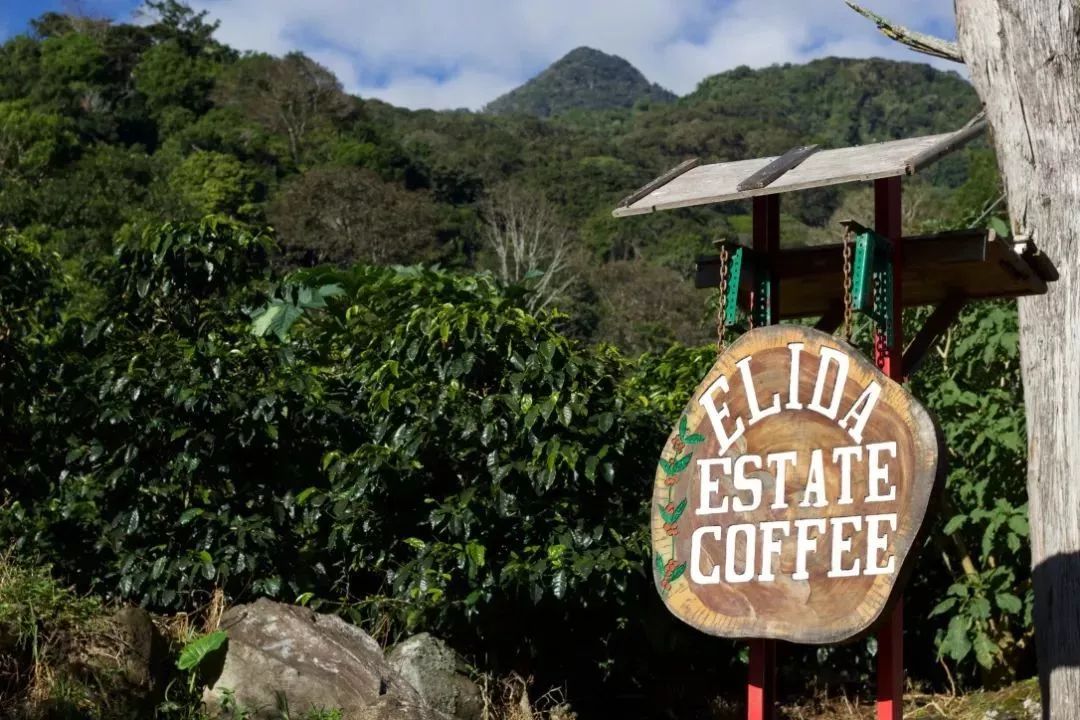
Elida Estate in Panama has over a hundred years of coffee-growing history, and the coffee it produces has always been at the top level of the industry. In the previous BOP (Best of Panama) competition, a Geisha submitted by Elida won the top prize in the Geisha processing category. Front Street Coffee specially selected Elida Geisha from the same plot and same altitude for cupping and tasting. When talking about Geisha, one naturally cannot avoid another famous estate in Panama—Hacienda La Esmeralda. After comparing the Geisha from these two estates side by side, Front Street Coffee found that due to differences in their respective processing methods, Elida Geisha showed richer and more complex flavor layers than Esmeralda Geisha. In addition, Front Street Coffee also conducted a comparative tasting between Elida's Geisha and Typica from the same estate, in order to observe just how large the gap is between different varieties within the same estate.
Panama—Elida Estate Geisha
Region: Boquete, Panama
Estate: Elida Estate
Altitude: 1900 meters
Variety: Geisha
Processing method: Anaerobic fermentation low-temperature slow sun-drying

Panama—Elida Estate Typica
Region: Boquete, Panama
Estate: Elida Estate
Altitude: 1850 meters
Variety: Typica
Processing method: Sun-dried
Boquete growing region Boquete
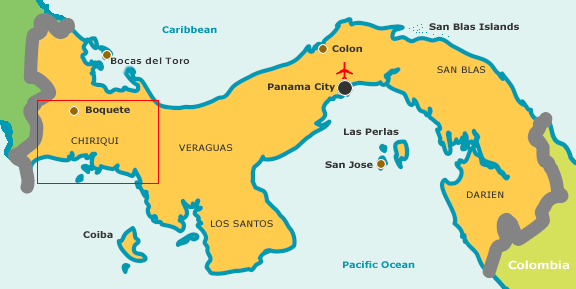
Elida Estate is located in Boquete, Panama's renowned specialty coffee region. Boquete is a small town under Chiriqui Province, situated near the border between Panama and Costa Rica, close to the famous Baru Volcano. The scenery here is beautiful, the soil is fertile and deep, and the climate and soil conditions are very suitable for growing high-quality coffee. The microclimate of Panama's Boquete highlands is the core resource that makes Boquete specialty coffee irreplicable. Panama's east-to-west geographical orientation causes cold air to flow through the central mountain range and converge above 6,500 feet, thus creating diverse microclimates around Boquete, where temperature and rainfall are just right, creating ideal conditions for plant growth.
Elida Estate Elida Estate
Elida Estate covers a total area of 65 hectares, of which more than half falls within the boundaries of Baru Volcano National Park. Only 30 hectares within the estate are actually used for growing coffee, while the rest remains pristine forest. Coffee is grown at altitudes ranging from 1670 meters to 1850 meters, making Elida one of the two highest-altitude coffee estates in Panama (the other estate at the same altitude is Carmen Estate in the Volcan Valley).
In such a high-altitude environment, low temperatures significantly delay the ripening period of coffee cherries, about a full month later than normal. The fertile volcanic soil provides ample nutrients for the coffee trees, and together with the excellent microclimate brought by Baru Volcano, Elida Estate has been able to achieve repeated success in cupping competitions.
The history of Elida Estate can be traced back to 1918. The estate is owned by the Lamastus family, and the estate name "Elida" comes from the name of the wife of the then estate owner, Robert Louis Lamastus.
Coffee bean varieties
Elida Estate mainly cultivates three coffee varieties: Catuai, Typica, and Geisha. The estate's processing plant is located halfway up the mountain, so after picking, the coffee can be delivered to the factory immediately for processing, ensuring that the quality of the coffee fruit is not affected. Of course, Elida Estate's natural conditions are also suitable for growing other high-quality temperate crops, especially tree tomatoes and some rare high-altitude fruits.
Speaking of this, Front Street Coffee often encounters people asking this question: if coffee is planted together with other crops, will the coffee flavor take on the taste of those crops? For example, as mentioned earlier, Elida Estate grows fruits such as tree tomatoes, and when tasting Elida coffee, Front Street Coffee does indeed perceive full and rich fruit notes. But Front Street Coffee wants to remind everyone not to be misled by this coincidence. Generally speaking, the formation of coffee flavor is determined jointly by variety, altitude, processing method, and roasting, and none of these can be missing. This is also the basic framework for evaluating specialty coffee today. What Front Street Coffee has always wanted to convey is that understanding coffee cannot stop at surface phenomena.
In addition to its unique ultra-high altitude and microclimate, estate owner Mr. Wilford has also put a great deal of effort into harvesting and processing. To achieve the highest standards, Elida Estate only allows hand-picking of the ripest coffee cherries (Ripe on Pinton). A high degree of fruit maturity means high sugar content in the mucilage, and this is precisely the foundation for Elida's high-quality flavor formation. In addition to being extremely strict about cultivation and processing, Mr. Wilford is also more meticulous than his peers in the "purification" stage after green bean processing.
Catuai
Catuai originates from the Agronomic Institute of Campinas (IAC) in São Paulo, Brazil, and is a hybrid of Mundo Novo and Caturra. Because the plant is short, it can be planted closely together in large-scale cultivation, with a planting density almost twice that of Bourbon, and yield is therefore much higher than Bourbon. Although its resistance to pests and diseases is not particularly strong, the plant's structural advantages make manual pest and disease control relatively easy. In addition, Catuai cherries do not easily fall after ripening and have strong resistance to wind and rain, making it favored in windy and rainy production areas.
Front Street Coffee conducted a cupping evaluation of Elida Estate's Catuai. The coffee showed fermented wine aroma and rose floral notes, with berry, citrus, and green tea flavors on the palate, and a finish with cream, nutty notes, and sugarcane sweetness. The overall performance was balanced.
Typica
Typica is the oldest native variety from Ethiopia. Its top leaves are bronze-colored, and the beans are oval or slender-pointed. Typica has an elegant flavor, but the plant is weak, has poor disease resistance, and low fruit yield. Well-known varieties such as Mandheling, Blue Mountain, Maragogype, Yunnan small round beans, and Geisha are all derivatives of Typica.
Geisha
Geisha was discovered in 1931 in the Geisha forest of Ethiopia and was subsequently sent to the Kenya Coffee Research Institute. In 1936 it was introduced to Uganda and Tanzania, in 1953 Costa Rica introduced it, and afterward it spread to Panama along the southern route. Panama's Esmeralda Estate separated it from other varieties and won the national coffee competition championship in one stroke, and only then did Geisha formally enter the public eye. Geisha coffee is extremely demanding regarding its growing environment, requiring high altitude, cloud and mist shade, fertile soil, and also sufficient accumulated heat. Geisha beans are slender-pointed and highly recognizable.
When mentioning the Geisha variety, one cannot avoid the Geisha coffee of Panama's Hacienda La Esmeralda. Panama Esmeralda Estate Geisha can be said to be one of the top-tier existences in the specialty coffee field, known to everyone in the coffee world. Front Street Coffee believes that whether as the discoverer and promoter of Geisha flavor or through deeds such as repeatedly setting auction records, together these have created Esmeralda Estate's current status.
Front Street Coffee—2020 new crop Panama Blue Label Geisha
Region: Boquete
Estate: Hacienda La Esmeralda
Altitude: 1500m
Variety: Geisha
Processing method: Washed processing
Flavor: Light jasmine floral and citrus aroma, with obvious citrus and smoked plum on the palate, fresh and bright acidity, nutty notes in the middle, honey sweetness in the finish, and lasting sweetness.
Coffee bean processing methods
Sun-dried processing
The sun-dried method reduces the moisture content of coffee through a period of drying in the sun. Among all coffee processing methods, sun-drying has the longest history and has been passed down since coffee entered the era of large-scale production. To this day, a considerable portion of the world's coffee production still uses sun-dried processing. However, Elida Estate has made meticulous adjustments on the basis of sun-dried processing. After green bean processing is completed, the beans still need more than 5 months of low-temperature Resting to remove greenness, which allows the coffee flavor to develop more balanced and full. The concept of low-temperature Resting for green bean purification was strongly promoted by coffee master George Howell starting in 2006. Different processing methods and altitudes affect the duration of low-temperature Resting. In the case of Elida Estate, 5 months of low-temperature Resting is the best choice.

Anaerobic fermentation low-temperature slow sun-drying
Elida Estate has always been known for its expertise in traditional sun-dried processing. After years of experimentation, it finally mastered the NATURAL-ASD (anaerobic fermentation low-temperature slow sun-drying) process last year. With Geisha processed this way, the estate won the championship in the Geisha processing category at the previous BOP. The specific method is to place the harvested coffee cherries into a sealed container for fermentation for 4 to 5 days, then spread a thick layer of coffee cherries on drying beds and let them dry slowly. By regulating the "drying rate" to create an active environment for specific types of microorganisms, thereby controlling the type and degree of fermentation to a certain extent, this is precisely the specialty of current estate owner Wilford Jr.
The low-temperature slow sun-drying processing method requires producers to invest more time and effort. Nurtured by time, slow drying allows the coffee cherries to develop the best water activity during the process. First, the flavor develops more fully; second, the green beans can also be stored for a longer time in the seasonal cycle. But at the same time, this method not only depends on favorable weather but also lengthens the production cycle of each batch, driving up the cost of green beans.
Green bean analysis
Elida Estate Geisha
The variety of this bean is Geisha. The green beans are yellow-green and smell of snow pear, orange, and a light fermentation aroma.
The Geisha variety can be divided into two types: Green Tip and Bronze Tip. Green Tip Geisha is characterized by floral notes, strong acidity, and sweetness; Bronze Tip Geisha is mainly characterized by body and sweetness, with less pronounced acidity.
Elida Estate Typica
Typica is one of the oldest varieties among the Arabica species discovered to date, along with Bourbon. The Arabica species originated in Ethiopia, and the species still grows naturally in the highland areas of the local primeval rainforest.
Typica beans are slender, the tree is tall, the fruit is oval, and the branches are slightly inclined. Typica's four main branches are long and spreading, with an inclination angle of about 50 to 70 degrees. The coffee yield per tree is very low, but the cupping score is very high.
Roasting suggestions
Elida Estate Geisha
Elida Geisha beans are also of the slender type. The green beans are yellow-green and smell of snow pear, orange, and a light fermentation aroma. Front Street Coffee uses a light roast profile. This coffee has medium-sized beans and medium density, absorbs a relatively large amount of heat during roasting, and the Maillard reaction progresses relatively quickly. Front Street Coffee opens the damper when the beans begin to turn yellow, in order to develop more fermentation aroma and enhance sweetness and balance.
Charge when the drum temperature rises to 160°C, set the gas to 100, open the damper to 3, with a turning point at 1 minute 42 seconds. When the drum temperature reaches 146°C, adjust the damper to 4; at this point the bean surface turns yellow and the grassy smell completely disappears. When the drum temperature reaches 166°C, reduce the gas to 80 and keep the damper unchanged.
At 7 minutes 31 seconds, ugly wrinkles and dark streaks appear on the bean surface, and the toast smell clearly turns into coffee aroma, which can be defined as the prelude to first crack. At this point, listen carefully for the sound of first crack. First crack begins at 8 minutes 28 seconds. Reduce the gas to 50, open the damper fully to 5, develop for 1 minute 45 seconds after first crack, and drop at 194.5°C.
Elida Estate Typica
Elida Typica beans are slender, and the green beans are yellow-green. Front Street Coffee uses a light-medium roast profile. The idea is to charge at a relatively low temperature—although it does not have the clean and powerful effect of high-temperature charging, the advantage is that the mouthfeel will be very soft and smooth. Because the development time after first crack is very short, the gas must be sufficient; otherwise, the planned drop temperature cannot be reached and the degree of caramelization will be insufficient. Front Street Coffee will use a coasting action to lower the temperature, or turn off the heat and use the residual heat of the drum to continue roasting the beans. Throughout the roasting process, the beans are in an endothermic state; only first crack and second crack are exothermic reactions. It is best not to increase the gas during these two stages, otherwise the beans can easily develop a spicy sensation.
Front Street Coffee adds one point: coasting emphasizes that, with the heat turned off, the residual heat of the drum and the heat released by the beans during the cracking stage are used to let the roasted beans continue to roast slowly.
Roaster: Yangjia 600g semi-direct fire
Charge when the drum temperature rises to 170°C, open the damper to 3, adjust the gas to 140 after 30 seconds, keep the damper unchanged, with a turning point at 1 minute 25 seconds. Adjust the gas once at 140°C; at this point the bean surface turns yellow, the grassy smell completely disappears, and dehydration is complete. Adjust the gas to 110 and the damper to 4.
At 8 minutes 45 seconds, ugly wrinkles and dark streaks appear on the bean surface, and the toast smell clearly turns into coffee aroma, which can be defined as the prelude to first crack. At this point, listen carefully for the sound of first crack. First crack begins at 9 minutes 07 seconds. Reduce the gas to 90 and adjust the damper to 4 (be very careful when adjusting the gas; do not reduce it so much that there is no cracking sound). Develop for 1 minute 45 seconds after first crack, and drop at 190°C.
Cupping flavor
Elida Estate Geisha
Dry aroma: floral
Wet aroma: berry, fermentation aroma
Palate: smooth entry, orange, guava, pomelo, apricot, honey, cream, high cleanliness.
Elida Estate Typica
Dry aroma: caramel, roasted almond, floral
Wet aroma: jackfruit, fermented wine aroma
Palate: smooth entry, obvious flavors of raisin, peach, orange, melon, sugarcane, caramel, green tea tea-like quality, high cleanliness.
Brewing demonstration
Front Street Coffee's brewing parameters are: V60 dripper, water temperature 90°C, coffee-to-water ratio 1:15, grind size based on 80% passing through a No. 20 standard sieve.
Front Street Coffee uses staged extraction, that is, a three-stage pouring method: use 30 grams of water for blooming, with a blooming time of 30 seconds, then pour 95 grams of water in a small stream in a circular motion, that is, stage when the water reaches 125 grams; when the water level drops and is about to expose the coffee bed, continue pouring water until 225 grams and finish. When the water level drops and is about to expose the coffee bed, remove the dripper. Extraction time is 2 minutes 00 seconds (including blooming time).
Flavor description
Elida Estate Anaerobic Fermentation Low-Temperature Sun-Dried Geisha
It smells of light fermentation aroma and floral notes. On the palate there are grapefruit, lemon, and guava flavors, with honey sweetness in the middle and a black tea finish.
Elida Estate Sun-Dried Typica
On the palate, peach, raisin, and orange flavors are clearly noticeable, followed by gradually emerging sugarcane and melon sweetness, with grapefruit and a green tea tea-like quality in the finish.
The above content is compiled by CoffeeHunters, a coffee news website.


