







What Do Kenyan Coffee Bean Grades Like AA and AB Mean?
Kenyan coffee bean grades are set mainly by screen size, not by cup quality. E, or elephant bean, covers flat beans above screen 19; AA covers screen 17 to 18; AB covers screen 15 to 16. A larger bean does not automatically taste better, and blind testing shows AA and AB can perform at similar levels in espresso.
The grades sit on top of coffee bean processing. Most top Kenyan lots are fully washed, and the K72 method, with two fermentation rounds, shapes the berry and tomato-like notes the country is known for. SL28 and SL34 varieties, roasted and dialed in for espresso, determine far more about the final cup than the screen-size label alone.
Kenyan coffee is famous for its distinct berry notes, lively acidity, and solid body. Its unique Kenyan-style washed processing and the green bean grading system based on bean size are also widely discussed. What exactly do the commonly seen grades in China, such as AA, AB, and PB, mean? Is AA necessarily tastier than AB? Front Street Coffee provides the answer through blind testing. This article will systematically outline the Kenyan green bean grading standards and quality assessment procedures, and, combined with Front Street Little Tomato, a washed AA-grade bean from the Thika region, introduce the characteristics of the SL28 and SL34 varieties, the K72 washed processing method, and specific roasting and brewing plans, helping you fully understand the flavor code of Kenyan coffee and its application potential in espresso.
For more specialty coffee knowledge, please follow: Front Street Coffee (Frontsteet Coffee)
Kenyan coffee has rich flavor layers, with juice-like acidity, prominent berry notes, a solid body, and lively, varied acidity. Many high-quality Kenyan beans also give off a strong little tomato aroma, leaving a deep impression.
When coffee was first introduced to Kenya in 1893, the area was still a British colony. Afterward, in order to obtain foreign exchange earnings, the British colonial government vigorously promoted coffee cultivation in Kenya, and the harvested coffee beans were shipped to London for export sales.
From a temporal perspective, Kenya has been growing coffee for more than a hundred years and can be considered one of the world's most important coffee-producing countries.
When people mention Kenyan coffee, they often immediately think of two things: first, its unique Kenyan-style washed processing method, and second, its coffee bean grading system based on bean size. The Kenyan grades commonly seen in the Chinese market include AA, AB, and PB. Although it is called "grading," is AA necessarily tastier than AB?
Kenyan Coffee Bean Grades
Kenyan coffee is inseparable from the processing factory model and Kenyan-style washed processing. The finest local coffee beans are basically all washed. Washed coffee can be roughly divided into the following eight grades:
E: Elephant Bean, also called elephant ear bean (Elephant ear), refers to flat beans with a screen size above 19
AA: Screen size 17 to 18
AB: Screen size 15 to 16, accounting for the majority of production
TT: Lighter beans blown out from AA and AB grade beans by an airflow sorter
C: Screen Size smaller than AB, that is, below 14, too small in size to be classified as specialty grade
T: Lighter beans blown out from C grade beans (below screen 14) by an airflow sorter, that is, too small in both size and density to be classified as specialty grade
PB: Peaberry, that is, round bean, classified by shape rather than size, unrelated to flavor and weight, accounting for about 10% of total production
UG: Those that do not meet the above standards
M'buni belongs to the low-quality natural coffee bean grade. Because of its poorer quality, it does not undergo Kenyan-style washed processing and is generally supplied to the Kenyan domestic market.
MH: M'buni Heavy = large beans
ML: M'buni Light = small beans
This Kenyan coffee bean grading standard is mainly based on size. The difference between AA and AB lies only in size, so will there be a big difference in flavor?
Front Street Coffee (FrontStreet Coffee) drew multiple AA, AB, and PB grade coffee beans from its coffee bean library for a private cupping (blind test). The final result was also as guessed before the cupping: although there were slight differences, the differences were actually not significant. If the coffee beans come from the same region or even the same processing factory, and only the size factor differs, the impact on coffee taste is relatively limited. Kenyan coffee beans of either AA or AB grade are very delicious coffee. Differences in taste among different regions may come more from factors such as region, altitude, and growing conditions.
The view of Front Street Coffee (FrontStreet Coffee) is not intended to suggest that this Kenyan grading system is outdated. Perhaps AA and AB grade Kenyan coffee are not necessarily the best coffee, but they are certainly the coffee with the most guaranteed quality.
However, it should be known that this "green bean grading system" standard, still in use today, was issued by a government department in 1938, even 40 years earlier than the birth of the concept of "specialty coffee." In the face of today's specialty coffee wave, how does Kenya respond?
When identifying coffee quality, Kenyan coffee research institutions and the local industry habitually use a "Kenyan Classification Procedure by Quality Assessment" formulated by Kenyan coffee research institutions, comprehensively grading according to three aspects: raw bean quality (Raw Beans), roasted bean quality (Roasted Beans), and cup quality (Cup/Liqour).
The raw bean quality assessment items are further divided into raw bean appearance size (Size), raw bean color (Color), and defects (Defect).
Roasted bean quality is subdivided into center cut condition (Center cut), roast condition (Type of roast), and defective beans (Defects).
Cup quality is scored by acidity (Acidity), body/texture (Body), flavor (Flavor), and negative defects (Off-flavor).
Combining the scores from the three aspects, coffee beans are divided into grades 1 to 10, with grade 1 being the best and grade 10 the worst. However, the size grading standard is still more commonly used at present.
Taking Front Street Little Tomato as an example,
Front Street Coffee (FrontStreet Coffee): Kenya · Little Tomato Coffee Beans
Region: Kenya, Thika region
Altitude: 1,550-1,750 meters
Variety: SL28, SL34
Processing method: washed processing
Coffee Bean Varieties
SL-28 and SL-34. These are two of the 40 varieties obtained from a research program led by Guy Gibson of the Scott Laboratories laboratory, which cultivated and named them in 1930. According to botanists at the SL laboratory, SL28 and SL34 are genetic variants. They account for the vast majority of Kenya's high-quality coffee production, but these varieties are susceptible to leaf rust. SL34 has French missionary, Bourbon, and more Typica ancestry. The bronze leaf color and broad bean-shaped beans have excellent sweetness, balance, and complex, varied flavors, as well as distinctive citrus and smoked plum characteristics.
Ruiru 11: During the global rust disease outbreak in 1985, Kenya developed this hybrid variety under that background with an emphasis on yield rather than quality, but its flavor quality is far inferior to the earlier SL28 and SL34, and it has not developed in the specialty coffee world. However, many suppliers, even importers of famous coffee brands, also mix this hybrid bean into blends to reduce costs.
Coffee Bean Processing Method: Kenyan 72-Hour Washed
Kenya adopts a repeated cyclic processing method of fermentation followed by washing. The coffee is processed on the same day as harvest. The highest-quality coffee cherries are selected for pulping and fermentation. The fermentation time is 24 hours, and after 24 hours they are washed with clean river water. Then they are fermented again with clean river water for 24 hours and washed again. After repeating the cycle 3 times, reaching 72 hours, it is called the Kenyan-style 72-hour fermentation washed processing method, abbreviated as [K72].
① First washing and fermentation
After the coffee cherries are harvested, they first undergo water flow density sorting. The principle is to use differences in the density and mass of the coffee fruit itself for screening; high-density (heavier) coffee beans sink in water, while low-density coffee beans float. Fully ripe, high-quality coffee fruits have high density, and these are selected for further processing.
After selecting high-quality and sufficiently ripe fruits, the skin is removed, and they are washed and soaked so that the mucilage attached to the outer layer of the green beans undergoes fermentation. Pectin has natural sugars and alcohols, which play a crucial role in the development of coffee sweetness, acidity, and overall flavor. The fermentation time lasts as long as 24 hours. After fermentation, 80-90% of the pectin can be removed, leaving only the flavor inside the coffee beans.
② Second washing and fermentation
Then comes the second washing and fermentation procedure. After the coffee beans from the previous stage are cleaned, they are soaked in water again for 24-48 hours. This process increases protein and amino acids, and the acidity of the coffee beans thus develops a complex and delicate layered mouthfeel. Finally, all remaining pectin is removed, and the coffee beans are moved to raised drying racks for sun drying.
The fermentation time lasts as long as 24 hours. After fermentation, 80-90% of the pectin can be removed, leaving only the flavor inside the coffee beans. Finally, all remaining pectin is removed, and the coffee beans are moved to raised drying racks for sun drying. The drying time depends on weather conditions and generally takes about 5-10 days to complete. Front Street believes that coffee beans processed by the Kenyan 72-hour fermentation washed method are fermented for a long time at low temperatures and finally completed after drying and dehydration, which gives the beans a brighter, cleaner yet fuller flavor.
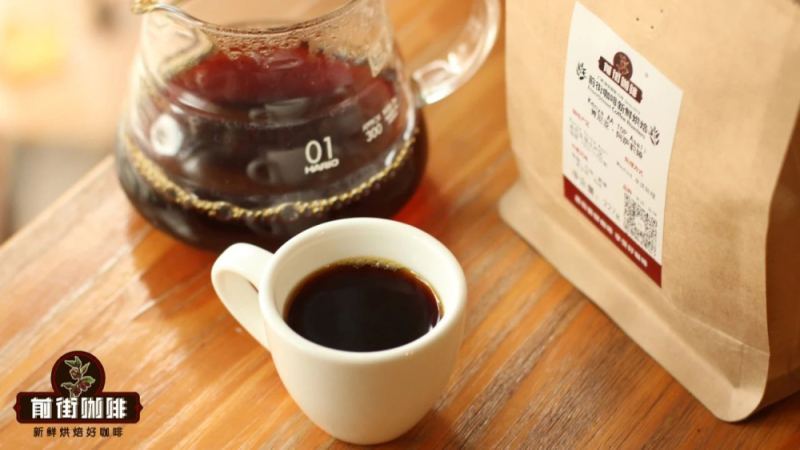
The Kenyan Little Tomato launched by Front Street Coffee (FrontStreet Coffee) is an AA-grade coffee bean from the Thika region. Next, Front Street will talk about how we roast this bean & brew this bean to see how the flavor performs.
Front Street Coffee (FrontStreet Coffee) Roasting Analysis
When Front Street Coffee (FrontStreet Coffee) roasts this Kenyan coffee bean, considering the need to highlight its rich fruity acidity and full berry juice mouthfeel, it uses a medium-light roast.
Front Street Brewing Suggestions
Front Street Coffee (FrontStreet Coffee), considering that this bean uses a medium-light roasting method, will use a higher water temperature and a faster-flow dripper, mainly because it wants to extract its bright acidity with high temperature, but does not want over-extraction caused by high temperature, so it chooses the faster-flow V60 dripper.
Coffee-to-water ratio: 1:15
Coffee grounds: 15g
Total water poured: 225ml
Water temperature: 91℃
Grind size: fine granulated sugar coarseness | EK43s setting 10 (80% passing rate on No. 20 standard sieve)
In the first stage, pour 30 grams of water for a 30-second bloom, then pour 95 grams (the electronic scale shows about 125 grams), completing the pour in about 1 minute. When the water level drops to 2/3 of the coffee bed, pour the remaining 100 grams (the electronic scale shows about 225 grams), completing the pour in about 1 minute 40 seconds. Dripping is completed at 2'00", remove the dripper, and extraction is complete.
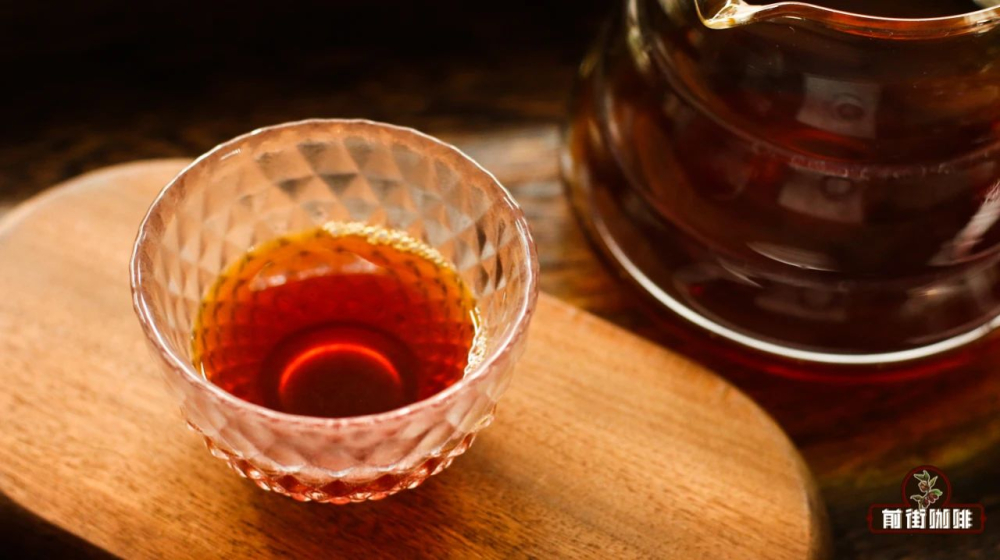
Brewed flavor: on the palate there are flavors of smoked plum and cherry tomato; the acidity is strong and full, with prominent sweetness in the middle and a juicy feel; the finish has berry aroma and brown sugar sweetness, along with green tea aroma.
The above content is compiled by CoffeeHunters, a coffee news website.


