







How does the Red Cherry Project improve coffee quality at the farm?
Operation Cherry Red, launched in 2007 by Dutch green bean trader Trabocca, raises coffee quality by requiring that all cherries be hand-picked at 100 percent ripe and then pass two rounds of cupping. Farmers are paid high prices for meeting the standard, which breaks the older cycle of valuing weight over quality at the coffee farm.
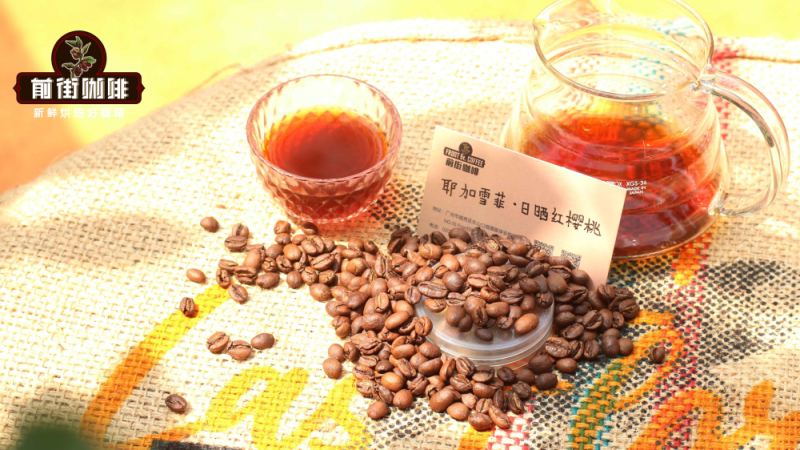
Machine picking is fast but cannot judge ripeness, and it suits flat terrain like Brazil's rather than high-altitude mountains. Cherry Red works where labor can select fruit by ripeness. One example is a G1 natural Yirgacheffe red cherry lot, traditionally processed with fruit aromas and a black tea finish, suited to pour-over, cold brew, and espresso SOE.
The flavor of coffee depends not only on the altitude, soil, and climate of its origin, but the harvesting method also has a key impact on quality. Although machine picking is highly efficient, it struggles to distinguish the ripeness of the fruit; manual harvesting, by contrast, allows selection based on ripeness and is especially more sensible in high-altitude mountainous areas. In 2007, the Dutch green bean trader Trabocca launched the "Operation Cherry Red," requiring all hand-picking of 100% ripe red cherries and strict quality control through two rounds of cupping, using high prices to incentivize coffee farmers to produce with care, breaking the previous vicious cycle of "valuing weight over quality." This article will walk you through how Operation Cherry Red works and recommend a Front Street natural red cherry coffee bean—G1 grade from Yirgacheffe, using traditional natural processing, with rich fruit aromas and a black tea finish, suitable for pour-over, cold brew, espresso SOE, and many other extraction methods.
The taste of coffee comes from the details of coffee cultivation in its origin and the processor's control of the processing techniques during processing. Factors related to the origin's influence on coffee taste include the altitude at which the coffee trees are grown, the soil, the climate of the origin, rainfall, and so on. Among these, the method of harvesting the coffee fruit also affects the quality of the coffee beans.
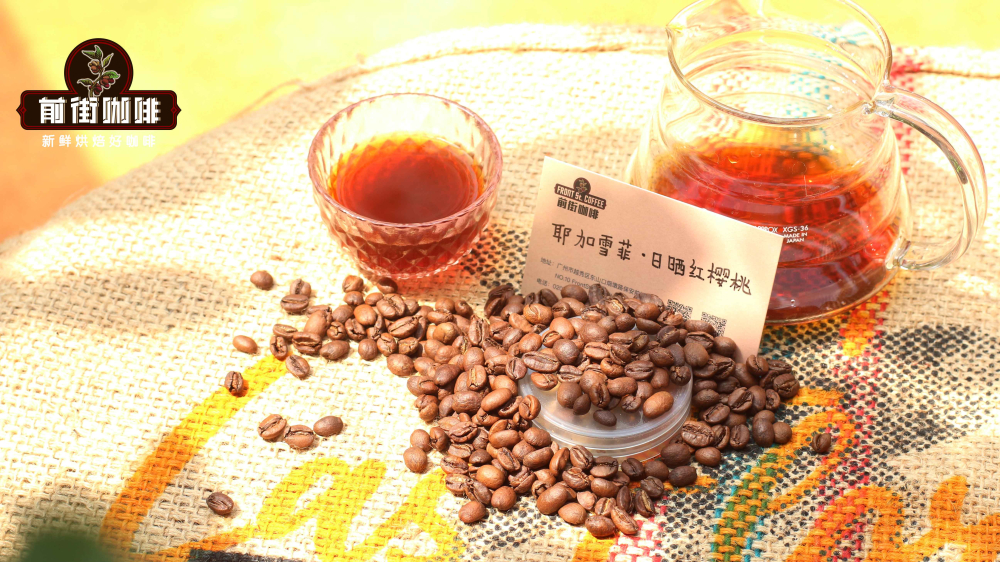
To all beginners and more advanced players, here is a recommendation for a high-quality, top-grade G1 Yirgacheffe—Front Street natural red cherry. It uses traditional natural processing, with rich fruit aromas and a sweet-and-sour texture, as well as a black tea finish, suitable for pour-over, cold brew, espresso SOE, American drip, and many other extraction methods.
The harvesting methods for coffee fruit can be broadly divided into two categories: manual picking and machine harvesting. The advantage of machine harvesting lies in its extremely high efficiency, but the applicable scenarios are relatively limited, usually seen in flat terrain areas such as Brazil. However, the limitation of its applicable range is not the most critical issue; what is truly core is that the coffee fruits do not ripen at the same time.
Front Street Coffee (FrontStreet Coffee) has mentioned many times in the past that coffee is essentially a plant, a crop, and what we commonly call coffee beans are actually the seed part of the plant. This seed is wrapped inside the coffee fruit, and the coffee fruit looks very much like a cherry. These fruits grow at the nodes of the coffee tree branches—figuratively speaking, like growing in the "armpits" of the leaves. Each node, depending on the variety, will bear anywhere from several to dozens of fruits, and the ripening times of the fruits therefore vary. In other words, coffee fruits do not ripen simultaneously, while the characteristic of machine harvesting is that it follows the branches and picks everything regardless of whether it is ripe or not. By contrast, manual picking can selectively harvest according to the ripeness of the fruit, and since coffee trees mostly grow in high-altitude mountainous areas, manual picking is often the more reasonable harvesting method.

Although manual picking can be done according to fruit ripeness, in reality coffee farmers do not necessarily know how to judge ripeness, and the worst case is that even if they know, they may not necessarily pick according to ripe fruit. Before the concept of specialty coffee developed, or before producing regions could increase farmers' incomes through direct trade, the primary logic or goal of all producing regions was certainly to increase yield. Just as Teacher Han Huaizong added the subtitle "valuing weight over quality" to the Colombia producing region in his book World Coffeeology, when bean hunters go to Colombia to seek beans, the first question the producing region's person in charge asks the bean hunter is how many containers of coffee beans they want.
Therefore, the most important goal for coffee farmers is to increase coffee yield, while quality is secondary, or even not cared about at all, and it is even less possible to require them to harvest according to proper ripeness.
However, with the development of specialty coffee, everyone gradually realized the importance of the production side to coffee taste, and the logic of producing coffee also shifted from "valuing weight over quality" to "maintaining yield while also improving coffee quality." Today, what Front Street Coffee (FrontStreet Coffee) wants to share is our Ethiopia Operation Cherry Red.
What is Operation Cherry Red?
The core content of Operation Cherry Red is to process fully red coffee fruits in order to improve coffee quality, which means unripe coffee fruits are unacceptable. Looking at it today, harvesting only fully red cherries does not seem like anything new, but if placed in 2007, it was a landmark innovative event.
Going back to 2007, Trabocca, the largest green bean trader in the Netherlands, in pursuit of high-quality Ethiopian beans, proposed "Operation Cherry Red" (OCR)—a project to improve the quality of small-scale farms.
Before that, whether local processing stations or green bean traders, the logic was to suppress green bean prices as much as possible in order to gain more profit.
For coffee farmers, the main factor determining their source of income was the quantity of coffee fruit sold, so coffee farmers did not care about coffee quality, which is exactly the "valuing weight over quality" just mentioned.
The exploitation by green bean traders and the coffee farmers' pursuit of quantity created a vicious cycle in coffee bean quality. Therefore, Trabocca saw this and had to break this dead cycle, and thus the win-win "Operation Cherry Red" came into being.
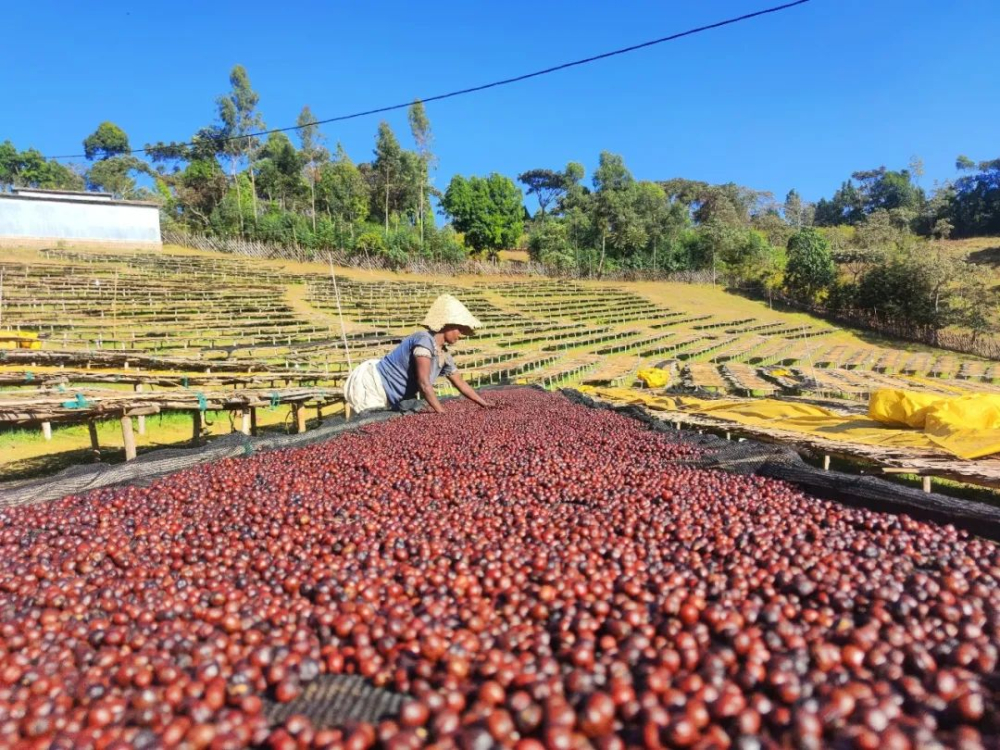
Operation Cherry Red requires that when picking coffee fruit, not only must fully red fruits be picked, but they must also be harvested entirely by hand. However, this is only the most basic requirement; Operation Cherry Red is far from this simple.
The main purpose is to encourage coffee farmers. The largest coffee bean trader in the Netherlands, Trabocca, invites all Ethiopian farms before the harvest season to produce small batches of about 1,500-3,000 kilograms (25-50 bags) of beans for it. Women are only allowed to select fully 100% ripe red cherries. This makes a huge difference to the flavor of the brewed coffee, so careful, sharp-eyed, and hardworking Ethiopian women are important drivers of Operation Cherry Red.
Operation Cherry Red is also a reinforcing practice, making farms put more thought into the process of screening and sorting beans. These coffees are also relatively more expensive. Operation Cherry Red includes washed, natural, semi-washed, semi-natural, and experimental coffees, with main producing areas including Yirgacheffe, Sidamo, Bonga Forest, Lekempti, Kembata, Illubabor, Harar, Limu, and in 2011 the Golocha producing area (near Harar) was added. These all have unique flavors and can fully display the flavor of Ethiopian coffee.
First, the cupping score requirements are high. In the cupping rooms in Addis Ababa, Ethiopia, and Amsterdam, the Netherlands, after Trabocca receives the coffee shipped from the producing area, it screens it again, judging whether the coffee beans meet the standard through two cuppings in Ethiopia and the Netherlands.
Coffee beans that meet the standard are organized by Trabocca for auction to coffee bean buyers around the world. Generally, the transaction price of coffee beans auctioned through this platform can reach more than 4 times the international general spot price of coffee, and the highest can even reach 20 times.
Second, the yield requirement is small, and the quality requirement is high. In order to have enough energy to take care of these top Ethiopian local beans, Trabocca requires that the beans participating in the project must all be small batches, with output roughly between 1,500 kg and 3,000 kg.
Finally, Trabocca's investment in and attention to this project are great, and it is highly valued. Trabocca donated new sun-drying racks, shade nets, generators, and so on locally. At the same time, it also provided financial loan support, new hardware equipment, and production and processing knowledge and technology to help farmers improve their production level. Moreover, through real-time monitoring, safe transportation, and other means, it ensured that the beans of "Operation Cherry Red" received the best care at every stage.
Specifically, Operation Cherry Red encourages coffee farmers to more carefully complete every process of coffee bean picking and processing by raising the purchase price of high-quality green coffee beans. The coffee beans produced in this way are of better quality and better taste, and can be better recognized by the end market, thereby balancing the relatively higher coffee purchase price.
Although the advantages of Operation Cherry Red coffee beans are not considered great now, the project also made a huge contribution to the development of specialty coffee.
The above content is compiled by CoffeeHunters, a coffee news website.


