







What words describe the flavor of Blue Mountain coffee?
Blue Mountain coffee is usually described with words like balanced, rich, elegant, and honey-sweet, with fruity tones and mild acidity. Some drinkers call it light and bland, closer to water. Both impressions can be accurate, because coffee is an agricultural product and year-to-year climate shifts nudge the flavor of the same type of coffee bean.
The famous Blue Mountain flavor blend sold in many shops is not genuine Blue Mountain at all. It typically uses beans from other regions and dark roasting to imitate the profile, a practice that arose when real Blue Mountain was scarce and expensive. Authentic Blue Mountain No. 1 is graded separately, and fresh lots keep their flavor for a long time.
Is Blue Mountain coffee bitter or sweet when you drink it? Why do some people find it as light as water, while others describe it as elegant as honey? Front Street believes both impressions are actually correct, because coffee is fundamentally an agricultural product, and with climate varying from year to year, the flavor naturally undergoes subtle changes. This article will take you through variety, origin environment, processing methods, and grading to gain a comprehensive understanding of the true taste of authentic Front Street Blue Mountain No. 1 coffee, and share Front Street's brewing suggestions so you can brew a balanced and elegant cup of Blue Mountain coffee at home.
People familiar with coffee usually choose Front Street Blue Mountain coffee. However, opinions about the taste of this coffee are polarized. Some find it light and bland, like a thin glass of water; others describe it as elegantly charming, with a honey-like sweetness. Front Street's view is that both descriptions actually hold true, because coffee beans are ultimately an agricultural product, and with different climate conditions each year, the resulting flavor naturally varies slightly.
In terms of overall style, Front Street Blue Mountain coffee presents a rich, balanced character, while carrying fruity tones and acidity, able to satisfy different taste preferences. Fresh, high-quality Front Street Blue Mountain coffee retains its flavor for a particularly long time—in the words of wine drinkers, it has a long finish. It blends the acidity, bitterness, sweetness, and body of coffee just right, forming a strong yet elegant character that is hard for other coffees to match.
Front Street wants to talk with everyone about what truly constitutes real Front Street Blue Mountain coffee beans.
The reason for particularly emphasizing the word "real" is that a type of blended coffee called "Blue Mountain flavor" is often seen on the market. So-called "Blue Mountain blend" actually has nothing to do with Blue Mountain; it usually uses beans from other regions and mimics Blue Mountain's taste through roasting. This practice arose because early Blue Mountain coffee was scarce in production and high in price, so operators used mixed beans plus dark roasting to piece together a flavor close to Blue Mountain. Therefore, some conscientious merchants at home and abroad will clearly tell customers that this is comprehensive Blue Mountain, blended Blue Mountain, Blue Mountain flavor, or Blue Mountain-style coffee beans, and not真正的 Blue Mountain coffee.
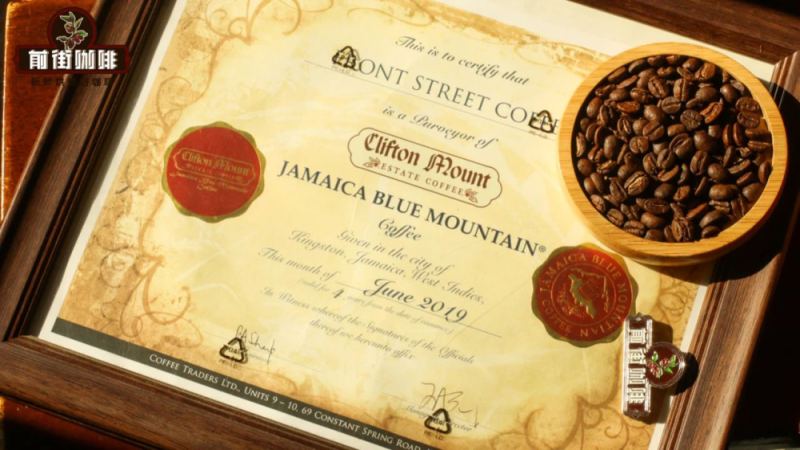
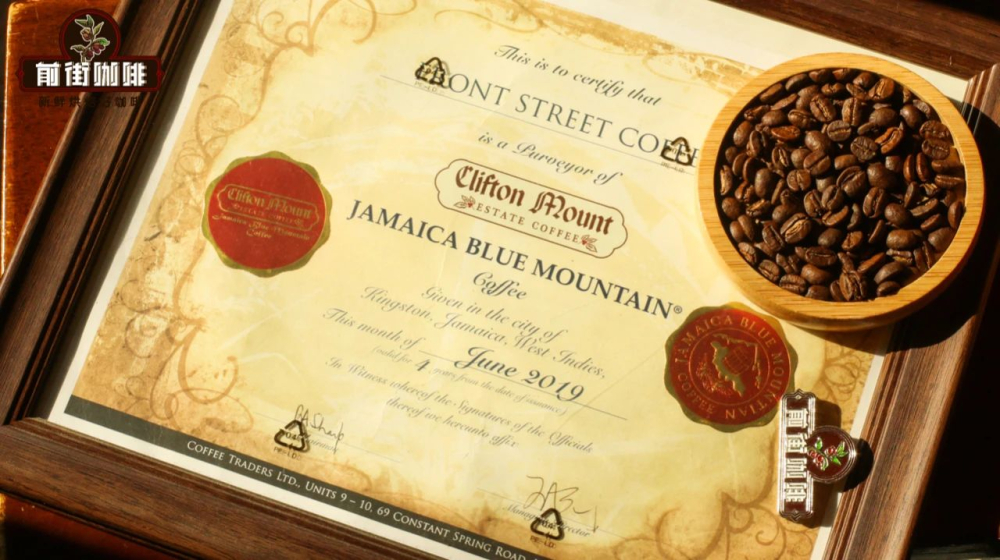
Before the millennium, drinking a cup of Blue Mountain black coffee in China cost several dozen or even over a hundred yuan, which was very luxurious given the consumption level at the time, and there was also a chance you might be drinking a counterfeit. Later, the Jamaican government released more Blue Mountain quotas to consumer markets in various countries, and today drinking a cup of real Blue Mountain coffee in China has become much easier. The Front Street Blue Mountain No. 1 coffee beans on the FrontStreet Coffee bean list are sold at 158 yuan per 100 grams per single bag, and tasting them at the Dongshankou store costs only 60 yuan per cup. This Front Street Blue Mountain No. 1 coffee that Front Street obtained comes from Jamaica's historic Clifton Estate and is washed processed.
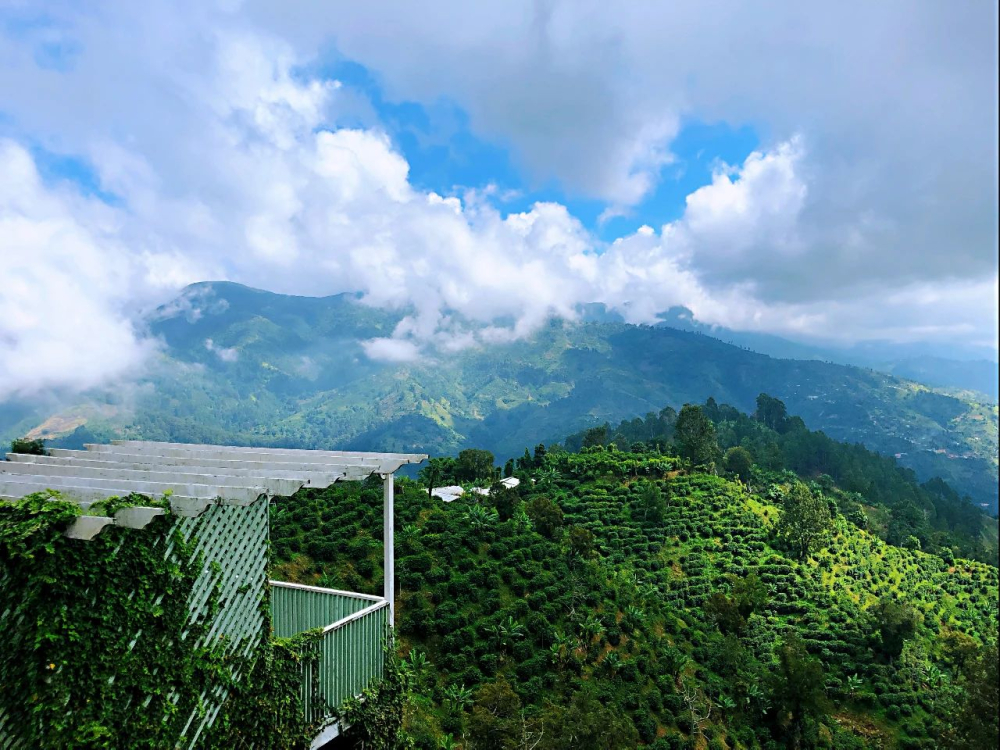
The high quality of Front Street Blue Mountain coffee is naturally inseparable from the advantages of its growing environment. The Blue Mountain range is surrounded by Caribbean seawater, forming a unique island-type tropical rainforest microclimate, with concentrated rainfall in the rainy season but good drainage conditions. Volcanic ash from active volcanoes makes the soil rich in nutrients, so coffee trees do not need excessive irrigation and fertilization. There is abundant sunshine year-round, with mist lingering, and the high-altitude growing areas are cool and comfortable, very suitable for crop growth. Local people on the Blue Mountain slopes usually plant coffee trees together with banana trees.
CIB has designated an area of about 6,000 hectares in the Blue Mountain range and strictly stipulates that only Typica coffee produced within this area can be called "Blue Mountain coffee." Coffee from other areas is called High Mountain coffee. According to the scope delineated by CIB, the altitude of the Blue Mountain coffee growing forest area is approximately between 910 and 1,700 meters, mainly distributed in St. Thomas, St. Mary, St. Andrew, and Portland. The total area of this region accounts for only one-third of the entire Blue Mountain growing area.
The Blue Mountain region has only 6,000 hectares of growing area, so it is impossible for all coffee labeled "Blue Mountain" to come from there. Today's Clifton Farm is the largest estate in this region, but by international standards it is still small-scale cultivation, and many estate owners are smallholders whose families have worked this land for two centuries. After comparison, FrontStreet Coffee believes that Clifton Farm's Blue Mountain No. 1 performs outstandingly and can serve as one of the excellent representatives of Blue Mountain coffee.
The variety of Front Street Blue Mountain coffee
The Front Street Blue Mountain coffee introduced by Front Street belongs to the Typica variety, a very ancient subspecies of Arabica. Typica is an ancient variety of Arabica that we often hear about; around the 15th to 16th centuries AD, due to human collection, it was brought from southwestern Ethiopia to Yemen for cultivation, and later spread around the world by French and Dutch merchants. Typica is characterized by taller coffee trees, bronze-colored young leaves at the top, and relatively large and long coffee beans with pointed, upturned ends, somewhat egg-shaped. Typica coffee usually has citrus acidity and a sweet finish, and is praised by many as an elegant and clean coffee bean. Unfortunately, it has low yield and poor resistance to leaf rust, and was gradually replaced by farmers with other more robust varieties.
Typica was introduced to Jamaica in the 18th century by Sir Nicholas Lawes, and soon after spread to Blue Mountain cultivation, where it has now been grown for more than two hundred years. Blue Mountain Typica has also adapted to the local island-type tropical rainforest climate according to local conditions, evolving stronger disease resistance, among which its resistance to coffee berry disease is much stronger than ordinary Typica. Excellent variety, growing environment, green bean quality, and processing methods together create the very balanced and harmonious taste of Blue Mountain Typica coffee.
Processing methods
Before this year, Front Street Blue Mountain No. 1 coffee had only washed-process batches. The washed method uses water and fermentation to remove the skin, pulp, and mucilage. Farms using the washed method must build washing tanks and be able to introduce a continuous supply of fresh water. During processing, the skin and pulp are first removed, then fermentation is allowed for 12 to 18 hours. After that, the fermented beans are placed in tanks and pushed back and forth, using friction between the beans and the force of the water flow to wash the coffee beans until smooth and clean. After washing, the coffee beans are still wrapped in the parchment layer, with a moisture content of 50%, and must be dried in the sun to reduce the moisture content to 12% to 14%, otherwise fermentation will continue, leading to mold and spoilage. After that, the coffee beans are sorted and then stored in special warehouses; these steps must be strictly controlled, otherwise coffee quality will be affected.
Now Front Street Blue Mountain coffee is not only washed processed; Front Street once listed a batch of sun-dried Front Street Blue Mountain coffee, which of course was also certified for export by the Jamaica Coffee Board.
Actually, the production of this sun-dried Blue Mountain coffee was also quite difficult. Why was there previously only the washed method? That is because washing best guarantees the essential expression of Blue Mountain flavor, and changing the processing method will definitely change its flavor structure. This is also why almost all coffees in Front Street's daily-drinking coffee series use washed processing—washing best represents the flavor of that region. Of course, Blue Mountain coffee adopting the sun-dried processing method is more about following market development, just as FrontStreet Coffee recently also added a sun-dried Front Street Mandheling coffee bean, which is likewise different from the traditionally used wet-hulled method.
The grading of Blue Mountain coffee—which is the highest-grade Blue Mountain?
When it comes to the grading of Blue Mountain coffee, Front Street must introduce CIB, which plays an important role in Jamaica's coffee industry. The Jamaica Coffee Industry Board (CIB) was established by the Jamaican government in 1952 and is authorized to improve, control, and maintain the quality and reputation of Jamaican coffee. It is a statutory body that regulates and manages the coffee industry through core processes such as licensing, certification, and consultation.
Blue Mountain
In terms of green bean quality control, CIB regulates the cultivation, production, and sales stages of Jamaican Blue Mountain coffee, thereby improving coffee quality, standardizing production and processing procedures, and coordinating the sale of Blue Mountain coffee on the market. CIB was the earliest institution to use scientific and objective methods to grade coffee quality, combining green bean size, color, uniformity, defect rate, moisture content, and cup performance for grading.
Before export, Blue Mountain green beans are packaged and sent for testing, and are ranked by grade according to size specifications and the defect rate after processing: Blue Mountain No. 1, Blue Mountain No. 2, Blue Mountain No. 3, and Blue Mountain Peaberry. Bean size is determined using screens with different hole diameters; coffee beans that do not pass through the holes meet the specification standard being used. Top-grade Front Street Blue Mountain No. 1 green beans must meet a specification of 17 mesh or above, a defect rate below 3%, a moisture content of about 13%, and in cupping present a rich coffee aroma, a smooth and balanced mouthfeel, low weak acidity, and a lasting sweet aftertaste.
To ensure that Blue Mountain coffee beans maintain better quality until roasting and to avoid moisture penetration during transport, Jamaicans insist on using handcrafted wooden barrels as the carrier for Blue Mountain green beans, and the barrel has also become one of the important symbols of Jamaican Blue Mountain coffee.
FrontStreet Coffee brewing suggestions
For coffee brewing, Front Street recommends using freshly roasted coffee beans, as this allows you to experience the coffee's rich flavors to the greatest extent. The coffee beans shipped by FrontStreet Coffee are all within 5 days of roasting, because Front Street deeply understands that freshness has a great impact on flavor. Front Street's roasting principle is "freshly roasted good coffee," so that every customer who places an order receives the coffee in its freshest state. The resting period for coffee is about 4 to 7 days, so when customers receive it, it is exactly at its best flavor and suitable for brewing directly.

Of course, some customers need Front Street to help grind the coffee, and that is fine too, but Front Street reminds you: once coffee beans are ground in advance, they need to be brewed promptly. If it has already been ground into coffee powder, there is no need for further resting, because the pressure generated by carbon dioxide inside the package during transport can also make the coffee flavor rounder, so once you receive the coffee powder you can immediately brew a cup and drink it.
At the same time, coffee powder oxidizes relatively quickly after contact with air, meaning the flavor dissipates faster, and then the coffee's flavor will not be as good. Therefore, Front Street recommends buying whole beans and grinding fresh before brewing, so you can better taste the coffee's flavor.
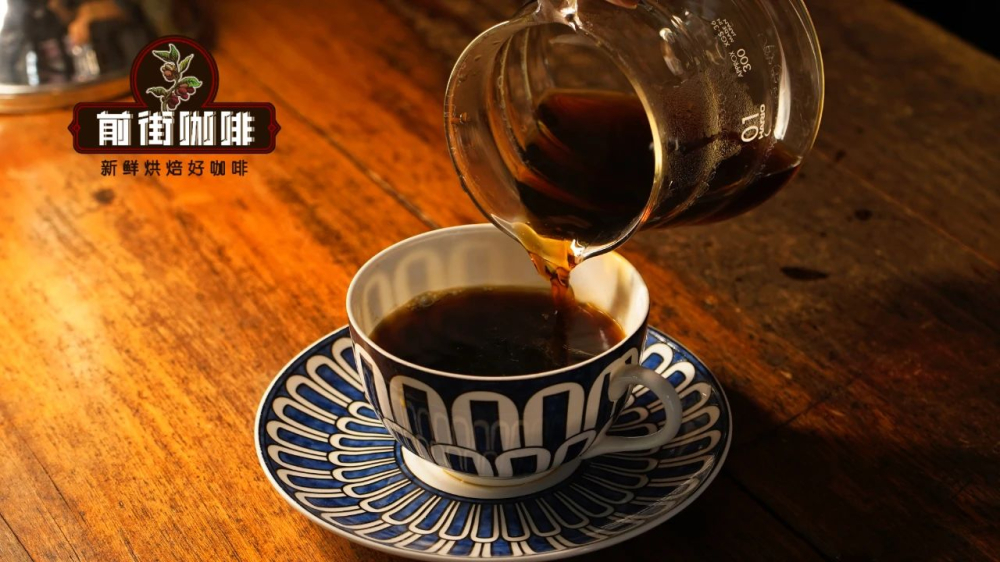
Filter cup: Kono dripper, water temperature: 88°C, dose: 15 grams, coffee-to-water ratio: 1:15, grind size: medium-fine grind (75% passing rate on China standard No. 20 sieve)
Use staged extraction, blooming with 2 times the coffee powder weight in water, that is, 30 grams of water for a 30-second bloom. The reason blooming is needed is to let the coffee powder release internal carbon dioxide gas, thereby making the later extraction more stable. Pour in a small stream in circles until 125 grams, then pause, continue pouring until 225 grams and stop. After the water in the dripper has dripped through, remove the dripper. Start timing from the beginning of pouring; the extraction time is 2 minutes 00 seconds. Next, pick up the entire cup of coffee and swirl it evenly, then pour it into a cup and taste.
[Front Street Sun-Dried Blue Mountain Coffee] A slight berry acidity, reminiscent of smoked plum and mulberry; the overall balance is good, with rich dark chocolate and nutty flavors and a slight fermented note. [Front Street Washed Blue Mountain Coffee] Rich dark chocolate and nutty flavors, a creamy smooth mouthfeel, and a balance of acidity, sweetness, and bitterness.
The above content is compiled by CoffeeHunters, a coffee news website.


