








Which coffee extraction methods work well for iced coffee?
Three low-temperature coffee extraction methods shape iced coffee at home: espresso-based drinks such as the iced Americano and iced latte, iced pour-over, and cold brew or ice drip. Espresso needs oil and body, iced pour-over depends on aroma layers, and cold brew and ice drip rely on beans that stay balanced when extracted in cold water for hours.
Because roast level decides how each method performs, medium-roast beans with floral and fruity notes cover the widest range. Light roasts can turn sour and astringent under espresso pressure, while dark roasts read harsh once chilled, which also answers whether is americano supposed to be bitter. Five blends and single origins are listed as starting points.
As iced coffee becomes a regular on social media, more and more coffee lovers are trying to recreate it at home. Iced Americano, iced latte, iced pour-over, cold brew, and ice drip each have their own tricks, and the key to whether an iced coffee tastes good often lies in the choice of beans. This article analyzes three types of low-temperature extraction logic: espresso needs oil support, iced pour-over emphasizes aroma layers, and cold brew and ice drip rely on balanced performance at low temperatures. Overall, medium-roast beans with floral and fruity notes can best accommodate multiple methods. The article also compiles five Front Street beans suitable for making iced coffee, covering blends and single origins, to help you find a summer iced coffee solution you like.

Regardless of whether the temperature outside is high, iced coffee always shows up frequently in social media feeds. Have you also been tempted to make a cup for yourself?
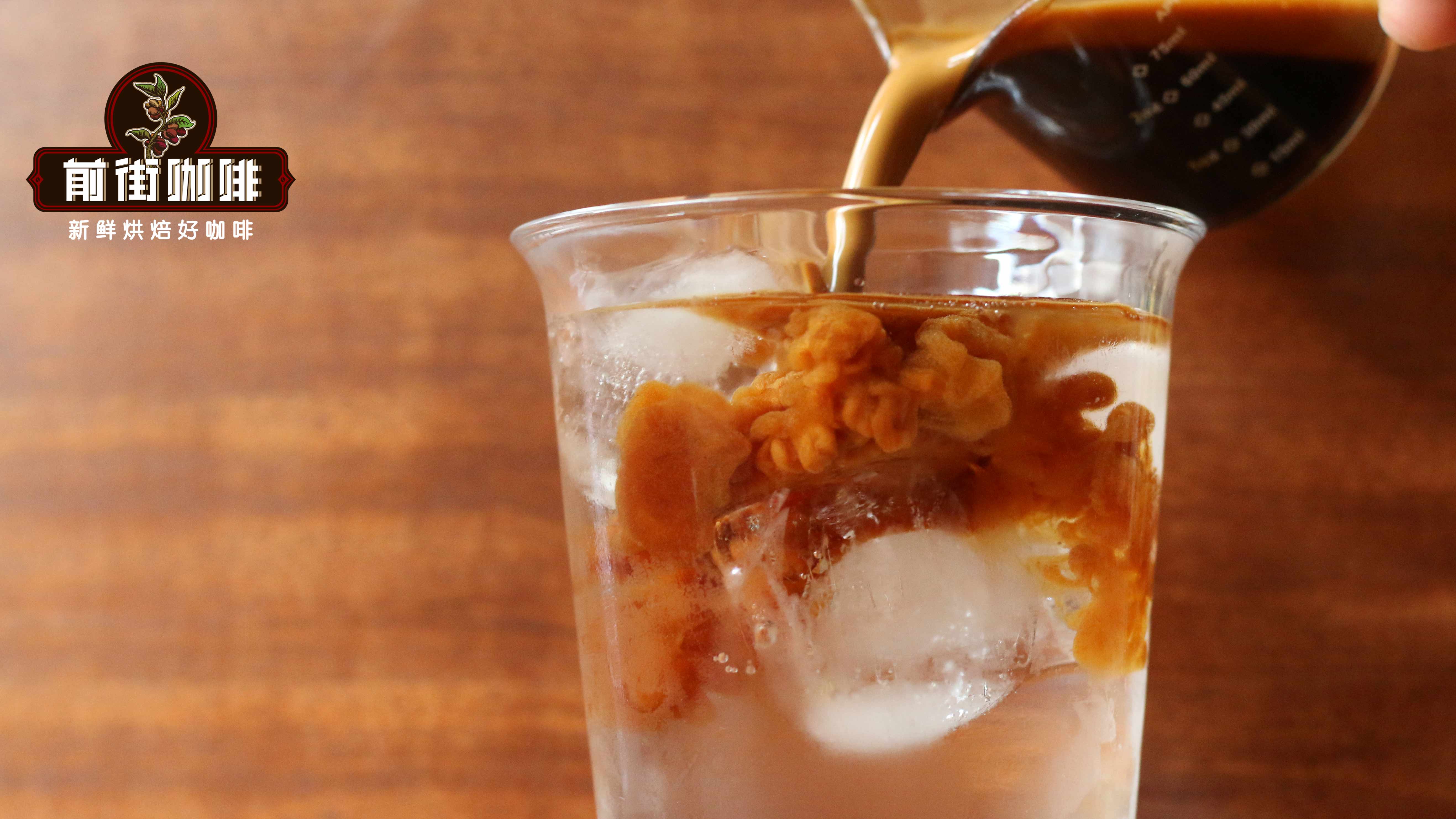
The iced coffee family has many members, with iced Americano, iced latte, iced pour-over, cold brew, and ice drip all being common types. Different beans naturally taste different, and when the extraction method changes, the flavor direction changes with it. Iced Americano and iced latte are made by first extracting espresso, then adding water or milk, and finally adding ice to dilute; iced pour-over is made by first brewing a stronger hot coffee, then rapidly cooling it with ice; as for cold brew and ice drip, the entire extraction process takes place in a cold-water environment.
So is there a bean that can cover all these methods and taste good no matter how it is made? There really is. First, look at espresso, which emphasizes oiliness and body. If the roast is too light, making it into an Americano or latte can easily be both sour and astringent, and the aroma will not hold up; iced pour-over pursues layered aroma. If the beans are roasted too dark, the bitterness will be especially striking after icing; because cold brew and ice drip extract at low temperatures from beginning to end, only beans with neither prominent acidity nor bitterness can bring out a balanced taste.
Considering these three types of extraction logic together, if you want to make a satisfying cup of iced coffee at home, it is best to prioritize medium-roast beans full of floral and fruity aromas:
The first type of bean suitable for iced coffee: Front Street. Strawberry Candy
This bean is Front Street's creation blending two high-altitude producing regions, combining Panama washed Geisha and Costa Rica honey-processed coffee. In order to bring out the strengths of both places, Front Street chose a medium roast, which preserves rich floral and fruity notes while also highlighting roast aromas. After brewing, you can taste caramel, raisins, candied fruit, and intense rose fragrance.
The second type of bean suitable for iced coffee: Front Street. Huakui
As a must-try entry-level bean among African specialty coffees, Front Street Huakui follows Ethiopia's most traditional natural process, with full tropical fruit flavors. Using it to make iced coffee gives a very pleasant sweet-and-sour taste, with floral notes interwoven with fruity acidity, low bitterness, and a clean, refreshing mouthfeel. It is suitable for enjoying on its own.
The third type of bean suitable for iced coffee: Front Street. Blackberry
Front Street Blackberry uses a distinctive black honey process. Unlike natural and washed methods, it leaves only the coffee mucilage for drying, so the green beans naturally carry a sweet aroma. After being made into various iced coffees, it shows flavors of grapes, flowers, and orange, with a light and elegant mouthfeel, and in the finish there are also notes of mulberry and berries.
The fourth type of bean suitable for iced coffee: Front Street. Sidra
Front Street Sidra comes from Finca La Divisa in Colombia's Huila producing region, grown at an altitude of about 1,700 meters, and uses a double anaerobic natural process. Its flavor profile is a mouthful of passion fruit and grapes, along with candied-fruit-like sweetness and mandarin-like acidity. After swallowing, an almond-like aftertaste remains in the mouth, and precisely because of this, it has gained many fans who repurchase it repeatedly.
The fifth type of bean suitable for iced coffee: Front Street. Mozart
Front Street Mozart comes from Costa Rica, a famous specialty coffee producing region, and uses a rather special raisin honey process. The sweetness of the mucilage layer seeps into the interior of the bean, presenting a ripe, rich fruit profile. When used to make iced coffee, the flavors of blueberry, black grape, and vinous fermentation are very distinct, the mouthfeel is refreshing, and after drinking it, the fragrance lingers on the lips and teeth.
The above content is compiled by CoffeeHunters, a coffee news website.


