







How does honey processing shape Costa Rica coffee brewing?
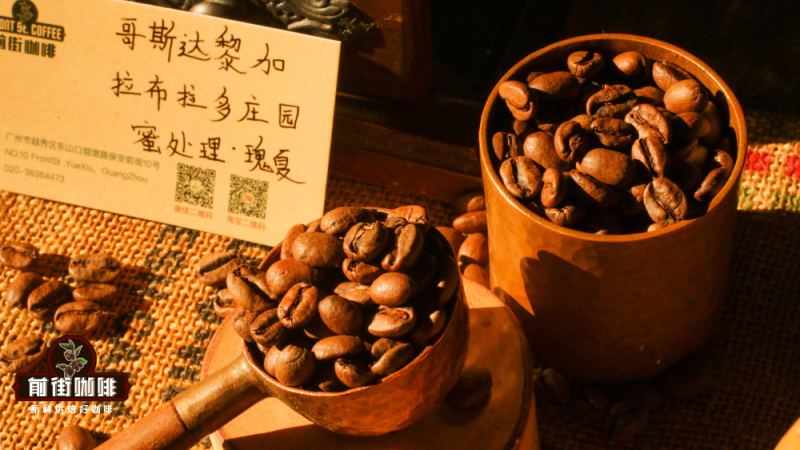
Costa Rica coffee brewing centers on high-altitude volcanic soil, strict green bean grading and a honey process that leaves mucilage on the bean during drying, which raises sweetness and body. The washed Tarrazu lot serves as an everyday reference point, while the Blueberry beans from Piedra Grande Estate show how a honey-processed SHB coffee can carry layered fruit notes.
For home brewing, the guide recommends a three-pour pour-over on a V60 dripper with carefully set water temperature, coffee-to-water ratio and grind size, matched to the density of high-altitude SHB beans. Honey processing usually dries fruit for two to four weeks until moisture falls to roughly 12 percent, which is why the cup reads sweeter than a washed green coffee bean.
Costa Rican coffee occupies an important position in the Central American specialty coffee landscape thanks to its high-altitude volcanic soil and innovative processing methods. This article starts with Front Street Coffee's everyday drinking bean—the washed Tarrazu—and sorts out Costa Rica's eight major producing regions and green bean grading standards, with a focus on analyzing how honey processing gives coffee greater sweetness. It also presents the complete profile of the recently launched Blueberry coffee beans from Piedra Grande Estate, along with a three-pour pour-over recipe tailored for high-altitude SHB extremely hard beans, including specific parameters such as the V60 dripper, water temperature, coffee-to-water ratio, and grind size, helping coffee lovers recreate a rich fruit complexity at home.
For more specialty coffee knowledge, please follow the WeChat public account: Front Street Coffee (FrontStreet Coffee)
When it comes to Costa Rican coffee beans, I believe every coffee lover is familiar with them. Front Street Coffee's Costa Rican product line is quite extensive. In addition to the highly popular Musician series in recent years, there are also Blueberry coffee beans from Piedra Grande Estate, most of which use honey processing. Central American countries such as El Salvador and Costa Rica have always favored this experimental style of processing, and today honey processing has long become a common processing method in the global coffee industry.
Washed, natural, and honey are the three mainstream processing methods. Before diving into the discussion, Front Street will first introduce the basic structure of the coffee fruit: skin, pulp, mucilage, parchment, and the coffee bean itself. After the bean selection stage, natural processing spreads the coffee fruit on drying beds for natural drying. The time required depends on climatic conditions, usually two to four weeks, until the moisture content of the coffee beans drops to about 12%, after which the outer shell is removed with a huller. During this drying process, the coffee beans can fully absorb the essence of fruit sugars, so their sweetness and body are superior to washed beans.
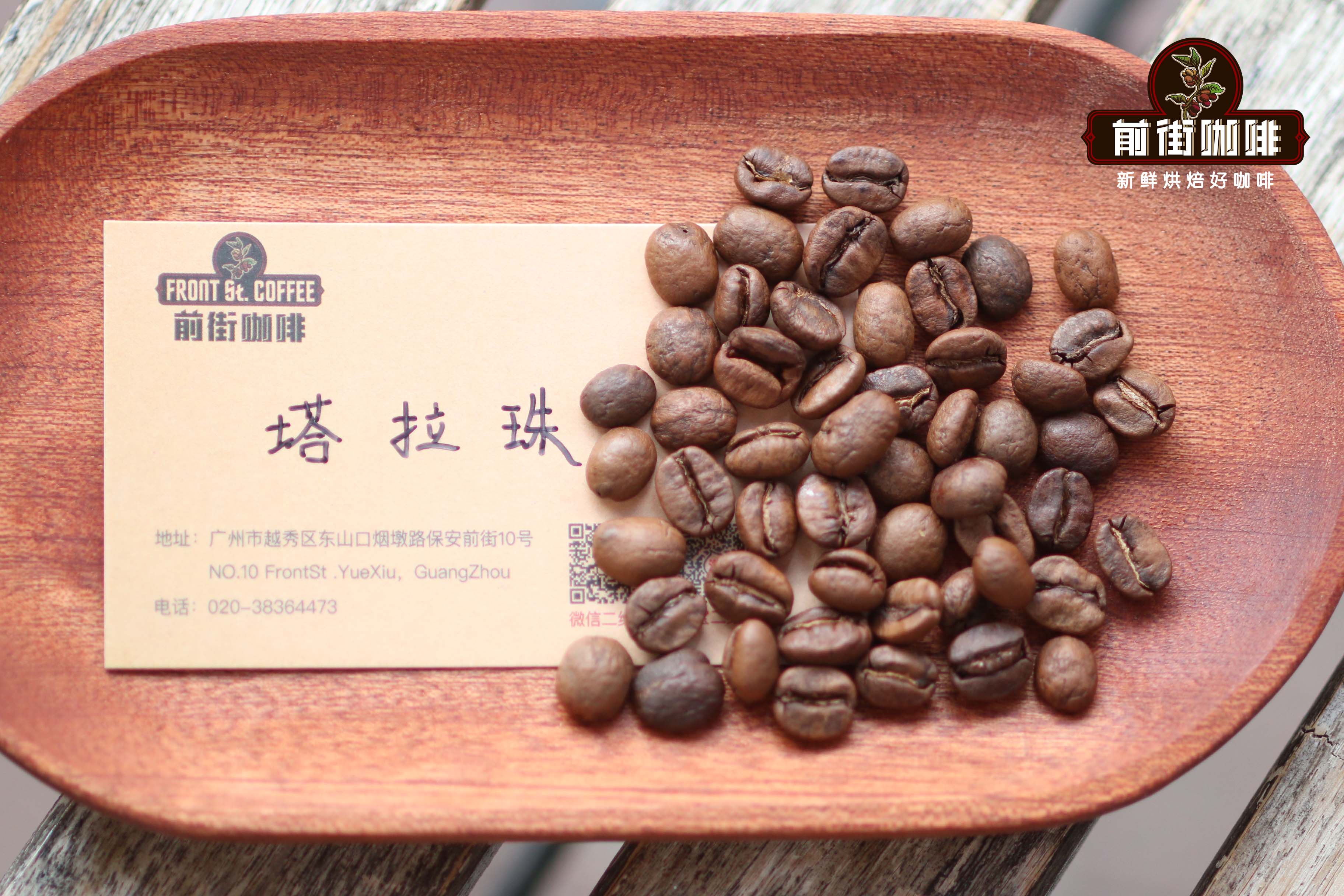
Front Street has always believed that washed processing is the method that best showcases the terroir personality of specialty coffee. After a series of steps including removing the skin and pulp, soaking and fermenting, washing off the mucilage, drying, and removing the parchment, washed coffee has outstanding acidity, with a bright, clean flavor and no off-taste. For this reason, almost all of Front Street's everyday drinking bean series use washed processing, with the aim of allowing coffee lovers to taste the most regionally representative flavors at the most affordable price. Even in Costa Rica, which is famous for honey processing, Front Street still selected a washed Costa Rican Tarrazu coffee bean for its everyday drinking bean product line. The following is the green bean information for this bean:
Front Street Coffee (FrontStreet Coffee): Costa Rica Tarrazu
Country of origin: Costa Rica
Region: Tarrazu
Variety: Catuai, Caturra
Altitude: 1,500 meters
Grade: SHB
Processing method: Washed
Today Front Street will use this bean as a starting point to talk with you about Costa Rican coffee. Costa Rica is located on the Central American isthmus and is influenced by the climate regulation of both Pacific and Atlantic ocean currents and sea breezes. It contains many towering volcanoes reaching 2,000 meters in altitude, allowing coffee cherries to grow slowly in fertile volcanic ash soil and a cool high-altitude environment, ultimately producing coffee beans with complete layering and full flavor.
The earliest coffee-growing area in Costa Rica was located on the slopes of Poas and Barva volcanoes, now known as the Central Valley. After years of development, the country currently has eight major coffee-producing regions, all with soil composed of multiple deep layers of volcanic ash and volcanic dust. These regions include: Tarrazu, West Valley, Central Valley, Tres Rios, Brunca, Guanacaste, Orosi, and Turrialba. Among them, the Tarrazu and West Valley regions account for about half of the country's coffee production. Costa Rican Tarrazu coffee beans produced in mountainous areas are hailed as among the finest coffees in the world.
As mentioned earlier, Costa Rican Tarrazu is only one member of Front Street's everyday drinking bean series. The real highlight of Costa Rican coffee is actually beans processed with honey. Next, Front Street will introduce another bean that quickly became popular after recently hitting the shelves: the Blueberry coffee bean from Piedra Grande Estate.
Piedra Grande Estate is located in the Brunca coffee-producing region of southern Costa Rica. The terrain and mountain ranges of this region connect with Panama, and it has diverse microclimates. Near the estate, stone carvings made by indigenous people between 200 BC and 1500 AD have been unearthed, known as the mysterious stone spheres, and the estate was therefore named after the giant stones.

Front Street Coffee (FrontStreet Coffee): Costa Rica · Piedra Grande Estate Blueberry Coffee Bean
Country: Costa Rica
Region: Brunca
Estate: Piedra Grande Estate
Altitude: 1,700-1,800 meters
Processing method: Anaerobic heavy honey processing
Variety: Bourbon, Catuai
Grade: SHB
What exactly is honey processing as a processing method? After the coffee fruit is depulped, a layer of transparent mucilage remains on the surface of the coffee beans. The core practice of honey processing is to retain this mucilage during the drying stage. As the coffee gradually dries, the concentration of the mucilage continues to increase, and the sugars and acids stored within it penetrate into the coffee beans. Compared with washed coffee, honey-processed coffee has a more prominent sweetness.
Observant people may have noticed that both coffees above are graded SHB. For Costa Rican coffee, SHB is already the highest grade. So how exactly is Costa Rican coffee graded? In that country, green coffee beans are mainly graded according to altitude, because altitude affects the hardness of the beans. Coffee beans produced in higher-altitude areas are harder in texture and are also considered more desirable. Front Street has compiled Costa Rica's green coffee bean grading standards for you:
SHB (Strictly Hard Bean): grown at an altitude of 1,500-1,700 meters;
HB (Hard Bean): grown at an altitude of 1,350-1,500 meters;
SH (Semi-Hard Bean): grown at an altitude of 1,200-1,350 meters;
Extra Prime (Extra Prime Washed Bean): grown at an altitude of 1,000-1,200 meters;
Prime (Prime Washed Bean): grown at an altitude of 850-1,000 meters;
Good Washed (Good Washed Bean): grown at an altitude of 700-850 meters.
Here Front Street shares a piece of trivia: although throughout the Americas, Costa Rica's high growing altitude is a key factor in the excellent flavor of its coffee, another interesting fact that keeps the country's coffee at such a high standard is that in Costa Rica, growing Robusta coffee beans is illegal.
Front Street Coffee (FrontStreet Coffee) Barista Brewing Recommendations
Considering that this bean is a Costa Rican high-altitude SHB extremely hard bean, if you want to brew a rich fruit complexity, Front Street recommends using a higher water temperature and a finer grind. The harder the coffee bean, the more a finer grind is needed to increase the extraction surface area, thereby raising the extraction yield.
Dripper: V60 Water temperature: 90-91ºC Dose: 15g Coffee-to-water ratio: 1:15 Grind size: fine granulated sugar size (sift the grounds with a No. 20 sieve to 82%)
Three-pour extraction: Pour the coffee grounds into the V60 dripper. First wet the coffee bed with twice the amount of water as the coffee grounds and let it bloom for 30 seconds. Then, using a slow stream, pour in circles from the inside outward until reaching 125 grams, then pause the pour. Wait until the coffee bed drops to half the height of the dripper, then continue pouring the third stage with the same slow stream until reaching 225 grams. Once all the coffee liquid has filtered through, remove the dripper. The total time should be controlled at about 2 minutes (a 10-second margin is allowed).
The above content is compiled by CoffeeHunters, a coffee news website.


