







How Do Arabica Beans Differ From Robusta Beans?
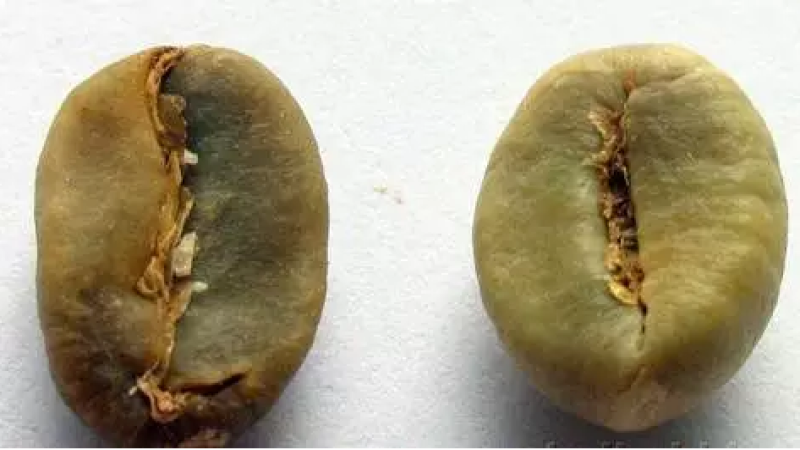
Arabica and Robusta are the two mainstream coffee varieties, with Liberica far rarer. Before roasting, arabica beans are longer, oval and flat with a center line curved like an S or C, while Robusta is rounder and more spherical with an almost straight center line. Once roasted and mixed, appearance alone is not enough to tell them apart.
Robusta usually gets a deep roast and shows heavy body, deep bitterness and low acidity, with walnut, peanut, hazelnut, barley tea and grain notes; poor handling can bring earthy or rubbery off-flavors. It is common in dark-roast espresso blends because it thickens crema, and one commercial blend uses 10% Robusta. Arabica, higher in sucrose and richer in flavor, dominates the specialty market, and the two also differ in caffeine, growing conditions and cost.
In the coffee consumer market, Arabica and Robusta are the two major mainstream varieties, while Liberica is relatively rare. Before roasting, the two can be quickly distinguished by their physical characteristics: Arabica is long, oval, and flat, with a center line curved like an S or C; Robusta is more round and spherical, with a straight center line. However, once roasted and mixed together, they are difficult to tell apart by appearance alone, and judgment requires combining aroma and taste. Robusta is mostly used in dark-roast espresso blends, as it can enhance the thickness of espresso crema. Front Street's commercial blend contains 10% Robusta beans; Arabica, due to its high sucrose content and rich flavor, is more favored by the specialty market. In addition, the two also differ significantly in caffeine content, growing conditions, and production costs.
For more specialty coffee knowledge, please follow the WeChat official account: Front Street Coffee (FrontStreet Coffee)
Currently, there are three main varieties in the coffee consumption sector, among which Arabica and Robusta are the most common, while Liberica is relatively rare. Before coffee beans are roasted, we can quickly distinguish Arabica from Robusta by their physical characteristics. Arabica beans are longer and oval, relatively flat, with a center line shaped like an S or C; Robusta beans are mostly oval, spherical, or nearly spherical, with a center line close to a straight line.
However, if roasted Robusta and Arabica are mixed together, it is not easy to identify them by the naked eye alone. Therefore, determining whether a bag of coffee contains Robusta beans usually also requires combining aroma and flavor for auxiliary identification.
Robusta beans are generally given a deep roast and often show extremely high body, a deep bitterness, and low acidity, with flavors leaning toward walnut, peanut, hazelnut, barley tea, and grain. If not handled properly, they can also develop a strong earthy or rubber-like negative flavor, which people collectively call the "Robusta taste." For this reason, Robusta beans are often used in dark-roast espresso blends, helping to increase the viscosity of espresso crema during extraction. For example, the commercial blend launched by Front Street contains 10% Robusta beans.
As the most favored variety on the market, the various sub-varieties under Arabica develop unique and rich aromas and sweet-acidic flavors according to the terroir of their growing environment, especially high altitude, volcanic soil, and microclimates, and their mild mouthfeel is also easier for the public to accept. Arabica usually displays elegant flavors such as floral notes, fruit, chocolate, and roasted hazelnut, and also has higher cleanliness.
Arabica is currently the most popular coffee variety. Different sub-varieties develop unique and rich aromas and sweet-acidic flavors according to the terroir of their growing environment, especially high altitude, volcanic soil, and microclimates, and their mild mouthfeel is easier for people to accept.
If the substances contained in Robusta and Arabica are analyzed, it will be found that the sucrose content of Arabica is almost twice that of Robusta beans. Sucrose is converted into aromatic substances during roasting, giving the coffee a more diverse sweet aroma. As specialty coffee culture continues to spread, people have increasingly high demands for coffee's taste, mouthfeel, and quality. Therefore, aromatic-rich Arabica better meets the high demand of the current specialty coffee market than Robusta. For example, Front Street's Panama Geisha coffee has a unique orange-blossom honey charm, making tasters feel as if they are drinking a cup of fruit tea.
Compared with Arabica, Robusta varieties have a higher caffeine content, roughly between 2.7% and 4%, twice that of Arabica. Caffeine, as a plant's natural insecticide, helps Robusta resist most insect damage.
From a cultivation perspective, Robusta coffee trees can tolerate high temperatures, cold, drought, and humidity. At the same time, a single Robusta plant also has a high yield and strong adaptability to the environment. It is usually planted on low-altitude plains and can also be directly managed and harvested uniformly by mechanization, so its selling price is naturally lower. Therefore, Robusta's cultivation and production costs are lower, making it more suitable for commercial mass production.
Although Arabica is more favored, this does not mean it has no shortcomings. The Arabica plant is quite "picky" about its growing environment.
Because Arabica has a lower caffeine content, it is more susceptible to insect damage, so it needs to be planted in highlands above 800 meters in altitude where frost does not occur. The higher the altitude, the more obvious the temperature difference, the more conducive it is to the accumulation of flavor substances in the coffee fruit, and the fuller the aroma development. To display diverse and positive flavors, in addition to high altitude, it also needs the support of a unique microclimate. Many well-known specialty coffees are produced under microclimate conditions. High-altitude terrain is often not flat enough, making planting, management, and harvesting more difficult, so high-quality Arabica coffee requires more production cost investment.
The above content is compiled by CoffeeHunters, a coffee news website.


