







How does traditional coffee differ between pour-over and espresso?
Espresso forces hot water through a fine, compacted puck under pressure in about 25 to 30 seconds, giving a concentrated shot with crema that anchors drinks like the americano vs latte lineup. Pour-over relies on gravity and a slow, even pour, producing a lighter, clearer cup that shows a single origin's acidity and aroma.
Equipment and timing separate the two further. Espresso needs a machine, a fine grind and steady pressure; pour-over needs a dripper, a coarser grind and a few minutes of pouring. Heavily roasted beans built for milk drinks suit espresso, while lighter single-origin lots often read better as filter, though traditional coffee drinkers may prefer the opposite.
The coffee world is changing with each passing day, and the rise of specialty coffee has led us to re-examine the infinite possibilities of this beverage. Today, coffee-making methods are endless, and the two major camps of espresso and pour-over each have their own characteristics, with significant differences from extraction principles to flavor expression. Some people prefer the intense impact of espresso, while others love the clean and delicate taste of drip coffee. Exactly how do the two differ in extraction time, equipment choice, and flavor presentation? What kind of coffee beans and drinking habits are each suited to? In this article, Front Street will take you through a comprehensive comparison of pour-over and espresso coffee, along with a brewing demonstration of a single-origin bean, to help you find the cup that suits you best.
Coffee culture has always been evolving, and today coffee has long gone beyond being merely a beverage. The emergence of the specialty coffee wave has completely refreshed the way people understand and appreciate coffee, and has also broken the rigid, stereotyped image of traditional coffee. At present, coffee-making methods are diverse, and as the community of coffee lovers continues to grow, more and more people have noticed that obvious differences exist among different coffees, and that changes in extraction methods can also influence the overall flavor direction of coffee. Many seasoned coffee enthusiasts can even identify the subtle differences brought by the same producing region, different processing methods, or different brewing devices. This is exactly what makes coffee so fascinating.
The coffee landscape can be broadly divided into two major camps: espresso coffee and pour-over coffee, and the two are clearly distinct. So, which of these two brewing methods is actually better or worse? In this article, Front Street will compare them from multiple dimensions, including flavor expression and extraction method.
Espresso Coffee
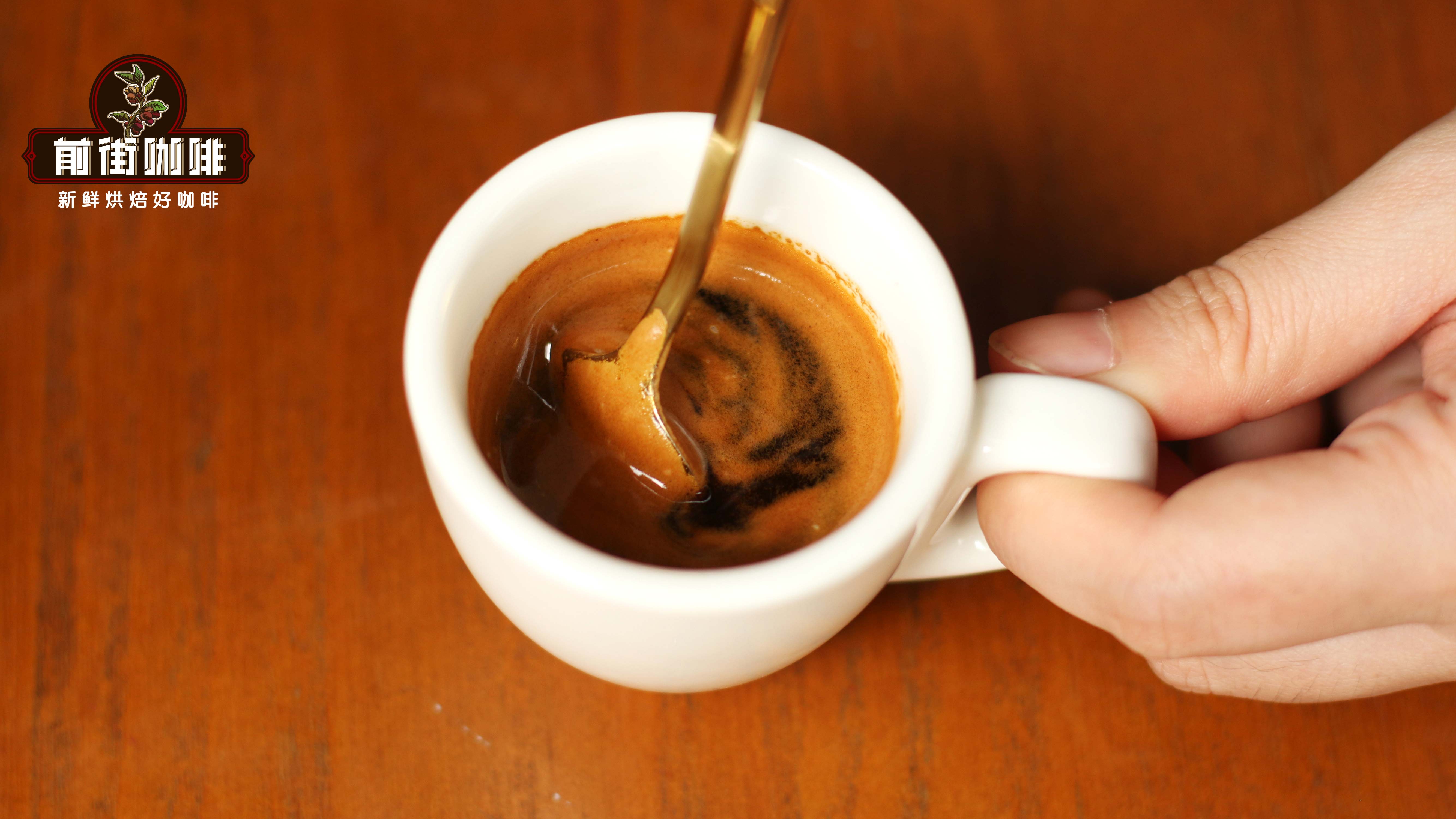
In the eyes of Italians, Espresso represents the quickest route to ingesting caffeine. The word itself points to its most core trait—fast. And that is indeed the case: quick to make, quick to drink, and quick for the caffeine to take effect. Besides "fast," what other characteristics does Espresso have? It uses extremely hot water for extraction, with a pressurized stream of water passing through very finely ground coffee powder, and the resulting coffee liquid far exceeds filter coffee in both density and concentration. As a result, espresso inevitably leaves a strong and intense impression. However, espresso is not just a small cup to be downed in one gulp; it is also the foundation of various Italian-style coffees. Americano, latte, flat white, cappuccino, and others all rely on espresso as their support, so that even after blending with milk they still retain a rich coffee taste.
First, Espresso is covered with a layer of golden-brown crema, thick or thin, composed of proteins, oils, and melanoidins (formed by the combination of sugars and amino acids). Not all coffees can produce crema, and there has always been controversy surrounding crema: some dislike its excessive bitterness, while others regard it as the mark of a high-quality Espresso. Second, there is the coffee liquid beneath the crema, which is the main body of espresso and contributes acidity and sweetness. This part of the liquid is often subdivided into two layers: body and heart. The body is located in the middle section of the Espresso and usually appears caramel brown, while the heart tends to be deeper and darker in color.
Pour-Over Coffee
From a theoretical perspective, espresso coffee and pour-over coffee are like a pair of opposites under the same concept, because their basic extraction principles are exactly the same—hot water is poured over a bed of coffee grounds, the water passes through the coffee bed and some kind of filter medium, extracts the coffee liquid, and finally flows into the cup. However, the core difference between pour-over coffee and espresso coffee is that the water used in making pour-over is not driven by pressure and relies solely on gravity to pass through the coffee bed. For this reason, to obtain a sufficiently outstanding cup of coffee, its extraction process requires a slightly longer time. Also for this reason, pour-over coffee requires a larger water-to-coffee ratio. For the same 20 grams of coffee grounds, making espresso may require only 40 grams of water, while pour-over coffee would use 300 grams or even more water.
Other equivalent names for pour-over coffee include "drip coffee." Through manual extraction, it tends to draw out a richer range of flavor substances from the coffee, which makes this brewing method especially suitable for single-origin coffee beans to highlight the "terroir flavor" bestowed by their place of origin. Unlike the intense taste and layered complexity of espresso coffee, what pour-over coffee pursues is cleanliness, clarity, and consistency.
Extraction Time
The extraction process of pour-over coffee is quite complex. Usually, a small amount of water is first used to wet all the coffee grounds, followed by a 30-second bloom to release carbon dioxide and at the same time create a smoother flow for the subsequent extraction stage. After the bloom is finished, an extraction period of 1.5 to 2 minutes is still required. As for espresso coffee, Italians insist on an extraction time of 25 to 30 seconds, no more and no less. If it is a milk coffee, a few more seconds must be added for steaming and pouring the milk. Overall, making a cup of espresso takes about 1 minute, making it a quicker way to get coffee.
Choice of Extraction Method
When it comes to the required equipment, most pour-over devices are priced lower than a professional and complex espresso machine. For pour-over coffee, the needed items include a dripper, filter paper, a digital scale, a gooseneck kettle, and so on. Drippers are further divided into Chemex, clever dripper, cake cup, V60, and others, and each type of dripper differs in many ways, including material, size, hole diameter, and whether it is single-hole or multi-hole. On the other hand, depending on different needs, espresso machines can also be classified into semi-automatic and fully automatic types. Home espresso machines are relatively much cheaper, but they may not be able to generate enough pressure, making it difficult to produce espresso of the same quality as a commercial machine.
Pour-Over VS Espresso: Which Is Better?
Some people favor pour-over coffee, while others love espresso coffee, and there is no simple answer to this question. Pour-over coffee is a more precise way to appreciate the origin flavors of coffee, especially those flavors that are less likely to be expressed in espresso coffee. However, when it comes to preparation time, pour-over coffee is definitely not as quick as espresso coffee. Another factor to consider is personal drinking habits. Because espresso coffee has an intense taste and thick texture, it is easier to blend with milk, and steamed milk usually adds more sweetness and aroma to the coffee, making espresso and milk a perfect match. By contrast, pour-over coffee tastes cleaner, smoother, and softer, which means it is usually suitable for drinking on its own, without mixing with any milk, syrup, cream, and so on. This allows you to better appreciate the subtle regional flavors of a coffee bean.
In the end, the best choice still depends on lifestyle and taste preference. However, each method can produce completely different results with different beans, depending on the coffee bean's origin, roasting curve, and so on. This uncertainty is exactly the magic of coffee, isn't it? It can always surprise the taste buds! At the end of the article, Front Street Coffee (FrontStreet Coffee) shares the brewing of a single-origin coffee to conclude this coffee sharing session!
Front Street Colombia · Flower Moon Night Coffee Beans
Region: Huila
Altitude: 1,500 meters
Variety: Caturra
Processing Method: Anaerobic Natural
Front Street Coffee (FrontStreet Coffee) Brewing Parameters: V60 dripper, coffee-to-water ratio 1:15, water temperature 91°C, medium-fine grind with 80% passing through a No. 20 sieve
Front Street Coffee (FrontStreet Coffee) Brewing Method: Bloom with 30 g of water for 30 s, second pour to 125 g in stages, third pour to 225 g and stop brewing, remove the dripper once the coffee liquid has fully drained, with an extraction time of 2:00
The above content is compiled by CoffeeHunters, a coffee news website.


