







Where is Costa Coffee from, and how does siphon brewing work?
The same siphon setup produces different cups depending on whether the grounds are stirred or left to steep. In the stirring method, a cross stir breaks the crust 30 seconds after the grounds meet the water, heat is removed at 56 seconds, and total extraction runs 1 minute 8 seconds. The steeping method lets the grounds sit for one minute before heat removal, for 1 minute 32 seconds total.
The two approaches pull different things forward: stirring emphasizes aroma and a lighter mouthfeel, while steeping builds body and sweetness. The siphon itself dates to Loeff in Berlin around 1830 to 1840, was refined in France, the UK, and Germany, and spread to Denmark and Japan by the mid-20th century before gaining mass popularity in the 1950s. Costa coffee about origins aside, cloth filter care and steady parameters matter most.
There is more than one way to extract with a siphon. With the same set of equipment, switching your approach to stirring or steeping will steer the flavor in the cup in different directions. This article starts from Front Street Coffee's brewing experiments, using the Costa Rica Canet Estate Mozart, a raisin honey processed bean, and compares the stirring method with the steeping method. In the stirring method, 30 seconds after the coffee grounds contact the water, a cross stir is performed to break the crust; at 56 seconds the heat is removed, for a total extraction time of 1 minute 8 seconds. In the steeping method, the coffee grounds are left to sit for 1 minute before the heat is removed, for a total extraction time of 1 minute 32 seconds. The two methods each emphasize different aspects of aroma, mouthfeel, and acidity-sweetness, suiting different taste preferences. The article also covers the working principle of the siphon, parameter suggestions, and key points for cloth filter maintenance, to help coffee lovers brew a rich, aromatic cup more consistently.
For more specialty coffee knowledge, please follow: Front Street Coffee ( Frontsteet Coffee )
Let's first briefly talk about the origins of the siphon. It was born in Europe, about seventy years earlier than the appearance of pour-over coffee. Between 1830 and 1840, Loeff in Berlin, Germany, was the first to develop a glass, upper-and-lower chamber siphon extraction method and applied for a patent. After that, through continuous improvements in France, the UK, Germany, and elsewhere, it spread to Denmark and Japan by the mid-20th century, gradually entering the mass market and becoming popular in the 1950s.
Siphon Principle The lower chamber of a siphon, also called the capacity flask, is round and bulbous, marked with water volume scales corresponding to the number of cups, and is used to receive the coffee liquid; the upper chamber is cylindrical and is the space where extraction actually takes place. The core of the whole setup is the physical phenomenon known as the siphon effect.
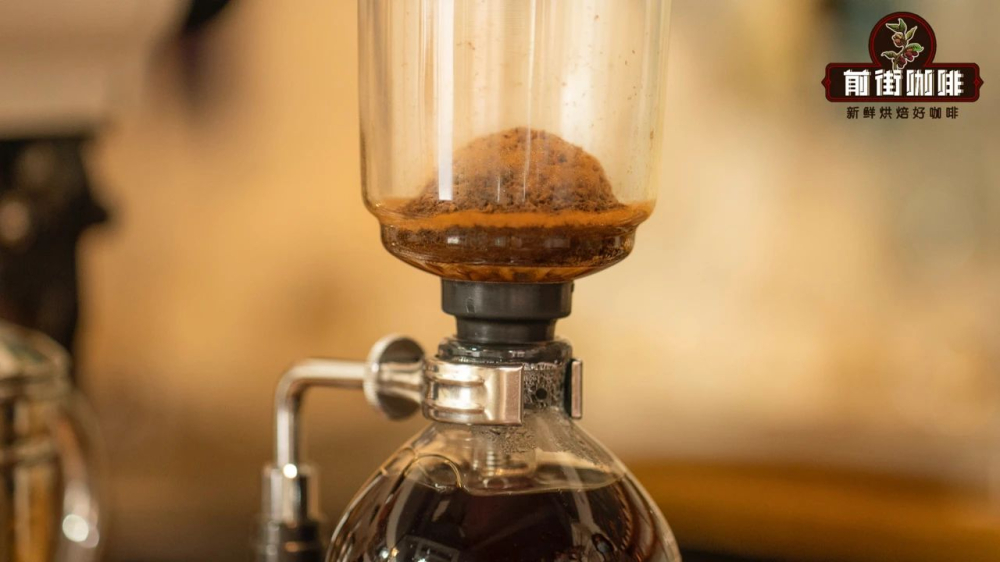
After the water in the lower chamber is heated, it produces steam and creates pressure, pushing the hot water up through the glass tube into the upper chamber and beginning to steep the coffee grounds there. Once extraction is complete, turn off the heat and remove the heat source. The lower chamber is then close to a semi-vacuum state, the upward pressure disappears, and the coffee liquid in the upper chamber is drawn back down into the lower chamber (if you want to speed up the return of the coffee liquid, you can wipe the lower chamber with a wet cloth to reduce the pressure difference between the upper and lower chambers, and the return will be faster). The coffee grounds are intercepted by the cloth filter in the upper chamber, and extraction is complete.
There are countless ways to brew coffee. Different equipment, different techniques, different grind sizes, and different times can all produce a cup of coffee; conversely, the same set of equipment can also be used in different ways, perhaps even bringing unexpected surprises. Today let's talk about the stirring method and the steeping method in a siphon, and just where the differences lie. First, follow Front Street and take a look at the basic information of the beans used in this brewing experiment.
Costa Rica Canet Musician Series Mozart Front Street Coffee (FrontStreet Coffee): Costa Rica Mozart coffee beans Region: Tarrazú Canet Estate
Variety: Caturra, Catuai Altitude: 1950 Processing: Raisin honey processing Flavor: Raisin, osmanthus, berry, pineapple, caramel
The Costa Rica Canet Estate · Musician Series Mozart bean has rich floral notes and soft fruit acidity, and the raisin honey processing also gives it fermented aromas along with berry and raisin flavors. Without further ado, let's start brewing right away, beginning with the stirring method.
Parameters: coffee-to-water ratio 1:10, 20 grams of coffee, fine grind (EK43s grinder setting 9 / China standard No. 20 sieve pass rate 85%), water temperature 90°C.
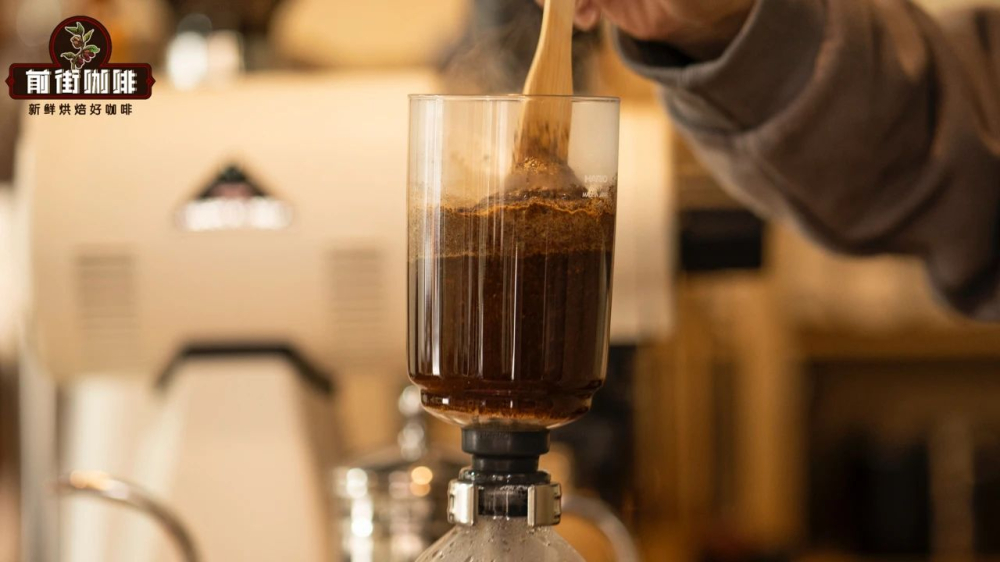
Method: Add 200 grams of water to the lower chamber. When the water temperature reaches 90°C, insert the upper chamber tightly. After the water rises into the upper chamber, add the coffee grounds and stir to let the grounds and water fully contact; at 30 seconds, stir back and forth in a cross pattern once around to break the crust; at 56 seconds, remove the heat source and let the coffee liquid return (timing starts from adding the grounds), for a total extraction time of 1 minute 8 seconds.
Flavor: Floral, berry, fermented wine aroma, raisin.
Next, try the steeping method. Parameters: coffee-to-water ratio 1:10, 20 grams of coffee, medium-fine grind ( EK43s grinder setting 9/ China standard No. 20 sieve pass rate 85%), water temperature 90°C. Method: Add 200 grams of water to the lower chamber. When the water temperature reaches 90°C, insert the upper chamber tightly. After the water rises into the upper chamber, add the coffee grounds and stir to let the grounds and water fully contact. After steeping for 1 minute, remove the heat source and let the coffee liquid return (timing starts from adding the grounds), for a total extraction time of 1 minute 32 seconds.
Flavor: Osmanthus aroma, berry, raisin, caramel.
When extracting with these two methods in a siphon, the difference is this: the coffee made with the stirring method has a richer fermented wine aroma and a substantial mouthfeel, with the sweet-tart taste of raisins once the temperature drops; the coffee made with the steeping method has a more prominent osmanthus aroma and, when a bit cooler, presents berry and raisin notes, with a slightly thinner mouthfeel but very clean and sweet. One leans fuller, the other leans fresher.
Of course, taste varies from person to person, and everyone can choose an extraction method according to their own preferences. Regarding the siphon, there are still a few things to keep in mind: a siphon extracts coffee under continuous heating, so try to keep the water temperature between 86 and 94 degrees. This way the coffee grounds achieve a higher extraction rate, and it stays continuous and stable with fewer variables, so the coffee tastes more consistent. Even a beginner who has just started can brew a cup with a rich body and a full, fragrant taste. In addition, clean the cloth filter after each use, and replace the cloth filter after a period of use, otherwise it can easily affect the taste of the coffee.
The above content is compiled by CoffeeHunters, a coffee news website.


