







What defines Yunnan coffee from Baoshan and Lincang?
Yunnan coffee comes mainly from nine prefectures and cities, including Pu'er, Baoshan, Dehong, Lincang, Wenshan, and Xishuangbanna, spread across 35 counties and districts. Planting area sits near 1.8 million mu with annual output around 139,000 tons, roughly 1.5 percent of global production. Baoshan, cultivated since the 1950s, holds Lujiangba, the largest planting base in the country.
Typica and Catimor are the varieties usually grown, and washed and natural processing separate the flavor profiles: washed Catimor tends toward clean, balanced cups, while natural Typica brings more fruit and sweetness. Higher grades remain limited, with about 10 percent reaching high-grade commercial standard above 75 points and roughly 5 percent specialty grade, based on 2019 figures.
In recent years, the quality of Yunnan coffee has steadily improved, and more and more domestic enthusiasts have begun to pay attention to the small-bean coffee produced in this land. This article focuses on the distribution of Yunnan coffee-producing regions, the planting history of Baoshan, the origin of the Catimor variety, and the two processing methods of washed and natural, to help you understand the flavor foundation of Yunnan small-bean coffee. At the same time, combining Front Street Coffee's washed Catimor and natural Typica beans, it provides specific references from producing region to cup, helping friends who want to try Yunnan coffee find the cup that suits them.
In recent years, through continuous investment and improvement by all parties, the quality of Yunnan coffee has made obvious progress and has also gained recognition from many domestic consumers. For friends who have not yet tried Yunnan beans, what they are most curious about is often what it actually tastes like.
Why is the small-bean coffee from the Baoshan producing region worth paying attention to?
Looking across the country, Yunnan's coffee planting area is currently stable at about 1.8 million mu, with an annual output of about 139,000 tons, accounting for around 1.5% of global total production. The proportion that can meet the standard of high-grade commercial beans (above 75 points) is about 10%, while specialty grade accounts for 5% (2019 data). Yunnan has long been the country's largest coffee planting area, trade distribution center, and export source. Coffee planting is spread across 9 prefectures and cities including Pu'er, Baoshan, Dehong, Lincang, Wenshan, and Xishuangbanna, and 35 counties and districts, involving more than 380,000 planting households and more than 1.14 million people. Baoshan is one of the earliest producing regions to begin cultivating coffee.
As early as the 1950s, Baoshan introduced its first batch of coffee tree varieties for seedling trials. After decades of development, Baoshan's Lujiangba has become the largest coffee planting base in the country, and Xinsai Village within it is even known as "China's No. 1 Coffee Village." Locally, almost every household grows coffee trees on the hills behind their homes, coffee beans are dried in courtyards, and the aroma of coffee fills the houses. There is no frost all year round here, the climate is warm, and coffee trees grow comfortably and vigorously; the obvious temperature difference between day and night brought by the high altitude allows the coffee cherries to mature more slowly, thereby accumulating richer flavor substances.
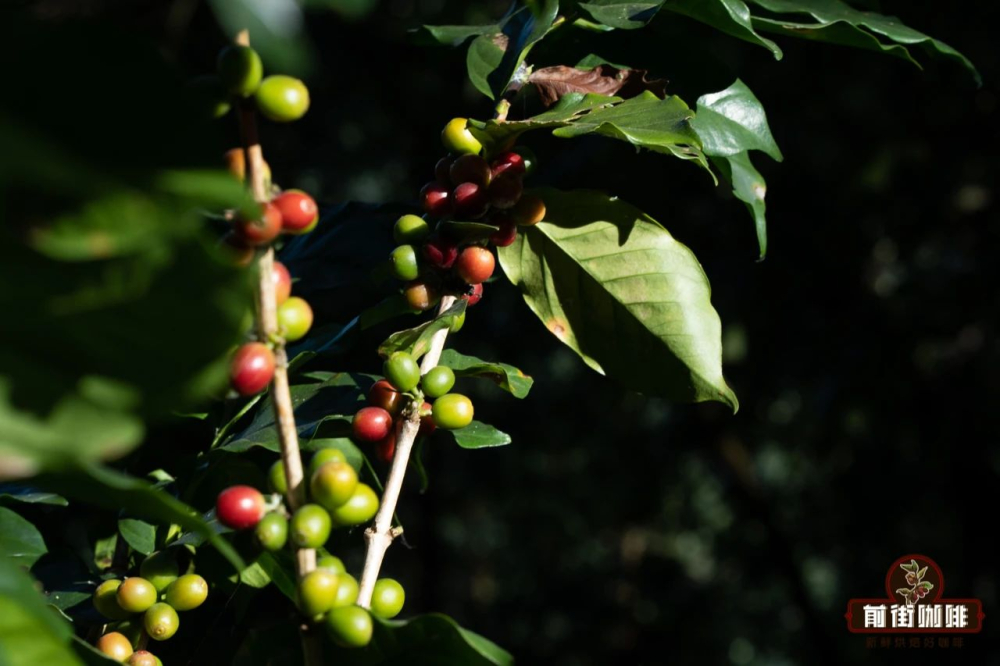
Yunnan's coffee trees are mostly planted on mountainous and sloping land, with plots at irregular elevations, making it difficult for machinery to enter for harvesting, so it has always relied on manual picking of ripe coffee cherries. Similar to most coffee-producing countries, Yunnan harvests only one season each year in winter, with concentrated picking from November to March of the following year. Coffee cherries gradually turn red in the mountains, and busy figures picking small-bean coffee can be seen everywhere on the slopes.
What exactly is the small-bean coffee variety?
Yunnan small-bean coffee is also called Arabica (coffea arabica L.). In the 1950s, the main varieties in the Baoshan area included Typica, Bourbon, and S288. Among them, Typica is the oldest, with pure and elegant flavor, but its yield is relatively low, and its disease resistance is weak, making it prone to infection and death. Later, Yunnan introduced Catimor, which can be densely planted and has strong disease resistance, and it has now become the most widely planted coffee variety in Yunnan. Therefore, what is commonly called "Yunnan small-bean" in daily life mostly refers to Yunnan Catimor coffee beans.
Catimor is the offspring of a cross between Caturra and Timor. Caturra itself is a natural mutation of Bourbon and often appears in various specialty coffee competitions; Front Street Coffee's own roasted bean list includes dozens of selections using Caturra. Timor is a natural hybrid of Robusta and Arabica, discovered on Timor Island in Southeast Asia in the early 20th century. Robusta's flavor has never been very pleasing, mainly characterized by heavy bitterness, but it has extremely strong disease resistance, tolerates cold and heat, and has high yield. Catimor therefore inherited many advantages: higher survival rate, more fruit bearing, shorter maturation period, and naturally greater popularity among coffee farmers and producers.
Processing methods for Yunnan small-bean coffee
Because most Yunnan coffee farmers have limited conditions and cannot afford expensive processing equipment, the vast majority of Yunnan coffee beans use natural processing methods, namely washed and natural. Yunnan is rich in freshwater resources, but the harvest season often encounters rainfall, so washed processing is more suitable, and washed processing is also currently the most common method of green bean processing in Yunnan.
Recommended washed Yunnan small-bean coffee
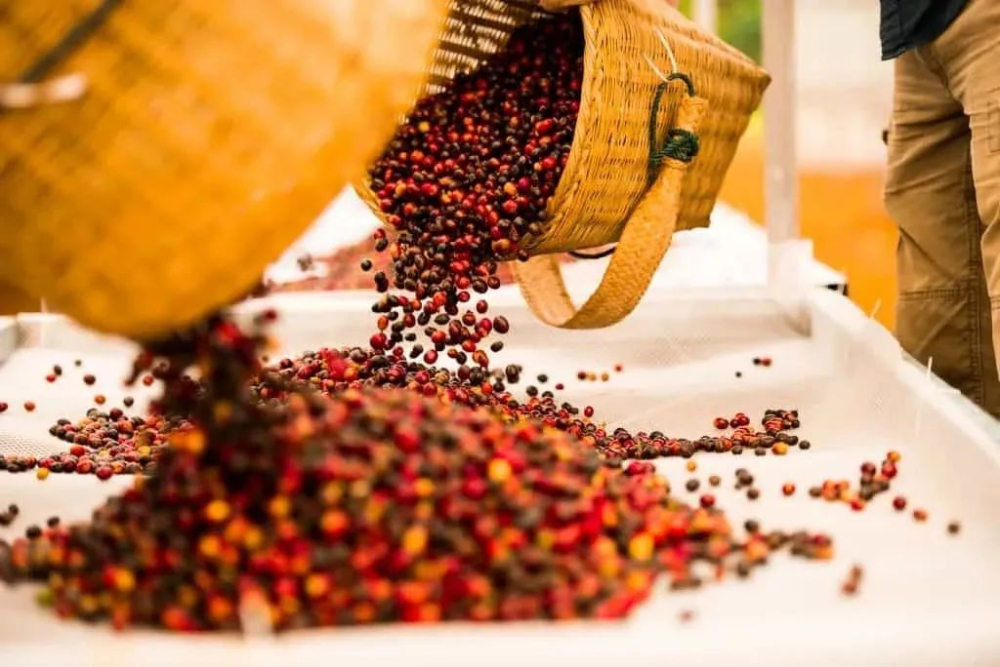
After the coffee cherries are picked, they are immediately sent to the washed processing station. First, they must likewise undergo flotation in water to remove defective beans.
Next, the skin and pulp are removed by machine, and at this point the coffee beans still have a layer of sticky mucilage attached to their surface. The processing station places the beans into fermentation tanks for fermentation, using microorganisms to break down the mucilage layer, then repeatedly rinses them with clean water in order to wash away the detached mucilage and residual pulp.
The cleaned coffee beans then enter the drying stage. Unlike natural processing, which retains all the pulp and mucilage, washed processing has already removed the skin, pulp, and mucilage, and the moisture content is much lower than that of natural-processed fruit, so the drying time can be shortened by more than half, generally requiring about two weeks depending on the weather.
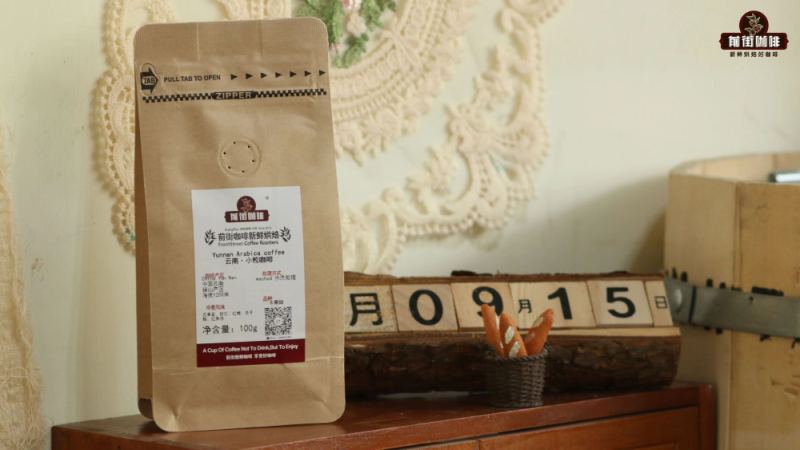
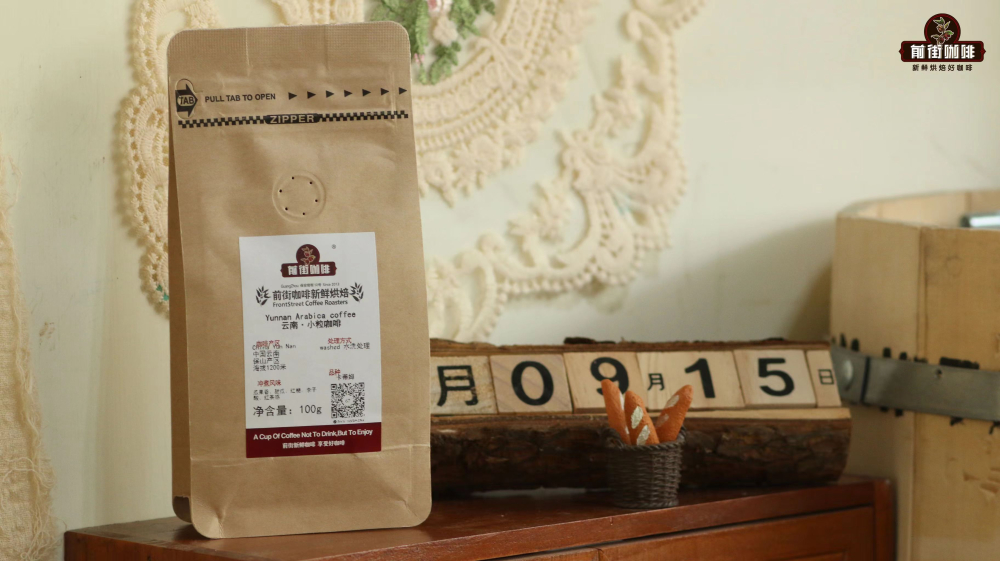
Front Street Coffee washed Yunnan small-bean coffee
Producing region: Baoshan, Yunnan, China Altitude: 1200m Variety: Catimor Processing method: washed
Flavor: nutty aroma, herbal, chocolate, caramel, with a faint fruity acidity in the finish.
Natural processing is the most primitive and traditional method of green bean post-processing. Compared with washed processing, natural processing can give coffee a richer flavor, with a particularly obvious enhancement in sweetness. After picking ripe red cherries, Front Street Coffee 2013 Typica spreads the whole fruit evenly on drying beds and turns them once every half hour. Such frequent operation is to allow the fruit to dry evenly while avoiding excessive fermentation that would produce unpleasant fermented flavors.
Front Street Coffee 2013 Yunnan Typica
Producing region: Lincang, Yunnan
Estate: Front Street Estate
Altitude: 1300 meters
Variety: Typica
Processing method: natural
Flavor: dried apricot-like sweet and sour, nutty notes, brown sugar sweetness, with a tea-like finish
When it comes to the flavor of Yunnan coffee, some describe it as chocolate, some say it is like sweet potato, and some friends think it is like Sanhua plum. The overall tone of Yunnan small-bean coffee is relatively moderate and balanced, with sweetness, acidity, and bitterness all present. Using a medium roast can highlight the roasted aroma of chocolate and nuts while retaining some acidity. In cupping, the Yunnan small-bean daily beans tasted by Front Street Coffee present nutty, herbal, and brown sugar aromas, melon-like sweetness, and plum-like acidity, with a balanced mouthfeel. The natural Typica presents chocolate, baked bread, a fermented tropical fruit note, and a black tea finish.
The above content is compiled by CoffeeHunters, a coffee news website.


