







Why Is Java Coffee Bitter and How Should It Be Brewed?
Mandheling coffee from Sumatra, Indonesia tastes bitter mainly because of its wet-hulled processing and typical deep roast, which build a heavy body and low acidity. That bitterness arrives with chocolate, herbal, and caramel notes plus a lingering sweetness, so it reads as mellow rather than harsh. Brewing with cooler water and a shorter pour-over time keeps the cup balanced.
The beans come from northern Sumatra, where Lintong and Mandheling are the two top-grade Arabica names. Lintong plots sit on high clay plateaus southwest of Lake Toba, grown by smallholders without shade or chemicals, at 1,100 to 1,600 meters. Varieties Timtim and Ateng go through wet-hulled processing, so roast level shapes how strong the bitterness becomes.
Mandheling coffee is a representative coffee of Sumatra, Indonesia, in Asia, famous for its rich, solid body and unique herbal and chocolate flavors. Is it actually bitter? How should it be brewed to taste good? Starting from the origin background of Front Street Mandheling, this article provides a detailed analysis of the differences between the Lintong region and PWN Golden Mandheling, the flavor changes at different roast levels, and the complete process and flavor causes of Sumatra's wet-hulled processing method. Finally, using pour-over as an example, it gives specific brewing parameters to help coffee lovers fully understand the character and charm of this classic coffee.
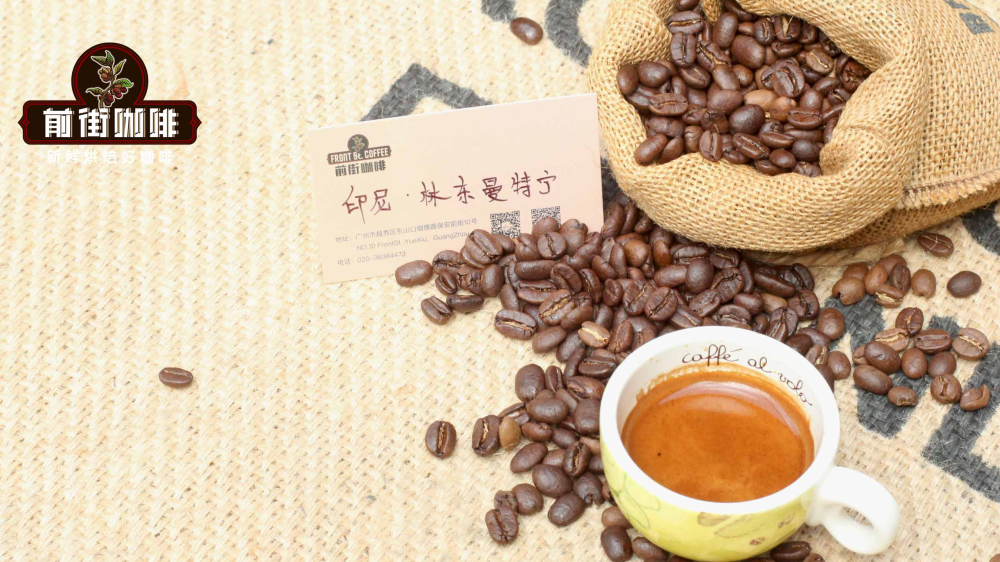
Front Street Mandheling belongs to coffee produced in Sumatra, Indonesia, in Asia, so it is often called Sumatra coffee. Indonesia's main coffee-producing regions include Java, Sulawesi, and Sumatra, among which Mandheling from Sumatra is the most famous.
Among the fine traditional Arabica coffees produced in northern Sumatra, the best quality enters the market under the two names Lintong and Mandheling. Strictly speaking, Lintong refers to coffee grown in a small area within the Lintong administrative region southwest of Lake Toba. The local coffee-growing areas are scattered, located on high-altitude, undulating clay plateaus covered with ferns. Lintong coffee is not grown under shade and does not use chemicals, and it is almost entirely owned by smallholders.
Front Street Indonesian Sumatra Lintong Mandheling
Region: Lintong region, Sumatra, Indonesia
Altitude: 1100-1600m
Processing method: wet-hulled
Variety: Timtim, Ateng
Flavor description: baked toast, nuts, caramel, herbs, chocolate
Front Street Mandheling coffee has rich aromatic layers, a solid and mellow body, and relatively low acidity, making it very thought-provoking. When deep-roasted, you can feel its lingering bitterness while also enjoying its elegant sweetness, and both smell and taste can simultaneously experience its unique mellow aroma.
Based on their understanding of Mandheling coffee, Front Street's roasters hope to showcase Mandheling's flavor to the greatest extent while preserving its own style and also making it suitable for most people's tastes. Every specialty coffee shop has its own characteristics. Front Street hopes to present the best Mandheling to customers with a unique understanding of coffee while preserving Front Street's characteristics. Front Street currently has two Mandheling coffee beans: one is the above-mentioned Lintong region Mandheling coffee bean, and the other is the Golden Mandheling coffee bean from PWN Company in the Gayo Mountain area of Aceh.
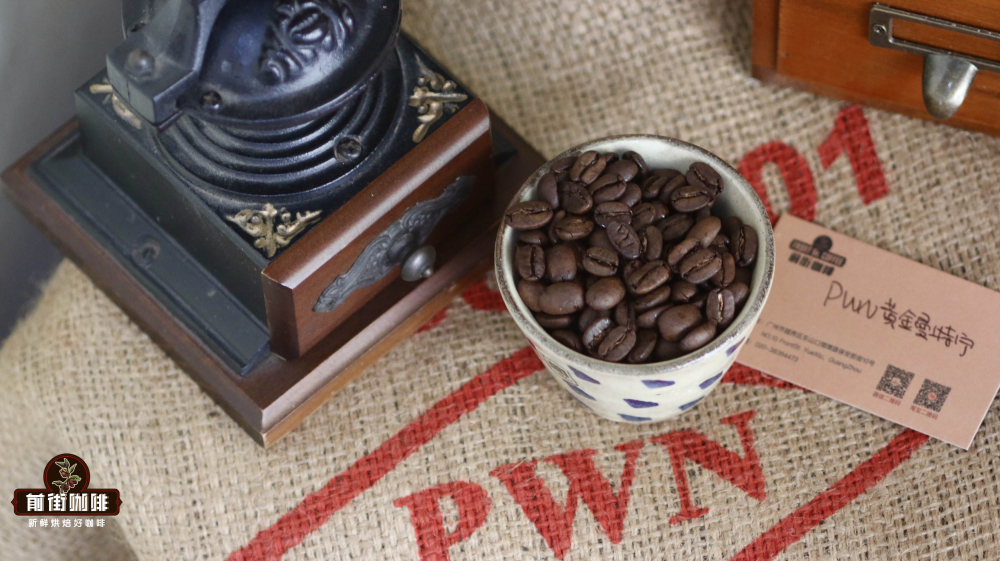
Front Street PWN Golden Mandheling coffee beans
Region: Gayo Mountain, Aceh, Sumatra, Indonesia
Altitude: 1100-1600m
Processing method: wet-hulled
Variety: Ateng
Flavor description: spices, nuts, pine, caramel, herbs, chocolate
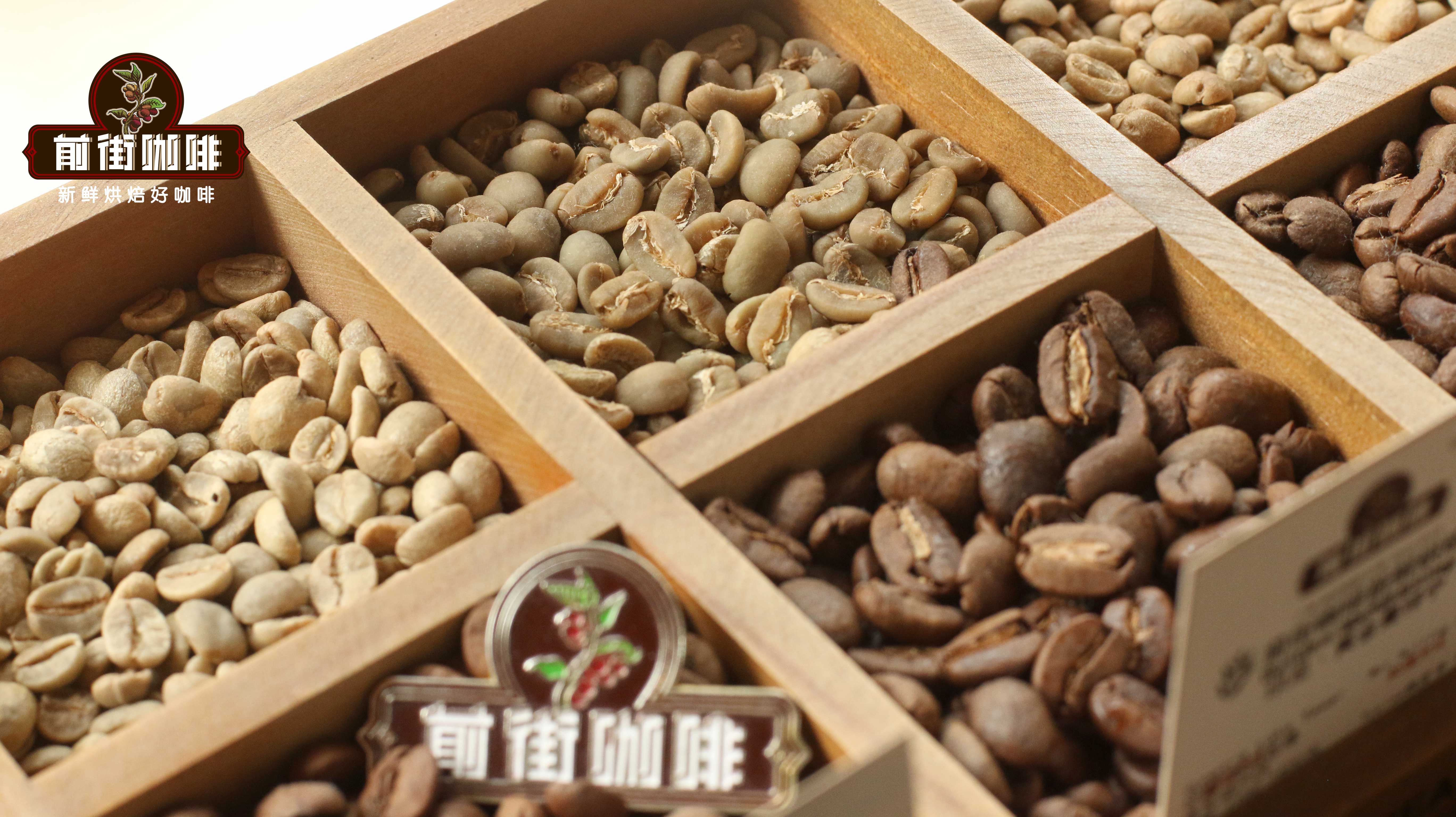
The difference between the two is that Front Street PWN Golden Mandheling coffee beans undergo at least three rounds of hand sorting after harvesting and drying to ensure the bean size reaches 18 or above. Defective beans number fewer than 3 (in a 300g green bean sample), belonging to the highest grade, G1. PWN beans are darker green in color and have a neat, flat bean shape.
What are the differences between Mandheling coffee beans at different roast levels?
For this reason, Front Street tested light-roasted, medium-dark-roasted, and dark-roasted Mandheling coffee beans through drip extraction (pour-over)~
For one serving, the grind size and water temperature are adjusted slightly according to the roast.
1. Light roast: No. 20 sieve passing rate 80%, water temperature 90°C, water-to-coffee ratio 1:15
2. Medium-dark roast: No. 20 sieve passing rate 75%, water temperature 88°C, water-to-coffee ratio 1:15
3. Dark roast: No. 20 sieve passing rate 70%, 86°C, water-to-coffee ratio 1:15
The test results are as follows:
1. Light roast: At this roast level, Mandheling has a stronger fruity acidity and is slightly bitter. The fruity acidity is obvious, but it is very comfortable on entry, with a salivating sensation on both sides of the mouth, and average smoothness.
2. Medium-dark roast: The balance is very good, aromatic and mellow, with a more obvious bitterness, more prominent chocolate and slight sweetness, obvious licorice aroma, weak fruity acidity, better smoothness than the light roast, strong aroma, and the fruity acidity is noticeably enhanced.
3. Dark roast: Almost no acidity, very heavy bitterness, and if direct-fire roasting is used, slightly improper roasting can also produce a burnt taste.
All coffee beans sold by Front Street Coffee are freshly roasted and shipped within 5 days after roasting~The best flavor appreciation period for freshly roasted coffee beans is 30-35 days after roasting is completed.
The darker the roast level, the more carbon dioxide is produced inside the coffee beans. After roasting is completed, the coffee beans are rich in carbon dioxide, so do not rush to drink them. You can first rest the beans for 3-5 days (counting from the roast date), allowing the coffee beans to release some carbon dioxide on their own in the original packaging, reducing the situation where excessive carbon dioxide bubbles during extraction lead to uneven extraction.
Mandheling coffee bean processing method — Sumatra wet-hulled method
March to May and September to December each year are the seasons for harvesting Mandheling in Sumatra. Now most coffee farmers also only harvest fully red coffee cherries. After collecting the coffee cherries in the morning, in the afternoon the coffee cherries are depulped and the mucilage removed. Sumatra's natural environment is superior, and most of the water used is mountain spring water.
1. Remove the peel from the coffee fruit, place the parchment beans in a large bucket or tank filled with water, and remove the defective parchment beans floating on the surface.
2. Briefly wash the dense parchment beans that sink to the bottom, take them out and put them into a bucket or plastic bag, and perform a brief dry fermentation, that is, allowing the pectin sugars on the surface of the parchment to ferment and enhance flavor. Basically, the longer the fermentation time, the heavier the acidity. Fermentation time varies from person to person, generally only a few short hours, but some estates omit the dry fermentation stage and directly sun-dry the parchment beans, which can reduce acidity and improve the viscous mouthfeel, allowing the pectin sugars to fully ferment and increase flavor. The fermentation time is usually between 12-36 hours, depending on the specific situation.
3. Sun-dry the parchment beans for one to two days, until the moisture content of the beans reaches 30%-50%. The beans are still half-hard and half-soft. Use a huller to scrape off the parchment and then dry again to accelerate the drying process. After about two days, when the moisture content reaches 12%-13%, the coffee beans are collected into woven bags, usually 40 kg and 80 kg per bag, and sent to a coffee processing factory for hulling. Done, about four days in total.
The hulling process uses a huller to grind off the bean shell, then dries again until the moisture content reaches about 12%-15%. Then, the coffee beans are sent for machine sorting to remove various impurities, and then classified by bean size. Of course, accidents can also happen. During the hulling process, the temperature of the coffee beans rises to 30-60°C, and the parchment is completely destroyed, which may trigger germination of the beans. Wet-hulling can also result in beans directly contacting the air because the fruit skin is removed during processing, so moldy beans and other defective beans are far more common than in washed and natural methods. Mold brings good flavors because coffee beans have four layers of protection: fruit skin, pectin, parchment, and silver skin.
In the washed method, only the first two layers are removed, retaining the parchment and silver skin, and then the beans are sun-dried. The wet-hulled method, however, removes the third and fourth protective layers midway, leaving the beans naked to sunbathe, which is why Sumatra green beans have a blue-green color. Although wet-hulling shortens drying time, the chance of exposure to mold, fungi, and yeast also increases greatly. Interestingly, contamination is not necessarily a bad thing; it depends on the strain of microorganism. Dr. Martha Taniwaki of Brazil's Institute of Food Technology once tried inoculating coffee beans with different strains and unexpectedly produced different flavors, including rotten, rancid, musty, woody, iodine, caramel, chocolate, and floral notes.
The academic community believes that the woody, grass jelly, earthy, banana, and spicy notes of Sumatra coffee are probably created by mold. Roastery supervisors also often report to academics that some coffee beans infected with mold taste better after being thoroughly cleaned, while others are hard to swallow, depending on the strain. Perhaps bad molds can be suppressed and good molds introduced, wild yeasts controlled, and elegant yeasts cultivated. But which molds help enhance coffee flavor? Which are bad molds? Further research is still needed.
Goat-hoof beans are the "ID card" of Mandheling coffee beans!
The wet-hulled method may trigger the germination mechanism of green beans, thereby affecting flavor. Because coffee beans that have lost their four protective layers are in a naked state, they are far more likely to trigger germination than washed beans that have only had two protective layers removed, that is, activating the metabolism of sugars, proteins, and fats, and these components are coffee aroma precursors. In addition, the friction generated during the hulling process raises the bean temperature to 30°C-60°C, which also favors germination and mold growth.
Moreover, when the parchment is removed from half-hard, half-soft moist green beans, they are easily crushed by mechanical force, and the beans are prone to cracking into a goat-hoof shape. This is why Sumatra has a relatively high proportion of goat-hoof beans. But whether goat-hoof beans are good or bad is still inconclusive. The key to control is keeping the equipment and beans clean. Once hulled, drying must be fast in order to produce a mellow, low-acid yet sweet Sumatra flavor; if control is improper, it may produce a bland Sumatra, or even a moldy, earthy taste. If you prefer stronger acidity, Aceh can also undergo washed processing, depending on customer demand.
Summary of the flavor characteristics of the wet-hulled processing method
To summarize the flavor of wet-hulled beans, setting aside those subtle differences. We generally believe that wet-hulled beans have earthy, smoky, and chocolate notes. They are mellow yet appear very dull. The low acidity comes from a shorter, weaker fermentation process and a longer drying time. If you forgot about wet-hulled fermentation, go back and take a look.
As for the earthy and herbal flavors of wet-hulled beans, opinions vary widely. Some say this is related to the bean varieties used in regions associated with the wet-hulled method (Tim family & Catimor family: with Robusta lineage), some say it is the result of organic interactions between green beans and the external environment, and some even say it is because there are too many defective beans!
There are many sources of defective beans in the wet-hulled method. First, natural defects present from the coffee fruit stage are unavoidable. Another contributor to defects is the hulling stage, as well as corrosion during the transport of wet parchment beans, and damage to exposed green beans from sunlight and moisture. Another point is that irregular weather brings uneven drying speeds, which also detracts from flavor. This is why Mandheling requires so many rounds of hand sorting.
Finally, Front Street summarizes the characteristics of various green bean processing methods~
Production risk: wet-hulled / natural > washed / honey > semi-washed
Equipment cost: washed / semi-washed > honey / wet-hulled > natural
Water usage: washed > semi-washed > honey / wet-hulled
How to brew Mandheling coffee beans?
Different equipment and different brewing methods will also produce different mouthfeels. Next, Front Street will take the store's PWN Golden Mandheling coffee beans as an example and use four different brewing methods to compare and analyze their flavor characteristics.
【Pour-over】
Flavor: layered and changeable, clean, balanced, with a lingering caramel sweetness in the finish
1. Choice of equipment: Hario V60
2. Water temperature: 88°C
3. Grind size: medium-coarse (standard No. 20 sieve passing rate 70%)
4. Roast level: medium-dark roast
5. Blooming time: 25 seconds
Specific method: [three pours with pauses] Pour-over Mandheling, 15g coffee powder, ground with a Fuji Royal ghost burr at setting 4, V60 dripper, water temperature 88-89°C. First pour 30g of water and bloom for 25s. Pour until the total water reaches 104g, then pause. Wait until the water level in the coffee bed drops to half before pouring again. Pour slowly until the total water reaches 220g. Discard the last 5g. Water-to-coffee ratio 1:15, extraction time about 2:00.
The above content is compiled by CoffeeHunters, a coffee news website.


