







What Is Coffee Bean Resting and When Does Flavor Peak?
Resting is the period after roasting when beans release carbon dioxide before drinking. Freshly roasted beans carry a dry, smoky taste and sharp acidity, so a rest of 3 to 7 days depending on roast level makes the cup rounder. Peak flavor usually falls between 7 and 20 days after the roast date, not on day one.
Each kilogram of beans releases roughly 6 to 10 liters of carbon dioxide, about 1 to 1.2 percent of their total weight, and around 35 percent escapes in the first three days. Aromatic volatiles leave with it. Shelf life is a separate number, often 12 months or more, and it marks safe consumption, not good flavor, so buying smaller amounts works better.
Many people think coffee beans should be drunk right after roasting, but in fact freshly roasted beans often carry a dry, smoky taste and need to be rested for degassing first, so the flavor becomes rounder. Front Street Coffee, drawing on years of roasting and cupping experience, has found that resting times vary from 3 to 7 days depending on the roast level, and the optimal flavor window usually falls between 7 and 20 days after roasting. The flavor window is not the same as the shelf life; the latter is only the safe consumption period, often as long as 12 months or even longer. This article clarifies the complete timeline of coffee beans from fresh to stale across several aspects—degassing principles, resting recommendations, flavor window, and storage limits—and also tells you how much to buy at once and how to store it so nothing goes to waste.
"Are coffee beans at their best the moment they come out of the roaster?" The answer is no. The roast date only tells you whether the beans are fresh; it does not directly equal peak flavor. Many enthusiasts compare coffee roasting to baking a cake, assuming that beans within two or three days of roasting count as fresh.
But roasting on demand and buying fresh does not mean drinking immediately is ideal. Front Street Coffee (FrontStreet Coffee), based on years of roasting experience and cupping comparisons, has found that beans one to two days after roasting often still carry the smoky notes produced by roasting as well as the grassy, green taste of the beans themselves.
Why should freshly roasted coffee beans not be drunk right away?
Freshly roasted beans carry what is commonly called a "dry" sensation, manifesting as acidity that is sharp rather than mellow, sweetness that has not yet reached a good state, and a slight astringency lingering in the mouth. Roasting itself is a series of complex chemical and physical changes, and there are still many variables we have not fully figured out, but the dry sensation is something you can genuinely taste.
Each kilogram of coffee beans releases roughly 6 to 10 liters of carbon dioxide in a non-saturated environment, equivalent to 1% to 1.2% of the beans' total weight. About 35% of this is released in the first three days after roasting. Along with the carbon dioxide escape aromatic volatiles. For about 48 hours from the moment of roasting, the beans continue to degas, so brewing immediately tends to produce poor flavor.
What is coffee bean resting?
So freshly roasted coffee beans usually need proper resting, meaning giving the beans time to release carbon dioxide on their own.
Front Street Coffee (FrontStreet Coffee) recommends storing beans during resting in sealed packaging with a one-way degassing valve, which both ensures carbon dioxide has a way out and blocks outside air and oxygen from entering; then leave them in a dry, cool place for 3 to 7 days to let the beans release some carbon dioxide on their own and shed the dry sensation. Subsequent extraction will be more stable and the coffee flavor rounder and fuller.
Resting time for freshly roasted coffee beans
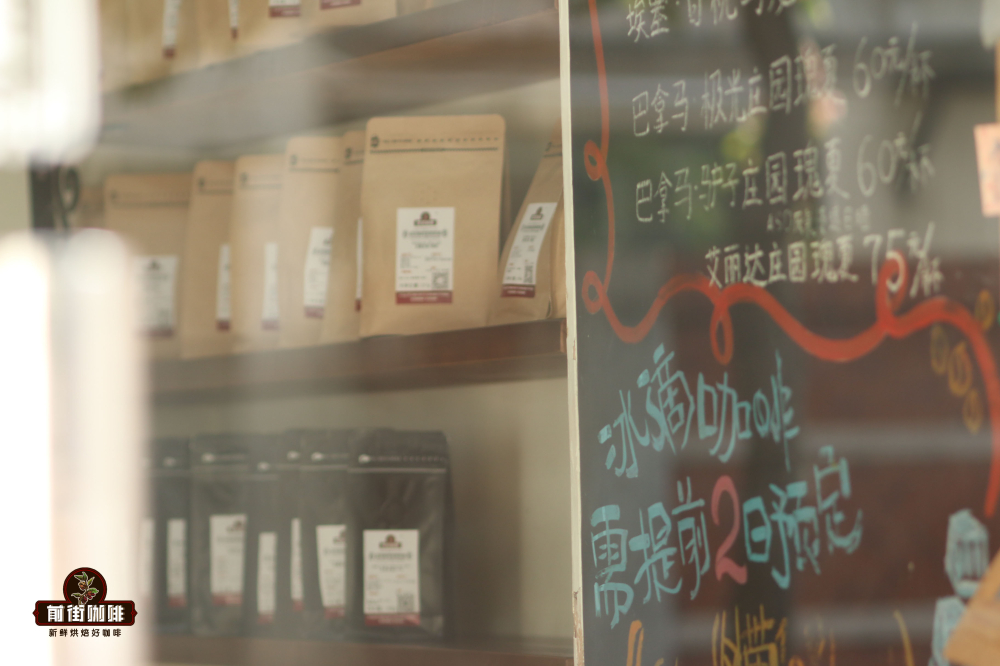
All coffee beans sold by Front Street Coffee (FrontStreet Coffee) are shipped within 5 days of completing roasting and use packaging with a one-way degassing valve, 100% guaranteeing the freshness of the coffee beans. Only freshly roasted coffee beans have more and richer flavor and aroma.
Beans of different roast levels also have different resting periods. Among the coffee beans sold by Front Street Coffee (FrontStreet Coffee), light-medium roasts are recommended to rest 3 to 4 days; medium roasts 4 to 5 days; medium-dark roasts 6 to 7 days.
Flavor window for freshly roasted coffee beans
The optimal flavor window of coffee is not the same as its shelf life; what really matters is the roast date. In the one to two weeks after roasting, the taste of the beans changes over time, like an extra journey, witnessing coffee's rise and fall like a flower blooming and fading. We usually taste the best state around the first week.
Based on Front Street Coffee's (FrontStreet Coffee) roasting experience, the flavor window of coffee beans is about 15 to 30 days (depending on the roast level), meaning that after the resting period, from 7 to 20 days counting from the roast date is considered the optimal flavor window.
Do freshly roasted coffee beans have an absolute "peak flavor period"?
Regarding the "peak flavor period," even if the roast level of each bean can be relatively stable, there will be a margin of error of a few degrees in either direction, even when strictly following the previous curve, and spatial and environmental factors are also involved. The days when you yourself find it very delicious are the state the beans should be in—that is the "peak flavor period."
Past the flavor window, the beans are not only no longer fresh—the good flavors have "gone" and bad flavors develop. Compounds in the beans are affected by oxidation, and the taste turns negative. Therefore it is recommended to buy about 2 to 4 weeks' worth of coffee beans at a time, store them sealed in a cool, dry place, and use them up within 2 to 4 weeks, when the flavor is at its best and most aromatic. Coffee past its storage period but stored properly generally will not cause problems if drunk; if it feels unpleasant, throw it out promptly.
Shelf life of roasted coffee beans
The shelf life of pre-packaged food refers to the safe consumption period of the product, provided by the producer and marked on products with a time limit for use. Within the shelf life, the manufacturing enterprise is responsible for the product's quality meeting relevant standards or expressly guaranteed quality conditions; sellers can sell it with confidence, and consumers can use it safely.
Before setting the shelf life of a food, objective quality change analyses such as microbiological tests, physicochemical tests, and sensory inspections must be conducted on the food, and microbiological indicators are often the factors most directly affecting human health. Coffee beans (grounds) have a relatively long shelf life because of their low moisture and resistance to microbial growth. Generally, coffee in foil pouches has a shelf life of 12 months, while most imported coffee has a shelf life of 2 years.
The roasted coffee beans sold by Front Street Coffee (FrontStreet Coffee) are regularly sampled and sent to professional institutions for testing, with a shelf life of 12 months.
The above content is compiled by CoffeeHunters, a coffee news website.


