







Why Are Spanish Coffee Beans Tied to Costa Rican Honey Process?
The word honey in honey-processed coffee comes from miel, Spanish for honey, and Costa Rican producers first popularized the term for the sticky mucilage left on the bean after depulping. No honey is added. Retaining that layer through drying creates the pronounced sweetness and heavy body that honey-processed Costa Rican lots are known for.
Honey processing grew out of Brazil's pulped natural method, which was developed partly to save water during production. Costa Rica shifted from near-total washed processing in the late 20th century, and between roughly 1997 and 2000 honey lots began spreading. Color labels such as yellow, red, and black track how much mucilage stays on the bean, which in turn sets the sweetness and body.
When it comes to coffees with prominent sweetness, natural and honey processing are often the first two methods that come to mind. Front Street Coffee's bean list always keeps at least one honey-processed coffee year-round, and the recently launched Colombia Hope Estate Geisha is honey-processed, with a rich rose aroma and extremely high sweetness. What exactly does the "honey" in honey processing refer to? Why is it so strikingly sweet? This has to start with the evolution of processing methods in Costa Rica. This article will sort out the origin of the name honey processing, its origin timeline, and the logic of its color classification, and also include Front Street's practical brewing parameters for this Geisha, to give you a comprehensive understanding of the flavor code of this processing method.

Many friends, like Front Street, probably think immediately of two processing methods when talking about noticeably sweet coffee: natural and honey processing. So that everyone can also experience that legendary sweet taste in daily life, Front Street's bean list almost always keeps at least one honey-processed coffee. For example, the Colombia · Hope Estate Geisha launched not long ago was processed using the honey method, with an intense rose fragrance and extremely high sweetness, and it has received praise from quite a few customers. So here comes the question: why can honey-processed coffee be so outstandingly sweet? Could it really have honey added to it?
What exactly does the "honey" in honey processing refer to?
Honey processing, written in English as Honey Process, is also called Miel Proces. The word "honey" here comes from Miel, which means honey in Spanish. This name for honey processing was first spread from Costa Rica, where locals customarily call the sticky, gelatinous substance inside the fruit "Miel." This processing method, which sounds sweet just from its name, has its predecessor in Brazil's Pulped Natural (semi-natural / pulped natural), and its original purpose was to save water in production. As for how honey processing rose in Costa Rica, Front Street found two key time points.

In the second half of the 20th century, Costa Rica's coffee products were basically dominated by washed processing, and with pioneering coffee cherry depulping equipment and wet mills, it could be called a pioneer of modern washed technology.
Around 1997 to 2000, international coffee prices remained depressed for a long time. In order to earn more income and make a living, many growers no longer sold coffee cherries directly to large processing stations for settlement, but instead shifted to a self-production and self-sales model to sell their own products. Because of this, coffee farmers gained control over the processing stage and could naturally experiment more, and it was against this background that the depulp-and-dry process was introduced into production.
Honey processing first entered the public eye in 2006, when a coffee farmer named Juan Ramón Alvarado, with two honey-processed coffees, took first and second place in the Costa Rica GOLDEN HARVEST green bean competition organized by the SCAA. The following year, honey processing appeared again in the first Costa Rica CoE, where 3 of the top five coffees were honey-processed.
By 2008, a major earthquake occurred in Costa Rica, causing severe power outages and water shortages in many places. In order to cope with the immediate difficulties, local coffee farmers began to adopt this "water-saving" process. Although many people were initially resistant, believing that drying with pulp and mucilage still attached could easily lead to uncontrollable fermentation, many farms not only achieved positive results after experimentation but also greatly reduced water consumption. Later, by controlling the degree of mucilage fermentation, people further derived multiple honey processing methods with different flavor expressions.
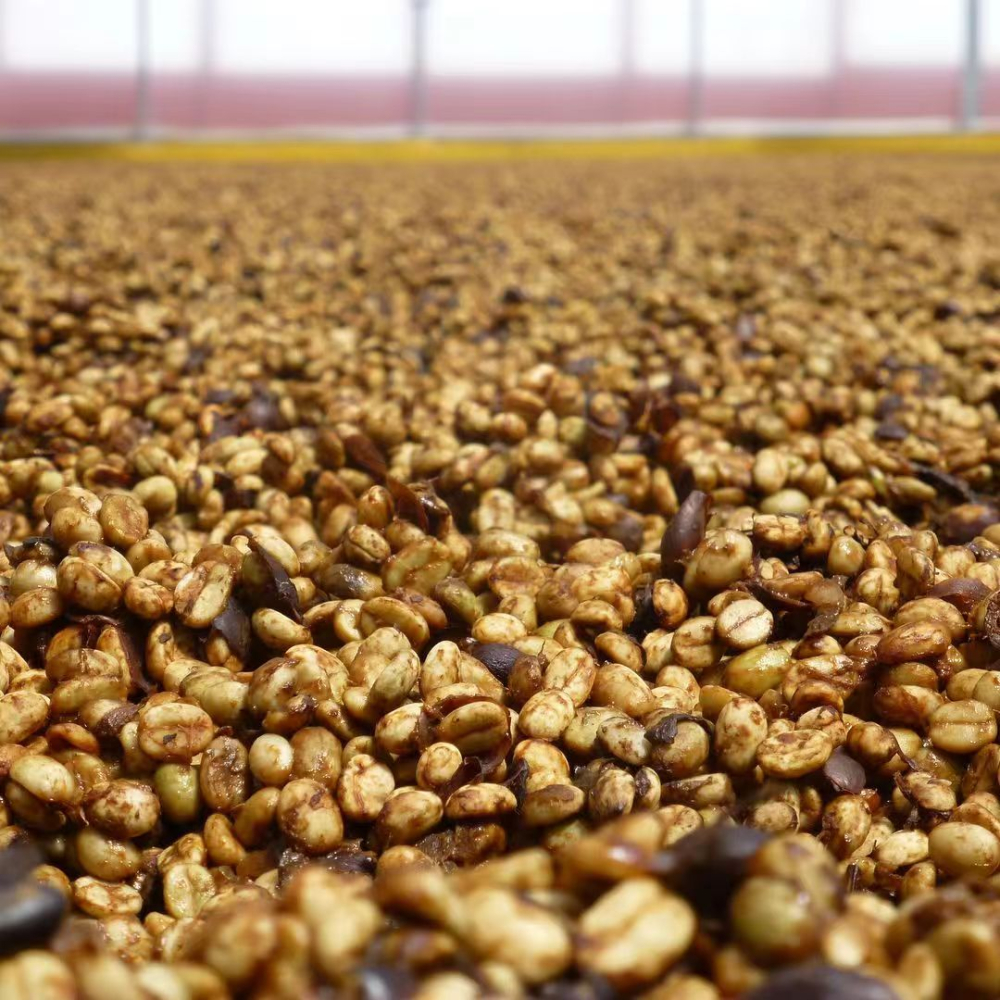
In terms of names, we often hear colored honey processing terms such as black honey, red honey, yellow honey, and white honey. This is because mucilage contains a large amount of sugar. When green beans with only mucilage retained are exposed to the air, oxidation occurs, and the appearance of the beans gradually changes from the initial yellow-white to golden yellow. As time goes on and fermentation continues, the beans may turn dark red or even black-purple, until drying is complete.
Theoretically speaking, black honey or red honey coffee will be closer to natural processing than yellow honey or white honey, and the fermented character will also be more obvious. However, even today, there is still no precise standard in the industry to define honey processing of different colors, and it mostly depends on the producer. Therefore, confusion often arises in naming; for example, what one producer calls "red honey" may be called "yellow honey" by another.
The drying time for honey processing falls between natural and washed, ranging from 2 weeks to 4 weeks. Similarly, the flavor also often tends to fall between natural and washed, mostly leaning toward the natural style, with a candied-fruit-like sweetness and often accompanied by solid, bright acidity. Compared with the washed method, honey processing can reduce freshwater use by about 40%, and it also avoids the negative defective flavors caused by long exposure to the sun. Coffee using honey processing generally presents full and delicate fruity sweet-acidity and refined, complex floral notes in cupping, with an overall fresh and clean mouthfeel. In this way, saving water, being environmentally friendly, and offering good flavor made the honey processing method begin to prevail in Central and South America, and the flavor of honey-processed coffee has been especially favored in the specialty market.
Now let's move on to the practical part and see how Front Street brews this Geisha! The parameters are as follows:
The above content is compiled by CoffeeHunters, a coffee news website.


