








How does Antigua coffee differ from Colombian coffee flavors?
Guatemalan coffee, especially Antigua coffee, tends to show a heavier body, gentle acidity and a distinct charcoal-roasted aroma, while Colombian coffee leans toward balance, mellow smoothness and brighter, more vibrant acidity. The difference comes from where each country sits in the coffee belt at similar latitudes but with different altitude ranges, rainfall and volcanic soil.
Guatemala and Colombia both receive roughly 2000 to 3000 millimeters of rain a year, yet Colombian growing areas sit mainly above 1500 meters with average temperatures of 18 to 22.5 degrees Celsius, supporting Huila, Cauca and Nariño micro-lots. Antigua's Flor de Café beans represent Guatemala's fuller, richer style, so the choice comes down to whether a cup should be bright or deep.
Colombia and Guatemala are both world-renowned specialty coffee-producing countries, but their flavor profiles each have their own strengths. Colombian coffee is known for its balanced, mellow smoothness and vibrant acidity, with the Huila region being a representative of specialty micro-lots; Guatemalan coffee, on the other hand, is famous for its rich, smooth body and distinctive charcoal-roasted aroma, with the Antigua region's Flor de Café beans being a typical example. Front Street Coffee examines the coffee characteristics of both countries one by one, from regional geography and climate conditions to processing methods and specific bean varieties, helping coffee enthusiasts understand the respective style positioning of Colombian and Guatemalan coffee, and find the cup that suits their taste.

For more specialty coffee information, welcome to follow our WeChat official account: Front Street Coffee (FrontStreet Coffee).
Between Colombian coffee and Guatemalan coffee, which one actually suits your taste better? What flavor characteristics does each present? Today Front Street will break down the coffee features of these two countries separately, starting with Colombia.
Colombia is located in the northwestern corner of South America, bordered to the east by Panama in Central America, roughly between 3 and 8 degrees north latitude. It has a tropical climate, but the specific weather varies greatly with terrain. The country has abundant volcanic soil, with annual rainfall between 2000 and 3000 millimeters. The overall climate is mild with relatively high humidity, and this climatic diversity allows Colombia to harvest coffee year-round. The southern part of the eastern plains and the Pacific coast have a tropical rainforest climate, while the mountains at elevations of 1000 to 2000 meters belong to a subtropical climate, and the northwest has a tropical savanna climate. The average annual temperature is approximately 15.8 to 20.5 degrees Celsius, while the average temperature in coffee-growing areas fluctuates between 18 and 22.5 degrees Celsius. Front Street believes that the combination of low latitude, high altitude, and volcanic soil gives Colombian coffee beans a flavor profile that tends toward balance, with prominent acidity, highly recognizable flavor characteristics, and a relatively full body, sometimes bringing out a hint of red wine-like character and pleasant fruity notes.
Colombia's specialty coffee bean-producing regions are mainly concentrated in the south, mostly at elevations above 1500 meters, distributed across Huila, Cauca, Nariño, and Tolima. These regions generally feature delicate acidity and berry sweetness, with overall sweetness standing out.
Huila Province is located in the southern section of the Central Cordillera in southern Colombia and is one of the country's most well-known specialty coffee regions. Surrounded by mountains, with growing elevations exceeding 1500 meters, several important rivers in Colombia converge here, bringing abundant water resources and moisture. Unlike the general impression of Colombian coffee as balanced and mellow, many specialty Colombian beans produced by smallholder micro-lots actually possess quite distinct regional flavor personalities.
In recent years, as the international market has placed increasing importance on coffee quality and raised its standards for specialty coffee, Colombia has gradually abandoned its previous grading system based on bean size, shifting instead to micro-regional selections organized by smallholder coffee producers in micro-regions. These micro-lots are pooled from the individual harvests of dozens of smallholders and sold collectively, which also provides more opportunities to directly identify many outstanding specific smallholder coffees through batch-by-batch cupping.
The coffee that best represents the Colombian region at Front Street Coffee (FrontStreet Coffee) is the Colombian bean used as a daily staple—Front Street Huila, a single-origin coffee that undergoes washed processing. When deciding to launch a new staple bean, Front Street selects beans from major regions that best represent the local original flavor, then introduces them to everyone in 100-gram small packages. Front Street hopes that every coffee enthusiast can taste the basic flavor of a coffee region at the most affordable and cost-effective price.
Country: Colombia Region: Huila Altitude: 1500-1800 meters Variety: Caturra Processing Method: Washed Flavor: Nuts, dark chocolate, caramel, soft fruit acidity
The so-called washed processing means that coffee farmers first pour the harvested coffee cherries into a large water tank; underdeveloped, inferior beans will float to the surface, while ripe, full fruits sink to the bottom. At this point, the defective beans or fruits floating on the surface are scooped out. Next, a pulping machine removes the outer skin and pulp of the coffee fruit, and at this stage the coffee beans still have a slippery layer of mucilage attached to their surface. The beans with mucilage are placed into a fermentation tank for 16 to 36 hours, during which microorganisms break down the mucilage. After fermentation is complete, the remaining mucilage on the beans is rinsed off thoroughly with large amounts of clean water. Finally, the washed coffee beans are spread out to dry. The washed processing method can produce acidity that is either soft or sharp, and body that is either heavy or light, combining sweetness with spicy notes.
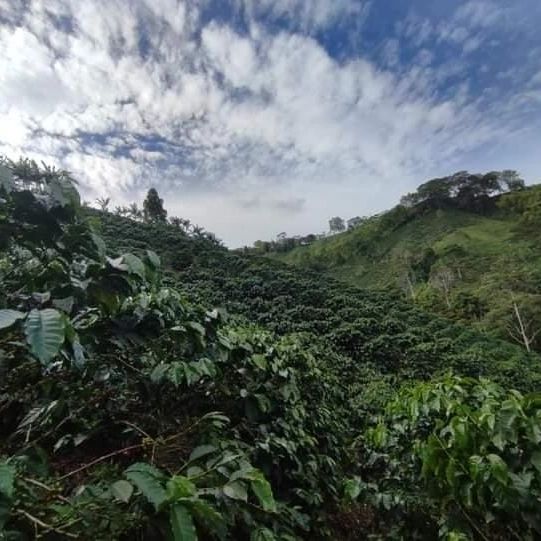
Front Street takes into consideration that washed processing better showcases the cleanliness of coffee's mouthfeel and the purity of its flavor presentation, so when analyzing the specific flavors of a coffee-producing region, it uses that region's washed beans as a reference.
Having discussed Colombia, Front Street will now talk about another well-known coffee-producing region—Guatemala.
Guatemala is located in the southern part of the North American continent, in the northwestern part of Central America. The country borders Mexico to the west and north, and connects to Honduras and El Salvador to the southeast. Two-thirds of Guatemala's terrain consists of mountains and highlands, with the western and southern parts belonging to a volcanic belt, where more than thirty volcanoes are distributed.
Guatemala is situated in the tropics. The northern and eastern coastal areas have a tropical rainforest climate, while the southern mountains have a subtropical climate. There are two distinct seasons—wet and dry—with the wet season from May to October and the dry season from November to April of the following year. The central highlands are Guatemala's cultural center, with elevations between 1300 and 1800 meters, a mild climate year-round, and temperatures ranging from 18 to 28 degrees Celsius.
Annual rainfall in the northeast is 2000 to 3000 millimeters, while in the south it is 500 to 1000 millimeters. Guatemala's overall average elevation is relatively high, with the coffee belt distributed above 1500 meters and between 14 and 16 degrees north latitude, making it easy to grow Strictly Hard Beans.
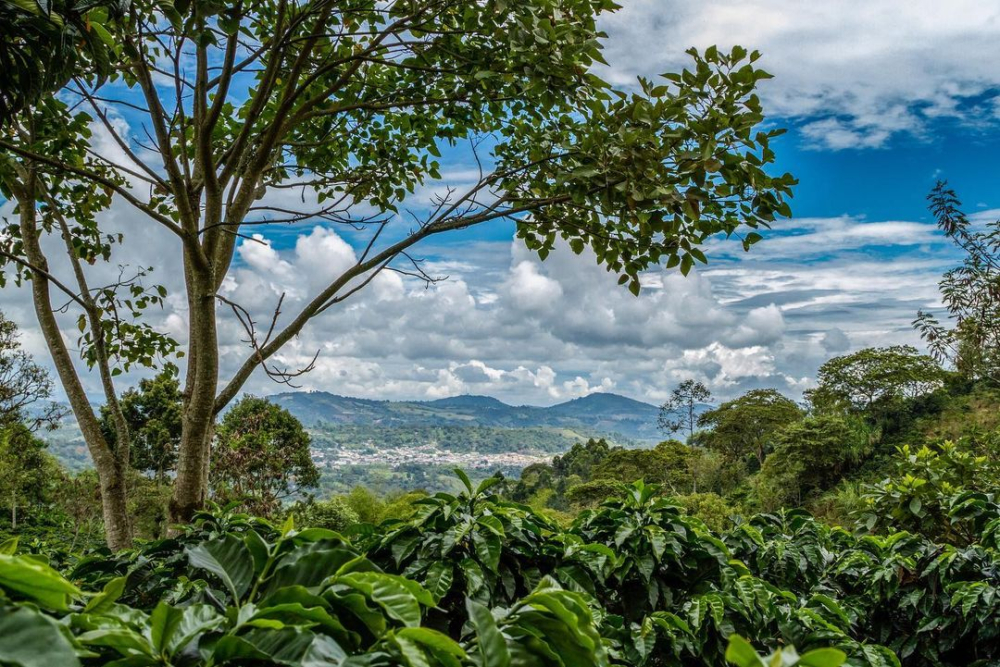
Guatemala Coffee Planting History
Records of coffee drinking in Guatemala date back to as early as 1747, but the year coffee was truly first planted was 1750, when the Jesuit priest introduced coffee trees to Guatemala and began cultivating them.
In 1845, coffee became an important cash crop in Guatemala. By 1880, coffee accounted for 90% of Guatemala's total exports. In order to obtain greater yields, those in power set their sights on indigenous lands, forcing indigenous people to sell their land and relocate to areas with poorer soil. To this day, approximately 60,000 family-run farms operate in Guatemala's coffee industry. Coffee is grown in the Sierra mountains near the Pacific coast. This Sierra mountain range spans the entire country, connecting to the Rocky Mountains to the north and the Andes to the south.
Guatemala Coffee-Growing Regions
The Guatemalan Coffee Association established the Guatemalan coffee bean brand and, with the slogan "A Rainbow of Choices," defined Guatemalan coffee beans from eight different origins. These eight regions are Antigua Classic, Huehuetenango, Rainforest Coban, Traditional Atitlan, Fraijanes Plateau, Volcanic San Marcos, Acatenango, and New Oriente.
The Antigua region is surrounded by three volcanoes (Agua, Fuego, and Acatenango), forming a valley. Among them, Fuego is an active volcano that erupts from time to time, enriching the soil of the Antigua region with minerals. This region retains a large amount of primary forest, and combined with fertile volcanic soil, coffee plants are able to obtain abundant nutrients for their growth. The Antigua region has a mild climate year-round, stable humidity, and rarely experiences extreme climate changes. Coffee grows at elevations above 1500 meters. The coffee produced in this region has won the most awards in Guatemala and is the country's most famous producing region.
One of the Guatemalan coffee beans that Front Street Coffee (FrontStreet Coffee) has sourced comes from the Antigua region. What's more worth mentioning is that it comes from La Minita. Thanks to the climate and altitude formed by the estate's geographical advantages, the location conditions limit the number of pests, so no insecticides are used in growing coffee here, and the small number of pests does not cause much impact on the coffee trees.
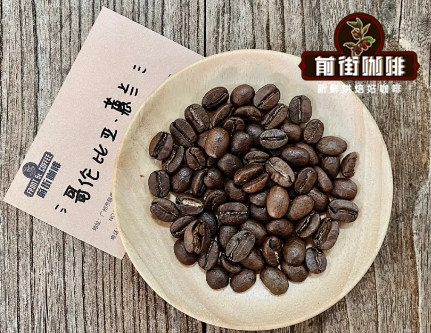
The estate conducts soil testing twice a year to determine how to fertilize, and is very careful when using yield-increasing products, fertilizing about 3 times a year. The estate's scientific cultivation management has resulted in the excellent flavor of this Flor de Café bean from Front Street Coffee (FrontStreet Coffee). Combined with La Minita's strict monitoring of the entire process from planting to packaging, the quality of this Flor de Café bean is guaranteed.
Front Street Coffee (FrontStreet Coffee) Guatemala Antigua Flor de Café Region: Guatemala Antigua Region Estate: La Minita Estate Altitude: 1200 meters Variety: Caturra, Bourbon Processing Method: Washed
Anyone who has tasted Guatemalan coffee knows that the country's coffee is famous for being rich, smooth, and mellow with a slight charcoal-roasted note, like the sweetness of chocolate mixed with a smoky character. It is precisely because of its distinctive charcoal-roasted aroma that Antigua coffee is also called "cigarette coffee."
The above content is compiled by CoffeeHunters, a coffee news website.


