








How Do You Make Americano Without a Bitter Finish?
To make americano at home, pull 40g of espresso from 20g of grounds in 25 to 30 seconds, then add 200ml of warm water for a 1:5 hot ratio. For an iced version, use a 1:2:4 ratio: 40g of espresso, 80g of ice, and 160ml of room-temperature water.
When a homemade iced americano turns out americano bitter and unpleasant, the beans are usually the cause. Overly dark-roasted beans build up roasted compounds that read as bitterness in the cup, so medium or medium-dark espresso beans such as a Huakui SOE give a more balanced result with neither sourness nor astringency dominating.
Americano, with its no-milk, no-sugar, low-calorie profile, has become the daily go-to for many young people today. Whether as a light option for social occasions or an easy entry-level drink made at home, it is approachable enough. However, what seems like a simple mix of espresso and water actually involves quite a few finer points in practice. This article covers the basic method for making Americano, the golden ratio of espresso to water, how to prepare iced Americano, and how to avoid a bitter homemade iced Americano, along with recommendations for several Front Street Coffee espresso beans suitable for making Americano, helping coffee lovers brew a balanced cup at home that is neither sour nor astringent.

Americano is essentially black coffee made by adding water to espresso, containing no milk or sugar and very low in calories, which is why it has become a widely accepted healthy drink among modern young people. People choose Americano partly because coffee shops provide a social space, and partly because it is affordable and easy on the body—whether drinking it alone or treating guests, it is relaxed and pressure-free.
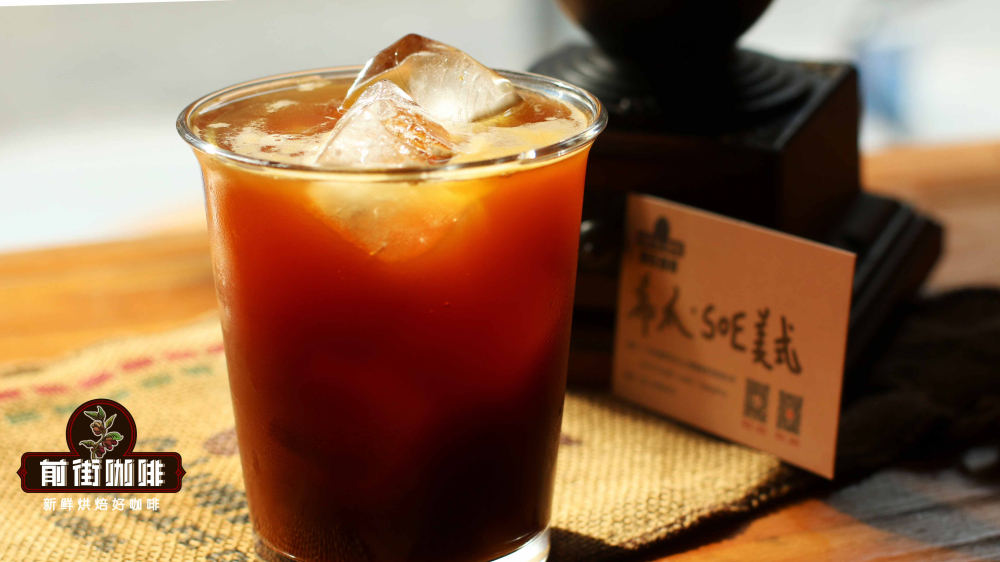
The method for making Americano is not complicated. When Front Street Coffee makes a hot Americano, it extracts 40g of coffee liquid from 20g of coffee grounds, with extraction time controlled between 25 and 30 seconds, then adds 200ml of warm water at a 1:5 ratio; for an iced Americano, use a 1:2:4 ratio, adding 80g of ice cubes and 160ml of room-temperature water to 40g of coffee liquid.
As more and more people start learning to make coffee, most begin with iced Americano, but many have told Front Street Coffee that their homemade iced Americano tastes prominently bitter and unpleasant, and they want to understand why.
For black coffee like Americano, the flavor is mainly determined by the coffee beans themselves, so the first reason an Americano tastes bitter is very likely the use of overly dark-roasted beans. Excessive heat exposure triggers intense caramelization, causing the beans to accumulate too many roasted flavor compounds, and the resulting espresso naturally becomes dominated by bitterness. Therefore, to avoid a bitter and astringent iced Americano, Front Street Coffee recommends using medium-roast or medium-dark-roast espresso beans.
For medium-roast espresso beans, the barista recommends Front Street Coffee Huakui SOE and Front Street Coffee Queen's Estate SOE. The espresso extracted from these two beans has lower bitterness and also carries fresh fruity acidity along with creamy nutty flavors. Used for iced Americano, the taste is balanced, neither sour nor astringent, and very suitable for home brewing.
"Front Street Coffee Specialty Blend Coffee Beans" is suitable for home brewing, specialty coffee shops, community coffee shops, and small coffee shops. This blend uses Colombian washed coffee beans plus Brazilian semi-washed coffee beans, presenting flavors of nuts, dark chocolate, and caramel.
If you want the coffee's bitterness to be even lower, you can choose Front Street Coffee Strawberry Candy Espresso. This is an espresso recipe designed specifically for friends who love floral and fruity aromas, blending selected single-origin coffees from three major producing regions—Costa Rica, Colombia, and Ethiopia—with aromas of roses, citrus, grapes, and dried blueberries. Made into Americano, it has a clear, sweet flavor like fruit gummies.
The above content is compiled by CoffeeHunters, a coffee news website.


