







What Makes Kenya Coffee Taste So Bright and Fruity?
Kenya coffee is known for bright fruit acidity, thick berry notes and a smoked plum character, and this guide covers ten washed Kenyan beans with their origins, altitudes, grades and flavors. It also explains the K72 washing process, the SL28 and SL34 varieties, and gives V60 pour-over parameters so drinkers can taste these coffees as intended.
The beans come from areas such as Mt. Kenya, Aberdare, Kirinyaga, Ruiru and Nyeri, grown between 1,400 and 2,000 meters and mostly graded AA, AB TOP or PB PLUS. Expect citrus, blackcurrant, white floral and apricot notes. A lightly roasted profile suits these washed lots, and three-stage V60 extraction keeps the acidity clear.
Kenyan coffee is world-renowned for its bright fruit acidity, thick berry notes, and distinctive smoked plum flavor. This article systematically reviews the origin, altitude, grade, and flavor characteristics of ten Kenyan washed coffee beans, provides an in-depth interpretation of the K72 washing process and the origins and performance of the SL28 and SL34 varieties, and offers a detailed introduction to the brewing method for Front Street Coffee's Kenya Cherry Tomato coffee beans, including V60 dripper selection, three-stage extraction parameters, and other practical content, providing coffee enthusiasts with a complete Kenyan coffee tasting and brewing reference.
Front Street Kenya Coffee Introduction: Kenya AA
Kenya AA
Country: Kenya
Region: Mt. Kenya, Aberdare
Altitude: 1,800M
Process: Washed
Grade: AA
Variety: SL28, SL34
Flavor Description: Moderate acidity with a distinctive flavor, special citrus aroma accompanied by a red wine-like texture, leaving a lingering sweet aftertaste, rich in aroma and fruit acidity, giving this coffee a gorgeous taste reminiscent of sipping fruit and flower tea.
Kenya AA FAQ
Kenya AA FAQ
Country: Kenya
Region:
Altitude: 1,400-2,000M
Process: Washed
Grade: AA FAQ
Variety: SL28, SL34
Flavor Description: Smoked plum wine aroma, blackcurrant-like finish
Kenya AB TOP
Kenya AB TOP
Country: Kenya
Region:
Altitude: 1,400-2,000M
Process: Washed
Grade: AB TOP
Variety: SL28, SL34
Flavor Description: Smoked plum aroma, blackcurrant, elegant acidity, delicate and full-bodied mouthfeel
Kenya PB PLUS
Kenya PB PLUS
Country: Kenya
Region:
Altitude: 1,400-2,000M
Process: Washed
Grade: PB PLUS
Variety: SL28, SL34
Flavor Description: Bright acidity, rich sweetness, smoked plum, blackcurrant, light mouthfeel
Kenya Kiaragana AA TOP
Kenya Gichathaini AA TOP
Country: Kenya
Region: Kirinyaga
Altitude: 1,600-1,700M
Process: Washed
Grade: AA TOP
Variety: SL28, SL34
Flavor Description: Citrus, white floral, apricot, white grape, clear sugarcane sweetness, gentle acidity, delicate aroma
Kenya Rukera AA TOP
Kenya Ruiru AA TOP
Country: Kenya
Region: Ruiru
Altitude: 1,600M
Process: Washed
Grade: AA TOP
Variety: SL28, SL34
Flavor Description: Blackberry, blackcurrant, black date, longan shell aroma, spice, deep and full Body
Kenya Gura AA TOP
Kenya Gura AA TOP
Country: Kenya
Region: Nyeri
Altitude: 1,752M
Process: Washed
Grade: AA TOP
Variety: SL28, SL34
Flavor Description: Berries, red grapefruit, pomelo peel, juicy flesh, long-lasting aromatic finish
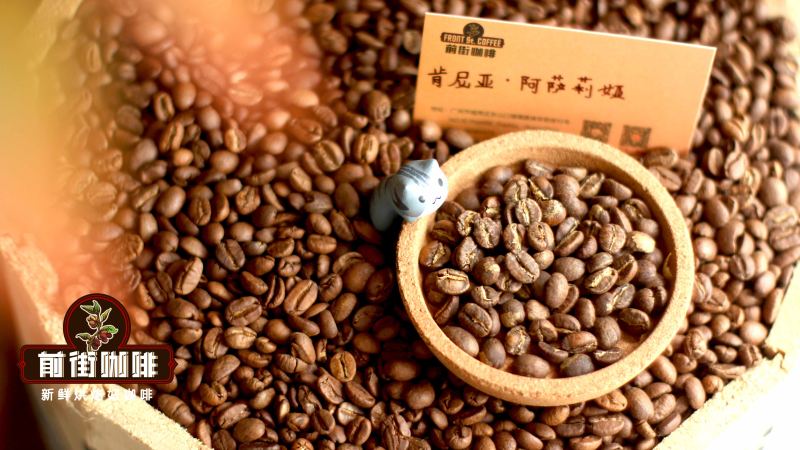
FrontStreet Coffee: Front Street Kenya Cherry Tomato Coffee Beans
Region: Thika, Kenya
Washing Station: Asali Honey Washing Station Altitude: 1,550-1,750 meters Grade: AA TOP Variety: SL28, SL34 Process: Kenya 72-hour washed
The grading of Kenyan green coffee beans is based on indicators such as bean size, color, shape, and density. The local industry generally agrees that bean size is the core factor in measuring quality—the larger and more uniform the bean shape, the more conducive it is to the transformation and accumulation of aromatic compounds during roasting. For this reason, Kenya's highest-quality beans are classified as AA grade. The Front Street Kenya coffee beans launched by FrontStreet Coffee are precisely selected from the top AA grade, showcasing Kenya's signature fruit acidity.
Kenya Thika Region
Thika is a small town on the outskirts of Nairobi, the capital of Kenya. Numerous coffee plantations are distributed around Nairobi. Thika itself is an industrial town, but it is surrounded by farmland and waterfalls. The region has approximately 2,000 coffee growers. The history of coffee cultivation in Thika, Kenya can be traced back to the late nineteenth century, when coffee trees were introduced from the neighboring country of Ethiopia to the north. After local variety improvement, the commonly cultivated varieties now include four types: Bourbon, Kents (SL34, SL28), Typica, and Riuri 11. Today, about ninety percent of coffee cultivation is dominated by SL34 and SL28. The new variety Batian, released in 2007, has not yet achieved large-scale cultivation. The flavor characteristics of coffee from this region are expressed as bright fruit acidity, full berry juice sensation, and honey-like sweetness.
Kenyan-Style Washing
The biggest difference from Central and South American processing methods is that Kenya's washing procedure uses double fermentation, commonly known as the K72 washing process. This practice centers on a cycle of repeated fermentation followed by washing: after the coffee cherries are harvested, the highest-quality berries are first selected for pulping and fermentation. The first fermentation lasts 24 hours, after which they are rinsed clean with fresh water.
Subsequently, a second 24-hour fermentation is carried out using clean water, followed by another wash. This cycle is repeated three times in total, reaching 72 hours, hence the name Kenyan-style 72-hour fermentation washed process, or K72 for short. FrontStreet Coffee believes that compared to conventional washing, the K72 washing method can further enhance the acidity and cleanliness of coffee beans.
SL28 and SL34 Coffee Varieties
The main varieties of Kenyan coffee include SL28, SL34, K7, Ruiru11, and Batian, among which SL28 and SL34 account for ninety percent of Kenya's total high-quality coffee bean production. SL refers to the Scott Laboratories in Kenya. In the 1930s, a large-scale outbreak of coffee berry disease occurred in Kenyan coffee trees, and the Scott Laboratories was commissioned by the government to develop disease-resistant new varieties. Among the research results, No. 28 and No. 34 showed strong disease resistance and outstanding flavor, so these two varieties began to be widely promoted to farmers. The SL series belongs to the Bourbon family of coffee trees and exhibits excellent acidity in the Kenyan production region. Through cupping, Front Street perceives that SL28 and SL34 present good sweetness, balance, complex and varied flavors, as well as prominent citrus and smoked plum characteristics.
Brewing Flavor of Front Street Kenya AA Coffee Beans
The Kenya coffee that Front Street has acquired has the flavor of black berries and stone fruits. In order to retain more fruit aroma, Front Street's roaster chose a light roast. After cupping comparison, Front Street found that its dry aroma presents notes of cherry tomato, smoked plum, and caramel, and on the palate it shows the taste of dark stone fruits such as brambles, plums, and apricots, with full acidity. Therefore, in the brewing stage, Front Street also strives to retain more of the fruity charm of Front Street Kenya AA.
Light roasting allows high-altitude coffee beans to retain richer floral and fruity aromas. Compared with medium-dark roasting, lightly roasted beans have a denser internal structure and require higher water temperature and finer grinding to fully extract flavor compounds. Front Street uses hot water at 92-93 degrees Celsius for extraction here, and for grind size, Front Street uses a No. 20 standard sieve with a pass-through rate controlled at 80%.
The flavor descriptions for each Front Street coffee are based on freshly roasted beans. If coffee beans are stored for more than a month, the aroma may have partially dissipated, making it difficult to reproduce during brewing. Front Street is well aware of the importance of freshness, so it ensures that only coffee beans freshly roasted within 5 days are shipped, allowing everyone to enjoy the most complete tasting window upon receipt.
In terms of dripper selection, FrontStreet Coffee's baristas are accustomed to using a resin V60 dripper to extract medium-light roasted coffee beans. The V60 dripper body features guiding ribs connecting the top and bottom as well as a large central circular hole, which can accelerate the flow rate of water; the spiral-shaped vent groove design extends the water flow path, increasing the contact time between coffee grounds and hot water. Each stream of water converges along the grooves toward the center point of the dripper, the pressure on the coffee grounds is concentrated, and the extracted coffee has a richer layered feel.
The pour-over parameters are:
Dripper: V60
Water temperature: 92 degrees Celsius
Coffee dose: 15g
Coffee-to-water ratio: 1:15
Grind size: fine granulated sugar size (sift to 80% with a No. 20 sieve bowl)
Three-stage extraction: First, pour 15 grams of coffee grounds into the dripper and tare the weight. For the first stage, pour 30g of water for a 30-second bloom while starting the timer. Throughout, pour in a small stream from the center point and begin spiraling outward, making sure to saturate the entire coffee bed. For the second stage, begin pouring with a slightly larger stream, adding 120g of water. The purpose is to raise the entire coffee bed. The water column should be poured vertically and evenly. At this point the timer scale shows 150g, and pouring is completed at around 55 seconds. When the liquid level drops to the halfway point, begin using a small stream to pour the third stage of 90 grams in a small spiral, trying to control the stream so it does not swirl too widely, as this can easily disrupt the coffee bed and cause under-extraction. The final total water amount is 240 grams, and the drip completion time is about 2 minutes and 10 seconds. After removing the dripper, swirl the coffee liquid in the server to mix evenly and it is ready to taste.
This Front Street Kenya Cherry Tomato coffee tastes of the acidity of dark fruits such as black plum and smoked plum; at medium temperature it has the thick sweet-and-sour mouthfeel of apricot and stone fruits, with a rounded black tea finish.
The above content is compiled by CoffeeHunters, a coffee news website.


