







Why Does Kona Coffee Taste Mild and Smooth?
Kona coffee is known for mellow smoothness and gentle acidity, a profile shaped by its island growing region. The Coffea genus splits into three main species: Arabica, Robusta, and Liberica. Arabica covers single-origin and specialty coffee, Robusta fills instant products, and Liberica is grown on a small scale. Island environments influence how varieties express themselves in the cup.
Typica, a derived variety of Arabica, is the plant behind Jamaica Blue Mountain, another classic island coffee. Typica resists leaf rust poorly and was largely replaced in Central and South America, yet Jamaica still grows it as the main variety because rust incidence stays low. That same varietal and geographic logic helps explain what is arabica-based about Kona's smooth, non-acidic taste.
Hawaiian Kona coffee is renowned for its mellow smoothness and gentle acidity, which is closely tied to the varietal characteristics of its island-growing region. This article begins with Front Street Coffee's introduction to the three major coffee varieties and extends to Jamaica Blue Mountain, a classic representative of island coffee, analyzing the flavor performance of the Typica variety in a low-altitude island environment. The article also documents in detail the flavor profile of Front Street Blue Mountain No. 1 under medium-dark roasting, along with the specific parameters and tasting impressions for making espresso and Americano with it, offering coffee enthusiasts a reference for understanding the unique charm of island coffee.
FrontStreet Coffee's Three Major Varieties and Introduction to Jamaica Blue Mountain Coffee Varieties
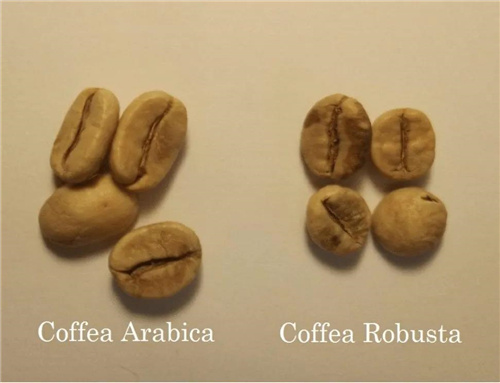
From a biological classification standpoint, the Coffea genus can be divided into three major species: Arabica, Robusta, and Liberica. The two most consumed varieties globally are Arabica and Robusta, while Liberica receives little market attention due to its limited cultivation scale and less impressive quality performance.
Generally speaking, Arabica is mostly used for single-origin or specialty coffee, while Robusta is commonly found in instant coffee products. Although Arabica can be regarded as representing high quality and Robusta as secondary, this division is not absolute—choosing based on personal flavor preference is more reasonable. In terms of consumption habits, consumers in the United States and Japan more often drink the lighter coffee brewed from Arabica, while Europeans prefer espresso made from a blend of Arabica and Robusta.
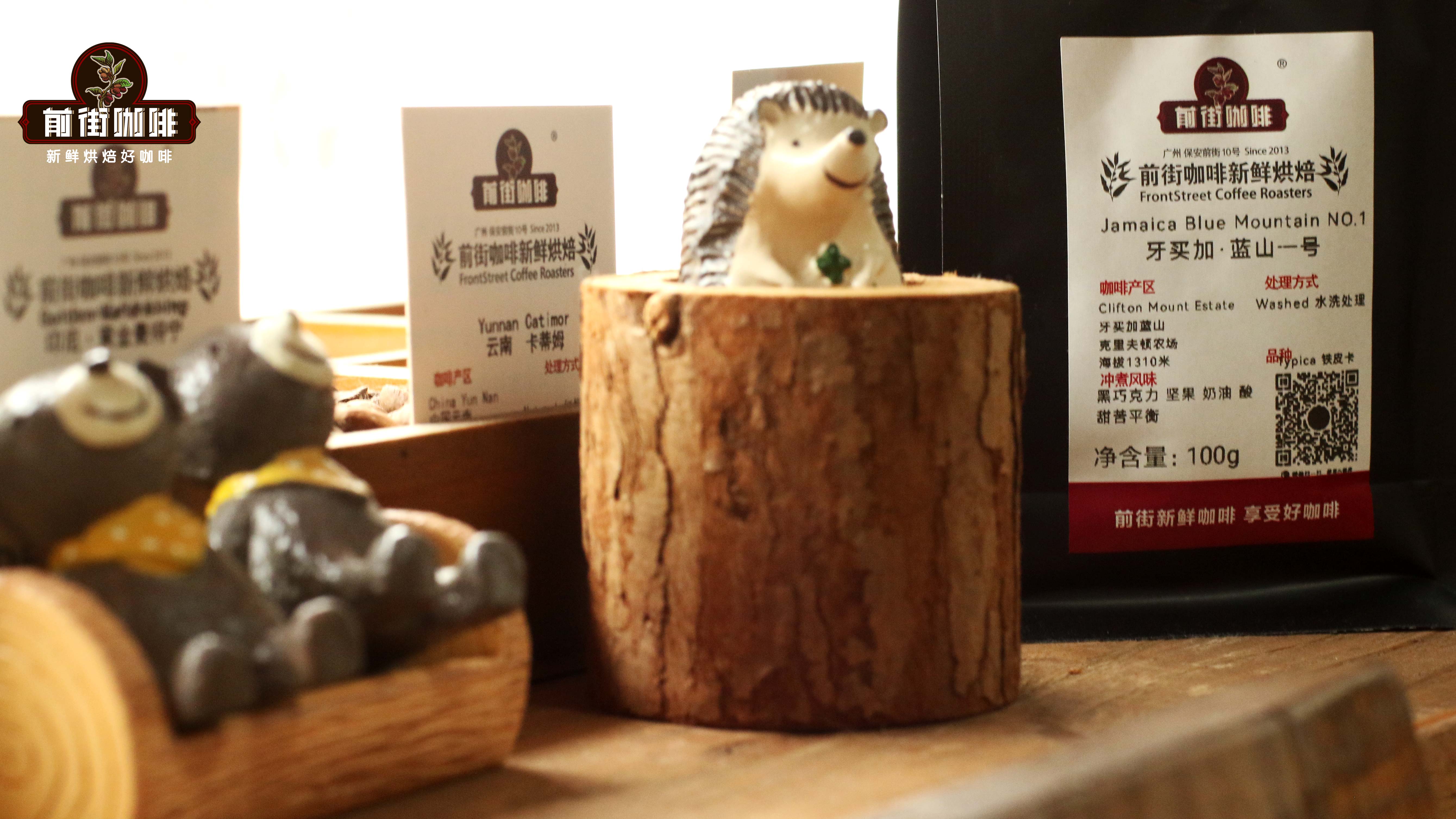
Typica, a derived variety of Arabica, is the variety used in Jamaica Blue Mountain coffee.
Jamaica Blue Mountain coffee is one of the world's most renowned representatives of island coffee, and the variety grown in the country is Typica. Typica has a rather weak resistance to leaf rust; originally widely cultivated in Central and South America, Typica was gradually replaced by other varieties due to the ravages of leaf rust. However, thanks to its unique geographical conditions, Jamaica still uses Typica as its primary variety, and the incidence of leaf rust remains at an extremely low level.
Since Jamaica is an island nation in the Caribbean Sea, Blue Mountain coffee does not have the advantage of high-altitude cultivation, so it does not possess the pleasant bright fruit acidity of Central American high-altitude coffees. Soft, low acidity is precisely the signature characteristic of Blue Mountain coffee, even though Blue Mountain's soil is also of the volcanic rock type. Constrained by its not-particularly-high growing altitude, Blue Mountain coffee's body is at a medium level. We should not describe Jamaica Blue Mountain coffee as full-bodied; a more fitting expression would be gentle mellow aroma.
Compared to other dark-roasted coffees, Front Street Blue Mountain No. 1 is at a medium-dark roast level, with a perfect balance of sweet, sour, bitter, and sweet-lingering notes. Its flavor profile is dominated by nutty cookie, cream, chocolate, and caramel. As a pour-over, you can experience its balance; as an immersion coffee, you can taste its full body; and as espresso or moka pot coffee, it produces beautiful crema and roasted aroma.
Who would have thought that 【Front Street Blue Mountain No. 1 Coffee】 could also be used for espresso! Making espresso with Front Street Blue Mountain No. 1 is also called Blue Mountain SOE. So how is it done? With the correct distribution technique—leveling the coffee bed surface and then tamping—the pressure would be around 25kg/m2 (but we use a calibrated tamper, so the tamping force is essentially consistent). Grind setting #1.9, extra-fine powder level, the coarseness of salt. For a single basket, we extract 20g of liquid from 13.5g of coffee, with an extraction time of 27 seconds; for a double basket, we extract 40g of liquid from 20.5g of coffee, with an extraction time of 26 seconds (single basket full load 14g, double basket full load 22g). Because the beans are relatively fresh, the crema is medium, showing a golden color with an intense caramel aroma. When tasting, you first experience soft fruit acidity, then caramel sweetness gradually emerges, with a finish of chocolate and brown sugar.
When Blue Mountain espresso is diluted with hot water to make an 【Americano】, the sweetness increases significantly, becoming lighter and more delicate, the fruit acidity decreases, and what lingers in the mouth is the taste of high-concentration dark chocolate.
The above content is compiled by CoffeeHunters, a coffee news website.


