








How Does Grind Size Change Coffee Extraction?
Grind size decides whether coffee extraction succeeds or fails: too fine a grind over-extracts and turns bitter, while too coarse a grind under-extracts and tastes bland. On the EK43s grinder, medium-light roasted beans work around setting 10 for pour-over and medium-dark roasted beans around 10.5. A 0.85mm No. 20 sieve verifies the result.
Grind degree describes both particle size and total surface area, and finer grounds expose more surface for hot water to reach. Concentration and extraction yield rise as the grind gets finer and fall as it gets coarser. Coffee extraction methods differ in their target range too, so espresso, pour-over and French press each call for a different grind, and beans from different origins respond differently.
Grind size is the key variable that determines the success or failure of a cup of coffee extraction. Too fine a grind tends to over-extract and produce bitterness, while too coarse a grind under-extracts and leads to a bland flavor. Drawing on the hands-on experience of Front Street Coffee, this article systematically explains the mechanism by which grind size affects extraction efficiency, sorts out the grind ranges corresponding to different brewing methods such as espresso, pour-over, and French press, and focuses on the setting of the EK43s grinder in the pour-over scenario—medium-light roasted beans are recommended at 10, and medium-dark roasted beans at 10.5. It also introduces the specific procedure for sieving verification using a 0.85mm No. 20 sieve, helping coffee enthusiasts quickly judge and correct grind size so that every cup of coffee can consistently present its ideal flavor.
Which is the finest coffee bean grind size from 1 to 10? Generally, the smaller the scale number, the finer the ground powder.
Grind size plays a key role when extracting a cup of coffee. For example, if the coffee grounds are ground too fine, over-extraction is likely to occur when used for pour-over; conversely, if ground too coarse, it will under-extract. In addition, coffee beans from different origins each have their own characteristics, and their requirements for grind size also differ. So how exactly should grind size be adjusted correctly? Many grinders on the market have a 1-to-10 scale, and how to operate them specifically is indeed a problem. Next, in this article, Front Street Coffee (FrontStreet Coffee) will talk about the standards for coffee grounds grind fineness.
What is coffee bean grind size?
As Front Street Coffee (FrontStreet Coffee) mentioned above, grinding is crucial to coffee because the size of the coffee particles directly affects the efficiency with which hot water penetrates and extracts the coffee. From a theoretical point of view, the more uniform the coffee particles, the more consistent the overall extraction efficiency, and the better the coffee flavor. Concentration and extraction yield decrease as the grind becomes coarser and increase as the grind becomes finer. Grind degree represents both the size and shape of the coffee after being ground and the size of the surface area. The finer the coffee is ground, the larger the surface area, and the greater the area in contact with the water flow, so more substances can be extracted. A larger surface area (a coarser grind) also gives the carbon dioxide inside the coffee beans more room to be released.
Grind degree is also often used to describe the fineness of coffee grounds. When the coffee is ground coarser, the particles are larger, and it takes longer for water to enter the particles and extract substances. Similarly, when the coffee is finer, the particles are smaller, and the time it takes for water to enter and extract substances is shorter.
So for the same coffee bean, under the same time conditions, a finer grind can extract more coffee substances and the taste will be stronger; a coarser grind can only extract limited substances and the taste tends to be bland. It can thus be seen that grind size plays an important role in whether the flavor of a cup of coffee can be fully extracted.
What are the common grind fineness levels?
Coffee grinders on the market can be roughly divided into three categories by grind range: one type is grinders that specialize in the espresso range; one type cannot handle espresso but can cover most grind degrees; and another type has a grind fineness range that can be used for all kinds of grinders.
If we look at the grind fineness recommended by grinders, several common grind degrees can be summarized: the finest grind is suitable for Turkish pot coffee; next is espresso; then medium coarseness for pour-over coffee or drip coffee; a bit coarser is suitable for siphon; and the coarsest grind is used for French press.
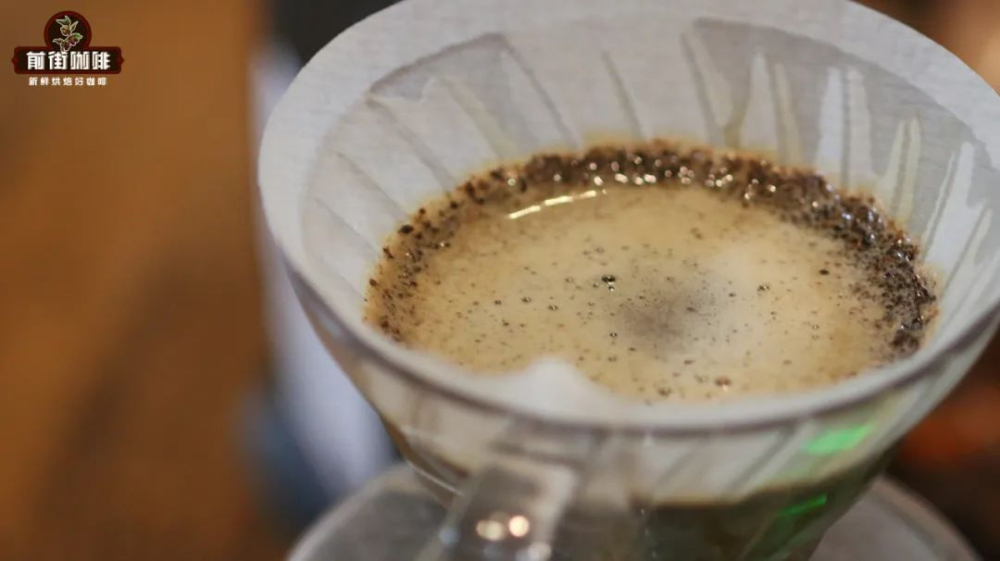
Espresso has a relatively fine grind, which stems from its production process and use. Espresso requires a very short extraction time, generally between 20 and 30 seconds, and it mainly serves as the base for most Italian-style coffees, requiring enough coffee substances to be extracted to support adding water or milk, so the grind degree is much finer than other brewing methods.
Among many methods, pour-over coffee has a relatively moderate extraction time, averaging about 2 minutes. Of course, 1 to 3 minutes is also acceptable, but most single-serving pour-over recipes average about 2 minutes of extraction time. Compared with espresso, pour-over does not require such a fine grind, in order to avoid over-extraction, so the grind degree is medium coarseness.
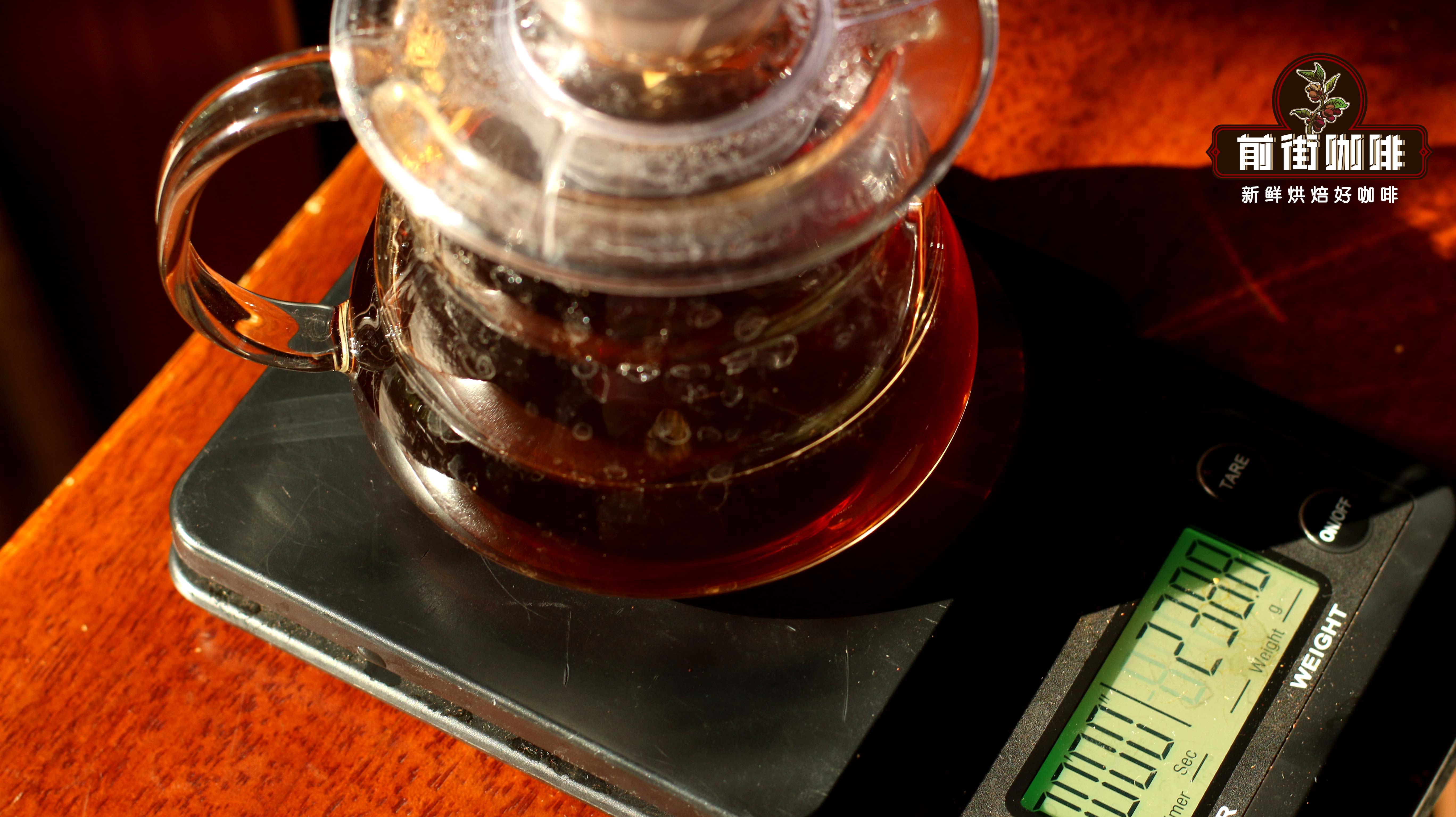
French press coffee has an extraction time of 4 minutes or more, longer than pour-over, so the grind degree for French press coffee is usually the coarsest, with the aim of avoiding over-extraction caused by long extraction.
So how do you adjust coffee bean grind size from 1 to 10?
From the above content of Front Street Coffee (FrontStreet Coffee), it can be seen that different coffee extraction methods use different grind sizes. And everyone has a different model of grinder, so the parameters that need to be adjusted for grind size are also different. Some grinders may be set to 3 for extremely fine grinding, while others may need to be set to 1 for extremely fine grinding. In such cases, the grind size can only be confirmed by sieving the powder. Here, Front Street Coffee (FrontStreet Coffee) will use the grind size for pour-over coffee as an example to explain.
What grind degree should be used for pour-over coffee?
Taking the freshly roasted coffee beans of Front Street Coffee (FrontStreet Coffee) as an example, single-origin coffee beans for pour-over are divided into medium-light roast and medium-dark roast.
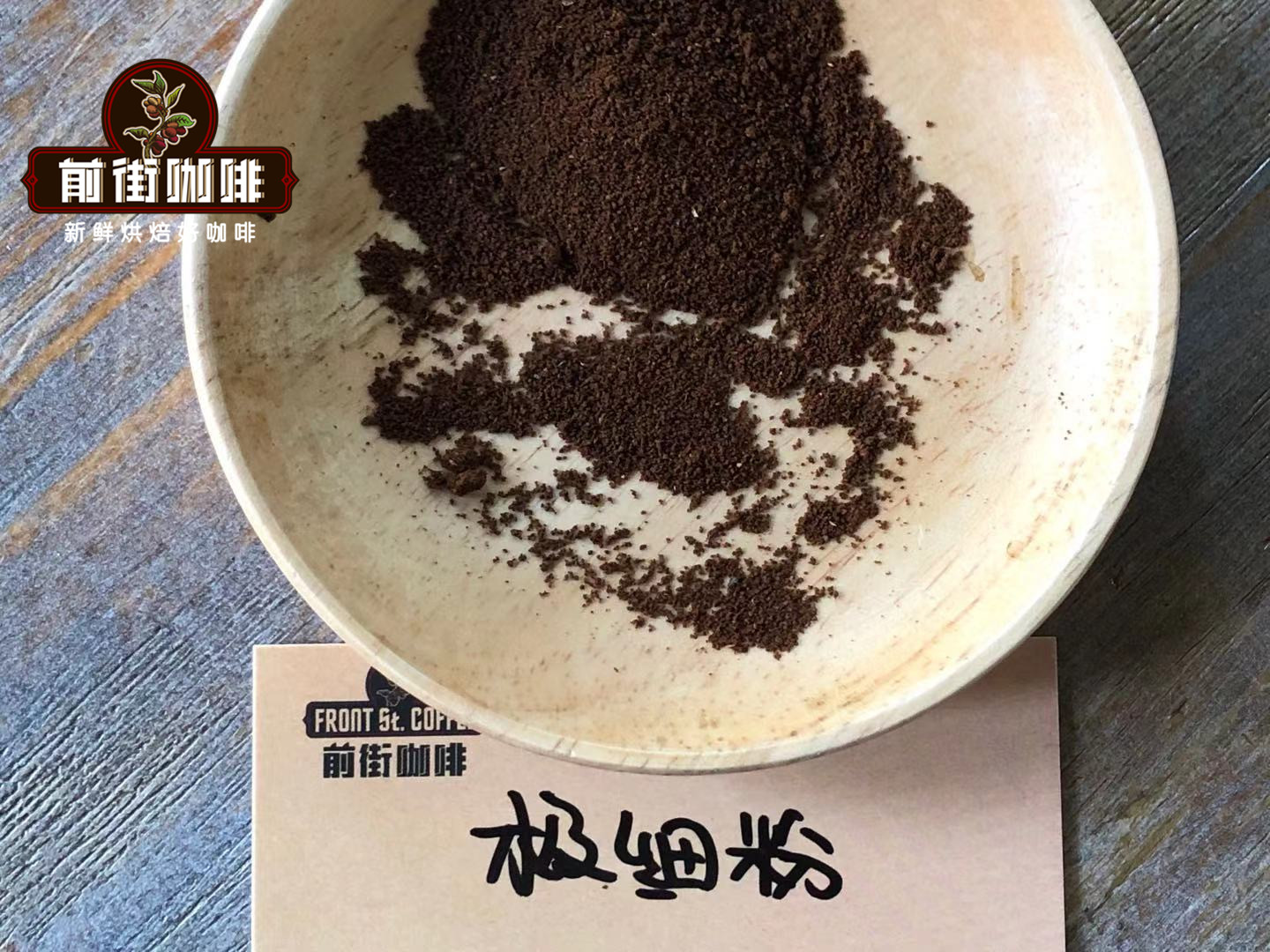
Front Street Coffee (FrontStreet Coffee) medium-light roasted coffee beans: medium-light roasted beans usually have a pronounced acidity, while caramelized substances are not easily extracted. Front Street recommends using a medium-fine grind (80% pass rate through a 0.85mm No. 20 sieve, that is, the size of fine granulated sugar), corresponding to 10 on the EK43s grinder. Medium-fine grinding can slow the time it takes for water to pass through the coffee bed, better extracting the acidic substances, sweet substances, and caramelized substances in the coffee, so that the coffee flavor can be balanced. For medium-fine ground coffee, a brewing water temperature of 91-93°C is recommended. If the water temperature is too high, it will over-extract caramelized substances and produce bitterness; if the water temperature is too low, it will under-extract and only extract part of the acidic and sweet substances, making the coffee flavor flat and dull.
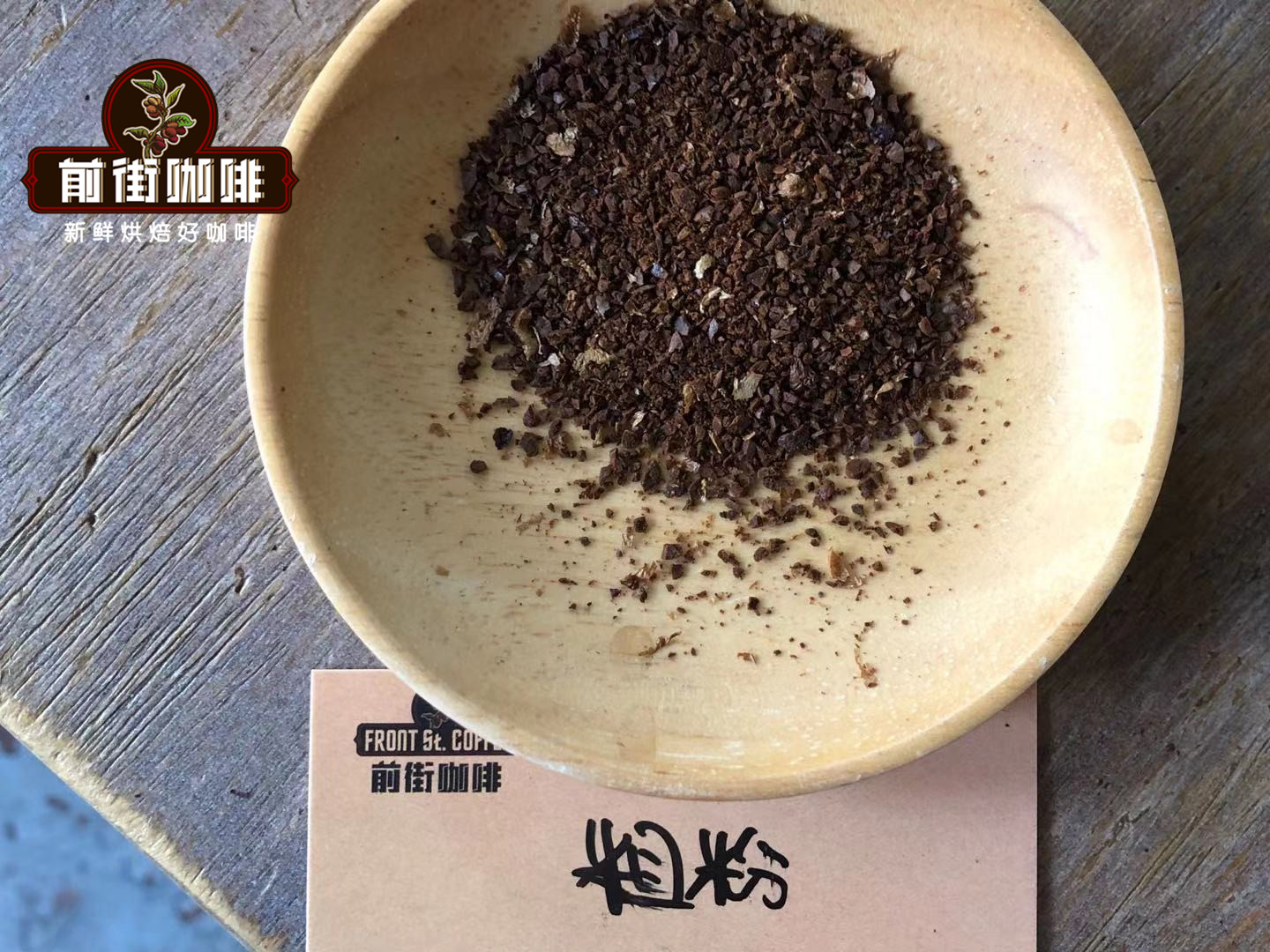
Front Street Coffee (FrontStreet Coffee) medium-dark roasted coffee beans: medium-dark roasted beans generally have lower acidity and a pronounced body, meaning that caramelized substances will be more abundant. Front Street recommends using a medium-coarse grind (70% pass rate through a 0.85mm No. 20 sieve, that is, the size of coarse granulated sugar), corresponding to 10.5 on the EK43s grinder. Medium-coarse grinding can speed up the time it takes for water to pass through the coffee bed, so that caramelized substances will not be over-extracted, allowing the coffee's flavor and mouthfeel to present a sweet, mellow thickness without producing unpleasant bitterness. For medium-coarse ground coffee, a brewing water temperature of 88-89°C is recommended. If the water temperature is too high, the coffee flavor will be bitter and hard to swallow; if the water temperature is too low, the coffee flavor will be dull and flat.
How to use a 0.85mm No. 20 sieve?
Regarding grind size, Front Street determines it through sieving, based on the grind recommendations provided by the Specialty Coffee Association of America (SCA) for pour-over coffee, and then verifies it in combination with actual operation. If there is no sieve at home, Front Street Coffee (FrontStreet Coffee) suggests observing the flow rate to judge: if the flow is too fast, the grind is coarse; if the flow is too slow, the grind is fine.
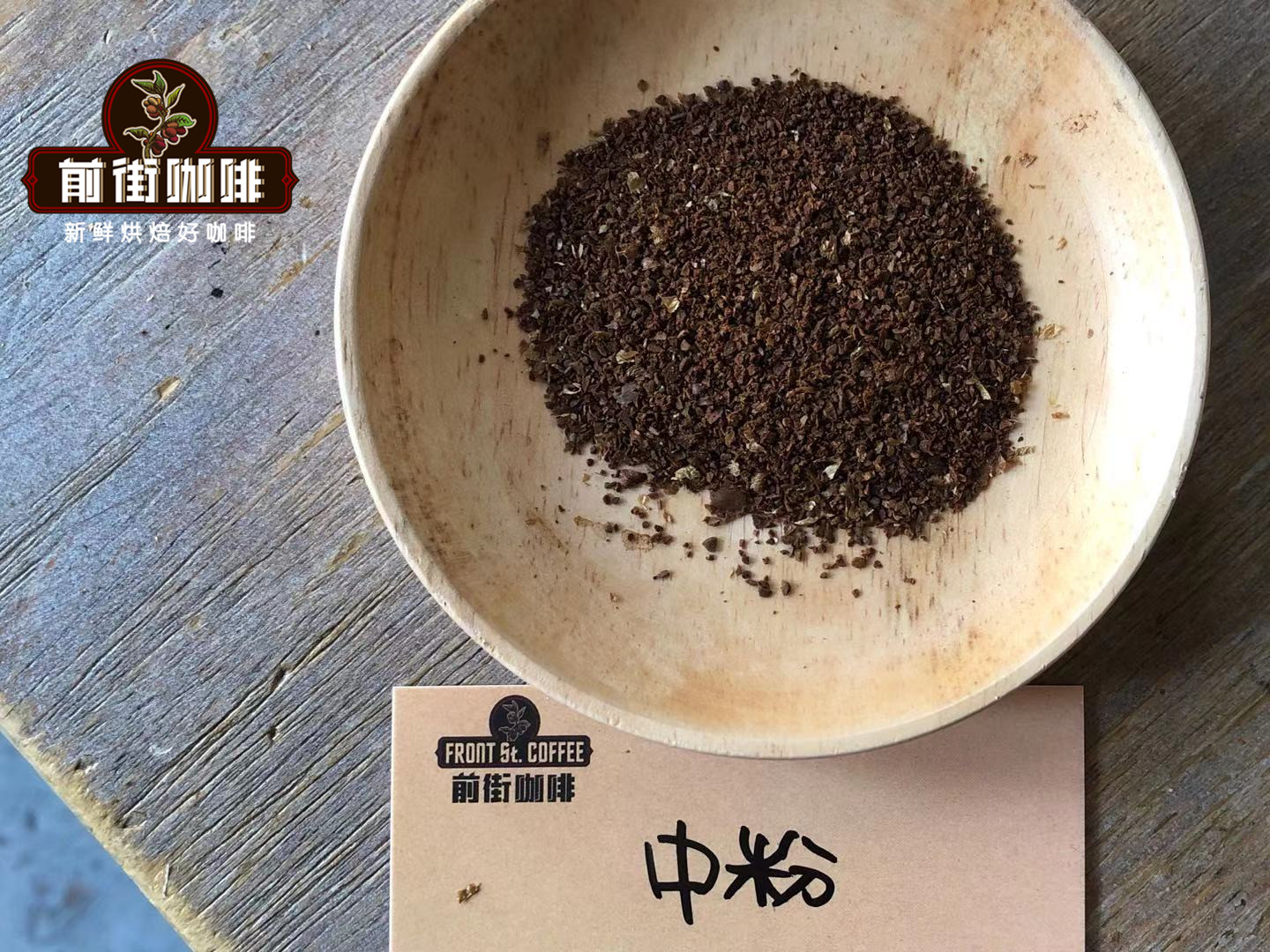
First prepare 10g of coffee beans for grinding, initially set a grind size based on the size of fine granulated sugar and coarse granulated sugar, then pour it into the sieve, cover the lid, shake left and right so that the coffee grounds pass through the sieve and fall into the powder tray below, until no more coffee grounds pass through the sieve, which counts as completing the sieving. Then prepare an electronic scale and a container and tare it to zero, pour the sieved coffee grounds into the container and weigh them: if the sieved coffee grounds reach 8g, it is a medium-fine grind; if they reach 7g, it is a medium-coarse grind. If the pass rate is too high, adjust the grind coarser; if the pass rate is too low, adjust the grind finer.
The following are the sieving data for different extraction methods obtained by Front Street Coffee (FrontStreet Coffee) through many practical brewing trials, for everyone's reference.
Fine > Coarse Pour-over Siphon 80% pass rate > American drip 75-80% pass rate > Cupping 70-75% pass rate > French press 65-70% pass rate
The importance of uniform grind size
The ground particles should be uniform. After coffee beans are ground into powder, the distribution of particle size has a great relationship with the quality of the coffee beverage. The more the particle size is concentrated within the target range, the more uniform the grind, and the better the flavor can be. If there are too many coarse particles, the good flavors hidden deep inside the coffee cannot be brewed out; if there are too many fine particles, the water flow will not be smooth, making the coffee taste messy or too bitter. If the uneven grinding is relatively serious, Front Street suggests changing to another grinding device.
The above is the relevant explanation on coffee bean grind degree compiled by Front Street Coffee (FrontStreet Coffee). We hope it can help coffee enthusiasts who want to learn related knowledge, so that in the future they can correctly adjust the coarseness of coffee grounds during the coffee extraction process.
The above content is compiled by CoffeeHunters, a coffee news website.


